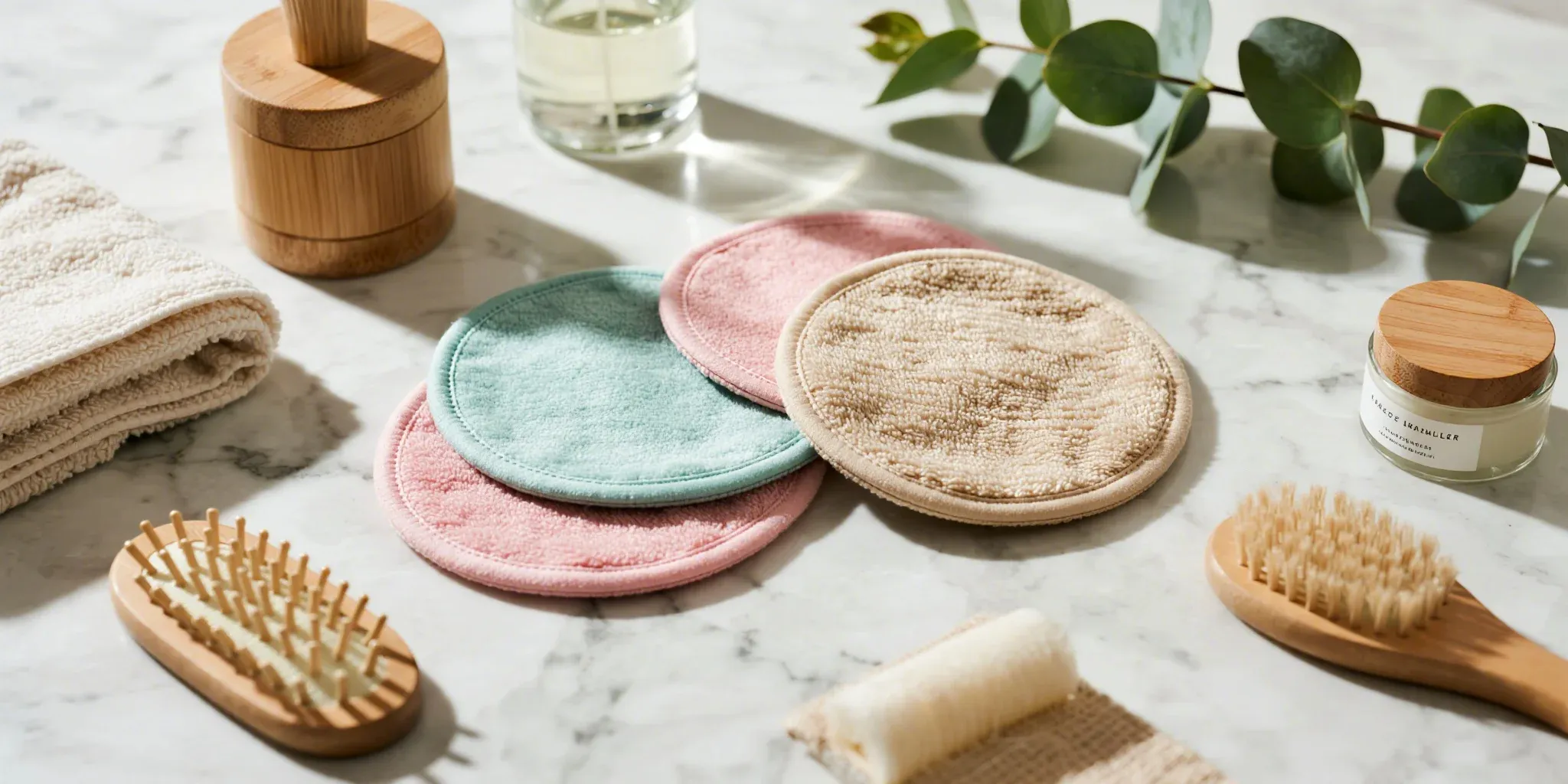
The cotton round is one of the most quietly wasteful objects in a daily skincare routine and one of the easiest to replace. A reusable makeup remover pad puts a few square inches of textile in its place, woven for softness, washed between uses, and kept for years rather than discarded at the end of each day. Used evening after evening, it becomes less a clean beauty accessory and more a permanent fixture beside the basin.
Yet not all reusable makeup remover pads are created equally. The material determines how the pad feels against the skin, how effectively it removes makeup, how well it withstands repeated washing, and ultimately how long it remains part of a daily routine. Organic cotton offers familiarity and softness, bamboo terry provides absorbency, linen and hemp bring durability, while microfiber prioritises efficiency and stain removal.
The difference may appear subtle at first, but over hundreds of uses, these characteristics shape both the experience and product lifespan. For those who value longevity, thoughtful materials, and a more considered approach to everyday objects, understanding the fabrics behind a reusable makeup remover pad is often more important than the shape, colour, or brand itself.
Some links in this post are affiliate links. That means we may earn a small commission, at no additional cost to you.
The Case for the Reusable Makeup Remover Pad
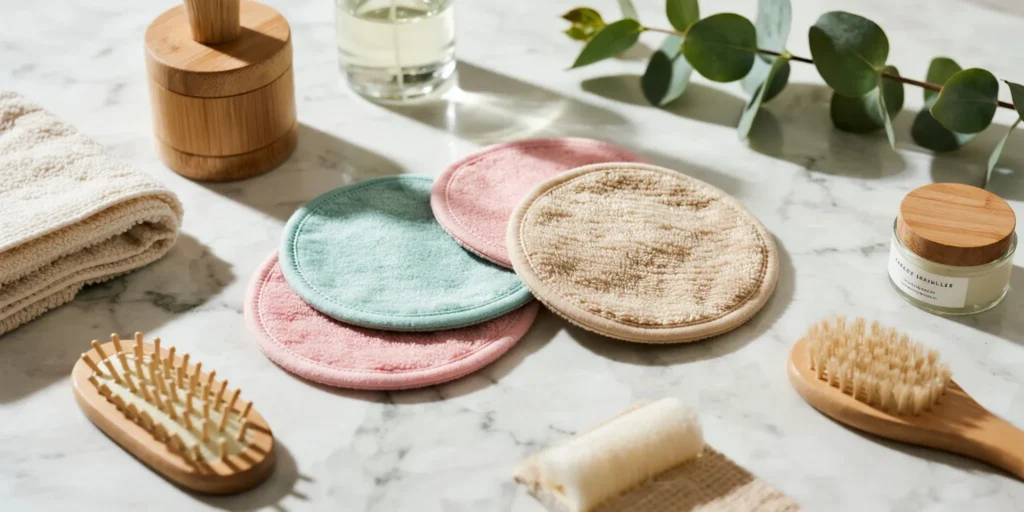
Most cotton rounds are used for a matter of seconds before being thrown away. Softened, bleached, packaged, transported, purchased, and discarded, they pass through a skincare routine almost unnoticed. Their convenience has long been their selling point, yet convenience often comes at the expense of longevity.
A reusable makeup remover pad offers a different relationship with the objects we use every day. Rather than disappearing after a single use, it remains. Washed alongside towels and washcloths, it returns to the bathroom night after night, gradually softening with age and becoming a familiar part of an evening routine.
The appeal extends beyond waste reduction alone. A reusable makeup remover pad introduces texture, craftsmanship, and material awareness into a routine that is often dominated by disposability. Whether made from organic cotton, bamboo terry, or hemp, the fabric becomes part of the experience itself, shaping how the pad feels against the skin and how well it performs over time.
Small changes rarely transform a lifestyle overnight. Their value lies in repetition. Used hundreds of times over the course of its life, a reusable makeup remover pad becomes a quiet reminder that the most sustainable objects are often the ones we continue to use long after the novelty has worn away.
Organic Cotton Rounds: The Gold Standard
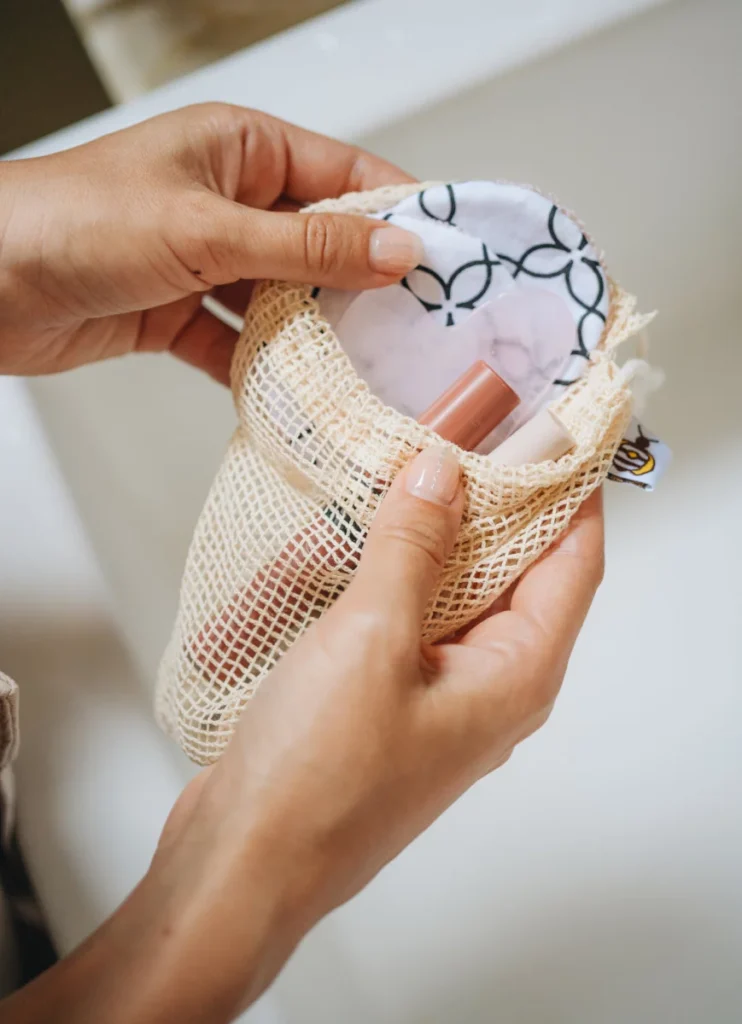
Ideal for: sensitive skin and cleansing around the eyes
Organic cotton is the entry point for those moving from disposables to reusables, and for good reason. It carries the familiar handfeel of the cotton round people have known since childhood, soft and forgiving on thin skin, yet its environmental impact is significantly different from that of its conventional counterpart. The Textile Exchange reports that organic cotton cultivation uses 91 percent less water from external sources than conventional cotton. This difference compounds across the lifetime of a single set of pads. When the cotton also carries GOTS certification, users have documented assurance that the fiber was grown without synthetic pesticides and processed without restricted chemical inputs from the farm through the finished textile.
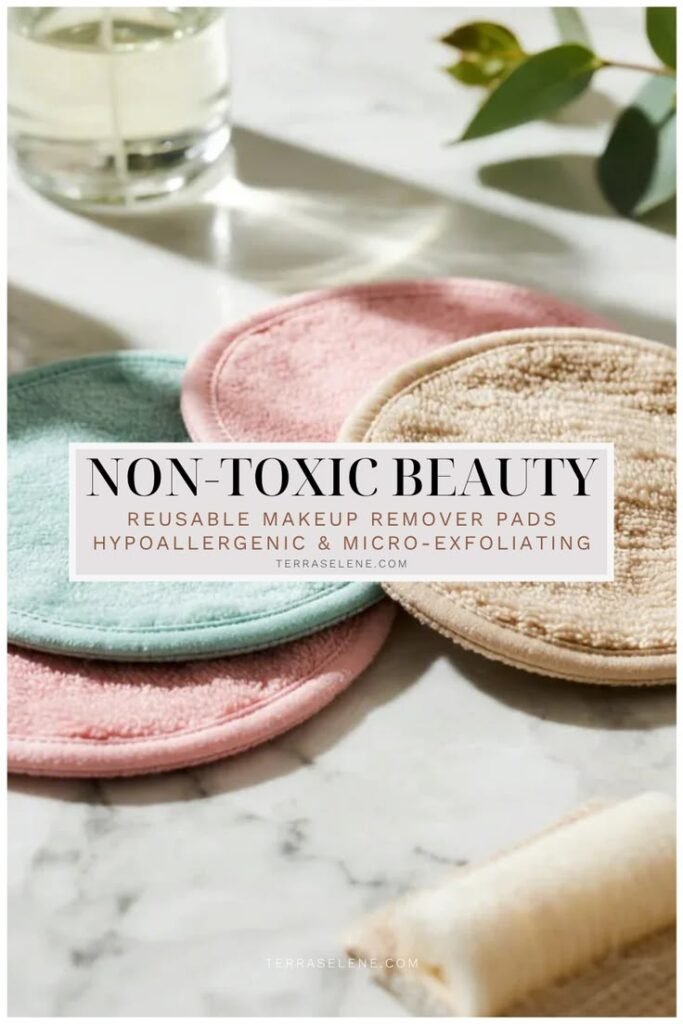
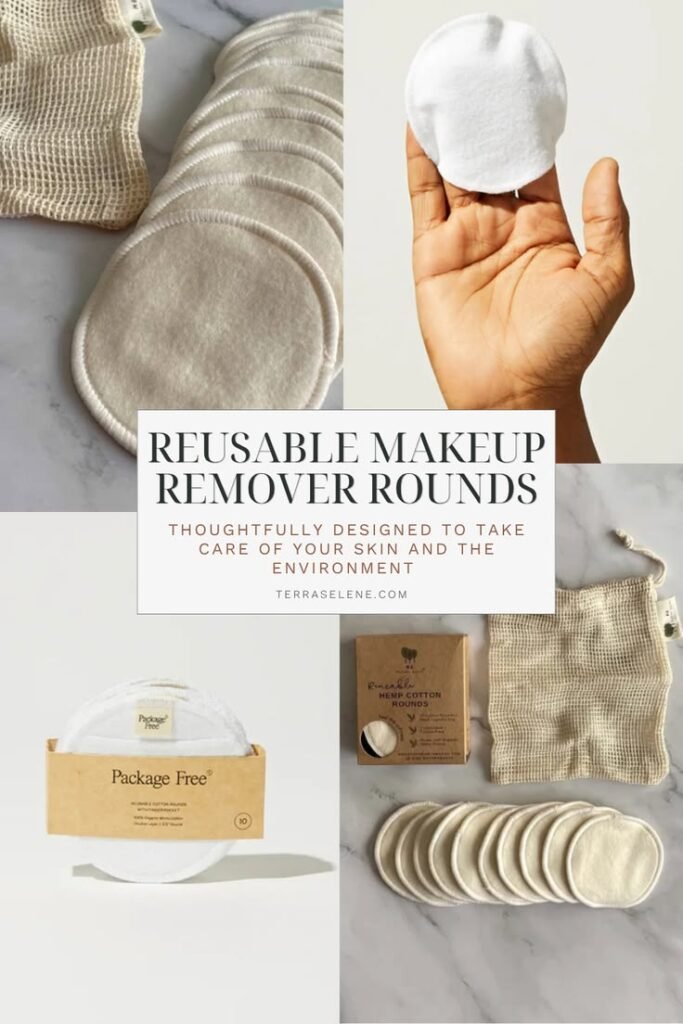
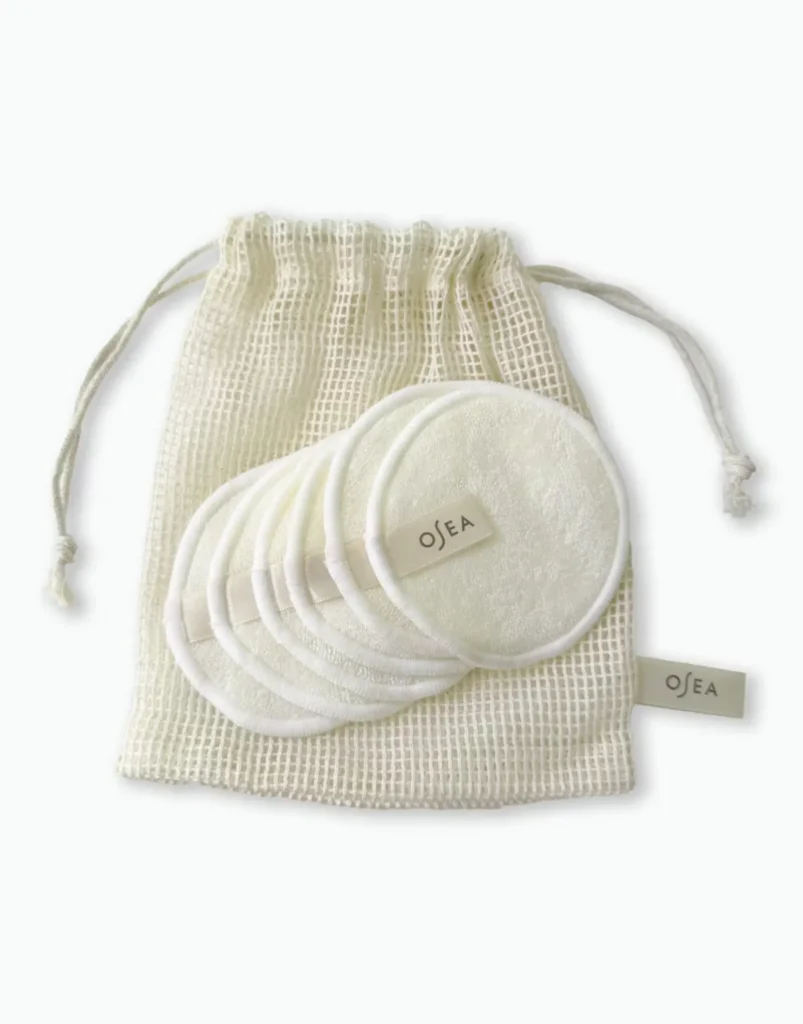
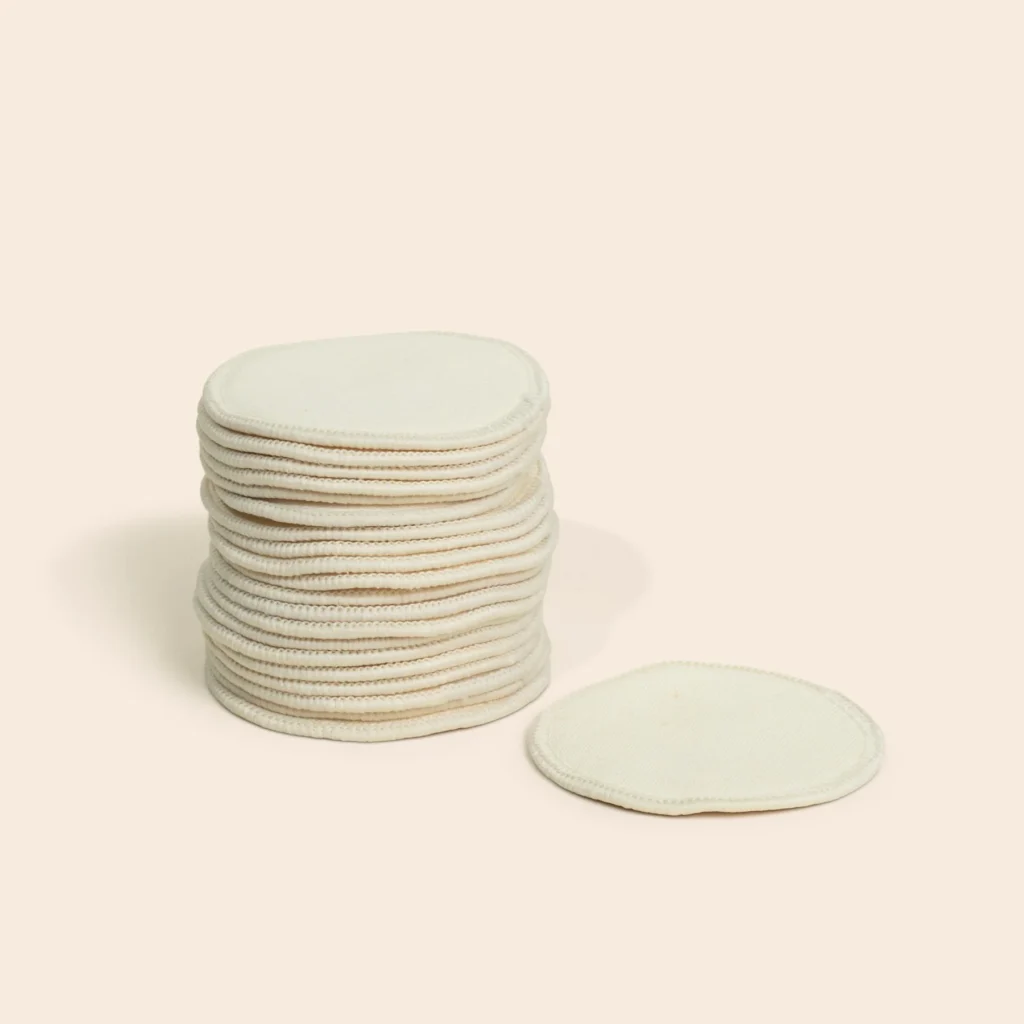
A reusable makeup remover pad made from organic cotton is typically double-faced flannel or terry, soft against the eye area and durable enough to withstand two to three years of weekly washing. Its color tends to be unbleached cream rather than optical white, a quiet visual signal of how little has been done to the fiber. For those transitioning from single-use rounds, this option offers the most intuitive starting point: the texture is immediately recognizable, the learning curve is minimal, and the environmental gain is substantial from the very first use.
Qualities:
- Incomparable softness: specifically engineered for the delicate periorbital area, minimizing friction on thin skin.
- Hypoallergenic and non-toxic: GOTS certification ensures the reusable makeup remover pad is free from synthetic pesticides and chemical residues.
- Minimal environmental impact: Cultivated using ninety-one percent less water from external sources compared to conventional cotton.
- Familiar tactile transition: offers the most intuitive shift for those accustomed to the weight and “give” of disposable rounds.
Curated selection:
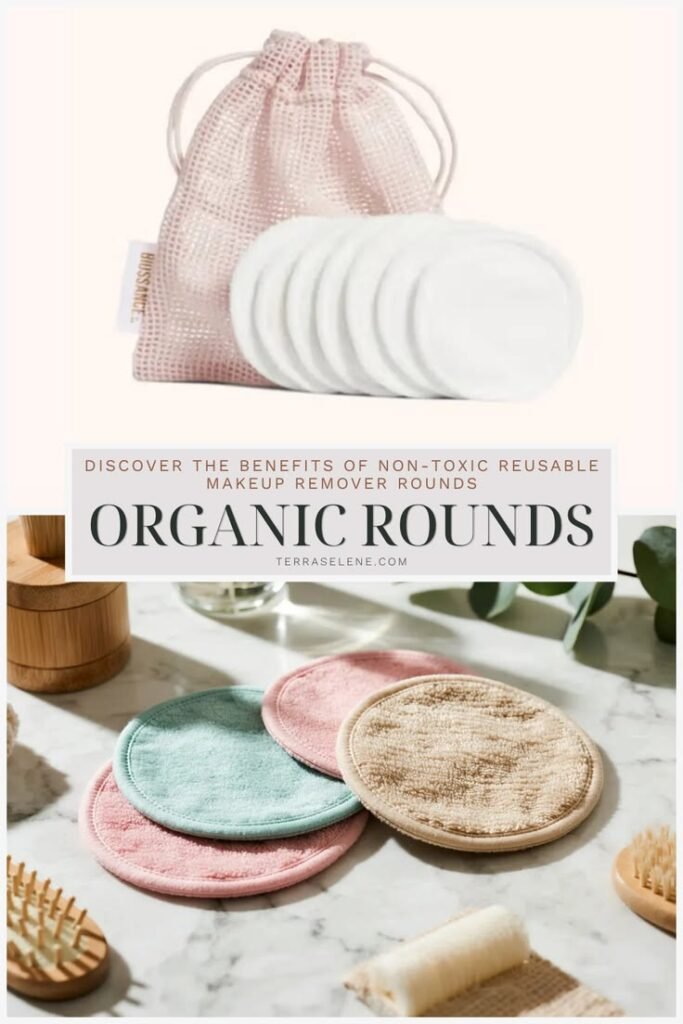
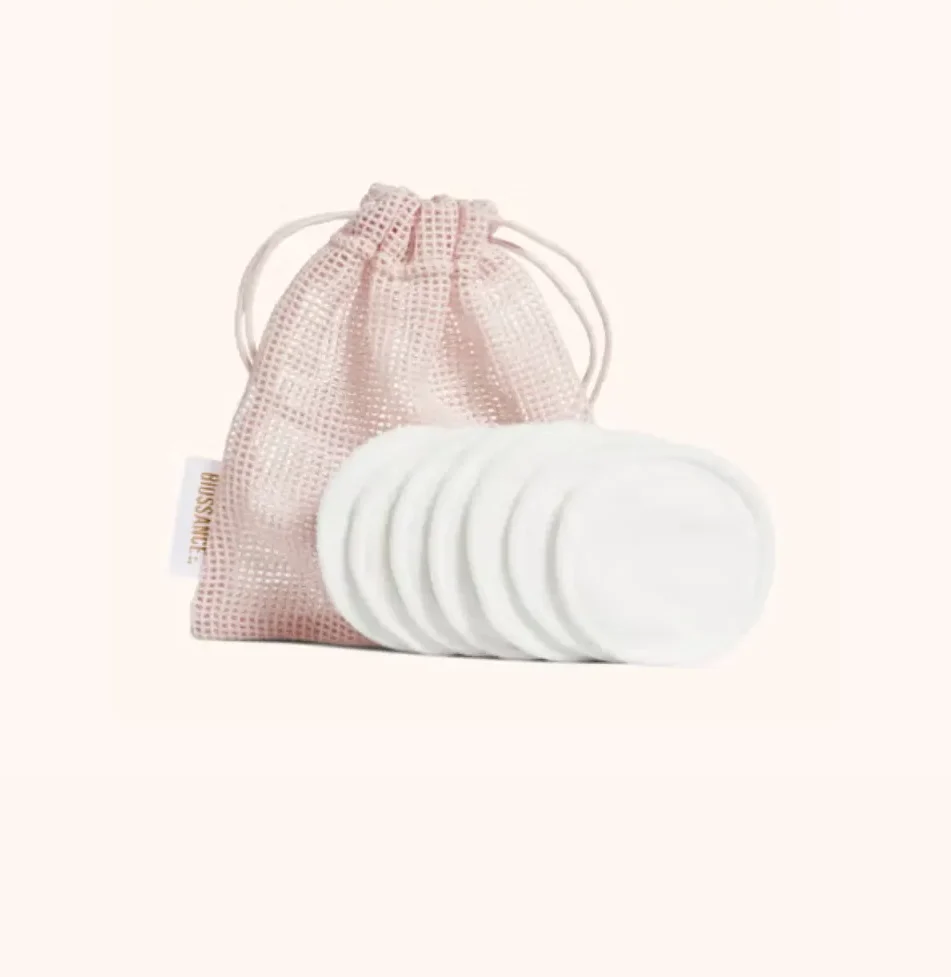
- Biossance Reduce, Reuse, Rejoice Cotton Pads
- Greenzla Reusable Cotton Pads
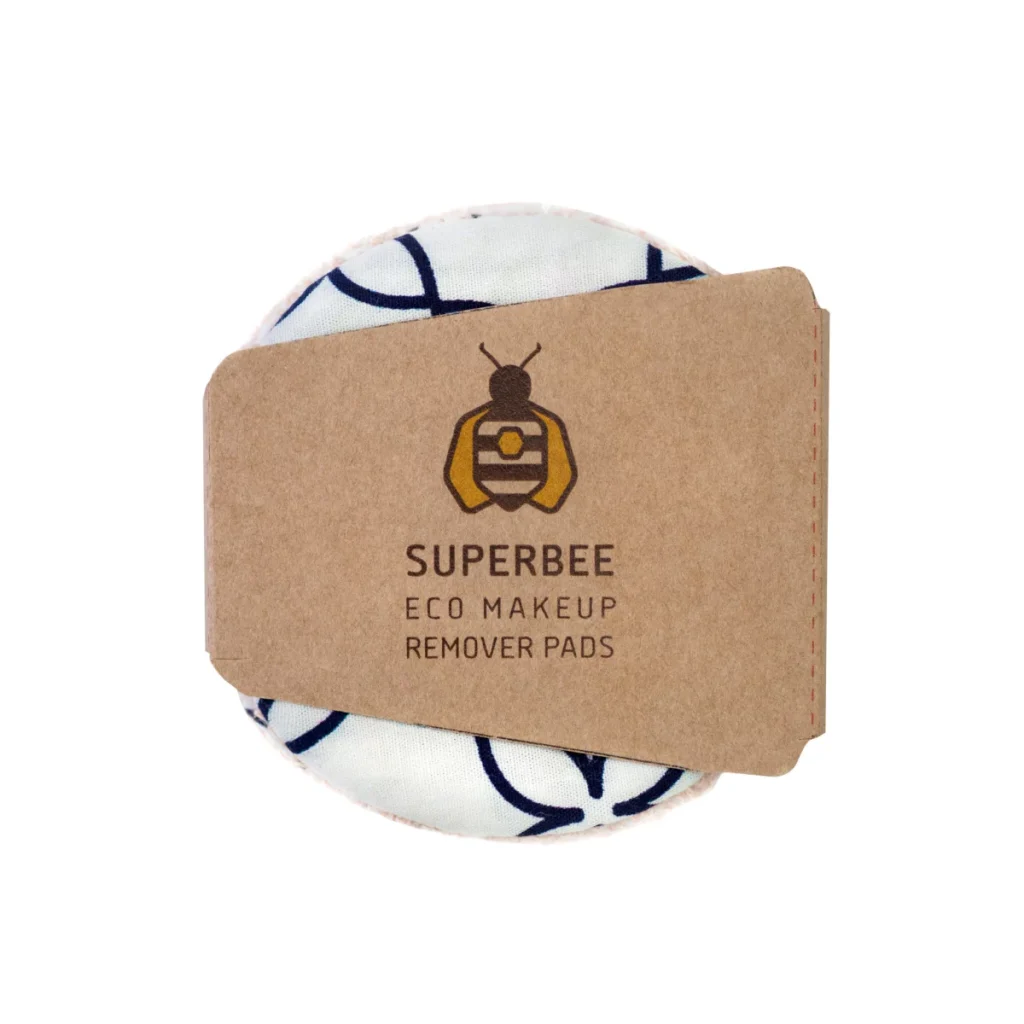
- Superbee Eye Makeup Remover Pads
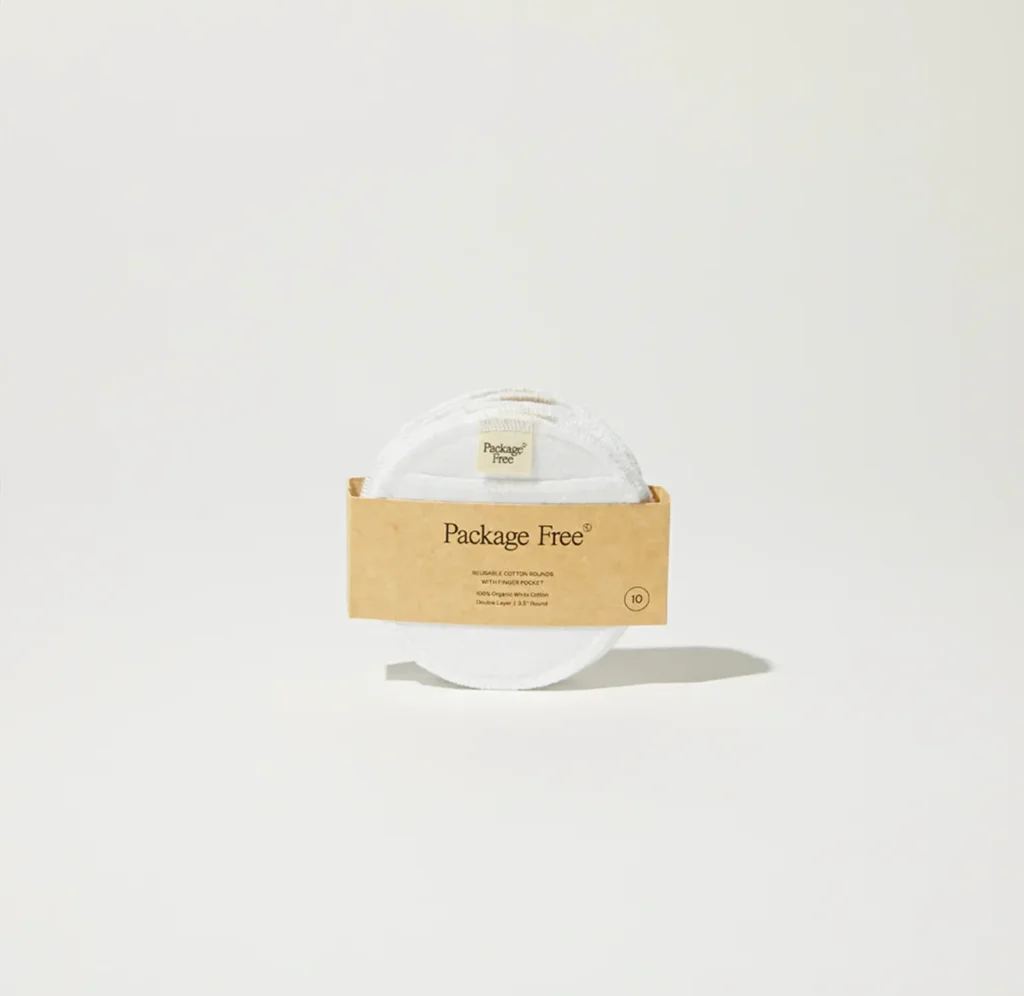
- Package Free Cotton Rounds
- OSEA Reusable Cotton Rounds
Bamboo Terry: The Antimicrobial Powerhouse
Ideal for: combination and oily skin, and evening cleansing routines incorporating cleansing balms
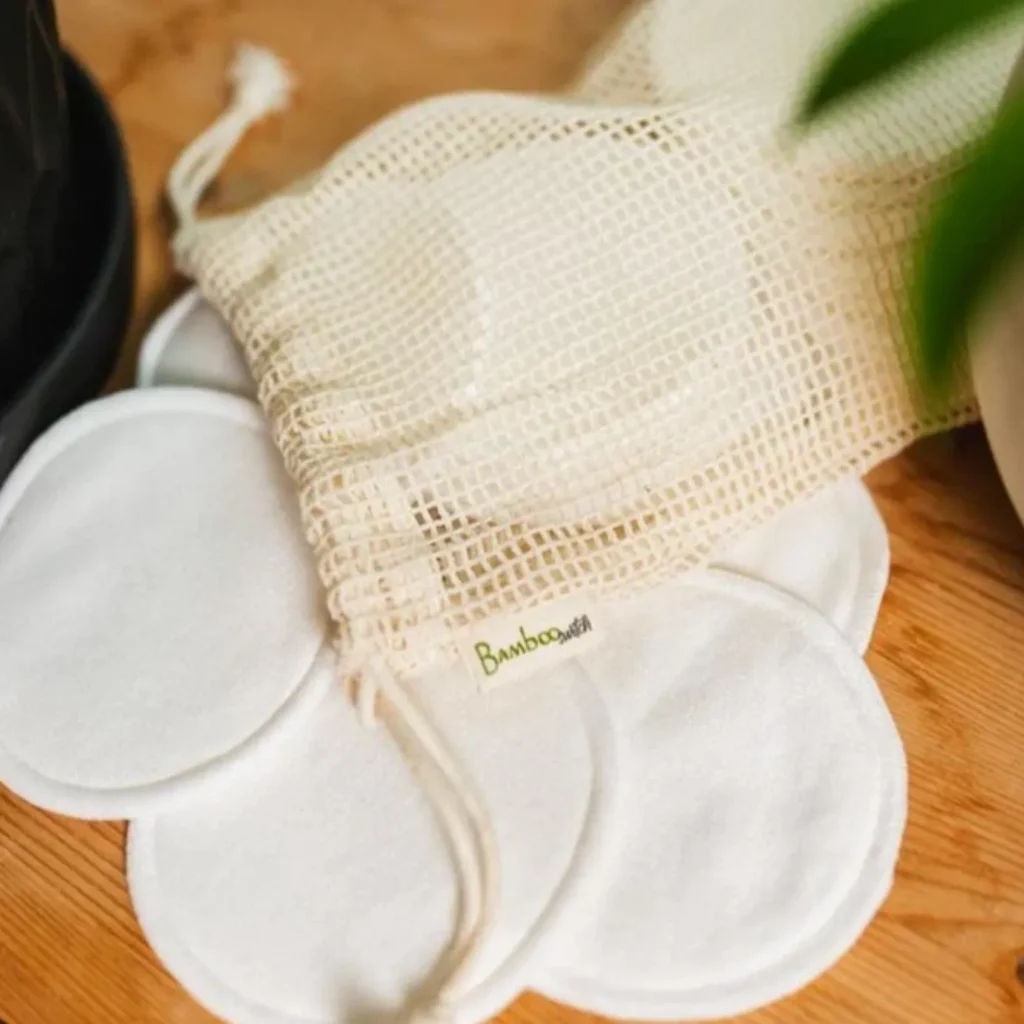
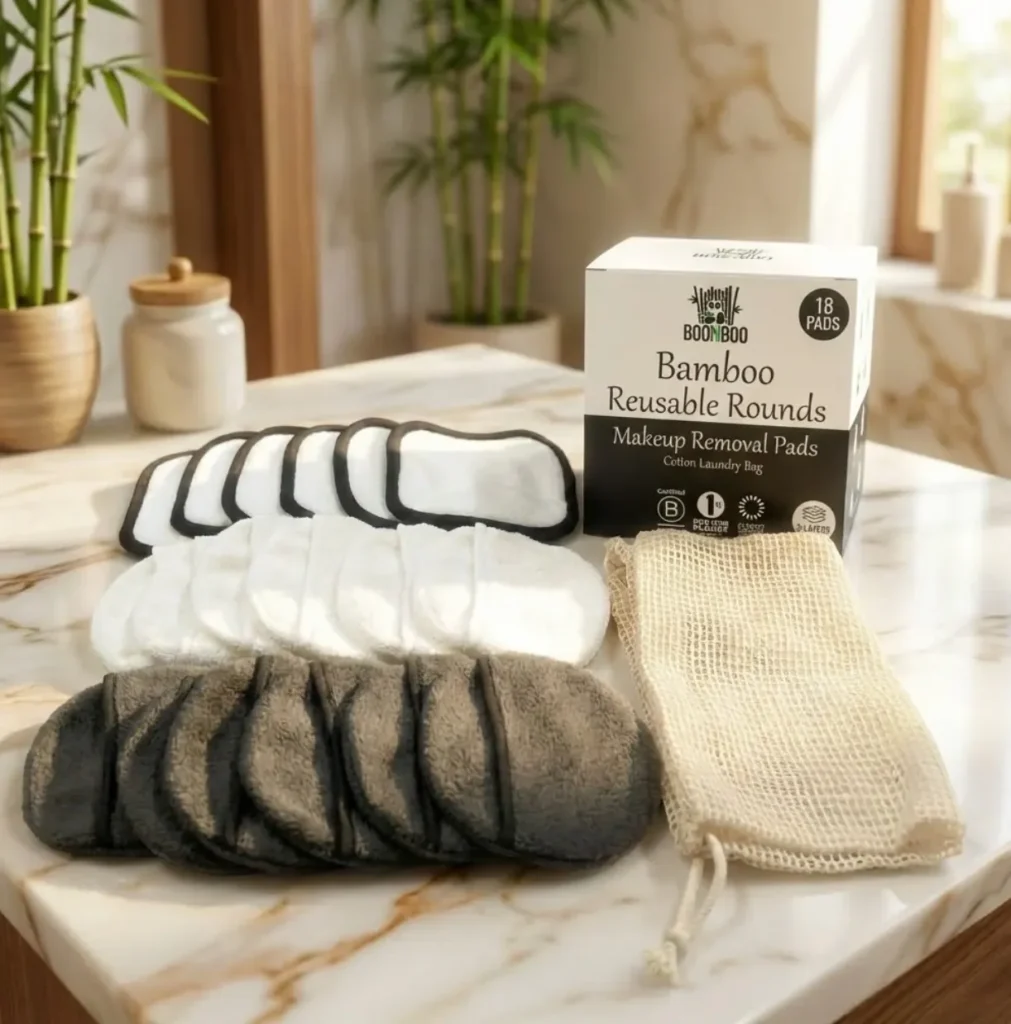
Bamboo terry occupies a different register from organic cotton. Where organic cotton is plush and pillowy, bamboo terry has a slightly more textured surface, with fine loops that lift residue through gentle friction rather than simple absorption. Research indicates that bamboo’s natural antimicrobial properties are driven by lignin-derived phenolic compounds rather than a singular bio-agent, as detailed in this analysis of bamboo fiber in the NC State BioResources Repository. For skin that is reactive, occasionally congested, or prone to evening breakouts in the T-zone, this distinction matters in practice.
A reusable makeup remover pad made from bamboo terry is particularly well-suited to oil-based cleansing routines. The looped surface draws balm and sunscreen away from the skin efficiently, while the antimicrobial quality means bacterial buildup between washes is less of a concern than with a denser, more tightly woven textile. Many bamboo terry pads are blended with a small percentage of organic cotton for structural stability, which also softens the handfeel without sacrificing the characteristic texture.
From a sustainability standpoint, bamboo grows rapidly, can be harvested without replanting, and requires minimal irrigation in its native climates. As a fiber source, it sits at a useful intersection of function and environmental responsibility. For those building a considered cleansing routine around materials that earn their place, the bamboo terry reusable makeup remover pad is among the more purposeful choices available.
Qualities:
- Self-sanitizing properties: contains “bamboo kun,” a natural bio-agent that resists microbial growth between wash cycles.
- Micro-exfoliating surface: the characteristic looped weave lifts dead skin cells and stubborn sunscreen through gentle mechanical action.
- Superior absorbent capacity: Holds significantly more liquid than cotton, making it the ideal partner for heavy oil-based cleansing balms.
- Rapidly renewable: derived from a carbon-sequestering plant that requires zero replanting and minimal irrigation.
Curated selection:
- Bambaw Reusable Makeup Remover Pads
- Bamboo Switch Reusable Bamboo Cotton Facial Rounds
- Boonboo Reusable Makeup Removal Pads
Hemp Blends: The Durable Environmentalist
Ideal for: morning cleansing and daily toner application
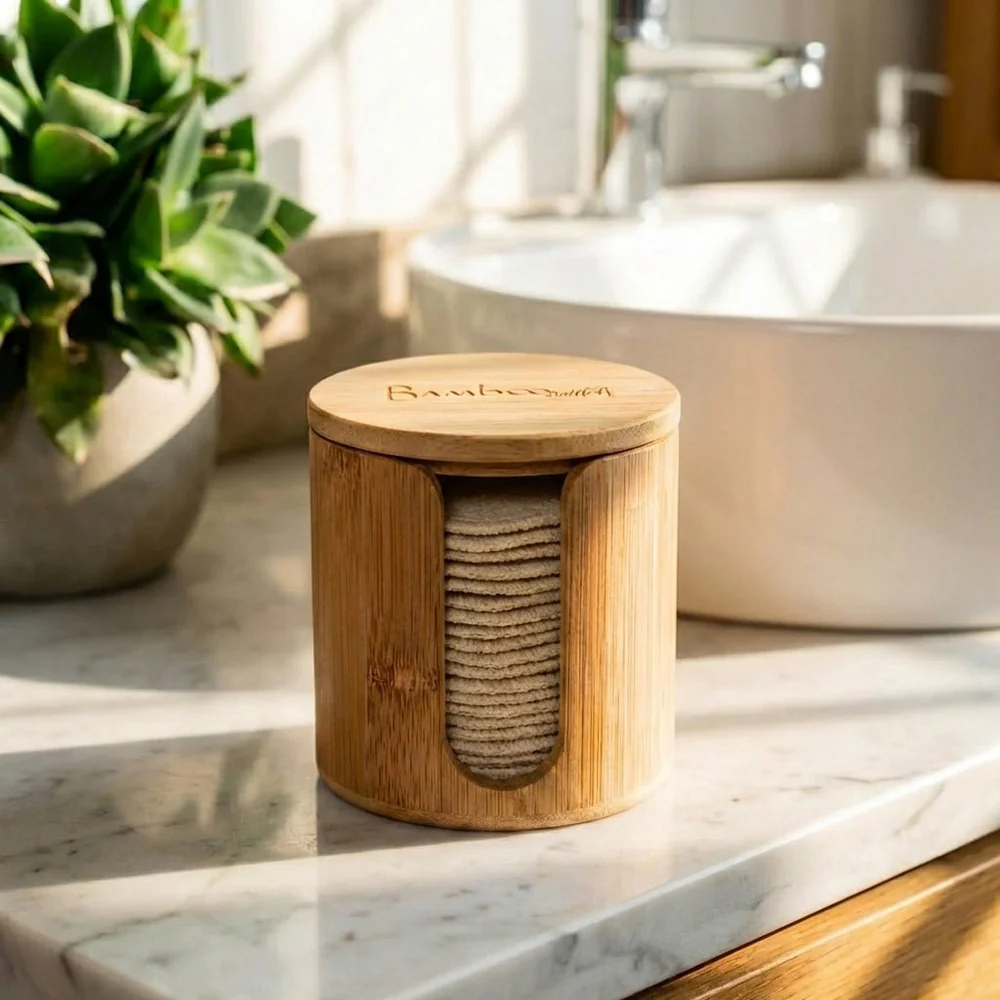
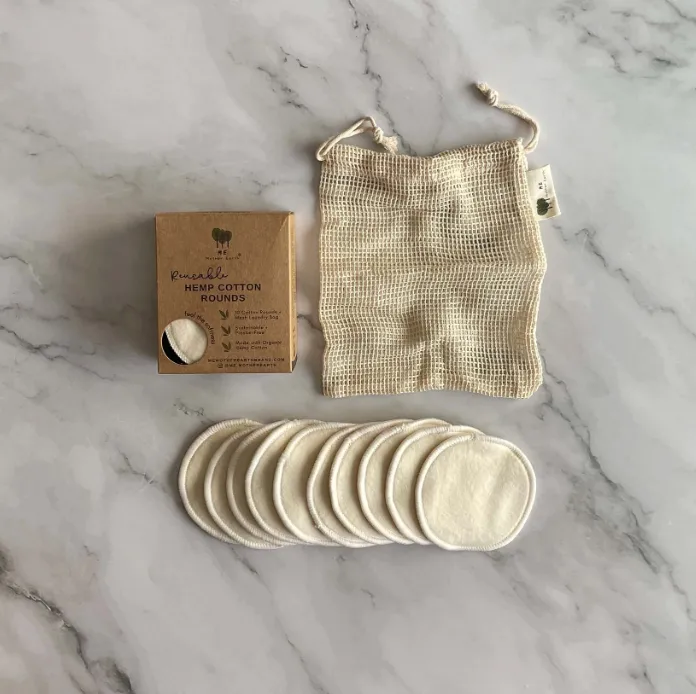
Hemp has one of the most compelling environmental profiles of any fiber used in a reusable makeup remover pad. It grows quickly, requires minimal irrigation, and actively improves soil health through a process called phytoremediation, drawing toxins upward through its root system rather than depleting the ground it occupies. The WWF estimates that producing the conventional cotton equivalent of a single t-shirt can require approximately 2,700 liters of water. A hemp-blend pad, typically woven from hemp fiber with a small percentage of organic cotton for softness, sidesteps much of that demand from the outset.
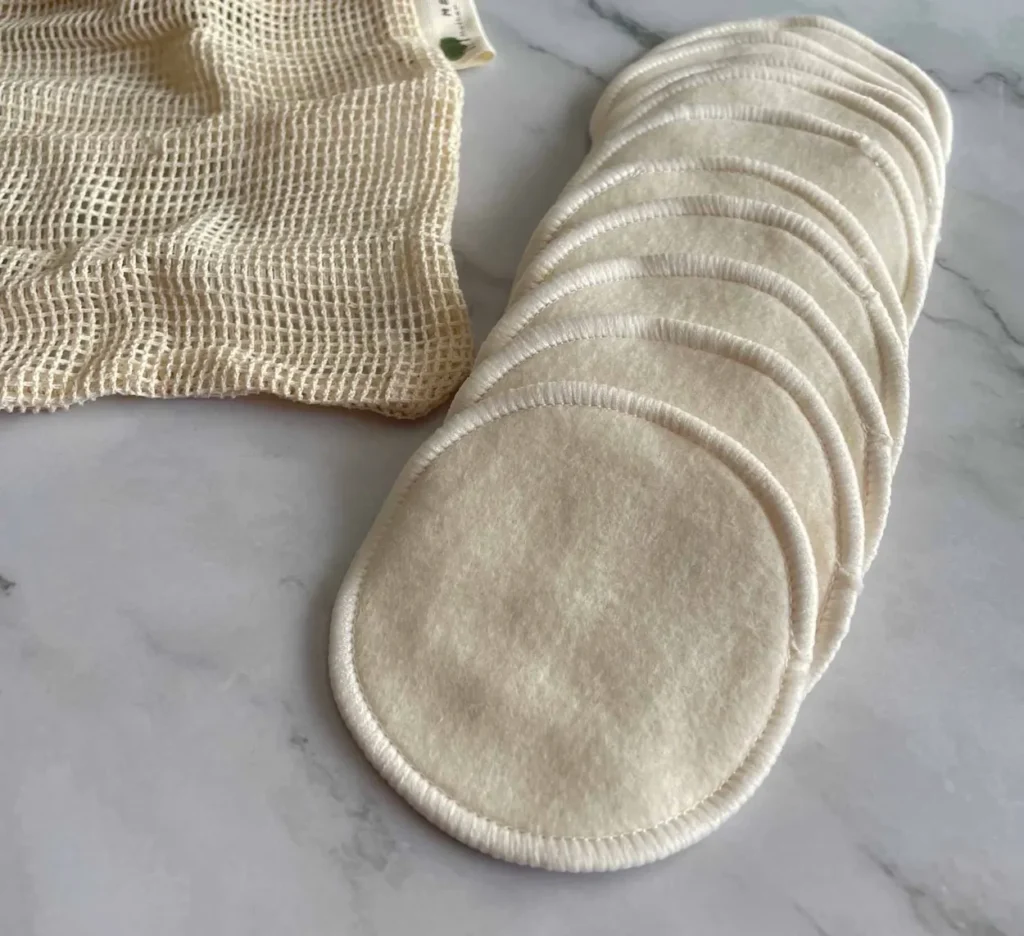
The structural integrity of hemp fiber also addresses a quiet frustration common to cheaper reusables: pilling. Inexpensive cotton-poly rounds begin to roughen and shed after a season of regular washing. A reusable makeup remover pad made from a hemp blend resists this, holding its weave and its shape across years of use. The handfeel is honestly described as slightly coarser than pure cotton, closer to a linen-cotton hybrid in texture; however, for morning cleansing and toner application, this reads as invigorating rather than abrasive. It gently wakes the skin, which is precisely what a morning skincare routine asks of a textile.
Among all the materials in this category, the hemp blend is the long-distance runner. It is the pad bought once and replaced less often, which is itself the most meaningful environmental claim any textile object can make.
Qualities:
- Maximum structural integrity: the long-staple fibers of a hemp-blend reusable makeup remover pad resist pilling and thinning across years of use.
- Phytoremediation profile: hemp actively restores soil health and draws out toxins during growth, making it the most ecologically active fiber.
- Invigorating texture: a slightly coarser handfeel that stimulates surface circulation, perfect for morning routines.
- Superior breathability: naturally resists the “musty” odors that can develop in denser textiles if not dried immediately.
Curated selection:
Upcycled Textile Rounds: Small-Batch Artistry
Upcycled textile rounds belong to a different category entirely. These are pads cut and sewn by independent makers from offcuts of cotton flannel, organic muslin, and surplus knit, often in small studios in Portugal, France, the American Pacific Northwest, or rural England. No two sets are identical; edges are finished by hand, and patterns are often mismatched, resulting in a personalized rather than mass-produced product.
What makes this category meaningful is not just the surface charm, but the position it occupies in the textile economy, as each upcycled reusable makeup remover pad diverts material from landfills. The pad itself carries a traceable story: a bolt of organic flannel left over from a children’s clothing run, a length of surplus muslin from a homeware atelier, or a remnant of cotton jersey that would otherwise have been baled and shipped overseas. Choosing from a small batch is an act of resistance against the anonymity of mass production. Those who have spent a decade refining a slower aesthetic at home recognize the value of an object made by a specific person in a specific place.
In practice, these rounds perform as well as their purpose-woven counterparts. Flannel offcuts are soft enough for the eye area, while double-layered muslin absorbs toner and micellar water efficiently. The slight irregularity in size or stitching is not a flaw, but a record of the hand that made it. Makers worth seeking include independent Etsy studios with documented offcut sourcing, regional zero-waste textile collectives, and small European ateliers working with surplus organic cotton from local mills.
Qualities:
- Absolute circularity: each set diverts high-quality textile remnants, from organic flannel to surplus muslin, directly from the waste stream.
- Narrative transparency: offers a traceable lineage from specific local ateliers or small-batch production runs.
- Variable functionality: mixed material sets allow for a tailored routine (e.g., flannel for eyes, muslin for exfoliation).
- Artisanal aesthetic: hand-finished edges and unique patterns reflect a “slow-craft” resistance to mass-produced anonymity.
The Multi-Layered Quilted Round: For Heavy Routines
Ideal for: heavy balm removal and double-cleansing routines
The multi-layered quilted reusable makeup remover pad is the textile equivalent of a weighted blanket. Where single-ply pads are designed for efficiency, the quilted round is designed for the routine itself. Three to five layers of organic cotton or bamboo terry are stitched together with a fine grid pattern, producing a pad that holds warmth, absorbs generously, and feels substantial in the hand. Editorial coverage from Goop’s clean beauty pages has described how multi-layered pads retain moisture and heat longer, more closely mimicking the experience of a professional facial steam.
This is the pad for an evening where cleansing becomes the deliberate centre of the day rather than a transition between activities. Warmed briefly under the tap, a quilted reusable makeup remover pad delivers a soft press of heat against the face that loosens balm and sunscreen with almost no friction. The stitching also extends the pad’s lifespan considerably: quilted construction resists the central thinning that single-ply rounds develop over years of wear, making it one of the more durable formats available.
For double-cleansing routines or evenings involving heavy SPF, long-wear foundation, or oil-based balms, the additional layering earns its place. The pad absorbs without dragging, holds its structure through repeated wringing, and washes flat without distortion. Among all the formats in this category, the quilted reusable makeup remover pad is the one most likely to feel like a considered object rather than a functional substitute, which is precisely the point.
Qualities:
- Thermal retention: multiple layers trap warmth when dampened, mimicking the experience of a professional facial steam.
- Weighted ergonomics: a substantial, “weighted-blanket” feel in the hand that encourages a slower, more intentional cleansing pace.
- Deep reservoir capacity: designed to hold heavy makeup and multiple applications of micellar water without reaching saturation.
- Quilted longevity: geometric stitching prevents the central thinning and “bowing” common in single-ply rounds.
Material Comparison: A Sensory Guide
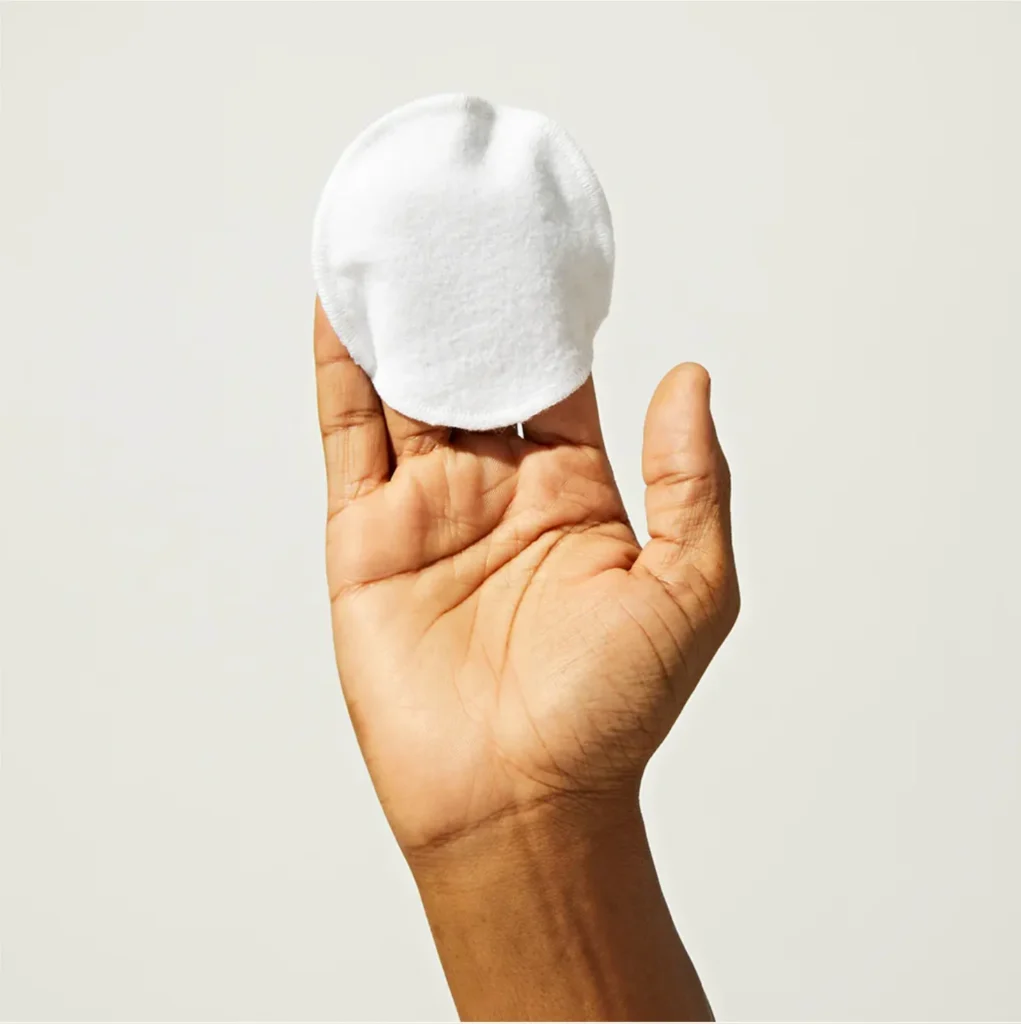
Choosing the right reusable makeup remover pad is less a matter of aesthetics than of matching a specific texture to a specific skin type and routine moment. Organic cotton is plush and forgiving, the textile of choice for the eye area and for sensitive or reactive skin. Bamboo terry is gently looped and naturally antimicrobial, well-suited to the T-zone and to oil-based cleansing routines. The hemp blend is the durable workhorse of the category, slightly coarser in hand, built for daily toner application across years of consistent use.
Across these materials, certain pairings emerge naturally. A complete drawer might hold organic cotton rounds for evening eye cleansing, and a bamboo set for morning T-zone work. If you prefer a single material should let skin type lead the decision: sensitive and mature skin gravitates toward organic cotton, while oily and combination skin benefits from bamboo or hemp.
For those building a considered cleansing routine from the ground up, the best overall reusable makeup remover pad tends to be either a GOTS-certified organic cotton round or a bamboo cotton set, both of which balance quality and longevity without forcing a single trade-off. Texture choice is ultimately dictated by skin sensitivity and routine, not by aspiration.
For more on clean beauty:
- Why Clean Makeup Removers Are an Investment in Your Skin’s Future
- Radiant Skin through Clean, Organic Makeup
- Natural Cleansing Balm: Your Complete Guide to Gentle, Effective Makeup Removal
- Organic Products for Skin: Glow Better with Clean Formulas
- Zero Waste Skincare: Circular Beauty Guide
The Art of Maintenance: Care and Longevity
A reusable makeup remover pad performs as well as the maintenance routine that surrounds it. Caring for your reusable makeup remover pad requires minimal effort, but a consistent routine extends its lifespan significantly.
Care instructions:
- Rinse each pad under cool water immediately after use to lift residue before it sets into the fiber.
- Store used pads in a small open dish or breathable cotton pouch between washes, never in a sealed container where moisture can linger.
- Wash the full set weekly inside a mesh laundry bag, which prevents small rounds from being lost in washing machine filters and protects them from agitation damage. Use a gentle, fragrance-free detergent at 30 to 40 degrees Celsius; skip fabric softener, which coats fibers and reduces absorbency.
- Air-dry on a rack or, when possible, in direct sunlight, which acts as a natural whitener and antimicrobial treatment without bleach.
- For occasional stain treatment, a diluted lemon juice rinse before the wash cycle handles most cosmetic residue without harsh chemistry.
Keep two sets in rotation, one in use and one resting, so that washing day never interrupts the routine. A good set, well-maintained, will serve two to three years, replacing several thousand disposable rounds across its lifespan.
frequently asked questions
Choosing What Lasts
No single material emerges as the universal choice. Organic cotton remains the softest and most familiar option for everyday use, bamboo terry excels at absorbency, and hemp rewards long-term ownership. The better question is not which material is best, but which qualities matter most within your individual skincare routine. A reusable makeup remover pad used every evening for years will reveal its character slowly, through the way it softens after washing, how it performs against the skin, and whether it continues to earn its place beside the basin.
Like many of the most useful household objects, a reusable makeup remover pad rarely demands attention. Its value is found in repetition rather than novelty, becoming part of a clean beauty routine so familiar that its presence is eventually taken for granted. In a culture increasingly defined by replacement, there remains something quietly satisfying about choosing an object designed to stay.
Pin This for Later