Radiant Skin through Clean, Organic Makeup
Selecting makeup today means sifting through promises of radiance set against headlines that question safety, sustainability, and integrity. Organic beauty rises as a reassuring alternative, offering formulas infused with botanical actives whose origins trace back to pesticide-free fields and transparent audits. Each swipe delivers breathable coverage that looks like real skin rather than a painted mask, while confidence grows from knowing every pot and pencil relies on safe ingredients vetted by accredited certifiers. This guide unpacks how the movement evolved, why natural standards matter, and which labels genuinely uphold them, so your vanity can align with both personal well-being and planetary care without sacrificing performance.
Some links in this post are affiliate links. That means we may earn a small commission, at no additional cost to you.



Close-up of an open jar of loose setting powder cupped in a palm while a small makeup brush lifts product; red-polished nails visible.
What Is Organic Makeup?
Organic makeup defines beauty products whose color bases are built from certified organic agricultural ingredients such as oils, waxes, and floral waters, at a minimum rate of 95%, with only a trace of synthetics retained for stability or pigment. The USDA National Organic Program audits American makeup labels, while COSMOS and ECOCERT handle European oversight, tracing every batch from seed to shelf and rejecting more than 1000 chemicals that have been deemed unsafe for your skin and overall health. Because these formulas rely on farming which is free of synthetic pesticides, herbicides, and non-GMO, they arrive on the vanity shelves as safe ingredients that meet the rising bar of clean beauty while honouring ecological integrity. Many organic makeup products are also gluten-free, making them suitable for those with gluten sensitivities or celiac disease and further supporting ingredient safety for a wider range of users.
Unlike “natural” claims, which carry no legal weight, or brand-defined “clean” promises, organic certification delivers third-party verification that the jojoba in your warm colored bronzer never met glyphosate, and the nourishing chamomile hydrosol in your setting mist travelled untainted by neon-nicotinoids. Freed from petroleum derivatives, the textures feel weightless yet nourishing on your skin, and are infused with skin-conditioning botanicals recognized for supporting an even and neutral skin tone. Sensitive skin benefits from natural makeup even further, as organic formulas typically shun harsh synthetic fragrances, artificial dyes, and parabens, which are additives often linked to redness and skin inflammation, replacing them with mellow scents from plant distillates and pigments sourced from iron oxides or responsibly mined mica. Aloe, shea butter, and cold-pressed plant oils enhance the base so makeup becomes an extension of your skincare routine, delivering natural and breathable full coverage that looks like real skin while quietly caring for it in every swipe.
Why Switch to Organic Makeup? Key Benefits
Skin Benefits
Parabens, phthalates, and synthetic fragrance molecules, which are found in many conventional makeup products, can inflame sensitive skin and have been additionally linked in laboratory studies to hormone disruption. Certified organic lines eliminate these potential disruptors, and often screen raw materials for heavy metals, a common impurity that is used in some artificial pigments. With natural and organic makeup, you will find their replacement as naturally soothing botanicals and hydrating plant oils that keep the skin barrier moisturized and resilient. These ingredients help soothe and comfort sensitive or stressed skin, alleviating irritation and supporting overall skin health.
As many formulas rely on non-comedogenic emollients and avoid occlusive silicones, those with acne-prone skin typically experience fewer clogged pores and flare-ups, while dry skin gains lasting comfort and hydration from the steady release of lipids and water-binding sugars. Users switching from conventional to organic bases frequently report reduced redness, diminished post-cleansing tightness, and an overall complexion that feels consistently hydrated within the first few months. For anyone seeking clean beauty grounded in safe ingredients, organic makeup offers a pathway toward calmer, more even skin tone that feels soothed rather than masked.
Long-Term Skin Health
Organic makeup does more than cover imperfections; it serves as an all-day leave-on treatment that continually nourishes and protects your complexion. Antioxidant complexes drawn from green-tea catechins help neutralize pollution particles before they oxidize sebum, while pomegranate seed lipids encourage steady collagen renewal, and rosehip supplies a gentle, naturally balanced retinoic acid that refines tone without the flaking often seen when using stronger synthetics. Because they use certified, natural formulas that avoid comedogenic fillers and pore-sealing silicones, they are kinder to sensitive or acne-prone skin, allowing the skin barrier to stay soothed rather than stressed.
Breathability matters, especially when skin blemishes flare. Conventional makeup that offers full-coverage foundation often relies on occlusive waxes that trap heat and bacteria in the pores of your skin; while a light, air-whipped organic base infused with non-clogging oils keeps the canvas hydrated, promoting a clearer texture over time. For those with dry skin, layering a lightweight moisturizer, a nourishing face oil, and a silicone-free primer beneath an organic tint helps create an even, smooth surface that prevents patchiness while sealing in hydration and promoting a dewy, natural finish. The result is makeup that contributes to a long-term skincare routine that aligns with clean beauty values, delivering color that looks freshly applied even after eight hours of wear, as the skin beneath the coverage remains balanced, comfortable, and able to breathe. Additionally, organic makeup is formulated for impressive staying power, maintaining its appearance and effectiveness throughout the day, even under challenging conditions.
Environmental Benefits
Organic ingredients used in natural cosmetics are produced in fields managed under strict agricultural standards that forbid glyphosate, synthetic fertilizers, and genetically modified seeds, a legal prerequisite for carrying an organic makeup label in most regions. Because soils are nurtured through crop rotation and compost rather than chemicals, they store more carbon, retain water efficiently during periods of drought, and provide pesticide-free forage that helps pollinators rebound. Mineral pigments replace plastic glitter, and rigorous testing screens for trace heavy metals, further easing the load on waterways. Additionally, non-nano zinc oxide provides reef-safe sun protection, so a sunny day on the beach spent reapplying an organic lipstick or tinted balm becomes a climate-positive loop rather than a silent contaminant.
Downstream choices echo these ethical farming initiatives. Many organic makeup producers extend their stewardship into manufacturing by selecting cruelty-free, often fully vegan formulations, using plant oils instead of animal by-products, and shipping in recycled or refillable vessels that shrink landfill impact. Clean beauty labels without full certification increasingly mirror this model, pledging the same cruelty-free stance and swapping virgin plastic for glass or post-consumer resin containers. With every palette infused with responsibly sourced pigments and packaged in lighter, recyclable materials, the environmental footprint of daily beauty routines dramatically narrows, proving that natural performance and planetary respect can thrive in the same compact.
Understanding Labels: Organic, Non-Toxic, and Clean
Non-Toxic and Clean Beauty
Non-toxic and clean beauty products aim to protect the health of your skin and overall wellbeing, yet the promises on their labels can vary widely as their lacks a regulatory body that defines the exact formulas they must follow. Most non-toxic brands start by banning ingredients already prohibited in the European Union, such as certain endocrine-disrupting preservatives or colorants known to carry heavy metals. Clean beauty policies often go further by creating proprietary “no” lists that exclude additional solvents, talc blends linked to asbestos contamination, and petroleum-derived polymers. While these self-governed guardrails help, they still rely on brand integrity rather than legal enforcement; therefore, reviewing the International Nomenclature of Cosmetic Ingredients (INCI) list remains the surest way to confirm what touches your skin.
A quick label audit can be revealing. Search for plant oils identified by their Latin names, organic ingredients marked with an asterisk, and notes that raw materials are non-GMO. Prioritize formulas that are clearly formulated without undisclosed fragrances or vague color codes. Some organic and clean makeup products are also labeled as water-resistant, highlighting their durability and suitability for active lifestyles or outdoor use. When a product pairs nourishing botanicals with iron oxides for a breathable foundation, it can wear just as long as its conventional counterpart while aligning with clean ideals. Seek proofs such as third-party lab certificates, cruelty-free badges, and refill offerings that minimize packaging. With a little practice, navigating beyond buzzwords and selecting natural options that truly honor transparency, performance, and the health of both complexion and the planet becomes second nature.
Defining Certified Organic Labeling
Certified-organic labels are applied only after third-party auditors rigorously trace every agricultural input from the initial seed order to the finalized product. They tour the production fields to test and verify pesticide-free soil, and analyze transportation records to ensure that dedicated trucks keep organic oils separate from conventional cargo. The governing standard behind these certified organic labels is often called the 95% rule. Under the USDA National Organic Program, mirrored by COSMOS and ECOCERT in Europe, a cosmetic may print the single word organic on its label only when at least 95% of its total agricultural content by weight, after subtracting water and salt, is certified organic. The remaining 5% must come from a tightly controlled list of minerals, gums, or naturally derived stabilizers for which no organic alternative exists. Anything falling below that threshold must downgrade to wording such as “made with organic ingredients”, and may not carry the full seal.
When reviewing the list of ingredients on organic makeup products, there are often further clues. Certified formulas list agricultural components first, such as sunflower oil, beeswax, and lavender hydrosol, among others, each often starred or italicized to denote their organic origin. Avoid vague terms such as “fragrance (parfum)” unless the source of the natural oils is disclosed, and skip colorants identified only by numbers if heavy metals pose a concern. Due to these products being infused with gentler and natural plant extracts, whilst forgoing strong artificial preservatives, their shelf life typically ranges from 6 to 12 months versus 24 months or more for conventional makeup.
Reading an INCI list
Every legitimate cosmetics label must print its full ingredients list in the International Nomenclature of Cosmetic Ingredients (INCI) format, and the order of those names tells a story. Ingredients appear in descending weight until they reach the one-percent line, after which items present at one percent or less may shuffle. This translates the first 5 or 6 entries, often water, a primary oil, and an emollient wax, which often dominate the formula, while trace preservatives or colorants settle near the end. Certified products flag their organic ingredients with an asterisk or the word “organic,” so you can quickly gauge how much of the base truly comes from pesticide-free fields.
Fragrance is another clue. If a perfume accord is used, INCI rules require it to be listed simply as parfum or fragrance, further broken out by individual allergens, such as limonene, linalool, and geraniol, each appearing in micro-quantities below the 1% threshold. Authentic organic ranges often skip synthetic fragrance altogether or rely on a short list of steam-distilled essential oils, naming them plainly so sensitive noses avoid surprises.
Latin binomials deserve a second glance too: Simmondsia chinensis signals jojoba oil, while Butyrospermum parkii refers to shea butter. Seeing these botanical names high on the list confirms the formula’s plant-forward identity. Conversely, vague terms such as mineral oil or color codes such as CI 19140 may flag petrochemical content or synthetic dyes not permitted in stricter clean-beauty standards. By reading the INCI list from top to bottom, and noting those all-important asterisks, you gain a transparent snapshot of exactly what you are applying to your skin, how much of it is genuinely organic, and whether any potential irritants hide behind generic wording.
Common Seals and What They Signal
USDA Organic: 95%+ organic agricultural ingredients (US standard)
COSMOS/ECOCERT: 95%+ organic agricultural ingredients (global standard)
BDIH: German certification for natural/organic hybrids
NATRUE: Strictest EU standard; bans all petroleum derivatives and synthetics
Leaping Bunny: Cruelty-free verification (no animal testing)
NSF/ANSI 305: Personal care organic standard requiring NOP compliance
Soil Association: UK certification using food-grade organic standards
Hero Organic Makeup Ingredients to Look For
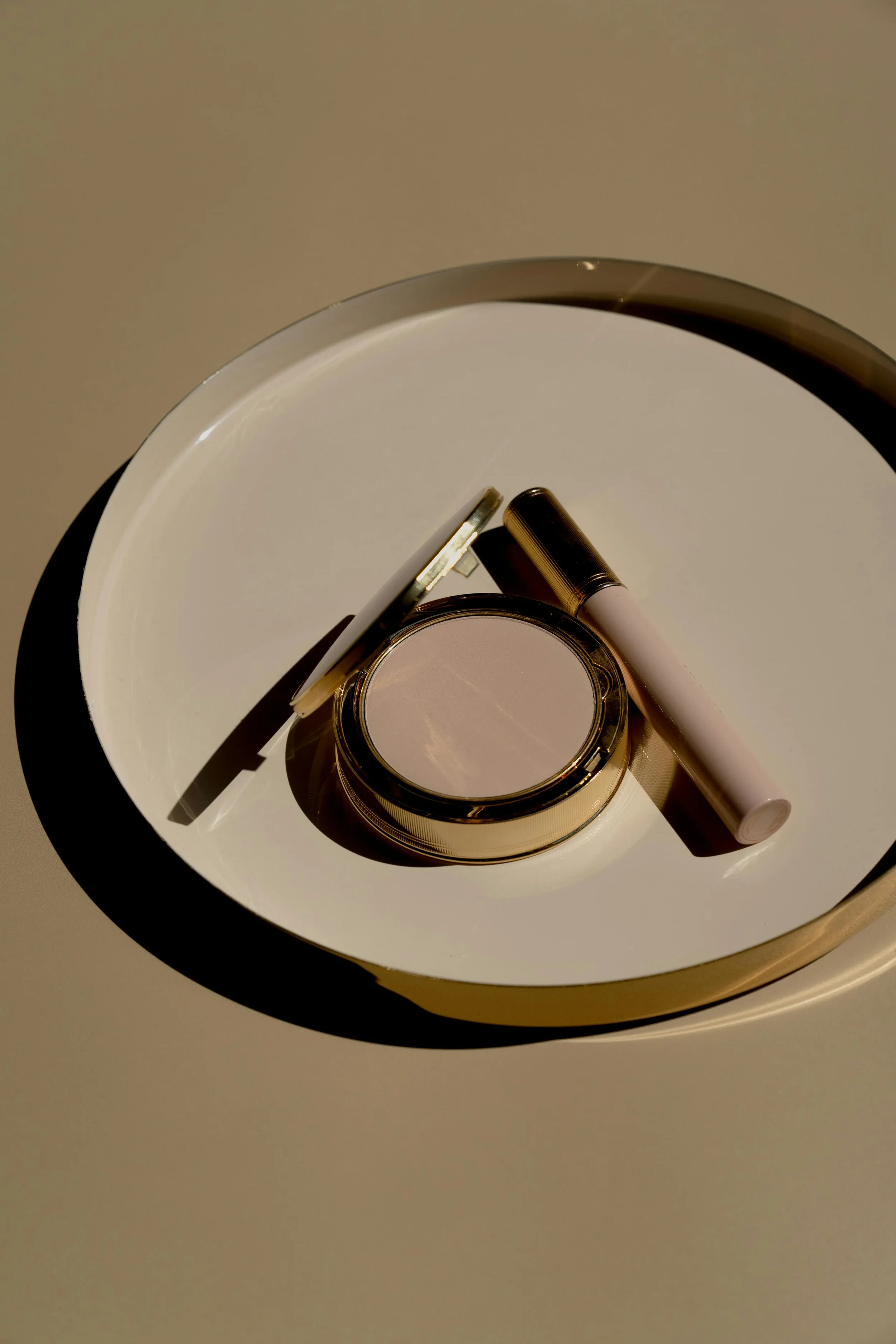
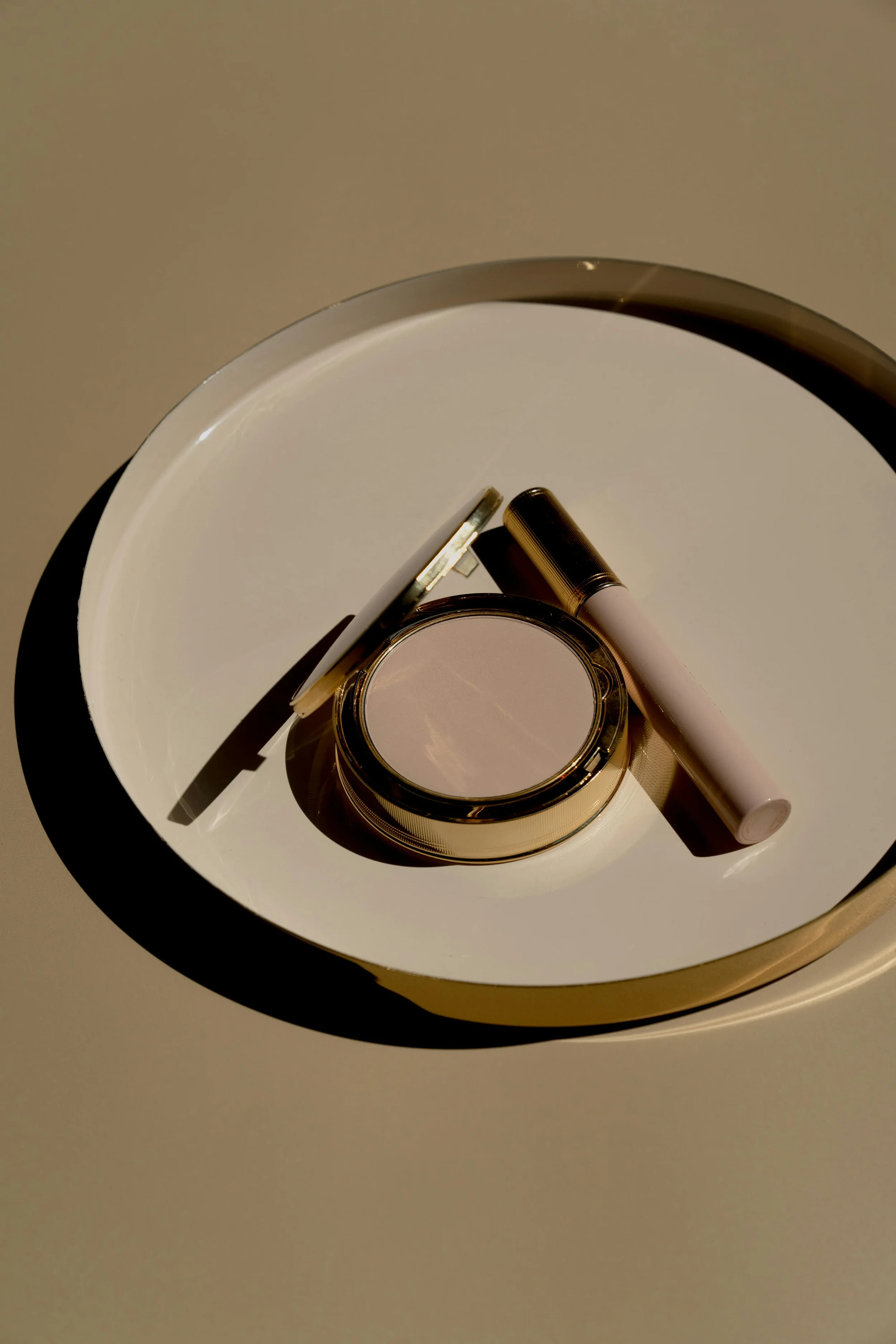
Gold makeup compact with mirror and matching slim tube arranged on a white ceramic plate, dramatic beige lighting casting soft shadows.
Understanding which natural ingredients shape texture, longevity, and the way a formula feels on your skin helps you decide whether a compact or tube merits the investment. Certified organic formulas rely on a combination of plant oils, botanical extracts, protective waxes, mineral pigments, and natural scents or flavors like vanilla that enhance the sensory appeal of organic makeup products. Many organic brands focus on high-color payoff products with a high percentage of organic ingredients, especially in products for lips and cheeks. For blush or cheek products, ingredients are chosen for their natural, buildable effects on the cheeks, providing radiance and dimension with long-lasting results.
Nourishing Base Oils and Butters
Organic Jojoba Oil (Simmondsia Chinensis): Mimics the skin’s natural sebum with 98% absorption similarity, with a non-comedogenic rating of 0-2.
Organic Shea Butter (Butyrospermum Parkii): Contains vitamins A and E at 5-10%, acting as a deep moisturizer and an emollient in concealers and organic lip products, boosting skin hydration up to 40%.
Organic Cocoa Butter (Theobroma Cacao): Rich antioxidant content, excellent for lip stability, creates a creamy texture in color cosmetics.
Organic Coconut Oil and MCT: Deeply moisturizing base for cream products, helps dry skin stay hydrated throughout makeup wear.
Protective Waxes and Binders
Organic Candelilla Wax (Euphorbia Cerifera): Vegan alternative to beeswax with a higher melt point of 68-73°C, provides a strong hold in mascara and brow products. Organic candelilla wax is commonly used in specialized brow formulations, such as pigmented brow colors and waxes, to help shape, define, and set brows.
Organic Beeswax: Film-forming properties ideal for brow gels and balms, creating a protective barrier on the lips. Organic beeswax is also used in brow-specific products to tame and hold brows in place.
Botanical Actives
Organic Aloe Vera (Aloe Barbadensis): 99% water-based soothing gel with polysaccharides that reduce inflammation by approximately 30%, commonly used as a foundation base.
Organic Chamomile and Calendula Extracts: Anti-inflammatory compounds (bisabolol, apigenin) that calm reactive and sensitive skin.
Organic Green Tea: EGCG antioxidants capable of neutralizing up to 80% of urban pollutants, excellent for pollution defense.
Organic Rosemary Extract: Rosmarinic acid acts as a natural preservative while providing antioxidant benefits.
Mineral Pigments and Physical Sunscreens
ECOCERT or Fair-Mica Certified Mica: Responsibly sourced shimmer and light-reflecting pigments for a radiant glow. These mineral pigments are commonly used in organic makeup highlighters to accentuate features and add a luminous highlight to the skin.
Iron Oxides (CI 77491-99): Stable, safe colorants used in both powder and liquid foundation, suitable for all skin types.
Non-Nano Zinc Oxide: Provides 20-40% SPF in tinted foundation formulas, blocks 97% of UVB rays per FDA monograph, and creates broad-spectrum protection.
Titanium Dioxide: Physical blocker for sun protection, often used alongside zinc oxide.
How These Translate to Performance
When formulators blend jojoba-infused oils with shea and cocoa butters, each application feels light yet delivers buildable coverage that can be layered shade after shade, including using a darker shade for contouring or achieving a more defined look, without settling into lines.
Rice-powder microspheres absorb excess sebum three times more efficiently than talc, so skin stays hydrated but not shiny through a full day of wear. For even greater longevity and to control shine without altering the natural look, a light dusting of setting powder can be applied to finish your organic makeup routine.
Plant waxes such as candelilla set pigments in place while remaining flexible, allowing organic beauty staples like cream blush or brow pomade to move with facial expressions instead of cracking. Responsibly sourced mica and stable iron oxides enhance luminosity and color accuracy, providing a bright and natural glow with a radiant, dewy 'glazed donut' effect, while non-nano zinc oxide and titanium dioxide extend sun protection when outdoors. The result is natural makeup that looks freshly applied hours later, comfortable, breathable, and naturally radiant.
Clean Makeup Brands
Ilia
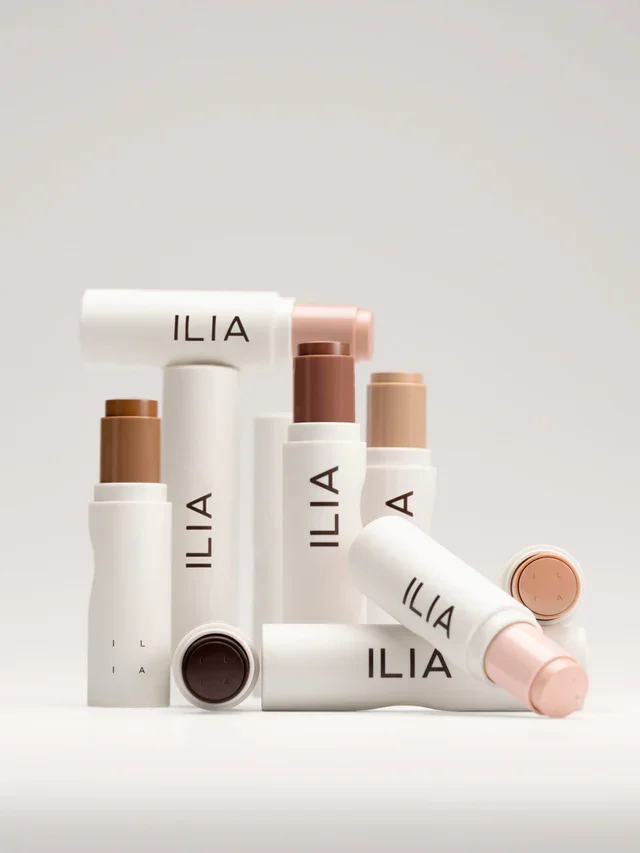
Assorted ILIA Skin Rewind Complexion Sticks in multiple shades, sleek white tubes stacked artfully on a neutral backdrop.
ILIA formulates every stick, serum, and concealer from scratch rather than altering private-label bases, ensuring the brand has full control over sourcing, sustainability audits, and purity checks. The Skin Rewind Complexion Stick exemplifies this ethos. A weightless butter-soft core deposits adjustable coverage that dries to a natural finish, then locks in visible benefits through a trio of anti-aging ingredients. A Ceramide-Peptide Complex visibly strengthens the skin barrier and lends a subtle firming effect throughout wear. Winged kelp extract replenishes skin moisture and boosts luminosity, helping brighten the skin’s complexion. Butterfly lavender extract smooths the appearance of fine lines, so the cream sits flawlessly instead of creasing. Non-nano zinc oxide supplies a transparent SPF, and the squalane–sunflower ester blend keeps the formula glide-ready without clogging pores. Inclusive shades are developed under daylight, and each base tone has a precise concealer match to maintain undertone integrity when layered. FSC-certified cartons, aluminum or glass components where practical, and a mail-back recycling program round out ILIA’s dedication to ethics and sustainability, proving high-performance color and planet-first values can live in the same tube.
Kosas Cosmetics
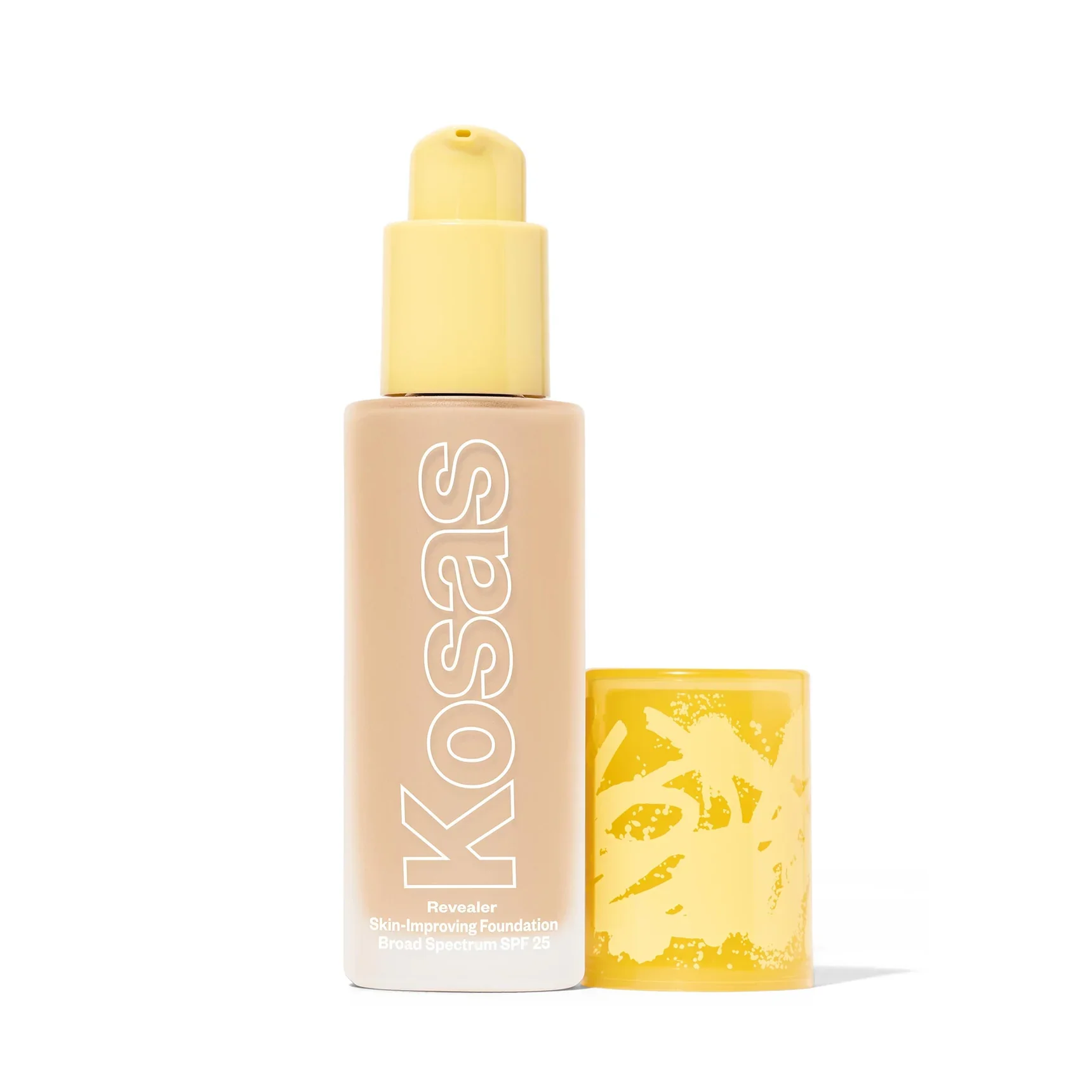
Kosas Revealer Skin-Improving Foundation with yellow pump and SPF 25, beige liquid visible inside frosted bottle.
Kosas built its reputation on marrying active skincare levels with true complexion cosmetics, and the Revealer Skin-Improving Foundation SPF 25 distills that philosophy into one bottle. The texture feels light as lotion yet spreads in a single smooth blend to deliver adaptable medium coverage that keeps every skin tone luminous rather than masked. Key ingredients read like a dermatologist’s prescription: niacinamide and caffeine brighten dull areas and refine pores, while a soothing cocktail of squalane, arnica, and provitamin B5 calms reactive and sensitive skin. Peptides pair with hyaluronic acid to plump fine lines from beneath, giving the natural finish a subtly lifted look without heaviness. A mineral, reef-safe SPF fortified by artemisia flower extract shields against UVA, UVB, and urban pollution.
Formulated with select organic ingredients and screened for allergenicity, the foundation is clinically and dermatologically tested, non-comedogenic, non-acnegenic, hypoallergenic, and certified safe for sensitive skin. Their range of 36 calibrated shades, developed in natural light, ensures a precise match whether your undertone is olive, neutral, golden, or deep red-brown. Kosas proves that active treatment, inclusive color, and sustainable, skin-first innovation can coexist in a single, airless pump, plumping, soothing, and protecting the skin’s complexion long after application.
Merit Beauty
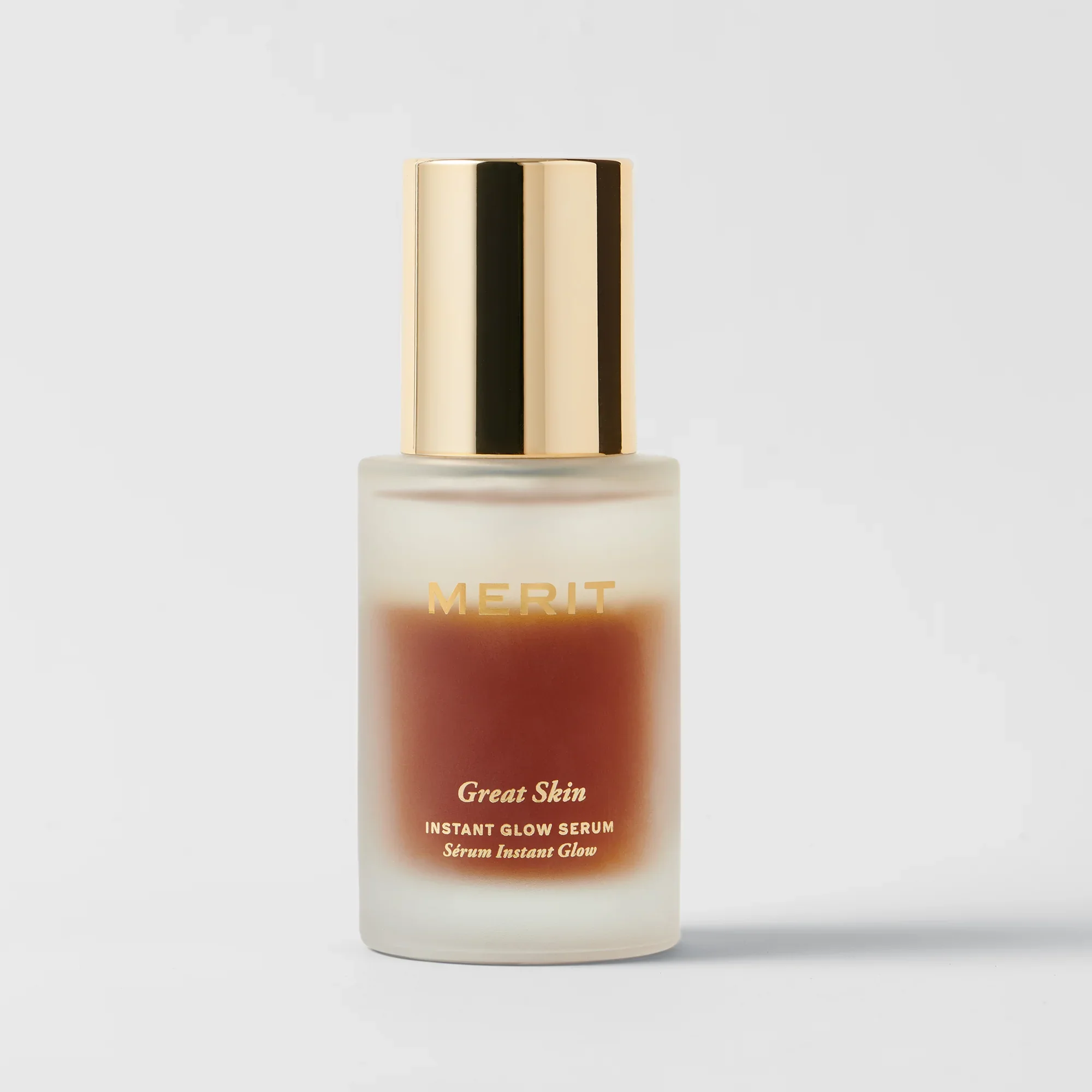
Merit Beauty Great Skin Instant Glow Serum in frosted glass; bi-phase amber formula topped with a gold metallic cap.
Merit Beauty’s brand promise is simplicity: a tightly edited wardrobe of complexion sticks, lengthening mascaras, and highlighting balms that glide on in minutes and require almost no brushes. Each formula follows the EU’s rigorous ingredient directives and is screened against a “Do Not Use” roster of more than 1 400 potentially unsafe substances, so even sensitive skin can reach for their range with confidence. Packaging mirrors the minimalist ethos; powder compacts and mascara tubes are molded from recyclable aluminum, and every order arrives in a reusable cotton pouch rather than single-use padding. The textures feel hydrating and breathable, ideal for anyone who has a preference for light, buildable coverage that looks like healthy skin, not heavy makeup.
Merit’s Great Skin Serum anchors the whole routine, acting as a weightless, oil-free primer treatment that absorbs in seconds and leaves zero residue. A clever bi-phase delivery system suspends actives in water and emollient fractions, maximizing bioavailability so clinical-grade ingredients reach target layers quickly. Clinical data and dermatologist oversight back the claims: the serum is non-comedogenic, fragrance-free, and carries the National Eczema Association Seal of Acceptance, verifying gentleness for even compromised skin barriers. Apply two pumps before complexion sticks and highlighter; the result is a softly luminous base that grips pigment without pilling, extending wear while making each swipe of color melt seamlessly into skin.
Well People
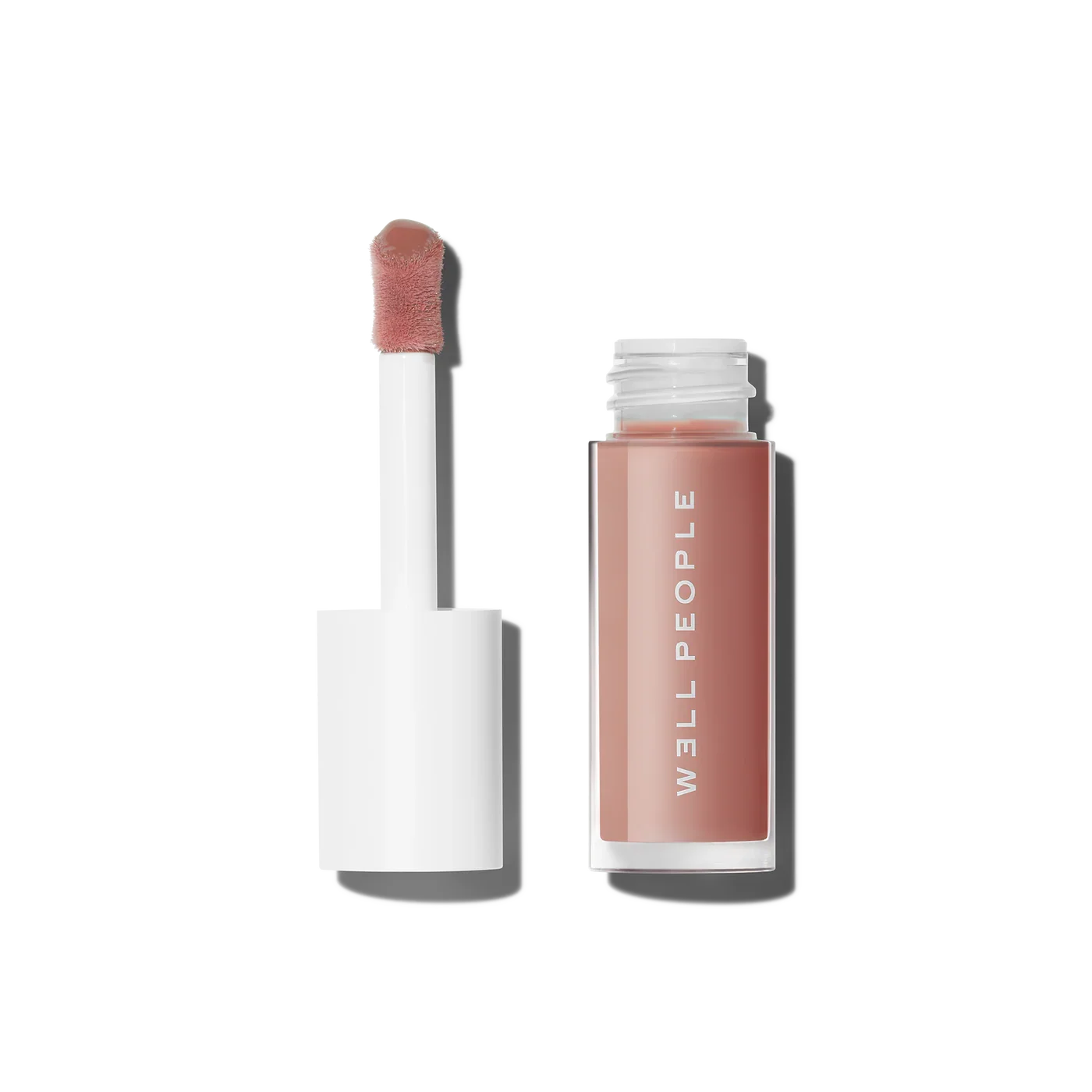
Well People Lush Lip Tinted Lip Oil in soft nude; open tube with doe-foot applicator shown next to clear bottle.
Austin’s Well People built its reputation on radical ingredient transparency, submitting every formula for Environmental Working Group review and earning more than 100 EWG VERIFIED stamps. That ethos shines in the Lush Lip Tinted Oil, a sheer lip gloss created under a dermatologist’s guidance to moisturize, soften, and visually plump the lips without a hint of stickiness. The lightweight oil glides on with a flexible doe-foot applicator, bathing lips in anglossy pigment that reads polished yet effortless. A custom botanical blend, think nutrient-dense seed oils and antioxidant-rich shea butter, works alongside a vegan lanolin alternative to lock in moisture while leaving a dewlike shine.
The finish feels cushiony rather than slick, thanks to a plant-derived gloss agent that replaces traditional petrolatum and mineral oil. A whisper of natural peppermint delivers a refreshing lift, making each application feel like a mini spa ritual. Due to the formula excluding phthalates, parabens, dimethicone, mineral oil, and more than 1000 other flagged additives, the lip oil is cleared for pregnancy use, though the brand advises consulting a physician for individual concerns. Certified cruelty-free by both PETA and Leaping Bunny, and bearing Fair Trade credentials for key raw materials, Lush Lip Tinted Oil embodies Well People’s mission: choose well, play clean.
Juice Beauty
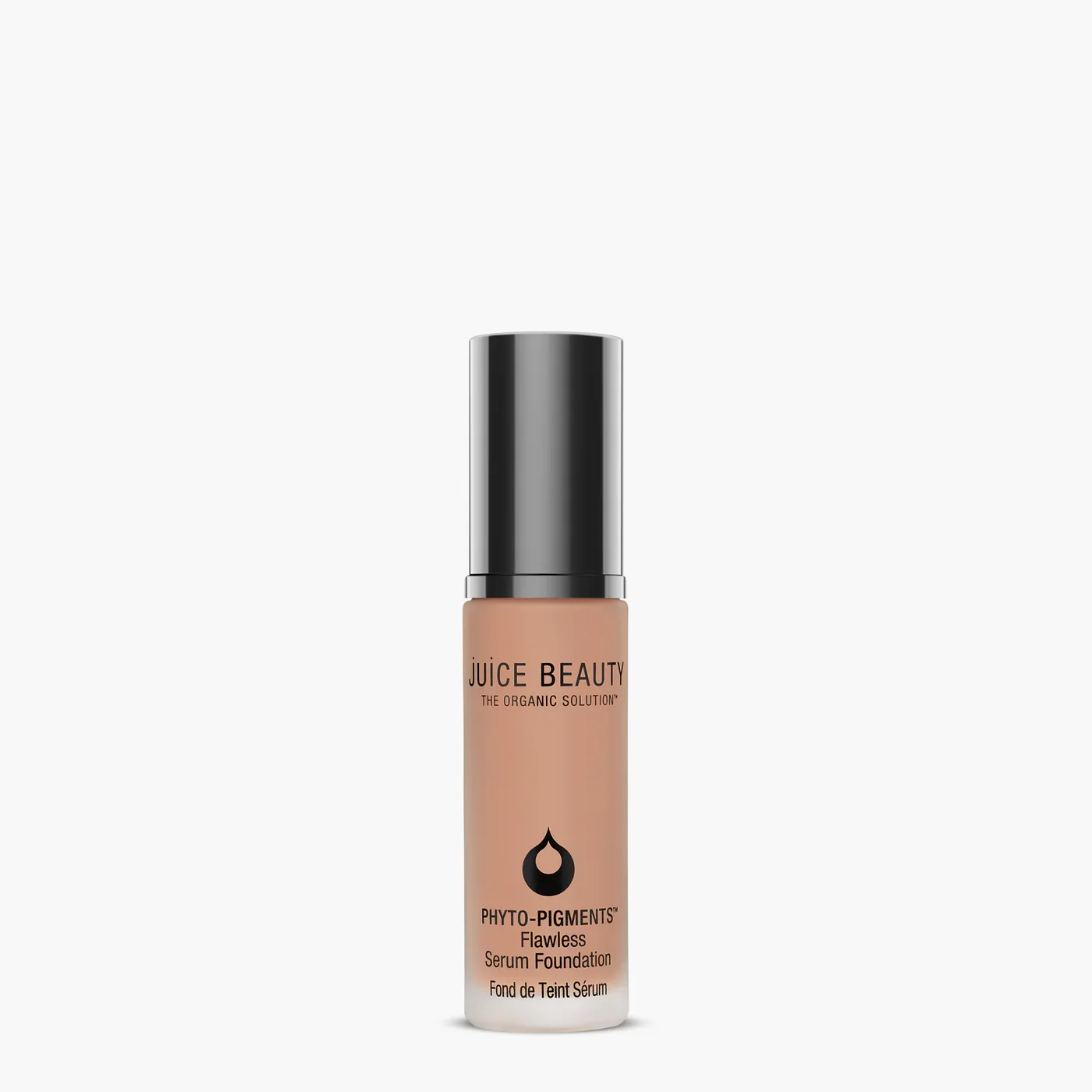
Juice Beauty Phyto-Pigments Flawless Serum Foundation, glass pump bottle with chrome cap in a medium tan shade, on white.
Juice Beauty’s Flawless Serum Foundation lives up to its “farm-to-face” reputation by replacing the usual water filler with SuperJuice Complex™, a proprietary blend of organic grape, apple, aloe, and lemon juices pressed in Sonoma. This antioxidant-rich base is then infused with vitamin C and vitamin E to boost radiance and defend against free-radical stress throughout wear. Medium to full, buildable coverage comes from rose-derived phyto-pigments that lay down true-to-tone color without synthetic dyes or talc.
The fluid texture feels weightless and provides easy application. Coconut alkanes and safflower seed oil help it glide, while plant-derived silica soft-focuses pores for a natural satin finish. Certified-organic grapeseed and argan oils supply omega fatty acids that keep the skin barrier comfortably moisturized all day, making the formula a strong match for normal, dry, or mature complexions that dislike the tightness conventional long-wear bases can create.
Clinically clean at every turn, the ingredient deck omits dimethicone, parabens, and synthetic fragrance, relying instead on plant emulsifiers such as cetearyl olivate and sorbitan olivate. The foundation is vegan, cruelty-free, and bottled in recyclable glass produced under Juice Beauty’s solar-powered manufacturing roof. Available in a balanced shade range built on iron-oxide and titanium-dioxide minerals, Flawless Serum Foundation offers skin-care benefits, buildable coverage, and sustainable sourcing in one serum-weight veil.
Saie
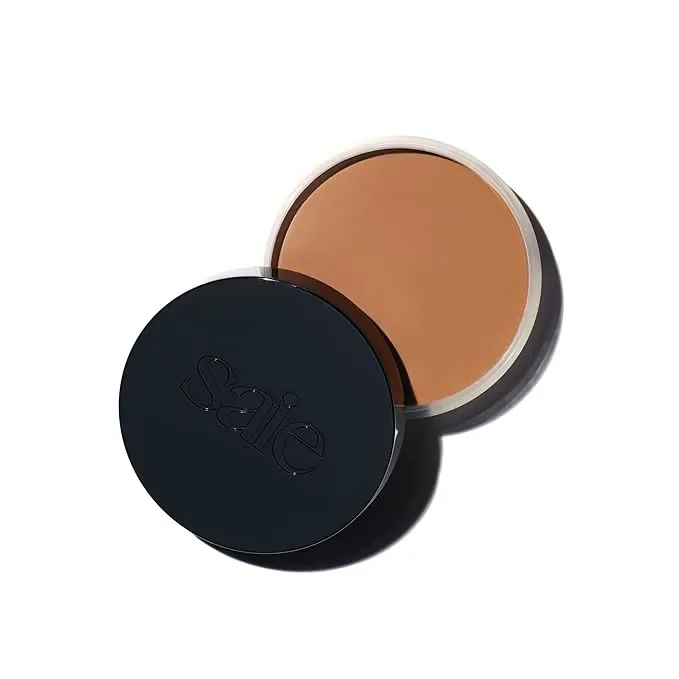
Saie Sun Melt cream bronzer compact opened to reveal warm brown shade; matte black lid rests ajar.
Saie’s ethos of organic, skin-loving, fragrance-free makeup products extends into Sun Melt, a cream-balm bronzer that melts instantly into the complexion for a natural, radiant finish. The texture feels plush when tapped with The Big Brush, allowing pigment to build gradually so you can sweep a sheer veil across high points or layer until the tan effect deepens without ever looking muddy. Saie Science underpins the formula: soothing colloidal oatmeal calms reactive skin, nourishing grapeseed oil keeps the surface supple, and antioxidant elderberry extract helps neutralize free-radical stress while you wear it. Their range is comprised of 6 undertone-balanced shades, from fair golden through to rich espresso, ensuring every skin tone finds a sun-kissed match that blends along the jawline and temple with no visible edges. The result is a healthy warmth that reads like real sun rather than makeup, reaffirming Saie’s reputation for color that treats the complexion as carefully as a moisturizer.
RMS Beauty
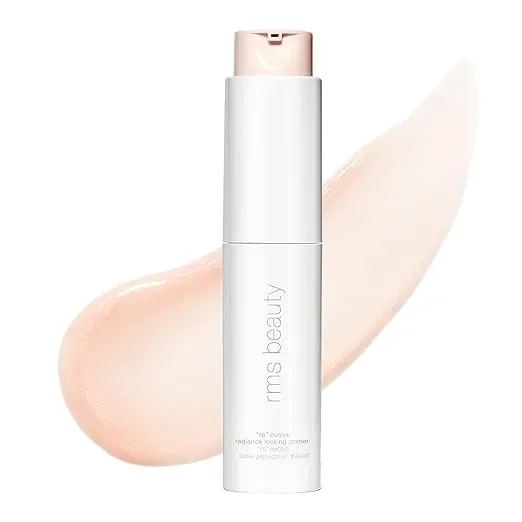
RMS Beauty “Re” Evolve Radiance Locking Primer, slim white cylinder pump displayed beside a peachy primer swatch.
ReEvolve Radiance-Locking Primer extends RMS’s raw-ingredient philosophy into the prep phase, delivering a feather-light gel that is both silicone-free and KIND TO BIOME® certified, so it supports the skin’s resident microbiota rather than smothering it. The formula relies on Tightenyl™, a plant-derived retinol alternative that helps firm and tone the surface so pores appear softened even before foundation touches the skin. Moisture-rich vegetable squalane mirrors the complexion’s own lipids, while hyaluronic acid draws water deep into the epidermis, keeping hydration levels elevated for a full twenty-four hours. Antioxidant-dense eggplant fruit extract adds a calming shield against daily environmental stress. Together, these actives create a breathable film that locks in previous skincare, grips makeup for all-day wear, and imparts a natural, candlelit radiance. Sustainability remains central: the pump housing is molded from fifty-percent post-consumer-recycled resin, designed to twist open so refills slide in with zero waste, and the outer carton uses eighty-percent recycled paper printed with vegetal inks. Smooth a pump or two over freshly cleansed skin, allow half a minute for the gel to settle, and notice how foundation glides on effortlessly, stays fresh until the evening cleanse, and leaves the complexion balanced, hydrated, and subtly luminous.
Jones Road Beauty
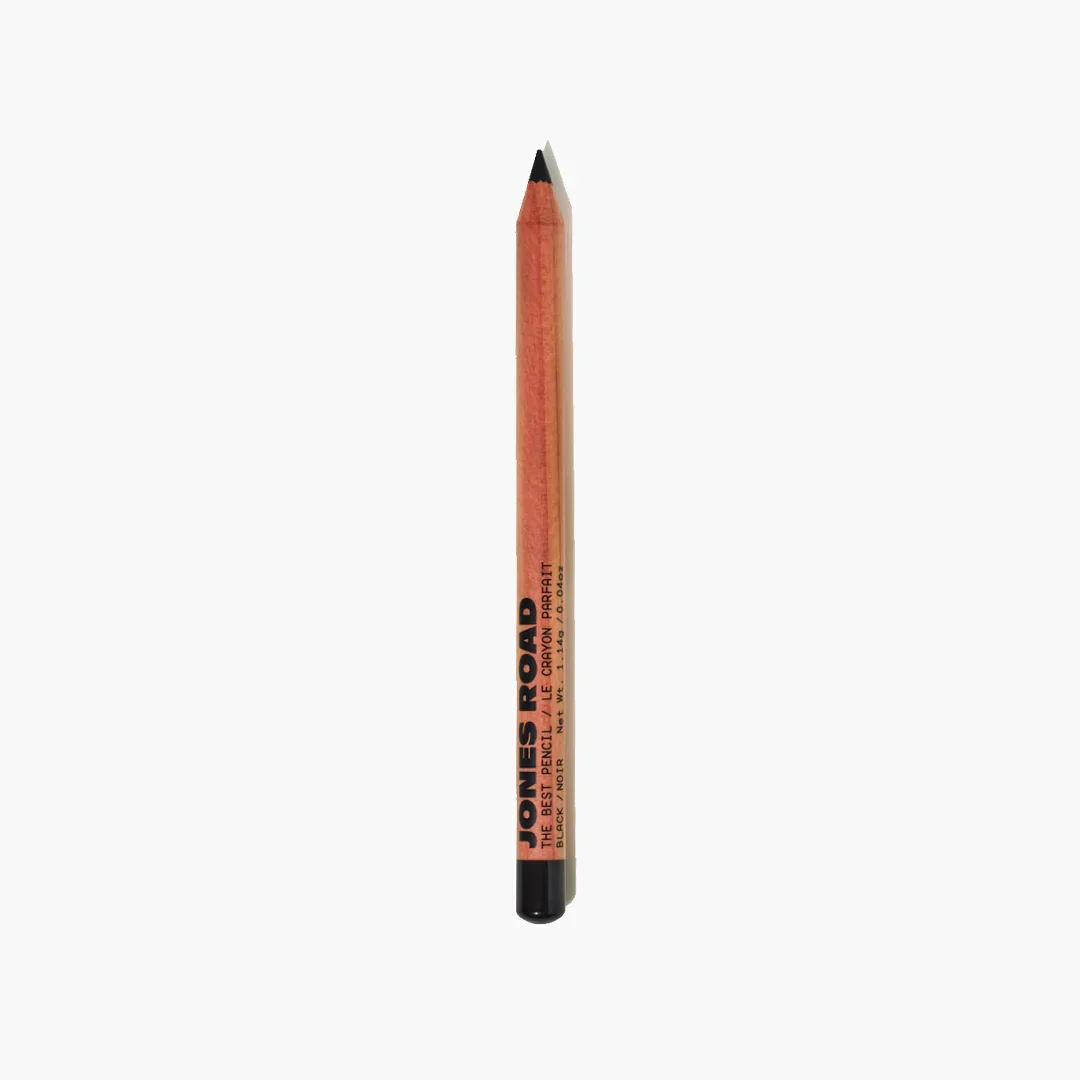
Jones Road “The Best Pencil” eyeliner in classic black, sharpened wooden pencil standing upright against a white background.
Jones Road builds its entire range on the idea that a single product should shift effortlessly from natural definition to high-drama artistry, all while staying faithful to a rigorously clean ingredient profile. The Best Pencil embodies that philosophy. Inspired by the ultra-dense liners of the nineteen-seventies, the formula delivers an inky, highly pigmented stroke that glides across the lash line without tugging, then sets to a budge-resistant finish. A touch of vitamin E infuses each application with antioxidant care, protecting the delicate eyelid area from environmental stress while softening dry skin so the line never flakes. Use the pencil alone for a crisp, graphic edge, smudge it before it sets for a lived-in smoky effect, or layer shadow on top to lock color in place; the wax-to-oil ratio is calibrated for seamless blending yet holds its shape once you arrive at your desired look. Like all Jones Road offerings, the pencil is free of petrolatum, cyclic silicones, and synthetic fragrance, proving that professional performance can coexist with modern clean-beauty standards.
Choosing the Right Organic Makeup for You
Choosing organic makeup begins with clarity on what matters most to you: a full USDA or COSMOS seal, refillable glass packaging, clinically proven active botanicals, or perhaps an exact shade match refined through digital try-ons and mailed samples. Once priorities feel anchored, study the undertone guides as you would examine soil when planting a garden; the right match disappears into the skin in natural light yet still offers the natural coverage level you desire. Sensitive or acne-prone skin should scan the ingredient decks for non-comedogenic oils and soothing extracts, while dry or mature skin may favor formulas that are rich in squalane or shea, keeping the surface comfortably hydrated. Remember that organic pigments often carry shorter shelf life because they skip the use of strong preservatives. Buying sample sizes first not only tests your skin’s tolerance but also ensures the freshness of the product. Many certified brands back this exploration with generous return windows, acknowledging that botanical dyes and minerals can shift slightly from batch to batch. When you assemble a capsule kit, perhaps a serum foundation, multitasking tint, and reef-safe sun protector, you confirm that honoring the soil, water, and personal well-being can coexist with the long wear, inclusive range, and polished finish expected of clean beauty.
Related Posts