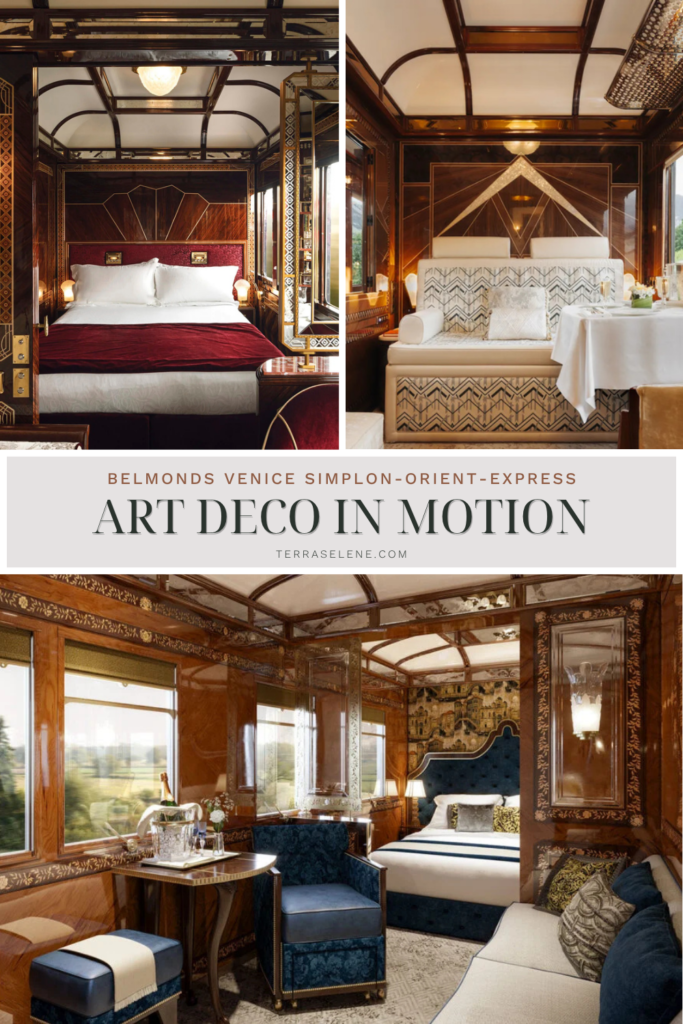
The Venice Simplon-Orient-Express is often described as one of the world’s most iconic train journeys, yet that description only captures part of what makes it remarkable. More than a mode of transport, it is a moving archive of European glamour, carrying guests across the continent in meticulously restored Art Deco carriages that have survived nearly a century of history.
As the train slips away from Venice and winds through landscapes that once shaped the grand tours of another era, time begins to stretch. The pace slows. Conversations linger. Meals become occasions rather than necessities. In a world increasingly designed for speed and efficiency, the Venice Simplon-Orient-Express offers something rarer: the opportunity to experience travel as an event in itself. This is more than a journey between destinations. It is an immersion into craftsmanship, ritual, and the enduring romance of rail travel, one that continues to captivate modern travellers nearly a hundred years after the first Orient Express departed.
Some links in this post are affiliate links. That means we may earn a small commission, at no additional cost to you.
The Living Legend: The Venice Simplon-Orient-Express
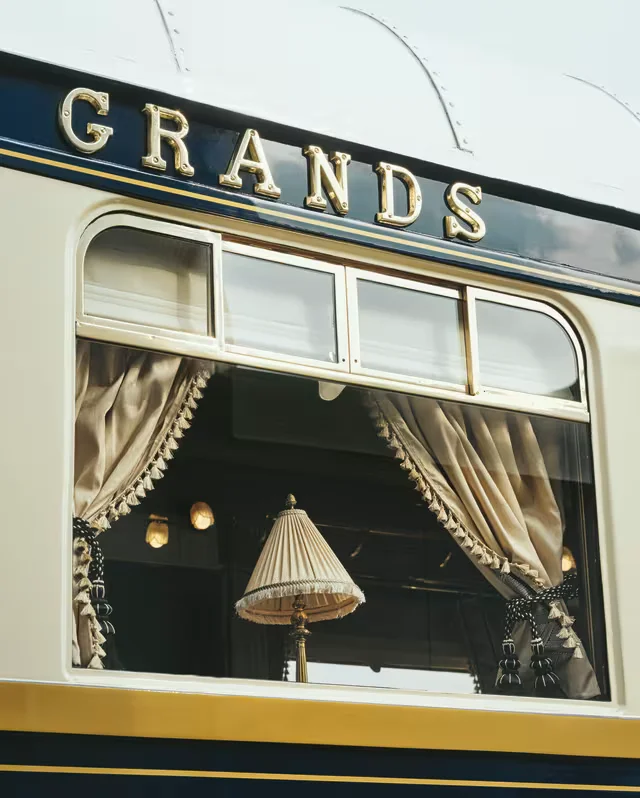
The Venice Simplon-Orient-Express is not a replica. It is a working collection of seventeen original carriages built between 1926 and 1931, recovered across Europe in the late 1970s by James Sherwood, and returned to service in 1982 under what became Belmond. Each carriage carries its own provenance file: the year it was built, the workshops that produced it, the routes it ran during its first operating life, the country in which it was found, and the materials used to bring it back into service. Belmond, the long-term steward, treats the train as a heritage object held in active use rather than as a luxury product refreshed on a hospitality cycle.
This distinction matters. A modern luxury train is engineered around contemporary expectations and dressed in period reference. The Venice Simplon-Orient-Express inverts that order. The carriages are the artifact; contemporary expectation is fitted around them, quietly, where it can be done without disturbance. Cabins are compact by current hotel standards. Corridors are narrow. Windows open. The rhythm of the journey, the slowing through Alpine passes, the long lunch service across the French countryside, the dressing for dinner at dusk, is shaped by the carriages themselves and the speeds they were designed for. Travelers stepping aboard are not consuming a recreation of the golden age. They are walking into rooms that were already rooms when Agatha Christie published her novel in 1934, restored with the same materials, and operated with the discipline that keeps them functional. The journey itself, rather than any single destination on the schedule, is what the train is offering.
A Working Belmond Vocabulary
A short vocabulary clarifies the journey before it begins. The terms recur in Belmond’s own materials, in the carriage’s history, and in conversation with the cabin stewards once aboard. Knowing them in advance helps guests inhabit the train at the register it was built for; recognizing Lalique glass when it catches the afternoon light, understanding what a steward refers to as villeggiatura, and reading marquetry as a working archive of interwar craft rather than mere decoration.
Marquetry
The decorative inlay work that lines the carriage interiors is composed of thin veneers of contrasting woods cut into floral, geometric, or pictorial patterns and pressed into panels. On the Venice Simplon-Orient-Express, the most celebrated panels were executed in the late 1920s by René Prou’s workshop and continue to be repaired by hand under museum-grade conservation protocols. Each carriage carries its own panel program; the pattern in the Côte d’Azur dining car differs from the geometry in the Etoile du Nord.
Art Deco
The design movement that emerged in Paris in the early 1920s was codified at the 1925 Exposition Internationale des Arts Décoratifs. The Venice Simplon-Orient-Express is one of the largest continuously operating Art Deco interiors in the world. The movement reached its design peak between 1925 and 1935, exactly the window in which the VSOE’s working carriages were built. The interiors are not styled to suggest the period – they are the period.
Lalique glass
Molded glass panels designed by René Lalique, originally produced for the Côte d’Azur Pullman car in 1929, featuring stylized figures and floral motifs in frosted relief. The figures sit in the partition walls of the dining carriage and are conservation-cleaned to the same protocols used in museum collections. They rotate light through the room in a way contemporary glass cannot replicate.
Grand Suite
The highest accommodation tier, introduced in stages starting in 2018, has six suites in total, each themed around a European city the train serves: Paris, Venice, Istanbul, Vienna, Prague, and Budapest. Covered in fuller detail in the Accommodations section below.
Suites
An intermediate tier introduced in 2023, larger than Historic Cabins and offering private bathrooms, sitting on either side of the Grand Suite category.
Historic Cabin
The original twin-berth sleeping compartment, transformed by the steward from daytime sofa to night berth, with shared corridor washrooms. The most faithful interior to the carriages’ 1920s register.
Villeggiatura
An older Italian word for an unhurried country stay, used here to describe the rhythm the train asks travelers to adopt. It carries the sense of unhurried duration that the carriages were built for: meals that hold a landscape for two hours, evenings that run past midnight in the Bar Car. There is no English equivalent that quite captures it.
Bar Car 3674
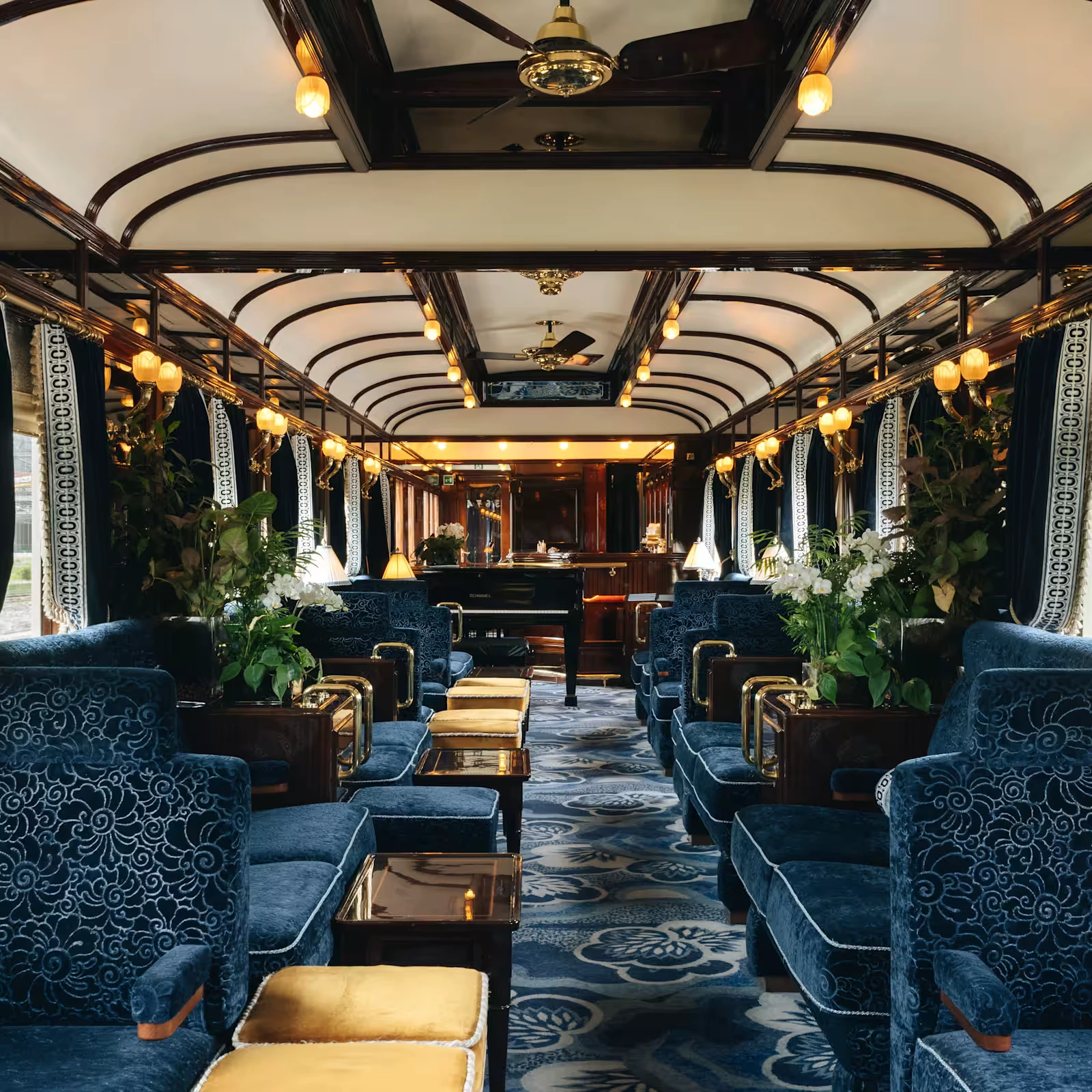
The lounge carriage at the social center of the train, where a resident pianist plays through the evening and into late night. Built in 1931, restored in the 1980s, with lacquered black panels, polished brass, and a small stage. The room becomes the social spine of the journey on the longer routes.
For a broader view of this destination, these pieces extend the journey:
- Unveiling the Best Places to Go in Italy
- How The Dolomites in Italy Captivates Every Traveller
- Rewriting the Palazzo: Venice’s Post-Venetian Boutique Hotels
A Moving Masterpiece
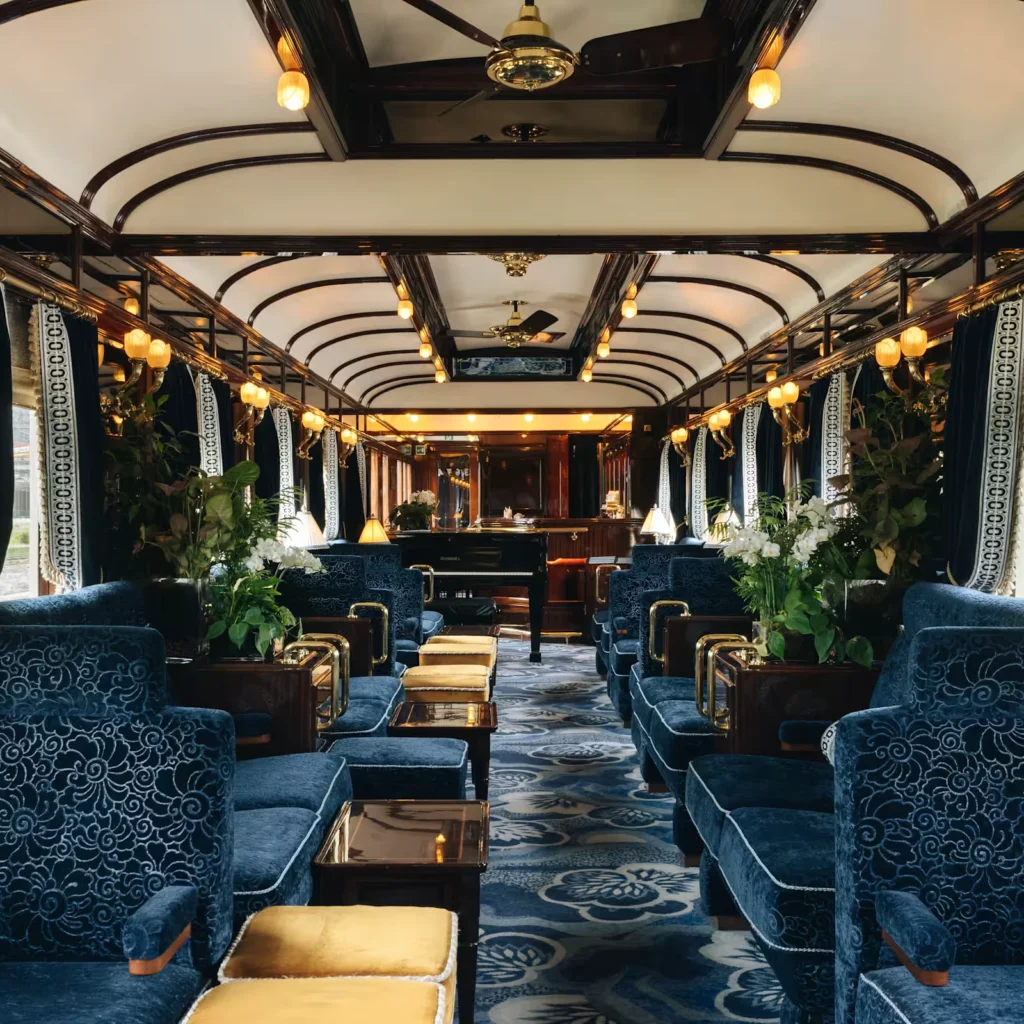
The interiors of the Venice Simplon-Orient-Express read as a slow archive of interwar European craft. Three threads run through them: the historic design lineage of the Wagons-Lits carriages, the contemporary intervention of the artist JR on the L’Observatoire sleeper, and the standing craftsmanship that keeps both legible.
The historic lineage begins with the Compagnie Internationale des Wagons-Lits, which commissioned the carriages in the late 1920s from workshops in Birmingham, Saint-Denis, and Nivelles. The decorative program drew on the leading decorators of the period. Rene Prou contributed marquetry panels in stylized floral patterns for several sleeping cars, executed in mahogany and sycamore. The Côte d’Azur Pullman car, built in 1929, carries the René Lalique glass panels that remain among the most photographed elements on the train: frosted figures in low relief, set into the partition walls and catching exterior light through the long windows.
JR’s L’Observatoire, unveiled in 2023, sits within this lineage rather than against it. The French artist worked with the original carriage shell, leaving the period proportions intact, and inserted a suite of hidden compartments, curated libraries, and shifting wall reliefs that function, as Architectural Digest described it, as a private moving art gallery. The intervention is contemporary in language but disciplined by the carriage’s history.
The craftsmanship that holds all of this together is workshop-based and ongoing. Marquetry panels are repaired by hand. Velvets are rewoven to the original specification. Lalique panels are cleaned with the conservation protocols used in museum collections. The result is a set of rooms that look as they did in 1929 because they have been kept that way, deliberately and continuously.
Culinary Provenance
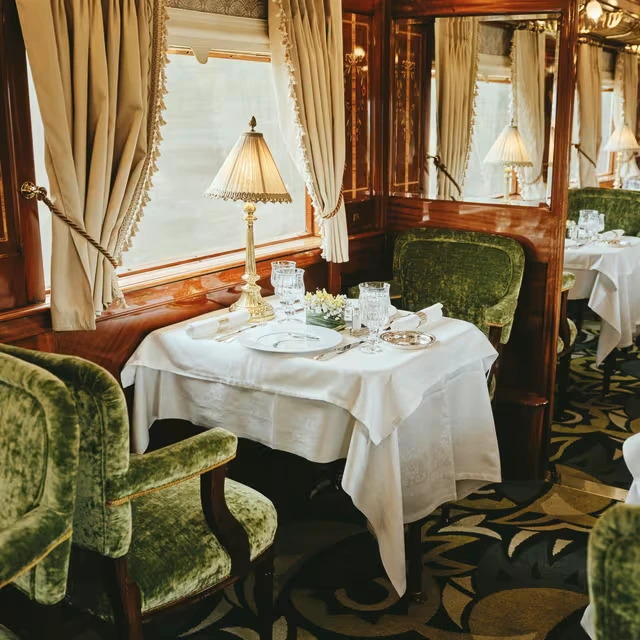
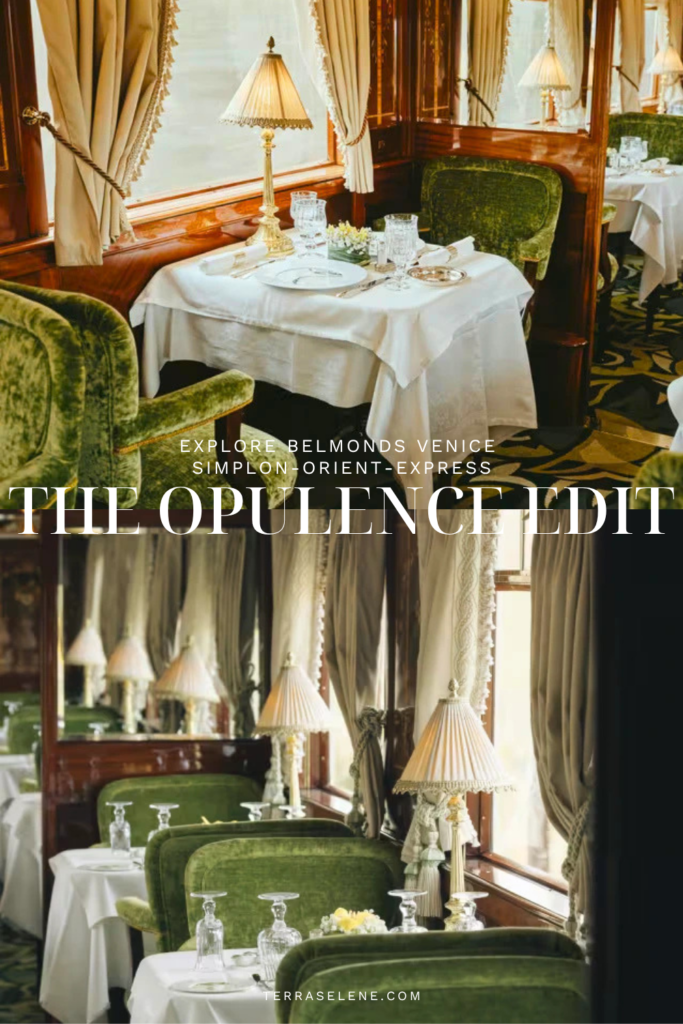
The kitchens on the Venice Simplon-Orient-Express work to a map rather than a menu cycle. Executive Chef Jean Imbert took over the program in 2022, and the kitchen’s working principle is that ingredients are sourced at points along the route the train is running, so what arrives at the table reflects the landscape outside the window over the previous hours. Brittany lobsters are loaded when the train passes through northern France. Mont St Michel salt marsh lamb arrives in the same window. Cheeses are drawn from the regions the train crosses, and seasonal vegetables follow the calendar of the route rather than the calendar of the company.
Three dining cars carry the program, each with its own design soul.
The Côte d’Azur
The 1929 Pullman that holds the Lalique panels is the most photographed of the three. The frosted glass figures glow against the upholstery, and lunch service here tilts toward seafood and the cuisine of the French Mediterranean.

Etoile du Nord
Built in 1926 and originally serving the Paris to Amsterdam route, carries marquetry panels by René Prou in dark wood and gilded line. Dinner service here leans into the classical Parisian repertoire, plated with restraint.
The L’Oriental
Originally a Côte d’Azur car repurposed for the eastern routes, it carries lacquer panels in a deeper, warmer register and reads as a quieter room. The kitchen often uses this car for the late dinner sittings.
The connection between terroir and table is the point. The lobster has not been flown from a central kitchen. It was on the dock that morning, near a station where the train passed at lunchtime. That continuity, ingredient to landscape to plate, is what the culinary program is built to preserve.
How to Choose Your Carriage
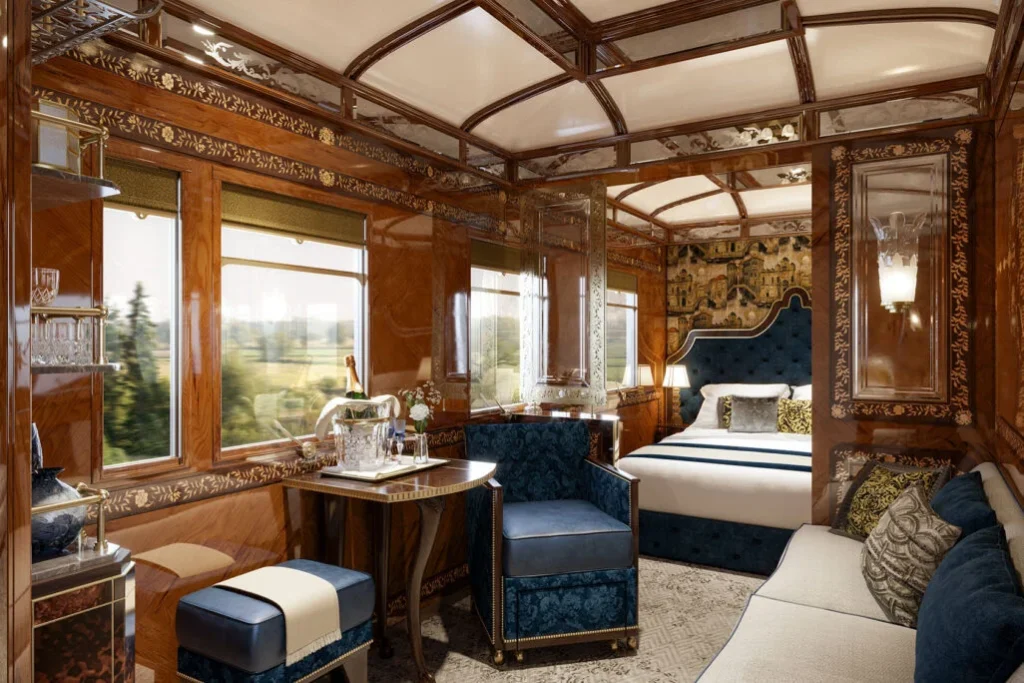
Three accommodation tiers run on the train, and the differences between them are as much about design language as about space. The choice tends to follow how a traveler prefers to inhabit a room rather than how much room is required.
The Historic Cabin
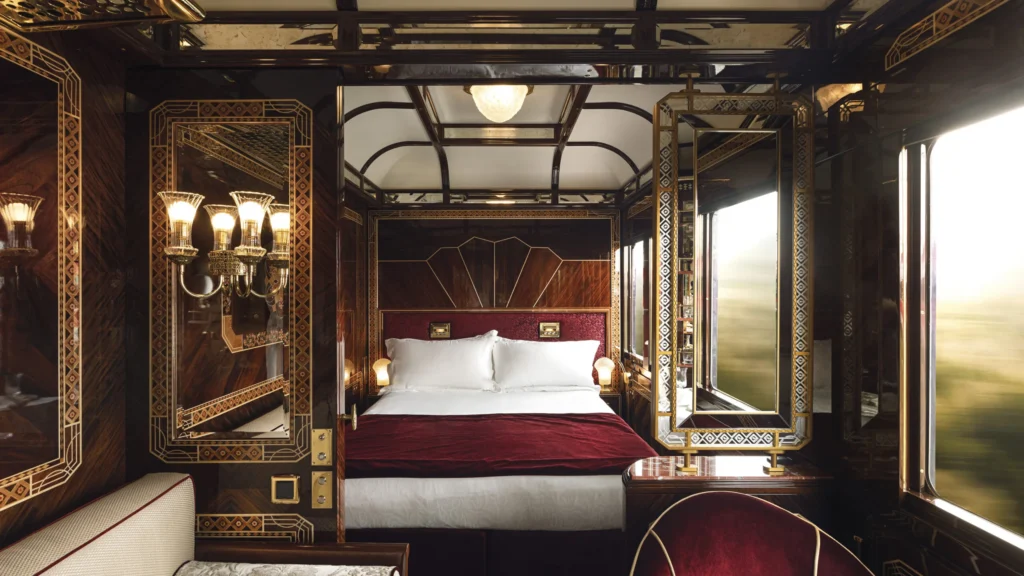
The original twin-berth compartment was a tightly composed space of inlaid wood, mohair velvet, and brass fittings. The cabin steward transforms the daytime sofa into a berth at turndown, and the washroom is along the corridor. The proportions are those the carriage was built with, and the cabin reads as a faithful interior from the late 1920s. Travelers drawn to the Historic Cabin tend to value period continuity over expanded space.
The Suites tier
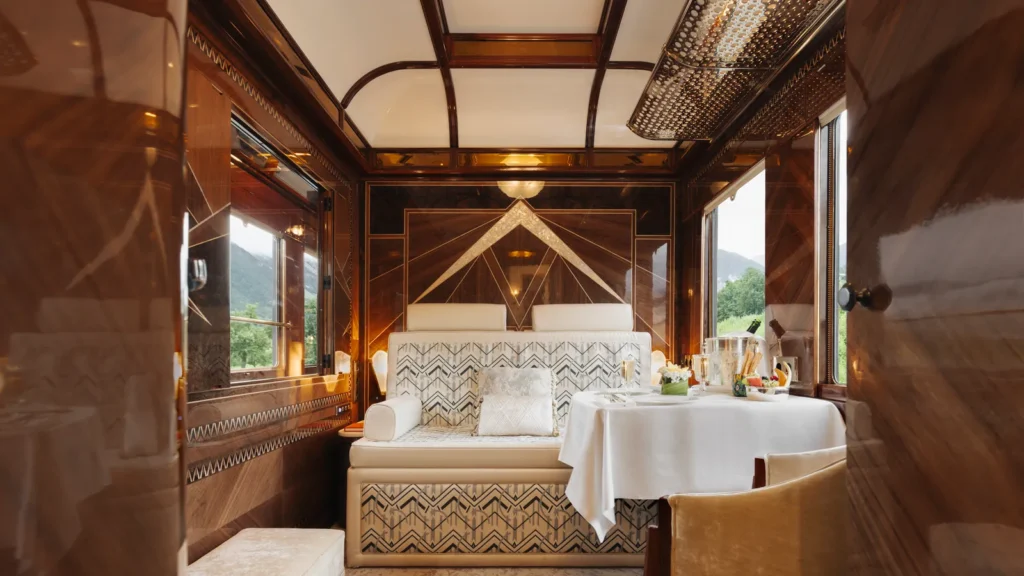
Introduced in 2023, builds on the same interior language. Each suite includes a private bathroom with a shower, a double bed at night, and a larger sitting area by day. Materials remain consistent with the historic carriages: marquetry, velvet, lacquered surfaces, and hand-finished metalwork. This tier suits travelers who want the period register intact but with contemporary plumbing fitted quietly into the floor plan.
Grand Suites
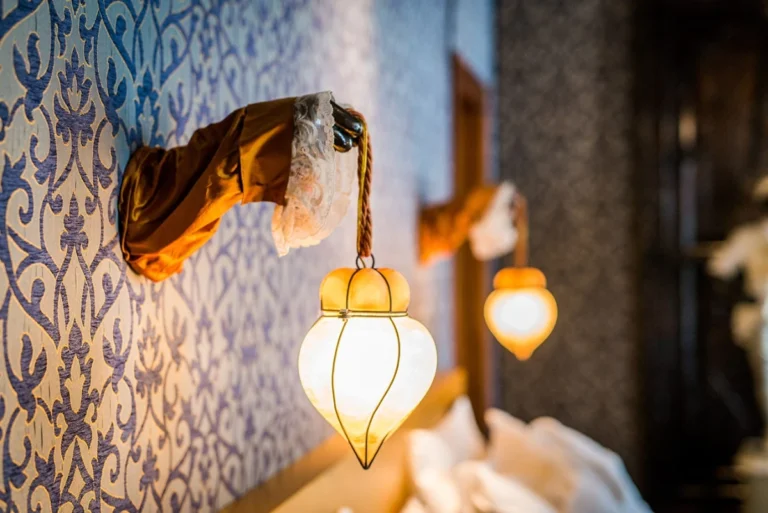
Six in total, each of the grand suites carries the name and design soul of a European city the train serves. The Venice Grand Suite draws on a lagoon palette and Murano detail. The Paris suite leans into late Art Deco refinement. The Istanbul suite holds a warmer color register and ottoman-inflected surface work. The Vienna, Prague, and Budapest suites complete the set, each treated as a small commissioned interior rather than a hotel room. All Grand Suites include a private bathroom with a bathtub, a double bed, a sitting area, and a dedicated cabin steward on call through the night.
The Grand Routes: Mapping the European Narrative
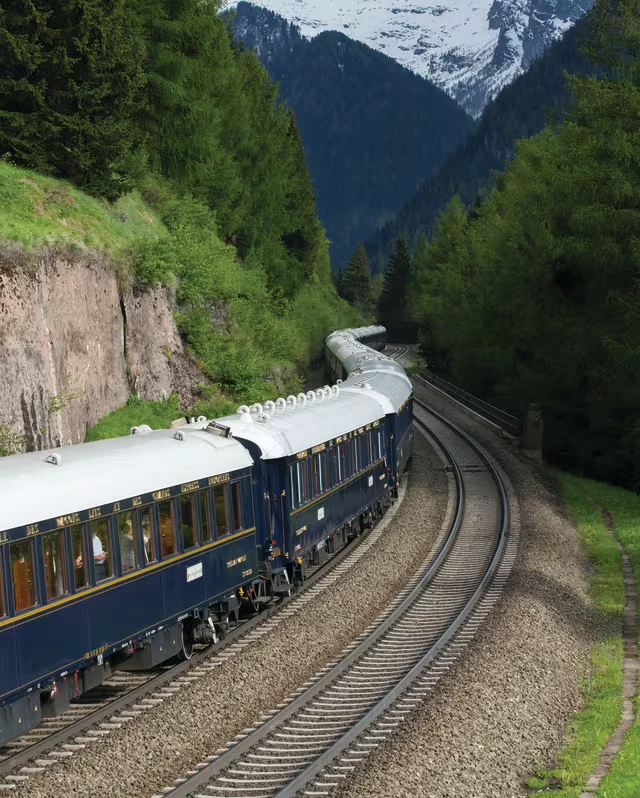
The Venice Simplon-Orient-Express runs a small number of routes between March and November, each carrying a distinct narrative weight. The classic journey is Venice to Paris and on to London, running weekly through most of the operating season. The train leaves Santa Lucia in the late morning, crosses the Veneto plain in afternoon light, climbs into the Alps through Verona and Innsbruck, and travels overnight across Switzerland and eastern France before arriving at Paris Gare de l’Est the following morning. Travelers continuing to London transfer to a Pullman service across the Channel, completing a journey that compresses three of the great European capitals into a single continuous arc.
The annual Paris to Istanbul run, scheduled once each year in late summer, is the longest and most historically charged route. It traces the original 1883 line of the Orient Express across France, Switzerland, Austria, Hungary, Romania, and Bulgaria before arriving at Sirkeci station on the Bosphorus. The route takes six days and includes off-train nights in Budapest and Bucharest. Demand is intense; suites for this run are typically held by repeat travelers a year in advance.
Newer routes have extended the geography. A Venice to Portofino service runs in early summer, ending on the Ligurian coast. A French Riviera run carries travelers from Paris to the Côte d’Azur in late spring. A Tuscany journey, introduced in 2025, brings the train into Florence with onward access to the Val d’Orcia.
Route selection shapes the trip’s rhythm. The shorter routes hold a compressed editorial pace; the longer eastward runs unfold across days and ask travelers to settle into the carriage as a temporary residence.
CURATED TRAVEL
Need help booking a seamless journey to your destination?
Let us plan your itinerary from start to finish, with carefully selected stays, seamless routing, and considered recommendations throughout. As a Fora Travel advisor, we’re able to secure upgrades, added amenities, and preferred access, at no extra cost to you.
Service as Personal Human Connection
Service on the Venice Simplon-Orient-Express runs at a staff-to-guest ratio approaching one to one, with around 40 cabin stewards, dining staff, and kitchen brigade attending roughly 170 guests across a typical run. The number matters less than what it allows in practice. A cabin steward stays with the same set of cabins for the entire journey, present from boarding through to disembarkation. The steward remembers the morning coffee order, the preferred turndown time, and the small request mentioned in passing the previous afternoon. The relationship is closer to the older European model of a chambermaid attached to a household than to a hospitality model of rotating staff.
The dining staff holds a similar pattern. The same waiter serves the same table across lunch and dinner, and across days on the longer routes. Wine pairings are introduced rather than presented. The pace of service is governed by the pace of the train. Courses arrive when the landscape has shifted enough to warrant the next.
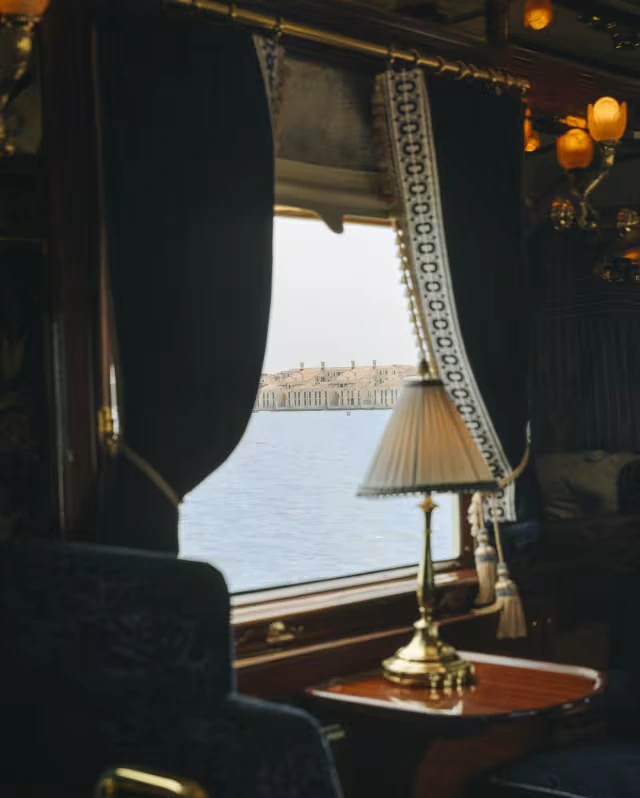
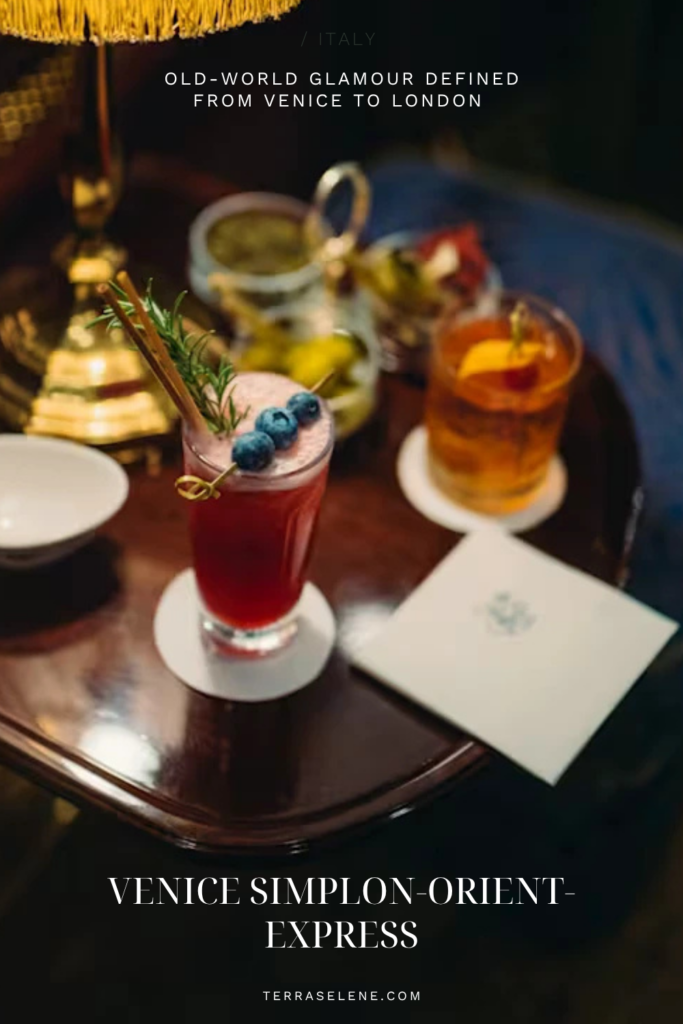
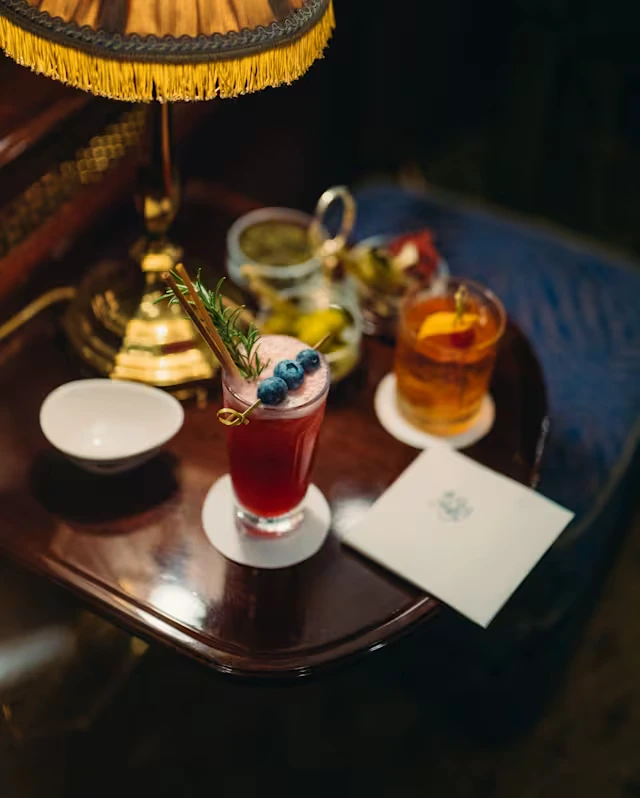
Bar Car 3674 sits at the social center of the train. Built in 1931 and rebuilt in the 1980s, it carries lacquered black panels, polished brass, and a small stage where the resident pianist plays from late afternoon through to the early hours. The bar is the room where strangers become acquaintances over the first night and where the late conversations of the second night settle into something quieter. The staff behind the bar work the same shifts across the route, and travelers tend to find that their drink is being prepared before they have ordered it by the second evening.
This service register sits closer to the Travel Atelier model than to standard hospitality: high-touch, relational, and built on continuity of attention.
The Etiquette of Elegance
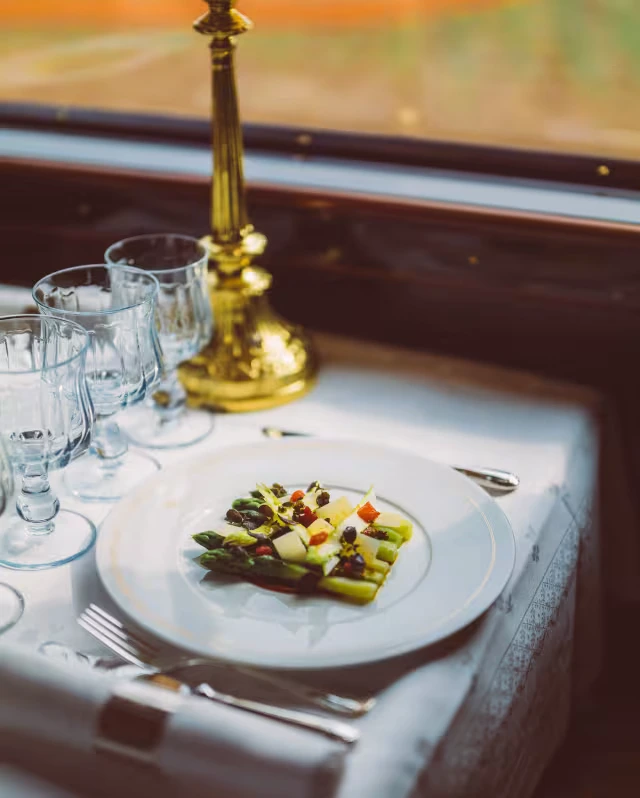
One of the quieter pleasures of the Venice Simplon-Orient-Express is the opportunity to dress for the occasion. The train belongs to a different era of travel, one in which dinner was an event, arrivals carried anticipation, and the ritual of preparing for the evening formed part of the journey itself.
During the day, the atmosphere remains elegant yet relaxed. Guests opt for polished separates, tailored pieces, and attire suited to a leisurely lunch in one of Europe’s grand hotels. As the train moves through the countryside, the mood is refined without feeling formal.
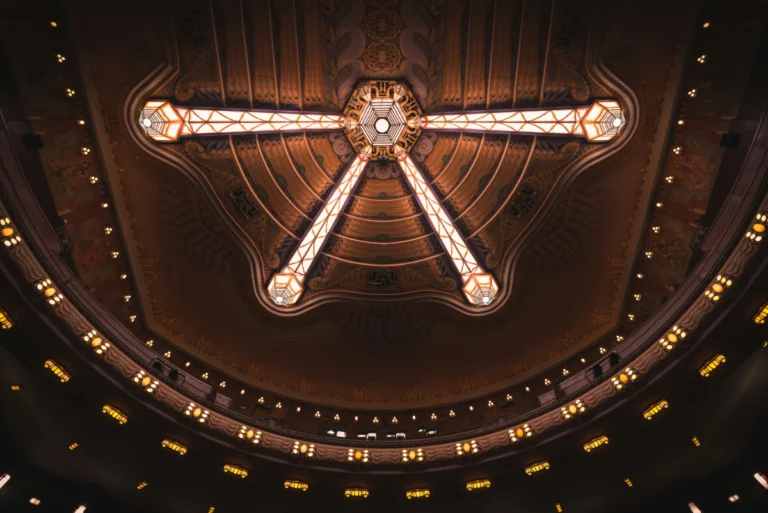
By evening, however, the experience transforms. The dining cars glow beneath Art Deco lighting, cocktails are served in Bar Car 3674, and guests emerge from their cabins dressed for dinner. Black tie is strongly encouraged, and many travelers embrace it wholeheartedly. Dinner jackets, evening gowns, cocktail dresses, and carefully chosen accessories feel entirely at home within the historic surroundings.
What distinguishes the dress code aboard the Venice Simplon-Orient-Express is that it never feels performative. Rather, it becomes part of the rhythm of the journey itself. The act of changing for dinner signals a shift in pace and attention, marking the transition from afternoon observation to evening celebration.
For many guests, these rituals become some of the most memorable aspects of the experience. In a world increasingly defined by convenience and informality, there is a certain pleasure in an occasion that asks a little more of us, and rewards the effort in return.
Beyond the Rails
The Venice Simplon-Orient-Express works to its fullest potential when it forms part of a wider journey through Italy rather than standing alone. The arrival in Venice invites lingering, the departure solicits the same. The train creates a rhythm that rewards travelers willing to move beyond a checklist of destinations and into a more considered experience of place.
Those extending their time in the lagoon may find themselves drawn deeper into Venice’s quieter corners long after the crowds have dispersed. Others may continue north toward the Dolomites, where alpine landscapes offer a different expression of slowness and scale. The train itself becomes less a singular event and more a thread connecting a broader European narrative.
What makes the Venice Simplon-Orient-Express remarkable is not simply its craftsmanship, its history, or even its legendary reputation. It is the way it challenges contemporary assumptions about travel. In an era built around efficiency, optimization, and arrival, the train remains devoted to something older: the belief that the journey itself holds meaning.
Pin This for Later