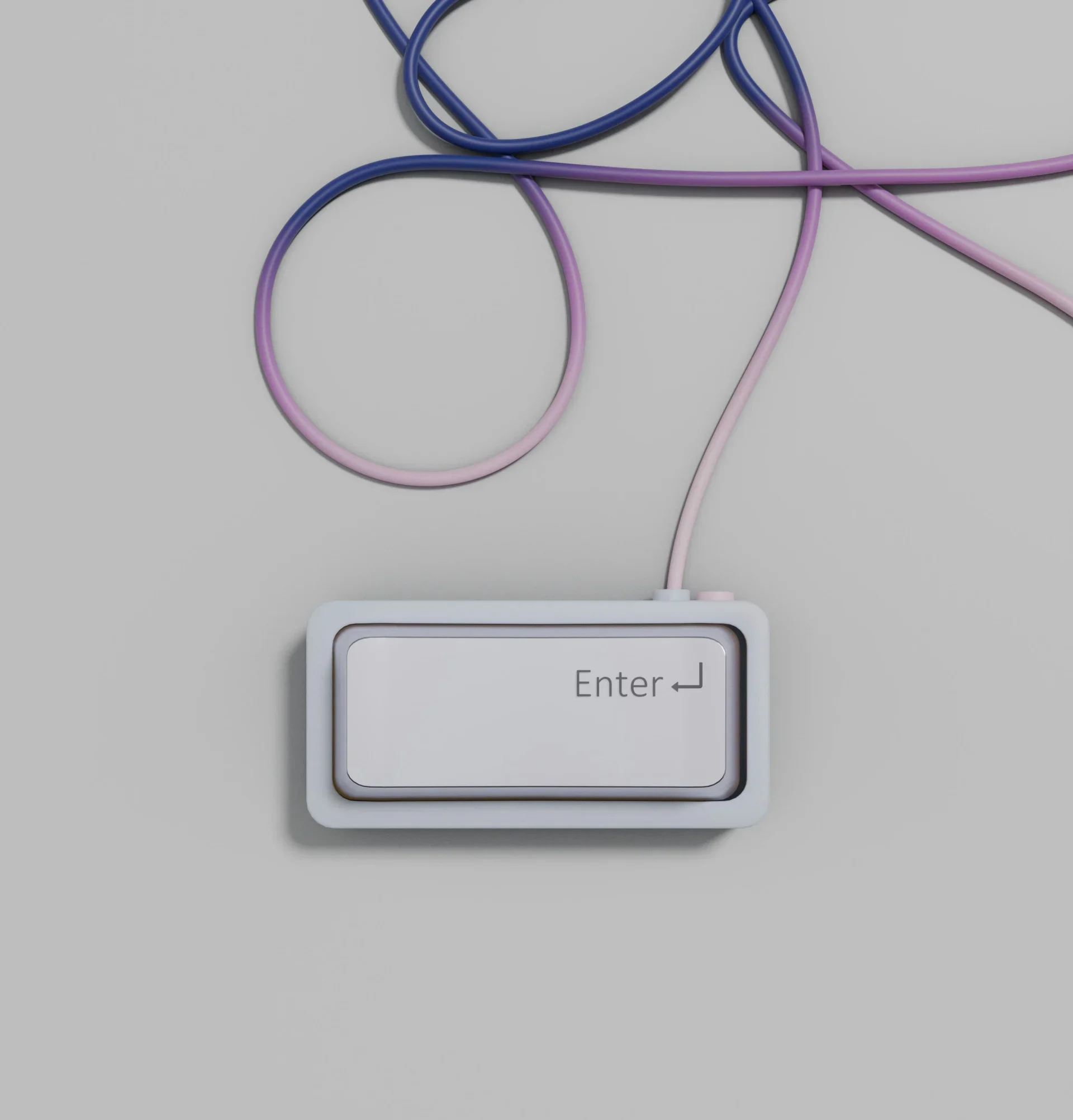
There is a particular kind of tiredness that comes from spending a day connected to everything and feeling truly present for very little of it. A morning disappears between messages and headlines. An afternoon intended for meaningful work is interrupted by a succession of small requests. By evening, the mind is full of other people’s news, opinions, and photographs, while the book beside the bed remains unopened.
The hours have been occupied. The day, somehow, has not quite been lived.
Digital minimalism offers a way to reconsider this arrangement. It asks us to look at the technology and digital noise woven through our days and decide which parts genuinely deserve a place there. The aim is not to retreat from modern life, abandon useful tools, or become unreachable. It is to create a digital life that supports the one happening beyond the screen. The changes themselves can be modest: a phone that stays out of the bedroom, messages checked at deliberate intervals, a quieter home screen, and an evening spent reading without the temptation to check what everyone else is doing. Their effect accumulates. Attention becomes less fragmented, leisure feels more restorative, and ordinary moments begin to regain their texture.
This is where digital minimalism becomes a lived practice, one aimed to improve your life. The philosophy matters, but its value lies in what happens when you put the phone down and discover that your life is waiting for you.
Some links in this post are affiliate links. That means we may earn a small commission, at no additional cost to you.
Where Digital Minimalism Began
Cal Newport’s book Digital Minimalism: Choosing a Focused Life in a Noisy World appeared in February 2019, three years after his earlier volume Deep Work had made the case that uninterrupted cognitive effort was becoming both rarer and more valuable in a distracted economy. The second book shifted focus from professional output to ones personal life. Newport defined a digital minimalist as a person who uses technology deliberately, measuring each tool against the question of whether it supports something deeply valued rather than whether it is merely useful or pleasant. The framing refused the binary of total abstention versus total immersion. It proposed instead a philosophy of mindful and conscious selection.
The intellectual lineage runs further back. Henry David Thoreau’s two years at Walden Pond, beginning in 1845, were an experiment in deliberate living against the accelerating communications of his own century. Contemplative traditions across Buddhism, Christian monasticism, and Stoic philosophy have long treated attention as a cultivated faculty rather than a given condition. Newport’s contribution was to translate these older insights into language suited to the particular shape of twenty-first-century distraction: the notification, the feed, the small bright rectangle that fits inside a pocket. The result is a practice less austere than it sounds and more demanding than it first appears.
Attention as a Scarce Resource

In 1971, the economist and cognitive scientist Herbert Simon observed that a wealth of information creates a poverty of attention. The sentence has aged into prophecy. Simon was writing before the personal computer, before the smartphone, before the architectures of persuasion that now shape most waking hours. His point was structural: when information becomes abundant, the scarce resource shifts to whatever information consumes, and what it consumes is the finite capacity of a human mind to notice, consider, and remember.
The attention economy, as it has come to be called, is the industrial expression of Simon’s insight. Platforms monetize engagement, engagement is measured in time, and time is extracted through techniques refined by teams of designers whose job is to render departure difficult. What the always-on era takes from the mind is not only hours. It takes continuity. It takes the quiet background on which an idea can form, the boredom from which curiosity rises, and the capacity to hold a single thought long enough for it to deepen. Digital minimalism names the recognition that attention, once treated as inexhaustible, behaves instead like topsoil – renewable under certain conditions and depleted under others.
For more on slow living:
- Live Slowly: Embrace Intentional Living Daily
- Float Spa Sanctuaries: Sensory Silence That Restores Body and Mind
- Slow Travel: Cultivating Connection Through Pace
- Labyrinth Walking Meditation: Benefits for Stress Relief
- What Is Slow Food? Principles, Benefits and Daily Habits
- Sound Healing for Deep Relaxation: A Comprehensive Guide
- Somatic Modalities: A Guide to Soothing the Nervous System
The Practice in Daily Life

The practice resists prescription because the circumstances of every life differ. Still, certain habits recur among those who describe themselves as digital minimalists, and they share a common grammar: the removal of the device from contexts where its presence corrodes something valued. The phone is set aside during meals, left in another room during conversation, and kept outside the bedroom at night. The default assumption that one must be reachable at every moment is quietly withdrawn.
Long-form reading returns, often with difficulty at first. The attention required to follow an argument across three hundred pages is not the same attention trained by the scroll, and it rebuilds slowly. Emails are batched into two or three windows a day rather than checked between every task, an older discipline that productivity writing has rediscovered under various names. An afternoon walk is taken without a podcast, allowing the mind the unstructured time in which ideas tend to arrive, perhaps even resulting in a walking meditation. A notebook sits alongside the phone, with the intention of using it first.
Social media is approached with the question of what, specifically, it is for. The answer sometimes justifies its presence and sometimes does not. What distinguishes the digital minimalist from the digital detox enthusiast is the absence of drama. There is no cleanse, no pledge, no triumphant return. There is only the slow recalibration of defaults, repeated across months, until the shape of the day looks different.
Digital Minimalism and Slow Travel

Within our own findings, we have grown to define travel as an act of attention paid to places that reward it. The connection to digital minimalism is immediate. A journey undertaken without the constant mediation of the screen – without the compulsive photograph, the running caption, or the stream of updates – is itself a digital minimalist practice, perhaps the clearest one available to a modern traveler. The agriturismo in a Tuscan hill town whose wifi is weak by design, the train through the Engadin where the valley unfolds through a window rather than a feed, and the morning in Lisbon when the phone stays in the room: these are not deprivations. They are the conditions under which a place becomes legible.
Presence is the point, and presence has preconditions. A traveler who photographs a cathedral through the viewfinder of a phone has seen something, but the seeing is thin and the memory thinner. The traveler who stands in the same nave for twenty minutes without recording anything carries away something different, something closer to what the architecture was built to produce. Slow travel and digital minimalism share this intuition. Both treat attention as the medium through which a place or an hour becomes real, and both accept that the medium requires protection from the forces designed to divert it.
What You Trade, What You Gain
The exchange is honest and worth stating plainly. Giving up the near-constant feed means giving up the small pulse of novelty it provides, the dopamine architecture that researchers have described in some detail. It means slower replies to messages, occasional missed invitations, and the mild social friction of being less immediately available. For those whose identity has become partly constituted online, it means a quieter public presence and the loss of certain forms of recognition.
What arrives in exchange is harder to describe because it accumulates rather than appears. Continuity of attention returns, the capacity to read for an hour or work on a problem for three without the involuntary reach toward the screen. Boredom returns too, and with it the strange generativity that boredom has always possessed – the idea that rises when the mind is left alone, the solution that surfaces during a walk. Conversations lengthen. Meals extend. Evenings acquire a different texture when they are not punctuated every few minutes by a glance. None of this is dramatic. It is the recovery of a baseline that most people did not notice losing.
Where the Practice Falls Short

Any serious account of digital minimalism must acknowledge where the practice becomes difficult or inappropriate. Many jobs demand responsiveness that is not optional. A clinician on call, a parent coordinating a child’s medical care, and a small business owner whose livelihood runs through the phone – these are not candidates for the leisured renunciation that some digital minimalism writing implies. The language of focused life risks sounding glib in contexts where the device is simply necessary tooling.
Accessibility matters as well. For many disabled users, the smartphone is not a distraction to be managed but an essential interface with the world: a communication aid, a navigation system, a magnifier, and a reader. Framing phones as uniformly corrosive flattens real variation in how technology functions in different lives. Families separated by geography depend on the same platforms a minimalist might wish to discard. Immigrant communities, long-distance caregivers, and anyone whose closest ties live elsewhere have legitimate reasons to remain reachable in ways that resist a universal protocol. The point of naming these limits is to protect the practice from evangelism.
Digital minimalism is a useful disposition for many; it is not a moral hierarchy, and it does not scale into judgment of those whose circumstances require different defaults.
A Considered Day
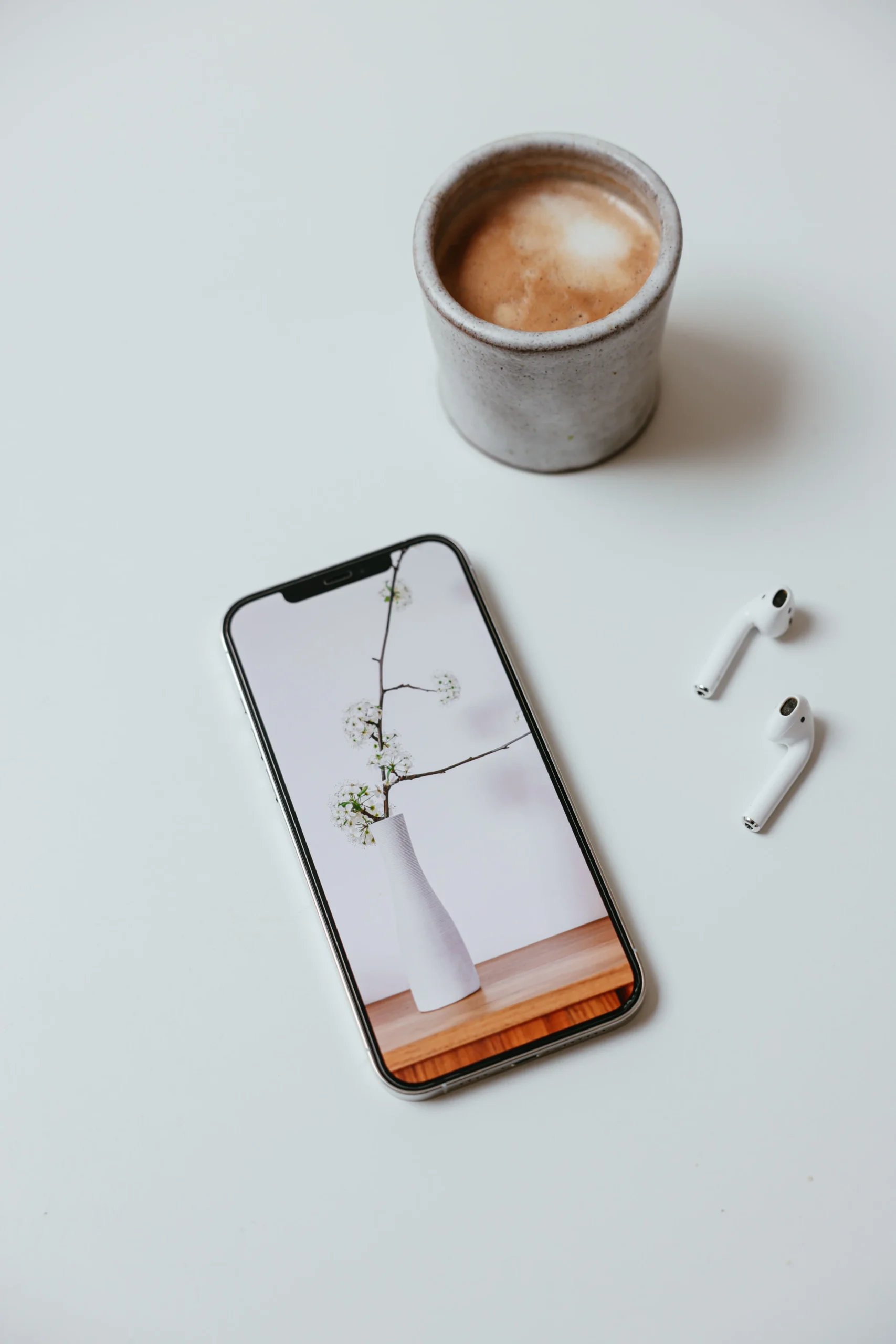
A day shaped by this practice looks ordinary from the outside and feels distinct from within. The morning begins without the phone. The first hour belongs to coffee, a window, perhaps a notebook, and whatever the mind brings to the surface when it is not immediately presented with news. Work follows in blocks of ninety minutes or two hours, during which the phone sits in another room and the browser carries only what the task requires. Emails are opened twice: once mid-morning, once mid-afternoon. Messages can always wait.
Lunch is taken away from the desk and away from the screen, often with a book. The afternoon mirrors the morning in structure. A walk somewhere between the second and third working block clears the attention that long focus accumulates. The phone comes along for safety and remains in the pocket. Evening carries its own rhythm: a meal cooked slowly, conversation that is allowed to meander, a long read before sleep rather than the scroll that fragments it. The device charges overnight in another room. None of this is prescriptive. It is one shape among many that the practice can take, offered as a sketch rather than a template. The underlying commitment is the same across variations: the defaults are chosen rather than inherited, and the chosen defaults protect what matters.
Digital minimalism is one thread within a broader architecture of slow living that includes how one travels, how one eats, how one keeps a home, how one tends to relationships that cannot be compressed into updates. It is not a complete philosophy, and it is not sufficient on its own. A life organized only around the removal of distraction can become its own form of austerity, as narrow in its way as the saturation it refuses.
The practice earns its place when it serves something larger – the hours given to work that matters, the attention offered to a person across a table, the capacity to inhabit a landscape without the compulsion to document it. Here we design journeys for travelers who recognize that presence is the rarest luxury the modern world offers, and that the practice of intentional living extends from the daily rhythm at home to the way a traveler meets a place. Digital minimalism is one entry point among many into that longer conversation, and it is best understood as a beginning rather than a destination – a quiet recalibration from which a more considered life can unfold.