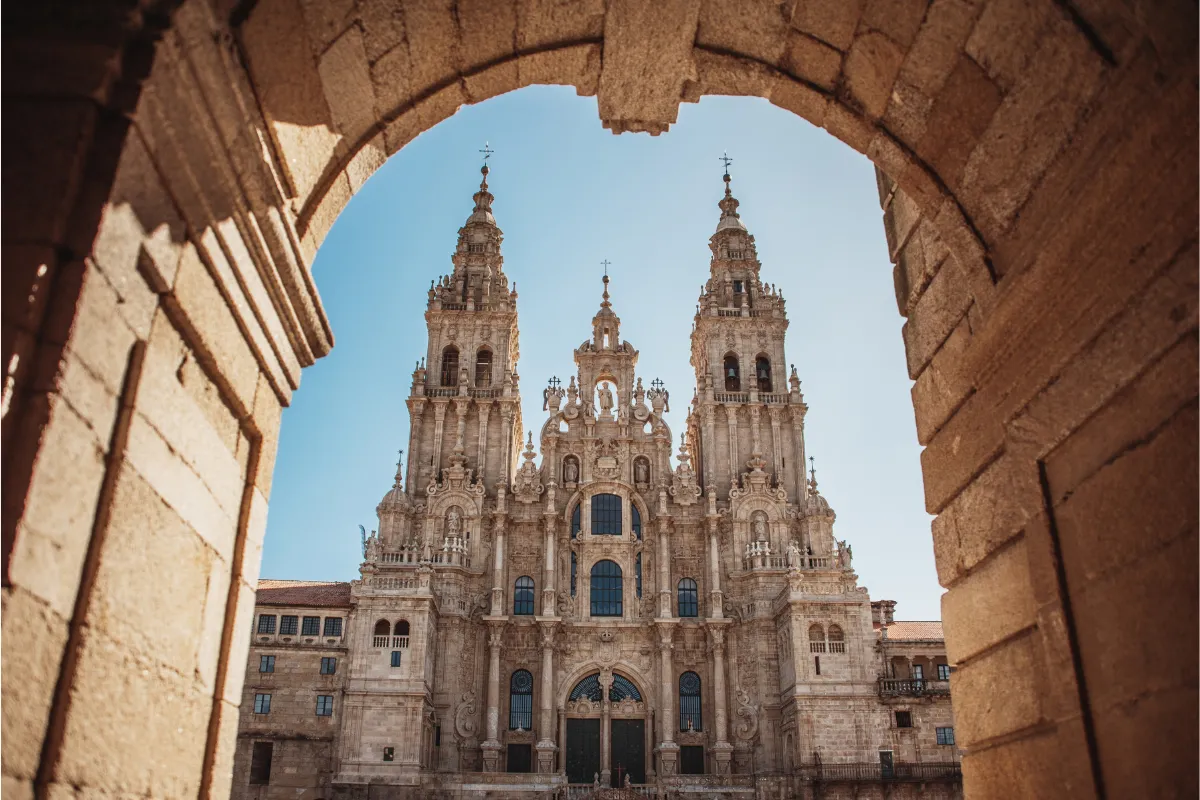
The journey from Porto to Santiago de Compostela on the Camino Portuguese rewards anyone willing to trade speed for a slower pace. In August last year, I set out from Baiona’s sea-sprayed harbor and, after six days spent walking, stood breathless in Santiago de Compostela’s Obradoiro square, 128 kms of salt dawns, vineyard afternoons, and eucalyptus dusk. Finally, reaching Santiago felt like the culmination of a long journey, bringing a deep sense of achievement. Yet my compact journey is only one thread in a larger tapestry that runs all the way from Lisbon to the cathedral doors.
From the Atlantic boardwalk to Roman roads, from surf-hollowed coves to medieval bridges, the route keeps exchanging landscapes but never its purpose. South of the Minho, pilgrims greet one another with ‘Bom Caminho’; one bridge later, the words bend to ‘Buen Camino,’ proof that borders may shift the language but not the welcome. Choose the inland hush of the central way, the salt-rimmed coastal rhythm, the surf-skimming senda litoral, or the contemplative Spiritual Variant; each corridor is a living braid of history and light that leads, sooner or later, to those bells in Santiago. As you arrive, hope rises for what comes next, inspired by the journey’s end and the possibilities ahead. What follows weaves my week-long passage into a full guide so you can find the tempo that fits your own walk, rooted in a slow travel philosophy.
Some links in this post are affiliate links. That means we may earn a small commission, at no additional cost to you.
Origins of the Camino Portuguese
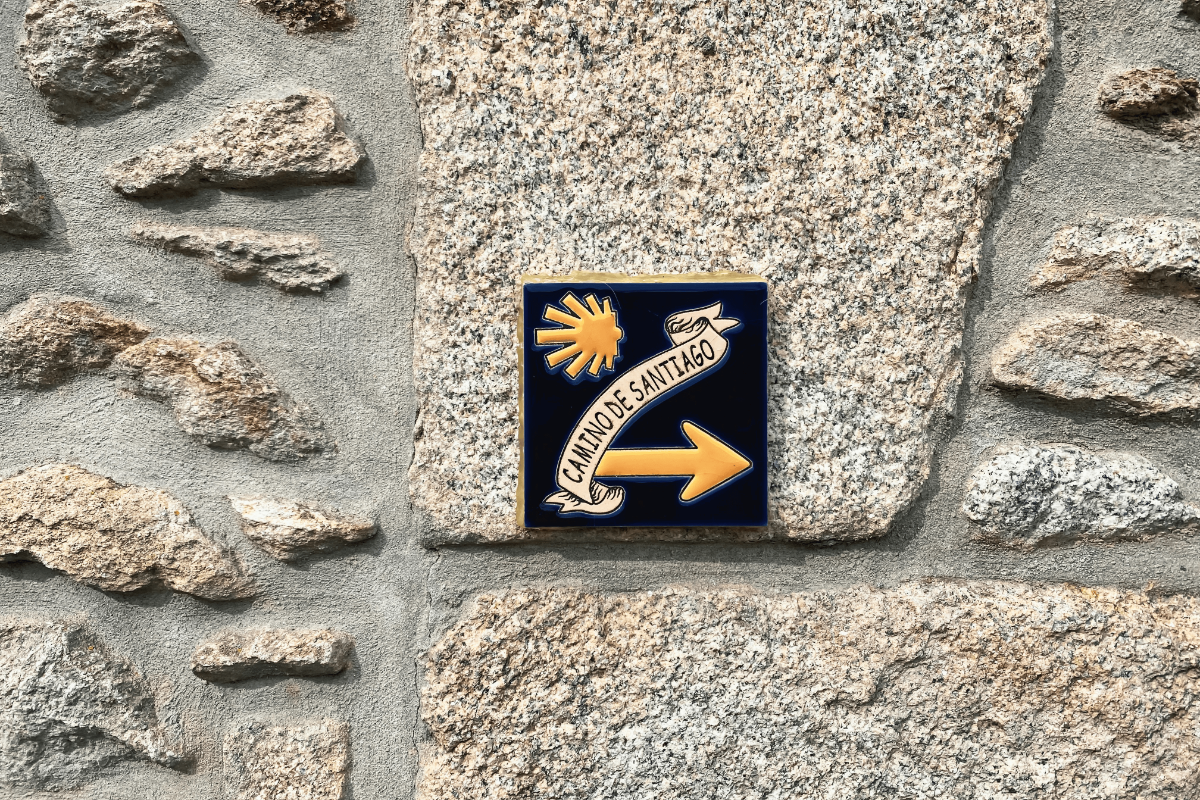
The first written reference to pilgrims of the Portuguese Camino appears in a royal charter from 1173, barely a generation after Portugal won independence, granting alms “to travelers bound for Santiago.” Why did the lane catch on so quickly? Geography, commerce, and faith converged here. Roman Via XIX already linked Lisbon with Braga, so monks, traders, and soldiers knew the roadbed. Portugal’s royal court encouraged north-bound devotion as a diplomatic bridge to Galicia, funding hospitals for pilgrims at Rates and Ponte de Lima. By the fourteenth century, the way was busy enough that Valença’s masons carved scallop shells into house lintels, hand-sized proof that an ordinary cottage once doubled as a pilgrim hostel.
The common thread that pulled walkers then and still thousands today was access: a route with reliable water, market towns, and churches eager to trade shelter for prayers. The stretch from Porto to Santiago de Compostela became the beating heart of this tradition, a corridor where the route’s medieval bones are most clearly felt underfoot.
Over centuries, the Camino Portuguese developed into a well-defined course followed by pilgrims seeking both spiritual and physical challenge. Stories amplified the draw. Fishermen in Baiona claimed they had sighted Saint James’s guiding star above the bay, and Queen Isabel of Portugal famously walked from Coimbra to Compostela barefoot in 1325, cementing royal endorsement.
The path’s popularity today, second only to the Camino Frances according to Santiago’s Pilgrim Office, rests on that layered credibility: physical traces underfoot, archived miracles on parchment, and the unbroken flow of greetings that pivot from Bom Caminho to Buen Camino the moment the Minho River bridge delivers Portugal into Spain.
Getting to Porto
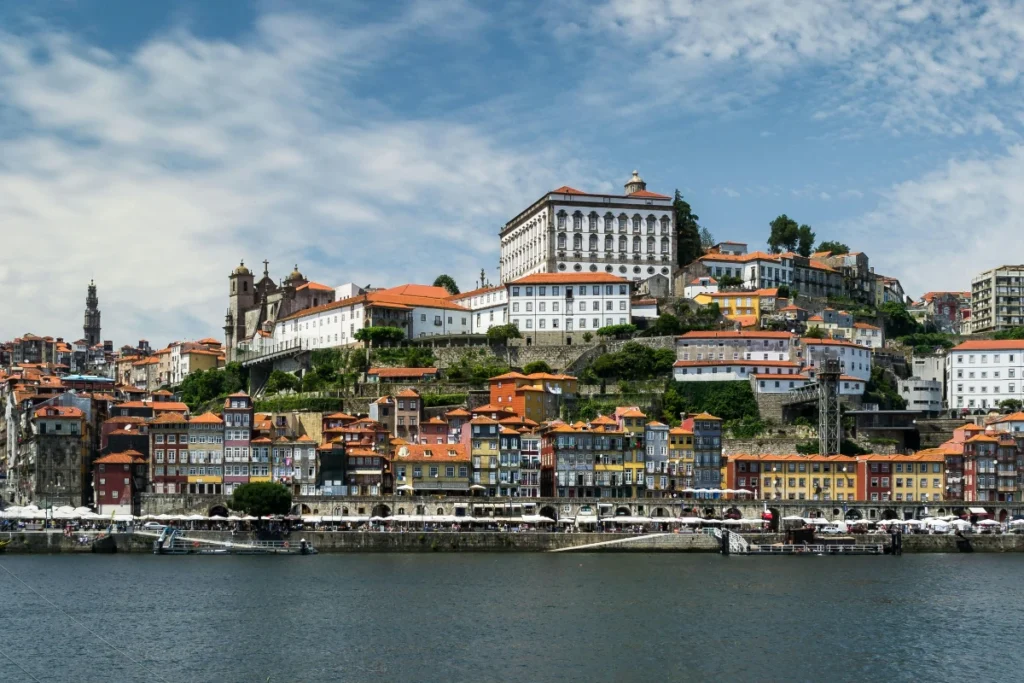
Reaching Porto, the traditional starting point for the Porto to Santiago de Compostela pilgrimage on the Camino Portuguese, is straightforward thanks to the city’s excellent transport links. Porto Francisco Sá Carneiro Airport (OPO) welcomes flights from across Europe and beyond, sitting just 12 km from the city center. From the airport, the metro or a taxi delivers you to Porto’s winding streets in under half an hour, leaving plenty of time to settle in before your journey north begins. For those arriving by bus or train, both the main bus station and São Bento train station sit conveniently in the city center, making transfers simple and stress-free.
Travelers coming from Spain can also reverse the classic direction entirely: direct bus and train services, including Flixbus and Renfe, connect Santiago de Compostela to Porto with ease, a useful option if you plan to walk the route back-to-back or simply want to experience the endpoint before you set out.
Whether you fly in, ride the rails, or roll in by bus, Porto’s welcoming city center is the perfect launchpad for pilgrims preparing to walk the Camino.
Explore these pieces to extend the journey:
- Live Slowly: Embrace Intentional Living Daily
- Future of Travel in 2026: Wellness Tourism Industry
- Orient Express Corinthian: The Quiet Future of Legendary Luxury at Sea
- Beneath the Peaks: The Glacier Express Across Switzerland
- Slow Travel: Cultivating Connection Through Pace
Starting Points and Variants: Central Route or Coastal Route
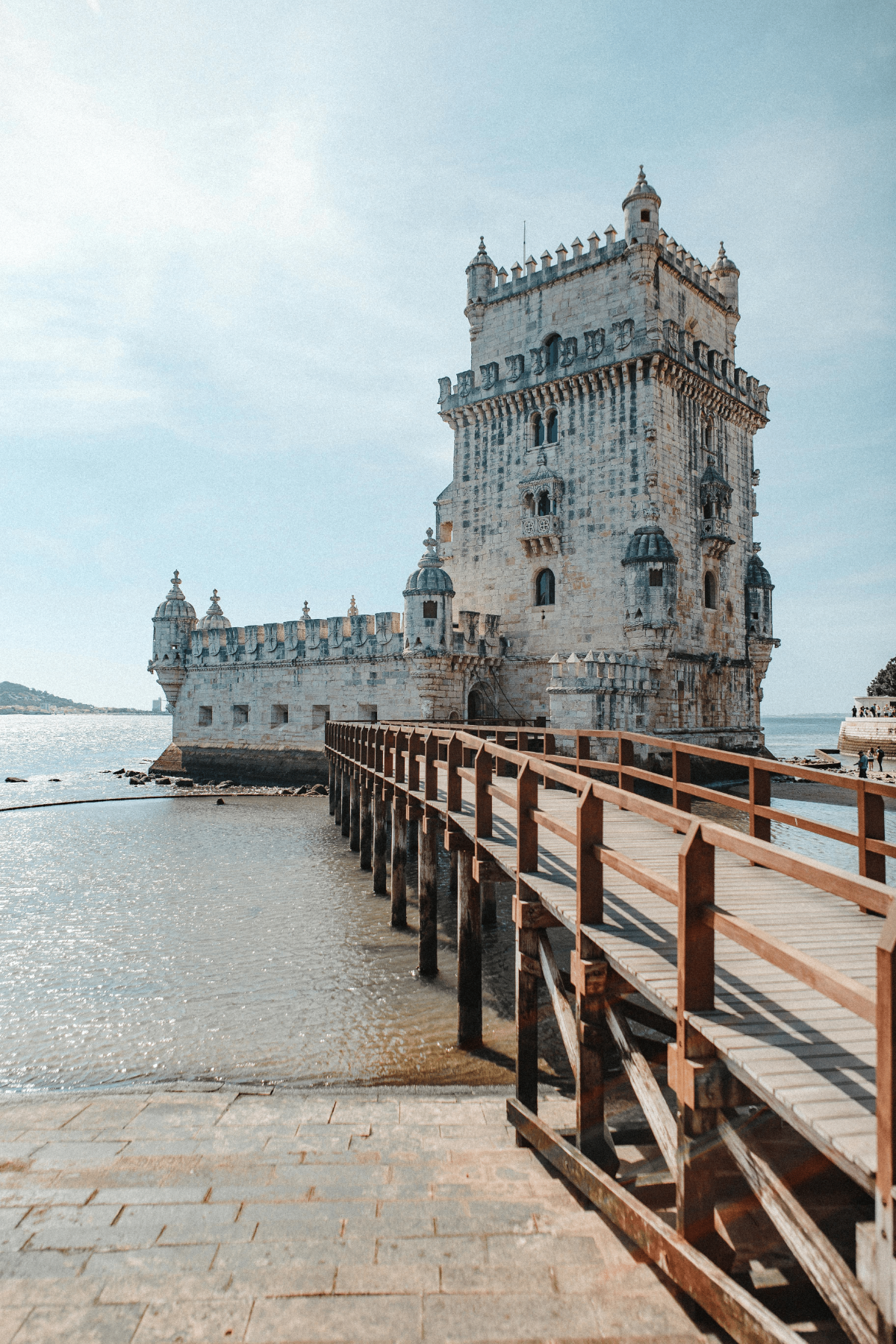
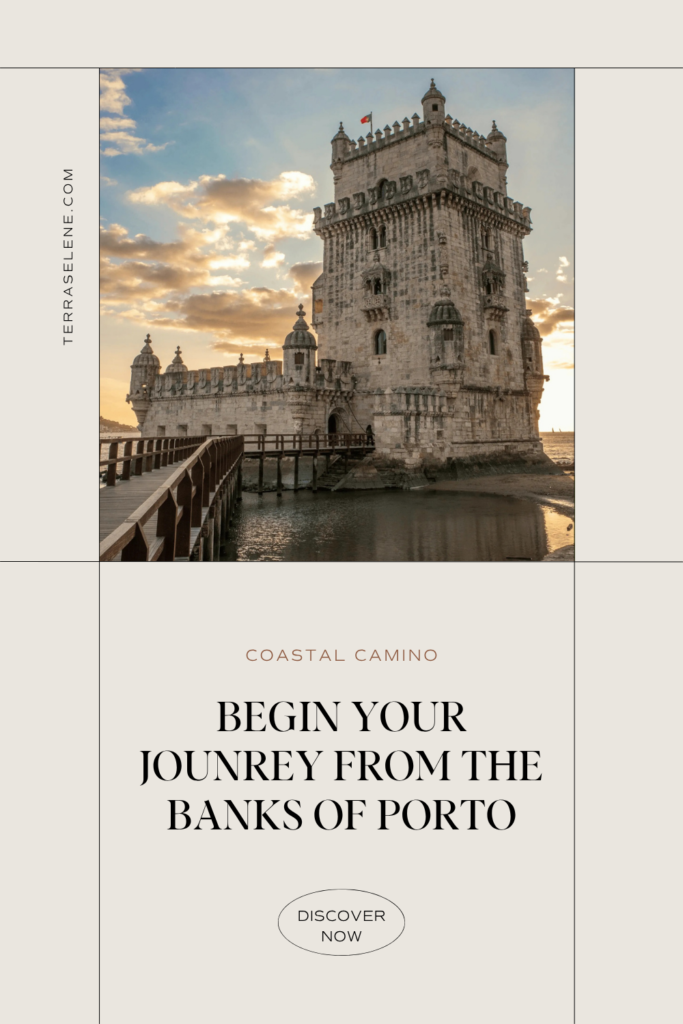
The Camino Portuguese is forgiving with thresholds. Its longest sweep begins in Lisbon, Portugal, well marked by the initial yellow arrow, which heads north for a total distance of 640 kms. For many pilgrims, however, the most popular starting point is Porto, the gateway to northern Portugal and the traditional launchpad for the Porto to Santiago de Compostela pilgrimage.
From the rose-granite cathedral forecourt, two distinct possibilities fan out, and the literal fork arrives quickly. Beyond Porto’s river mouth at Foz, the waymarks reach Matosinhos Beach: one sign sends walkers straight ahead onto dune-top boards that hug the coast, and the other bends right toward Maia’s farmland and the wooded rise of São Pedro de Rates.
If one decides to follow that inland turn, it joins the historic central route, a line of cedar terraces, the broom-bright Labruja ridge, and Roman milestones leaning like tired sentries before the path strides across Valença’s iron span over the broad Minho River into Galicia. Measuring about 245 kms, this corridor earns its nickname “the Goldilocks stretch,” long enough for the rhythm to settle into your bones.
Measuring 274 kms, the coastal route, flanked by the Atlantic Ocean, is slightly longer. After Vigo, this shoreline thread slips inland to meet its older sister at Redondela; from there onward, vineyard shade and sea-borne salt travel the Camino route together toward Santiago de Compostela. Some walkers chase the tide even more closely on the Senda Litoral de Málaga, while others decide to braid all three currents: sea-spray dawns from Porto to Santiago de Compostela’s outskirts via Vigo, central-route afternoons after Redondela, and forest dusk in the final miles toward the city of the saint, proving the Camino tolerates experimentation as long as a pilgrim keeps the arrows in sight.
North of Porto, the kilometerage compresses again. Valença and its Gothic twin Tui straddle the Minho; begin here, and you cover the last 100 km required for a Compostela, a span favored by first-timers or families alike. Vigo offers boardwalk mornings and mussel-raft panoramas on a lean 5-day schedule, while Baiona, my own August threshold, launches a 128-kilometer pilgrimage. The flexibility of the stages allows pilgrims to opt for a short walking day, perfect for those seeking a lighter schedule or more time to explore the towns along the way.
Whether a pilgrim steps away from Lisbon’s urban tide or Baiona’s fishing harbor, each starting point threads into the same moving fabric: greetings that pivot from ‘Bom Caminho’ in Portugal to ‘Buen Camino’ in Spain mid-bridge, stories layered since the Middle Ages, and the nightly certainty of fresh ink in the Camino passport (credencial). Distance changes only the tempo, never the tune.
Camino Route: The Spiritual Variant
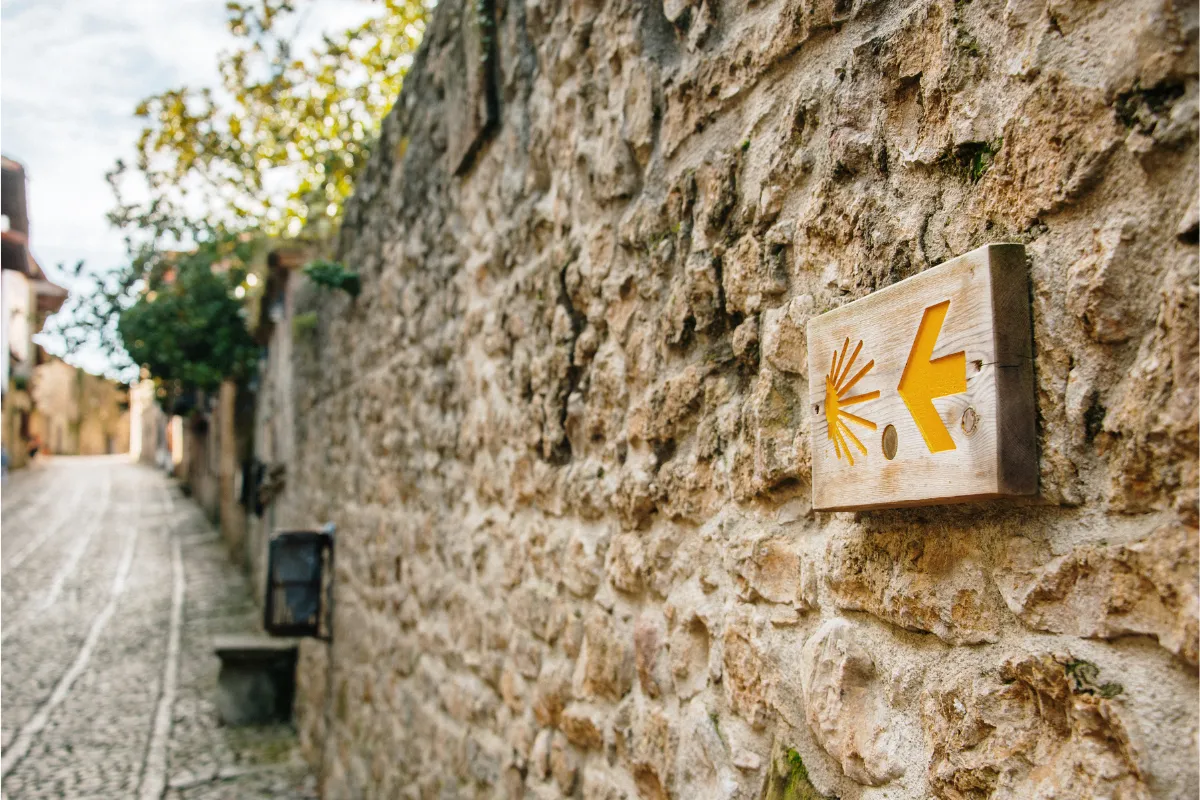
North of Pontevedra, just when the cadence of the walk from Porto to Santiago de Compostela risks feeling predictable, a discreet yellow arrow points left beneath a monastery wall, an alternative route locals call the spiritual route. It unspools through some of Galicia’s most picturesque villages. Granite lanes climb to the Cistercian courtyard of Armenteira, a notable stop where fountains whisper to centuries-old boxwood, and cloister arches frame slow sunlight.
On the second day, a flat-bottom boat gathers pilgrims at the Arousa estuary. The skipper retells the legend of Saint James arriving by stone vessel, a river reverie that trades foot rhythm for water pulse. Two unhurried stages later, travelers step ashore at Padrón, rejoining the main Camino not by road but by tide, carrying in their muscles a quieter tempo that often lingers all the way to Santiago.
Landscapes and Signature Towns
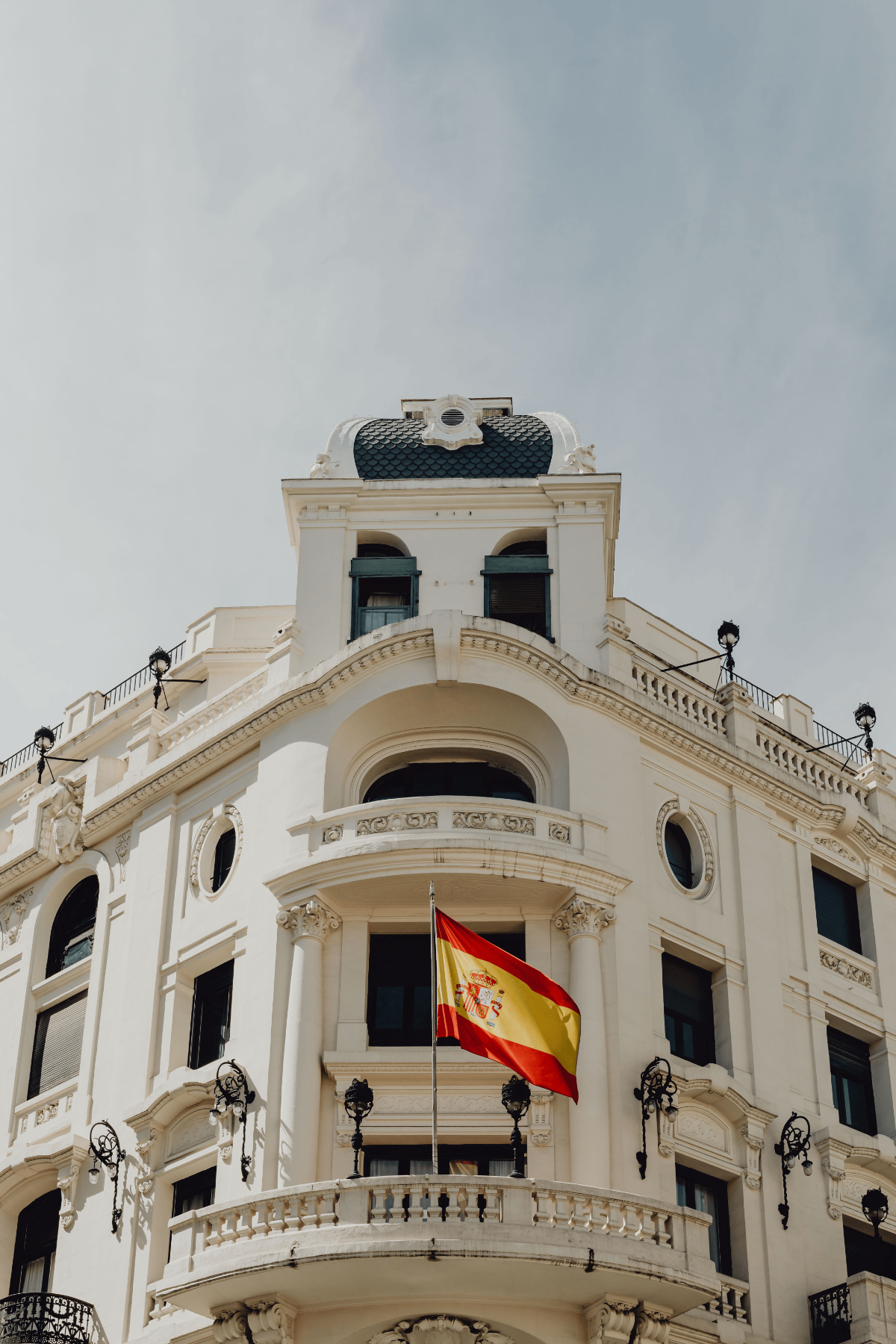
Leaving the coast at Baiona, the first town in Spain, you follow sturdy wooden walkways past the working harbor. A lighthouse museum marks the old fortress; the Cíes Islands sit just offshore, easy to spot from the promenade cafés where early-rising pilgrims collect their first stamp and a coffee to go. It’s common here to meet new friends among fellow pilgrims, sharing stories and camaraderie before the day’s walk begins. A half-day later, the route reaches Vigo, built like an amphitheater above its estuary. Stock up here: it’s the last full pharmacy and major supermarket before Santiago de Compostela.
Imagine standing at the top of Vigo‘s hills, looking out over the estuary and bustling city below, preparing for the next stage of your journey. The track makes a steady climb out of Vigo, drops to Cesantes beach, and runs beside mussel platforms until it turns inland for Redondela. This small town is where the coastal and central routes merge, resulting in accommodation being in high demand. Narrow granite lanes, laundry lines overhead, and the converted Casa da Torre guesthouse, once a village school, serve as the unofficial meeting point for pilgrims. Here, you’re likely to reconnect with friends you’ve met along the way, enjoying the sense of community that defines this iconic pilgrimage. Be sure to visit the Convento de Vilavella, a historic convent that offers a glimpse into the town’s past.
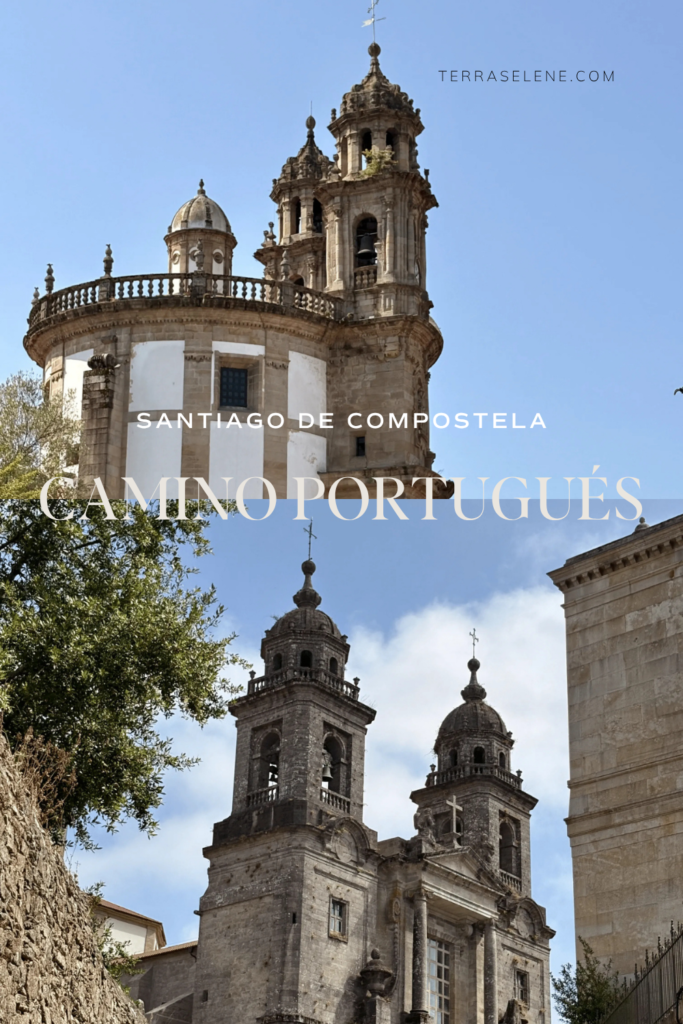
From Redondela, vineyard rows and small farms lead to Ponte Sampaio’s 16-arch stone bridge, best known for an 1809 battle that halted Napoleon’s troops. Ten kilometers later lies Pontevedra, a provincial capital with arcaded squares and a star-shaped pilgrim church built in the 18th century. Restaurants here stay open later than most along the route, which helps if the day runs long. Don’t miss the Museo de Pontevedra, which houses fascinating collections about the region’s history and culture.
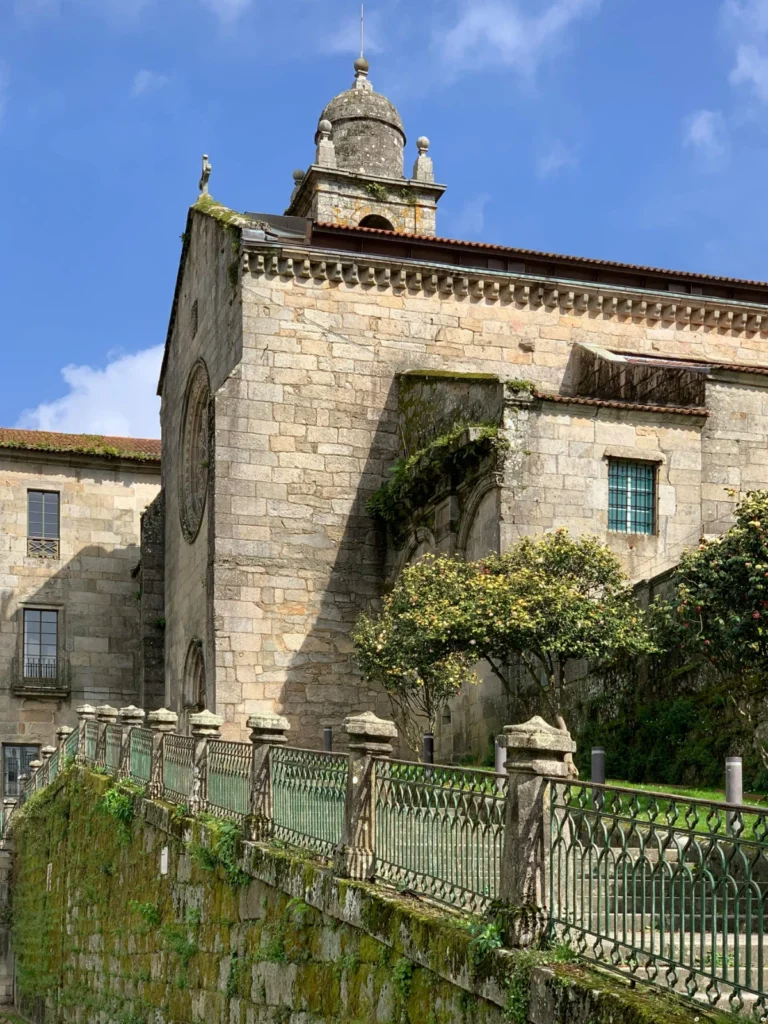
The path out of Pontevedra enters chestnut woods, then arrives at Caldas de Reis. A Roman-era hot spring flows beside the main street; benches and bronze plaques mark the spot where locals and walkers soak tired feet.
Leaving the baths, the Camino follows the Umia River through vegetable gardens and cornfields to Padrón, the hometown of poet Rosalía de Castro and of the peppers that share the town’s name. The parish church keeps a granite “pedrón” said to have moored the boat that carried Saint James’s remains.
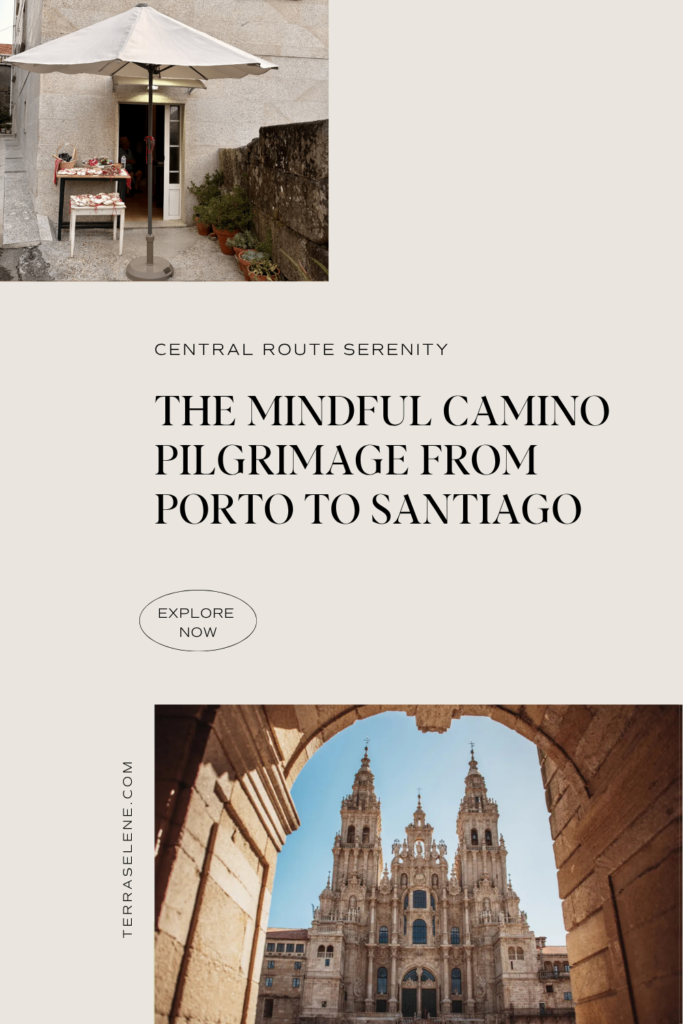
The final stretch rises through eucalyptus plantations to Monte do Gozo, where pilgrims catch their first glimpse of Santiago’s cathedral towers. A last 4 km descent leads to the Praza do Obradoiro: stone façade, daily bagpipes, and a Pilgrim Office that will stamp the credencial one final time, regardless of whether your journey started in Lisbon, Baiona, or elsewhere along the route.
Accommodation and Luggage Services
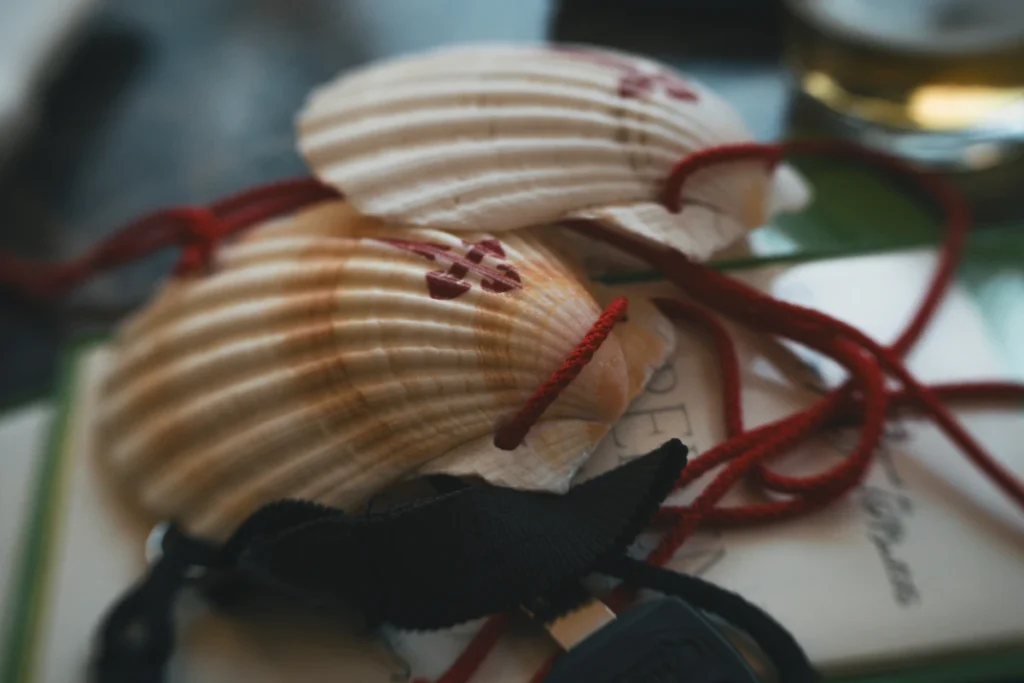
Along the route from Porto to Santiago de Compostela, evenings do not ask you to trade comfort for character. Albergues, the traditional pilgrim hostels, line the path, offering bunk beds, communal kitchens, and the reliable company of fellow walkers. Private rooms in small guesthouses and rural farm stays are equally common, particularly in larger towns such as Vigo, Redondela, and Pontevedra, where booking ahead is wise during the summer months. Most albergues stamp your credencial and can point you toward the next stage, keeping the rhythm of the walk intact.
For those who prefer to travel light, luggage transfer services operate along the entire route. Companies such as Correos, the Spanish postal service, offer a service known as the Pilgrim Paq, where they collect your bags from your accommodation each morning and deliver them to your next stop before you arrive, a practical option on longer or hillier stages. Similar services run on the Portuguese side of the border, meaning you can arrange transfers from Porto all the way through to Santiago de Compostela without interruption. Booking in advance, especially in July and August, ensures availability and gives you one less thing to think about as the yellow arrows lead you north.
Boutique Hotel Faro Silleiro, Baiona
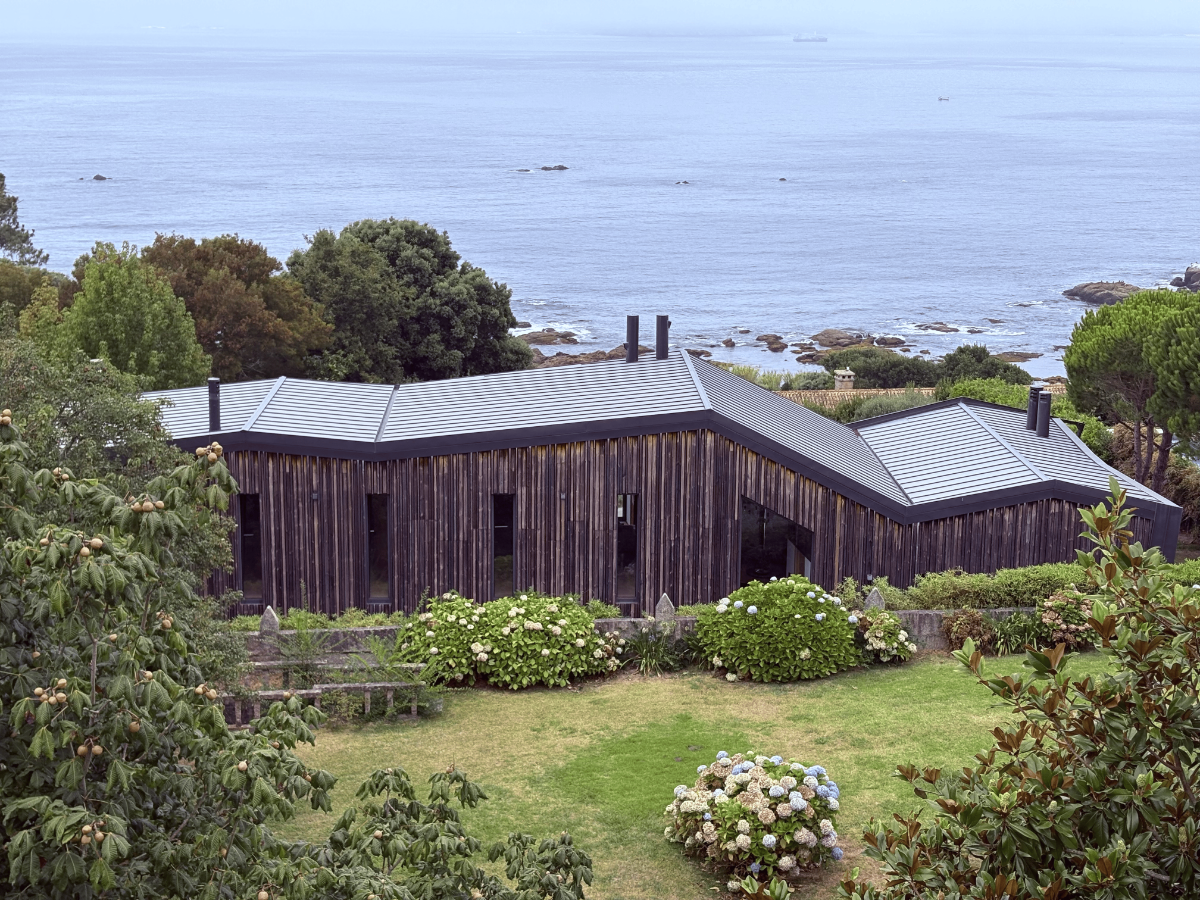
The first night on the coastal route should feel like a threshold, and Boutique Hotel Faro Silleiro understands that instinctively. Set high above the Atlantic, this restored lighthouse is not simply accommodation but a vantage point where the Camino begins to unfold in long, quiet lines below you. The original 1924 Fresnel lens still turns through the night, casting its slow rhythm across the sea, while inside, the rooms lean into warmth rather than nostalgia, with reclaimed teak and salt-softened tones grounding the experience.
What distinguishes this stay is not just its setting but also its perspective. From here, the coastline reveals its full geometry, with boardwalks threading the cliffs and fishing boats cutting deliberate paths through open water. There is a stillness that settles in quickly. Dinner is intimate and unfussy, built around local produce and served in what was once the engine room, a subtle nod to the building’s past without overplaying it. For those wanting more movement, Baiona’s old quarter sits just beyond reach, accessible by shuttle, though many find little reason to leave once the light begins to fade.
NH Collection, Vigo
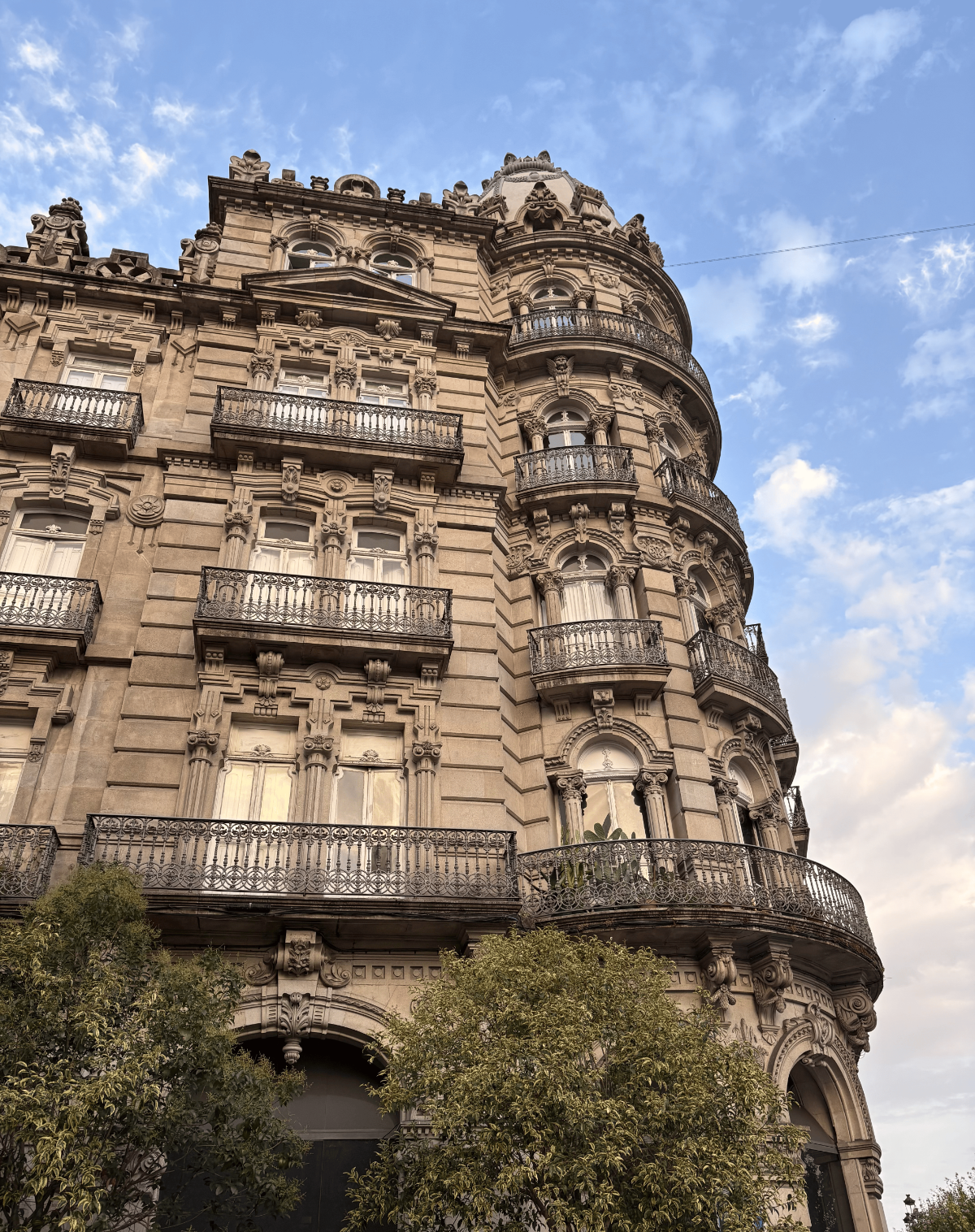
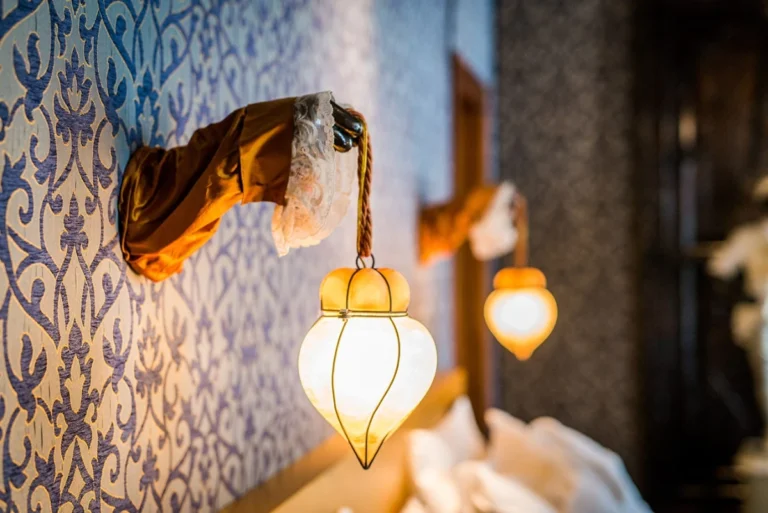
In Vigo, the Camino shifts tone, moving from coastal quiet into urban rhythm, and NH Collection meets that transition with clarity and structure. Housed in a restored Neo-Classical building designed by Michel Pacewicz, the hotel holds onto its architectural gravitas while integrating a more contemporary sense of ease. The scale is deliberate, with high ceilings, wide corridors, and original wrought-iron details offering a sense of permanence that contrasts with the transient nature of pilgrimage.
Rooms overlooking García Barbón Avenue place you directly within the city’s movement, where the Camino threads through everyday life rather than around it. This is where the journey feels momentarily less solitary. The restoration has been handled with restraint, allowing the original materials to retain their presence while quietly incorporating sustainability measures that rarely surface yet are deeply considered. After days along the coast, this stay offers a recalibration point, somewhere to step briefly into a different pace without losing the thread of the walk.
Hotel SPA GBC Arcade, Arcade
Arcade is not a place of spectacle, and Hotel SPA GBC Arcade doesn’t attempt to manufacture it. Instead, it delivers something far more valuable mid-route: precision and reliability. Positioned just beyond Ponte Sampaio’s historic bridge, it arrives exactly when the body begins to ask for structure. The rooms are intentionally simple but considered, with blackout blinds, firm beds, and a quiet that allows for real recovery rather than surface rest.
What sets this stop apart is its understanding of the pilgrim’s rhythm. The small thalasso pool, infused with lightly salted estuary water, feels less like a luxury and more like a functional extension of the day’s walk, easing joints without ceremony. Breakfast begins early enough to place you ahead of the flow, allowing you to cross the medieval arches before the route fills. It is a stay that respects momentum, offering restoration without distraction, and in doing so, it becomes quietly indispensable.
Casal do Camiño, Pontevedra
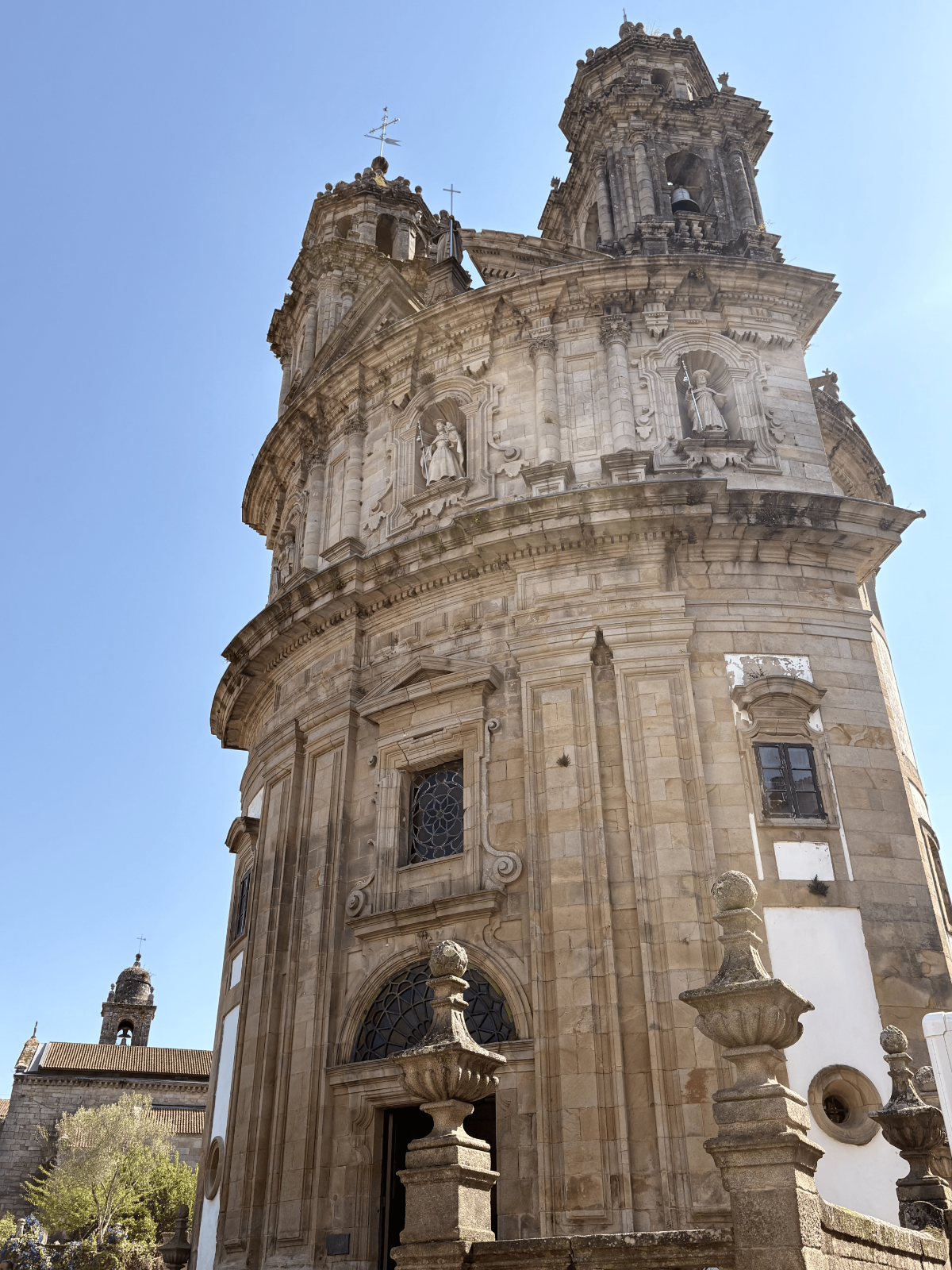
Casal do Camiño feels less like a hotel and more like an interlude. Set within a restored limestone house, its scale is intentionally intimate, just two suites, each designed to slow you down without asking. The sunlit galería draws in the city’s softer light, creating a space that shifts throughout the day, while the interiors lean into texture rather than decoration, with linen, stone, and wood carrying the atmosphere without excess.
The location places you at a natural pause within Pontevedra, close enough to the Basilica square to feel its presence without being absorbed by it. During Semana Santa, processions pass within view, their movement unfolding almost quietly from the balcony. The inclusion of a full kitchen and washer-dryer introduces a different kind of comfort, one that allows you to reset entirely, cook, clean, and briefly step out of the pilgrim flow. It is a stay that offers autonomy, which at this stage of the Camino becomes unexpectedly valuable.
Hostal HCELENIS, Caldas de Reis
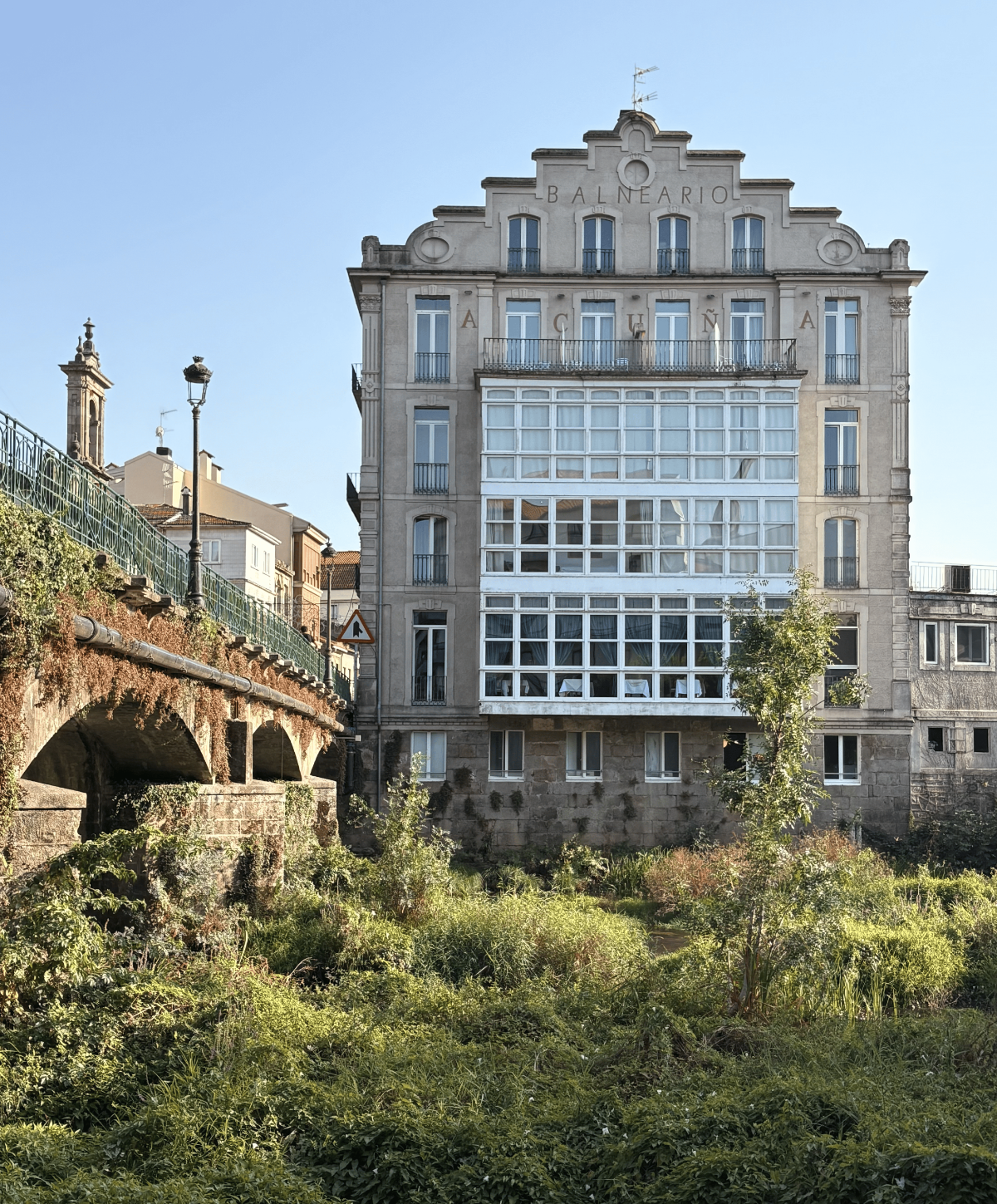
Caldas de Reis is defined by its thermal waters, and Hostal HCELENIS leans fully into that identity without needing to declare it. Set within a converted village house just minutes from the Roman baths, the property holds warmth in its stone walls, creating an atmosphere that feels both restorative and grounded. This is where the Camino begins to soften, where movement gives way to immersion.
There is a quiet attentiveness in the details. Towel pegs positioned exactly where they are needed, flip-flop mats at each doorway, and small gestures that reflect a deep understanding of why guests arrive here. The common room becomes a natural gathering point in the evening, with herbal tea and local honey offered without formality, encouraging a slower kind of connection. It is less about luxury and more about alignment, a place that meets you exactly where you are in the journey.
Os Lambráns, Padrón
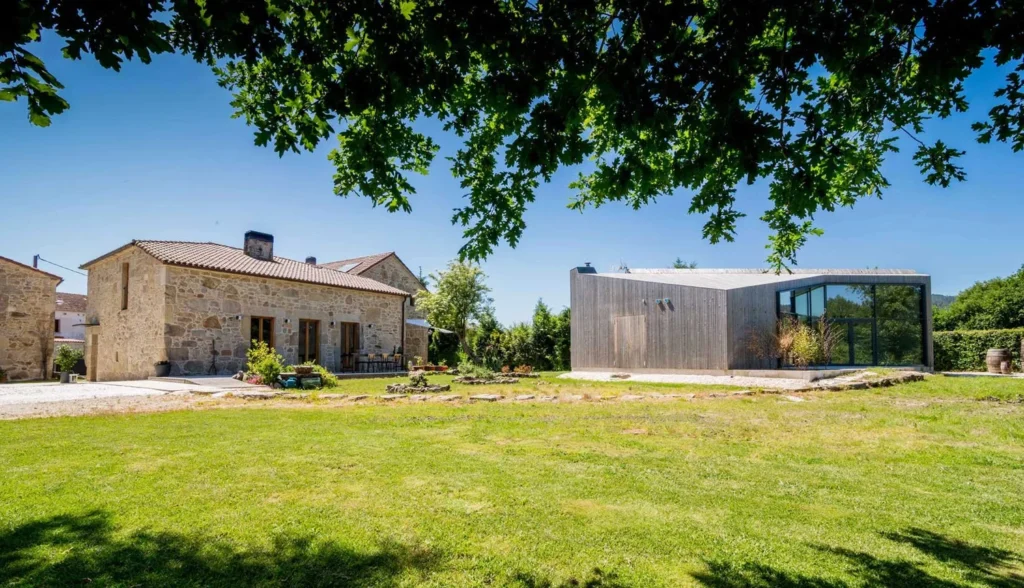
By the time you reach Padrón, the Camino begins to take on a different emotional texture, and Os Lambráns responds with something rooted and expansive. Set within three restored 18th-century barns, the property opens around a central courtyard scented with the region’s famous peppers, creating an environment that feels both agricultural and deeply intentional.
The interiors carry that same balance. Chestnut beams anchor the space, while linen and light soften it, creating rooms that feel connected to the land rather than separate from it. Breakfast becomes a moment in itself, with warm farm eggs, freshly baked broa, and ingredients that speak directly to the surrounding valley. The owner’s presence adds another layer, offering context and history that extend beyond the stay. It is here that the Camino begins to feel less like a route and more like a lineage, and this property holds that transition with quiet confidence.
NH Collection Santiago de Compostela
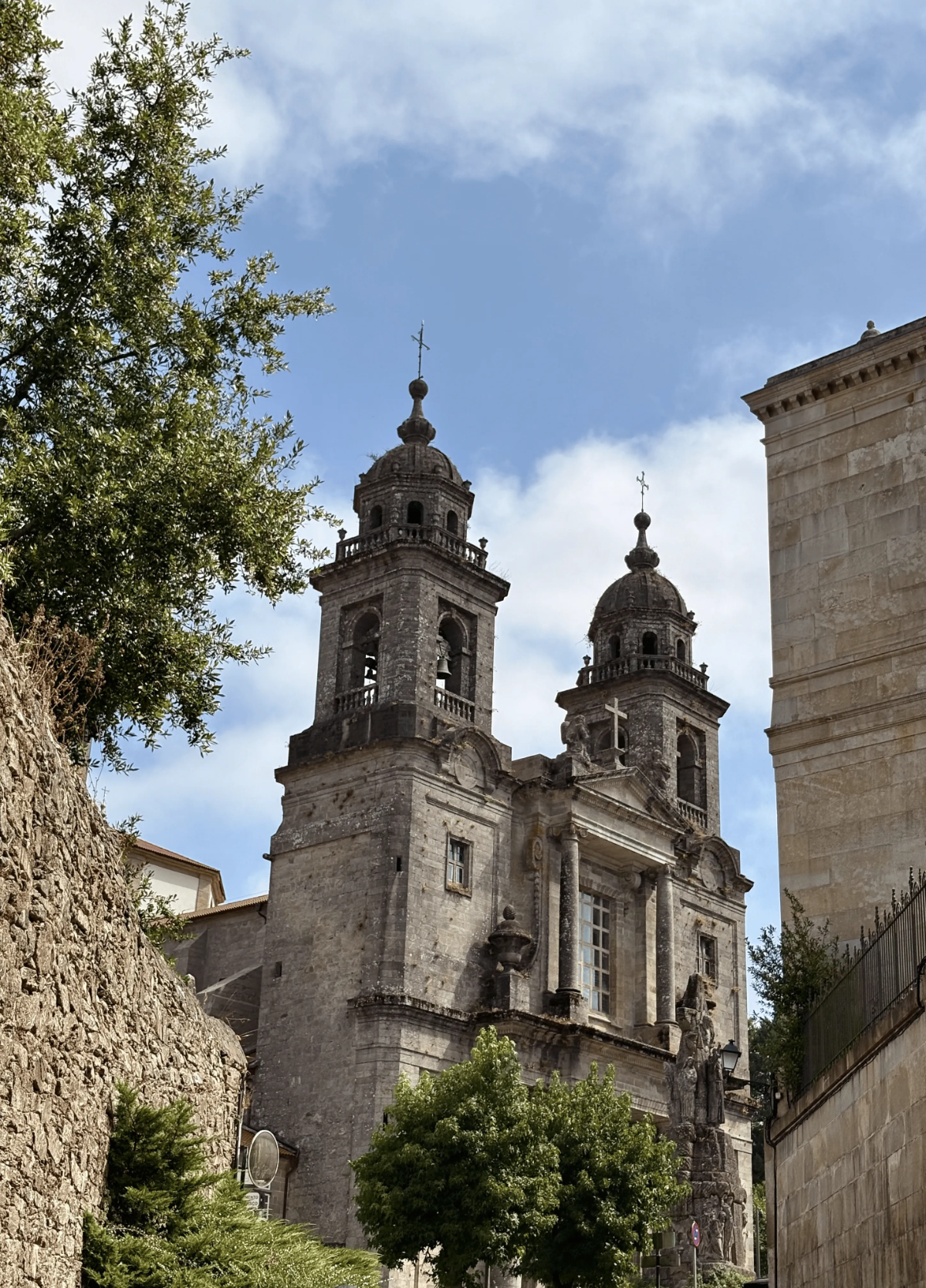
Arriving in Santiago carries a weight that is both physical and emotional, and this final stay should allow for both to settle. Positioned within a lakeside park just beyond the city’s historic center, NH Collection Santiago de Compostela offers a deliberate contrast to the intensity of arrival. Glass-lined spaces reflect eucalyptus canopies, softening the transition from pilgrimage to pause.
The distance from the cathedral is intentional, close enough to remain connected, yet far enough to create space. This allows for a different kind of experience, one where you can attend the pilgrimage mass, collect your Compostela, and return without urgency. The indoor and outdoor pools provide a final release for the body, not as indulgence but as closure. Late check-out extends that feeling, removing the pressure to move on too quickly. It is a stay that understands the importance of ending well, offering a place to absorb the journey before stepping back into the world beyond it.
Santiago de Compostela
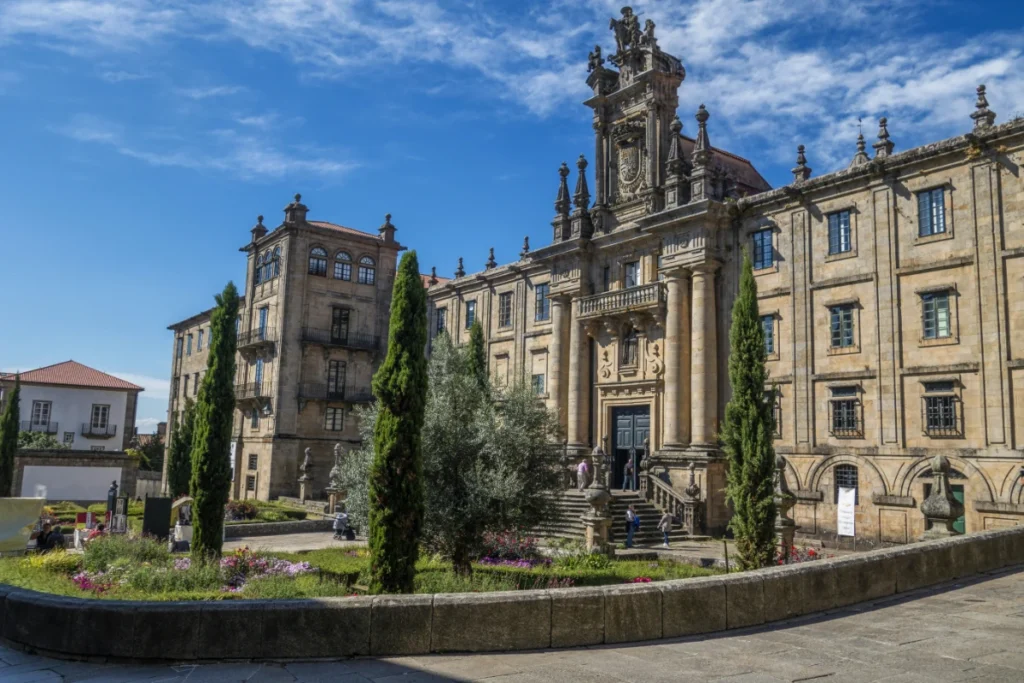
Santiago de Compostela is the Camino’s finish line, and for anyone who has completed the journey from Porto to Santiago de Compostela, arriving in the Obradoiro square carries a weight that no photograph quite captures. Pilgrims and barhoppers share the same rain-washed medieval core, the cathedral’s baroque façade looming above both with equal indifference. Spend time inside the cathedral, queue for the pilgrim mass, and try pulpo a feira and blistered Padrón peppers at one of the arcaded taverns nearby. When night falls, Galicia’s music spills into the stone lanes, and the city that marked the end of your walk reveals itself as a place worth lingering in long after the blisters have faded.
CURATED TRAVEL
Need help booking a seamless journey to your destination?
Let us plan your itinerary from start to finish, with carefully selected stays, seamless routing, and considered recommendations throughout. As a Fora Travel advisor, we’re able to secure upgrades, added amenities, and preferred access, at no extra cost to you.
Training, Rhythm, and Difficulty on The Camino Portuguese
The Portuguese route seldom climbs higher than 400 ms, yet the summer sun and Roman stone make every gradient feel steeper. Whether you are planning the full Porto to Santiago de Compostela journey or joining the route at a shorter starting point, training by walking at least three consecutive mornings is essential, gradually stretching the distance until it matches your planned longest day. These dawn sessions mimic the cadence the Camino demands: a steady, meditative stride that spares joints while conserving breath.
On the trail, I aimed to depart every town before the day’s first light. Pre-dawn kilometers slipped by with only the tap of poles on boardwalk planks and the hush of sea swell to keep time. After sunrise, the pace adjusted to the temperature rather than ambition. At 30℃, feet expand; laces need loosening, or circulation falters, and blisters bloom. If the route in August feels exacting, autumn softens it. Vines shade the lanes, chestnut smoke drifts low, and cool mornings invite longer stages without draining salt stores. Winter removes crowd pressure, yet the shorter daylight hours confront pilgrims with brisk decision-making: start later in winter, or walk in the dark at both ends of the day. The Camino permits either choice, so long as you respect the tone set by the season.
Best Seasons to Walk
Spring arrives wet and perfumed, yet strikes the ultimate balance between daylight and heat. By late April, the sun lifts the ground fog off the Atlantic coast by mid-morning, while the central route, heading inland past olive groves and vine terraces, retains a cool hush that lingers until lunchtime. Evenings still ask for a fleece, but the reward is space: most pilgrims have not yet filled private albergue bunks, café owners lean on doorframes swapping stories, and every credential stamp still presses crisp ink. When the clouds do burst, showers are brief enough that a poncho and a good sense of humor see you through the journey.
Summer floods the Camino with light. Sunrise flashes silver off the Atlantic Ocean before 6:00 a.m., and sunset holds color until nearly 10:00 p.m. The surf from the oceans cools your skin along the boardwalks, but inland vineyards on the central route trap the warmth like a greenhouse, where temperatures can soar past 35°C by noon. Accommodation vanishes early in Pontevedra and Caldas de Reis during this time, where coastal and inland strands converge, and siesta shutters fall just when late-arrivers crave lunch.
Walkers who choose their pilgrimage in August carry electrolytes handy and chase predawn kilometers to avoid the building heat. For everyone else, a June or early-September window offers the same long glow; however, it has fewer crowds and a slightly more palatable temperature along the full Porto to Santiago de Compostela corridor.
Autumn tastes of fermentation and is, with spring, the season most pilgrims eventually recommend. Olive groves south of Porto yield green-gold fruit that stall vendors slip into paper cones for passing walkers. Daylight shortens gently, granting 11 walking hours under a mellow sun, and rain returns in placid intervals rather than spring’s exuberant bursts. Crowds during this time thin to a companionable trickle. Clearing weather sweeps the Monte do Gozo overlook so crystal that the towers of Santiago de Compostela seem close enough to touch.
Winter speaks in quiet consonants. Boardwalks lie empty beneath Atlantic squalls, and inland cobbles darken to mirror polish under steady drizzle. Nine hours of pale light compress the walking day, but a silk liner, reflective pack cover, and willingness to wait for cafés to lift shutters at seven turn the season from ordeal to privilege. Those who walk this route in winter often describe the Camino not as a trail but as a private chapel stretched between Baiona’s surf and Santiago de Compostela’s bells.
Packing Light: Gear Checklist
Planning your backpack for the walk from Porto to Santiago de Compostela is one of the most important decisions you’ll make before setting out. Aim for a pack that sits just under 7 kilograms, about 10% of most adults’ body weight. That limit keeps the stair and vineyard climbs manageable, yet leaves enough room for the few things that make every stage easier: 2 moisture-wicking shirts that rotate each evening, 1 mid-weight fleece for setting out at dawn, and a feather-light shell that stops Atlantic crosswinds without sealing in the heat.
Breathable trail runners outperform heavy leather hiking shoes, and a spare pair of merino socks is the midday swap after you’ve coated your feet in a thin layer of Vaseline to avoid blisters from forming. Pack a well-thought-out blister kit that you can rely on. A sterile needle, a loop of cotton thread, an alcohol swab, and a single hydrocolloid patch weigh almost nothing, yet they turn a hot spot into a non-issue.
Keep hydration simple: a 2L hydration pack and a 1/2L soft flask in the side pocket carry enough electrolytes when needed throughout the day. Hip-belt pockets help hold the essentials you need to reach for without stopping: high-SPF sunscreen, a travel pump of hand sanitizer, and your phone kept mostly on airplane mode for the occasional arrow check.
This entire corridor rewards those who resist the urge to overpack, because every gram you leave behind becomes a kilometer you enjoy more fully.
Health, Safety, and Pilgrim Services
Walking the route from Porto to Santiago de Compostela demands the same practical preparation as any long-distance pilgrimage, and a few habits matter as much as sturdy boots.
Summer temperatures along the coast often push past 30°C by noon, so most pilgrims leave before dawn, refill at every fountain, and step off the lane whenever tree shade appears. Early starts also reduce the risk of being caught in a storm, as the Atlantic squalls can roll in without warning, and the safest response is to shorten the day rather than press on into lightning.
Your feet tend to suffer before your morale does, so layer them with a thick layer of Vaseline at breakfast, swap merino socks at lunch, and carry blister pads where you can reach them without needing to unpack. If hot spots begin to form despite precautionary measures, pierce the blister sidewall with a sterile needle, thread a wick to drain, clean with an alcohol swab, and seal overnight under hydrocolloid, a simple yet effective method that can heal your blisters.
Visibility tends to keep pilgrims and drivers equally safe. A reflective ankle strap and a red backpack light make you obvious on pre-dawn road shoulders, while a low-beam head torch preserves night vision without blinding others.
Valuables travel best in a flat money belt where you can carry your passport, credencial, bank card, and your phone. When long stretches begin to feel empty, pair up with pilgrims who match your pace, as company discourages petty theft and provides a witness if you miss a waymark.
Help is always close by; however, there are stretches where you can lose service on your phone. Dial 112 anywhere in Spain or Portugal for the police, fire, or an ambulance. The free AlertCops app shares your GPS location with emergency services; Camino-specific apps like Camino Assist and Buen Camino bundle offline maps, weather alerts, and clinic phone numbers for every stage. Pharmacies anchor each stage, but local festivals and public holidays can affect opening hours, as we experienced firsthand, so restock bandages and electrolytes well in advance.
Ensure you obtain travel insurance with medical coverage that works on both sides of the border, which is essential for this specific pilgrimage. EU and UK walkers should pack their EHIC or GHIC card; everyone else needs a policy that covers outpatient care, heat-related illness, and, worst case, medical evacuation. Present proof of coverage along with your passport at clinics in Valença, Pontevedra, or Santiago to keep paperwork short and treatment immediate.
Why the Portuguese Way Endures
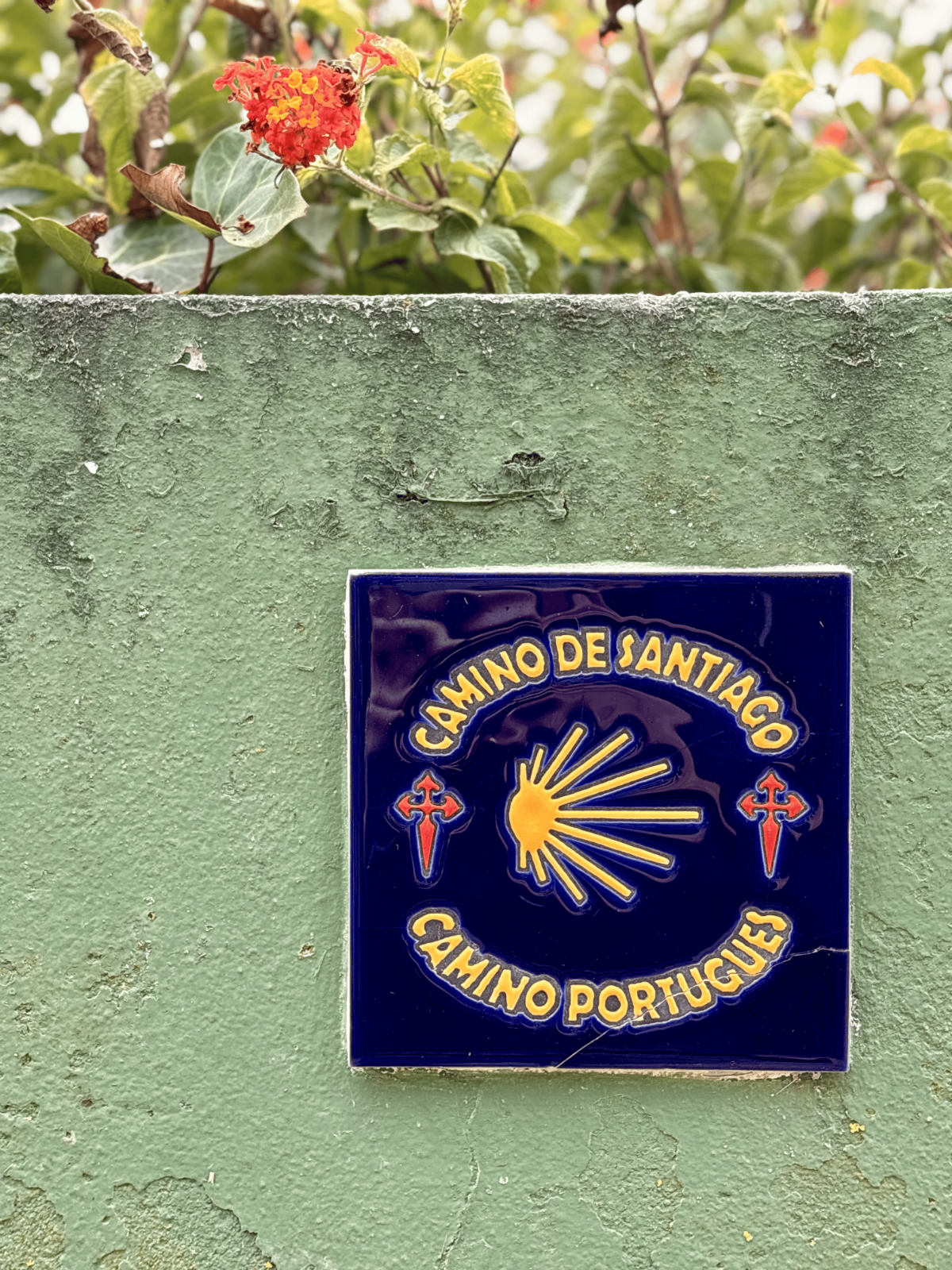
The Portuguese Camino endures as it is structured with a level of balance that few long-distance routes manage. From Porto to Santiago de Compostela, the path moves between distinct environments without feeling disjointed. It leaves behind red-tiled cities, follows the Atlantic coastline, and then gradually shifts inland through vineyards and small agricultural towns. The changes are frequent enough to keep the experience engaging, but measured enough that the body can settle into a consistent rhythm.
Each stage feels intentional. Distances are manageable, infrastructure is reliable, and the route offers flexibility between the coastal and central paths without losing continuity. You are not locked into a single landscape or pace, which makes it easier to adjust based on energy, weather, or preference.
What ultimately sustains the route’s appeal is its consistency. It delivers variation without disruption, comfort without overdevelopment, and a clear sense of progression from start to finish. By the time you reach Santiago, the experience feels complete, not because it was demanding, but because it was well-paced and thoughtfully designed.
frequently asked questions
Pin This for Later