Organic Bed Protector: The Complete Guide for 2026
Sleep is an intimate exchange between body, fabric, and air, yet many bedrooms still rely on materials and plastic-lined covers that creak at every turn and off-gas into the darkness. An organic bed protector rewrites that nightly routine. Soft, pesticide-free cotton and temperature-wise wool replace petroleum films, while a food-grade waterproof membrane guards against the cup of perspiration each sleeper releases before dawn. By sealing out moisture, dust mites, and body oils, a well-fitted organic shield can double a mattress’s lifespan and keep indoor air noticeably fresher.
This guide moves from the why to the how. We cover the science behind certified organic fibers and the invisible chemistry they avoid. Next, we compare waterproof cotton pads, breathable wool toppers, and full encasements so you can match protection to lifestyle. Key features such as thread count, fit depth, and laboratory safety seals follow, preparing you to read labels with confidence. Finally, we rigorously vet brands, each with verifiable certifications and care policies, appear in detail, allowing you to choose a protector that aligns with both ethics and comfort.
Some links in this post are affiliate links. That means we may earn a small commission, at no additional cost to you.


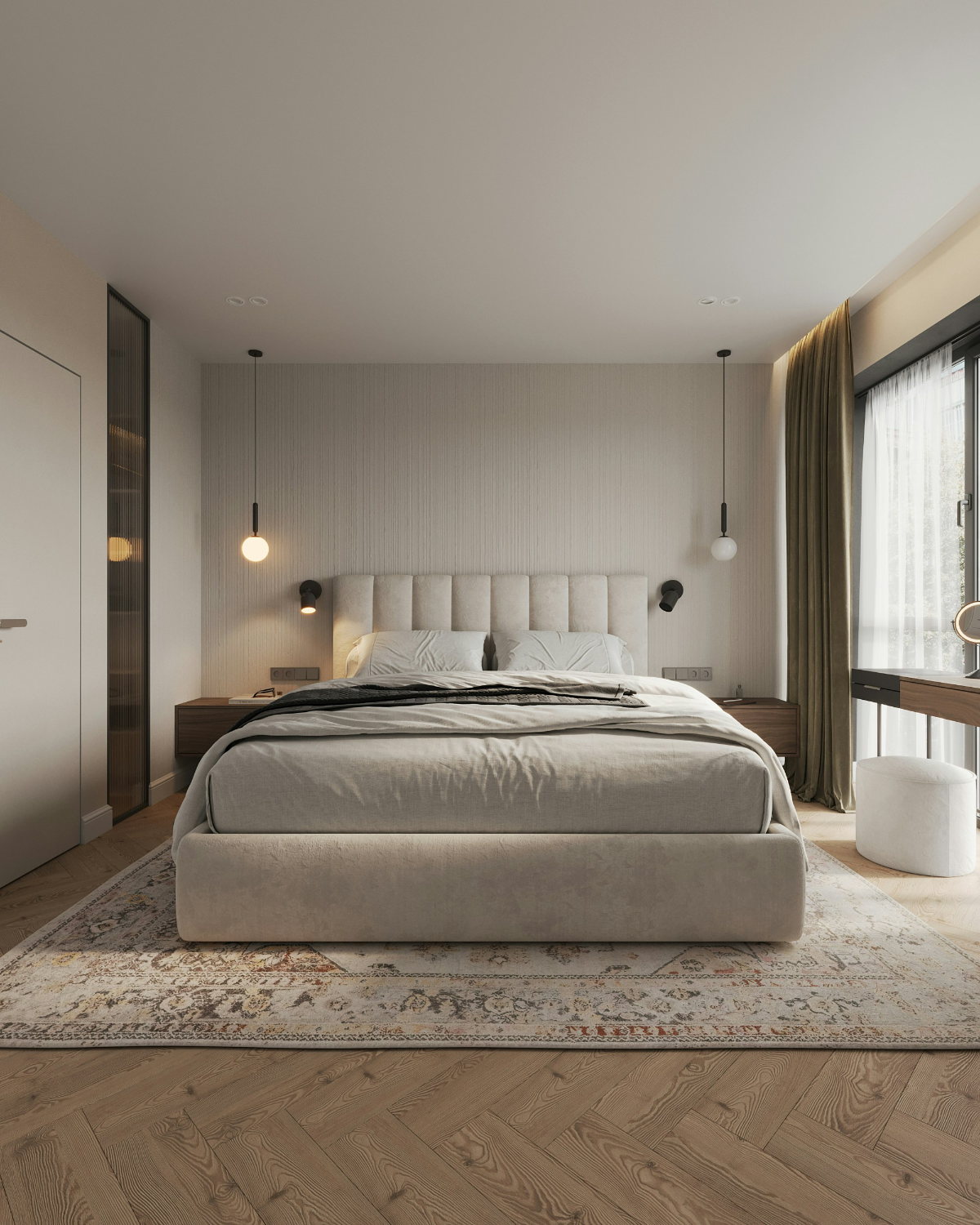
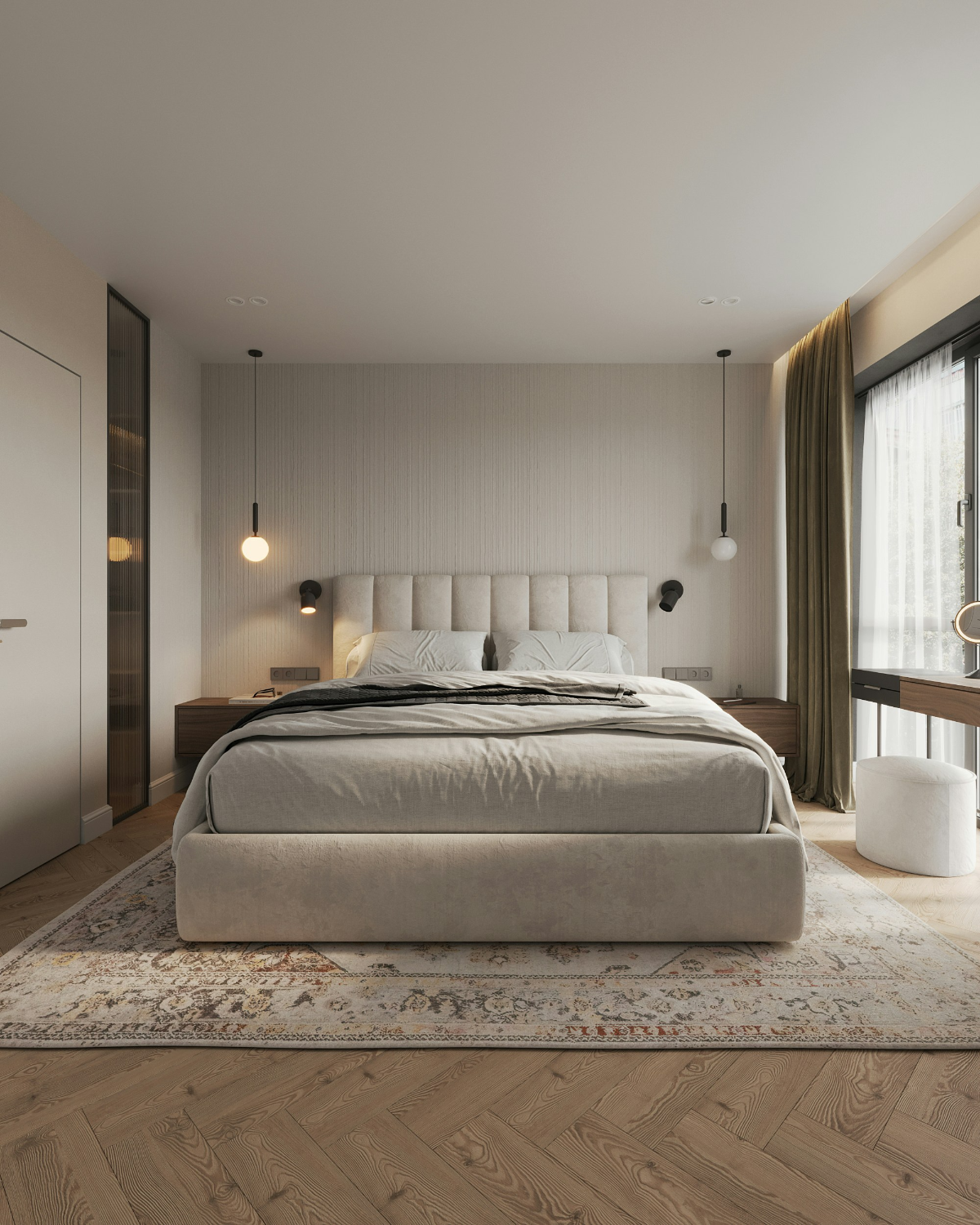
Modern bedroom with tufted headboard, globe pendants and plush platform bed over a patterned rug in warm neutrals.
What You'll Discover
Why Choose an Organic Bed Protector
The answer begins with protection. Without a mattress protector, even a premium organic mattress will begin to break down after four to six years as sweat, dust, and microorganisms seep through the ticking. A well-made organic bed protector doubles that life span by providing a breathable shield and moisture barrier. The value grows when you compare materials. Conventional protectors rely on vinyl and polyester, creating a plastic micro-climate that traps humidity, amplifies heat, and emits volatile organic compounds for months. Synthetic coatings may also include PFAS chemicals linked to endocrine disruption after prolonged exposure. In contrast, organic cotton and wool are cultivated without synthetic pesticides, herbicides, or GMO seeds, reducing residue that can irritate sensitive skin and lowering farm runoff that further harms rivers. For sleepers managing eczema, asthma, or chemical sensitivities, the difference is immediate: calmer skin on waking and fewer nasal flares.
Additionally, organic protectors satisfy the practical realities of family life by keeping your mattress clean. A toddler’s nighttime mishap, a pet’s muddy paws, or that weekend breakfast in bed no longer translate into permanent stains or odors. Modern designs offer a waterproof barrier and remain machine washable on gentle cycles and tumble-dryable on low, enduring more than two hundred launderings without delaminating the waterproof layer. Wash once before first use, as slight shrinkage can tighten the fit so the corners of the protector stay put through the night. Skipping bleach helps preserve the integrity of the natural fibers whilst avoiding premature aging.
The final argument is comfort. Cotton jersey mimics a favorite T-shirt, stretching with movement; percale feels crisp and cool; organically raised wool wicks moisture yet resists damp thanks to lanolin. All three outperform stiff polyester films that amplify every shift with rustling noise.
What Makes a Bed Protector Truly Organic
The word “organic” on a product label doesn’t automatically mean much. Without third-party verification, it’s often just marketing. Authenticity relies on independent certification and transparent supply chains. The Global Organic Textile Standard, known as GOTS, remains the gold standard, requiring that at least seventy percent of fibers originate from verified organic farms and that factories exclude formaldehyde, chlorine bleach, and heavy-metal dyes. The same label audits wastewater treatment and worker conditions. OEKO-TEX Standard 100 complements GOTS by testing the finished fabric for residual pesticides, heavy metals, and formaldehyde that could migrate to skin. MADE SAFE screens for known or suspected carcinogens and endocrine disruptors, while GREENGUARD Gold measures chemical emissions for indoor air quality.
A common misconception is that waterproofing disqualifies a product from organic status. In practice, a micro-thin layer of thermoplastic polyurethane, or TPU, can coexist with GOTS certification because the film contains no phthalates, vinyl chloride, or PFAS. The key is that both film and sewing facility must pass the standard’s chemical and social criteria. Beware labels that declare “organic cotton surface” yet hide polyester filling or vinyl skirts; such designs dilute the benefit.
Types of Organic Bed Protectors
Not all protectors serve the same purpose for your organic mattress. Some prioritize providing a moisture barrier, while others focus on breathability or allergen control. Some organic bed protectors also incorporate natural materials like latex for added comfort and durability. Understanding the different types helps you match the right mattress cover to your actual needs.
Waterproof Mattress Protector
A waterproof protector is the workhorse option for most households. Made with two layers of organic cotton with a silent, breathable moisture barrier between them, these protectors block spills, nighttime accidents, and sweat from reaching your mattress. The waterproof barrier, typically a thin TPU membrane, allows water vapor to escape while preventing liquids from soaking through. Many organic mattress protectors use a thin layer of polyurethane for waterproofing, which is considered safer than traditional PVC materials. Some organic mattress protectors are also made with a waterproof layer derived from natural materials, such as cornstarch. These are the best choice for families with young children, pet owners, or anyone who wants complete peace of mind. Quality models offer breathability ratings exceeding 1,000 g/m²/24h, meaning they won’t trap heat like old-school vinyl covers.
Organic Cotton Topper (Non-Waterproof)
If you rarely deal with unfortunate accidents, and want to protect your mattress whilst ensuring maximum breathability, a non-waterproof organic cotton protector might be sufficient. These focus on softness and airflow, wicking away sweat and providing a barrier against dust and skin oils. They’re lighter, often softer to the touch, and work well for adults who prioritize comfort over liquid protection. However, they won’t save your mattress from a spilled glass of water or a pet accident.
Organic Wool Protector
Wool is a naturally water-resistant material, not waterproof, thanks to lanolin, the waxy substance in wool fibers. Organic wool protectors excel at moisture-wicking, absorbing up to 30% of their weight without feeling damp, and temperature regulation for both hot and cold sleepers. They’re also naturally antimicrobial and resistant to odors. One point worth noting, is that they won’t stop a full spill from eventually soaking through to your mattress, and they typically cost 10-20% more than cotton alternatives. Wool protectors can last 15-20 years with proper care, making them a strong long-term investment.
Full Encasement Protector
A zippered, six-sided design that completely seals your mattress. Full encasement protectors are the go-to choice for allergy sufferers looking to block dust mites and bed bugs, or for anyone in urban apartments where pest prevention is a concern. Organic versions use certified materials throughout while still providing complete barrier protection. These are more involved to install and remove for washing however, they offer the most comprehensive mattress coverage.
Key Features to Look For
A mattress cover may look simple, yet the differences between a throw-away vinyl sleeve and a long-lasting organic bed protector lie in the details you feel but rarely see. Fit, fabric texture, breathability, waterproof science, and third-party safety seals all determine whether your purchase will sleep cool on night one and still guard the mattress years later. The following touchpoints translate marketing jargon into concrete traits you can test or verify before checkout, ensuring the protector you bring home aligns with clean-sleep principles and stands up to real-world family life.
Depth and fit
A protector that barely skims the corners lets moisture slip through the exposed side panels, so start by measuring the mattress from foundation to crown. Standard spring models sit near ten inches, but pillow-tops and modern hybrids rise to fourteen, sometimes sixteen. The right organic bed protector advertises a pocket depth at least one inch deeper than the number you record, building in the modest shrink that occurs after the first warm wash. Premium makers pre-shrink cotton skirts and finish the hem with a wide, continuous elastic tape; that construction grips edges all night, even when children chase each other across the bed, or an adjustable base lifts the head for late-evening reading.
Softness and feel
Fabric hand defines first impressions. Certified-organic cotton jersey drapes like a well-worn T-shirt, stretching with body contours and staying silent on motion-activated beds. For those who run warm or crave hotel crispness, a three-hundred-thread-count percale offers a cool, matte surface that glides beneath a sheet. Thread counts above three hundred often sacrifice breathability for density, so a balanced weave, two hundred to three hundred, delivers both durability and airflow. If possible, pinch the fabric in a showroom: it should feel like bedding, never like a slick tarpaulin.
Noise level
Organic cotton fibres are tubular and hollow, allowing water vapour to escape instead of collecting against the skin. Wool goes further, absorbing up to thirty percent of its weight in moisture then releasing it before dampness occurs, a natural phase-change action that levels temperature swings. Brands that publish moisture-vapour transmission rates above one thousand grams per square metre per twenty-four hours are signalling that the protector keeps pace with the amount of perspiration an adult releases overnight. In practice, that means fewer wake-ups caused by heat spikes.
Waterproof performance
True waterproof protection blocks a full glass of liquid without letting damp seep into the quilting beneath. Look for hydrostatic-head figures, laboratory ratings that show resistance to at least five pounds per square inch of water pressure, or explicit ASTM fluid-penetration tests. Descriptions claiming only “water resistant” often fail a spill left unattended for an hour. A high-quality organic mattress cover pairs its TPU membrane with seam construction that turns corners inward, preventing wicking along stitch lines.
Machine wash and durability
An everyday protector must survive routine laundering, so scan the care tag: warm-water cycles, mild detergent, and low-heat tumble dry are ideal. Top-tier organic protectors withstand more than two hundred wash-and-dry cycles without film separation or elastic fatigue. Heat-fused membranes outperform glue-bonded films by resisting peel-off when exposed to dryer temperatures. Expect up to three percent shrink on the first wash; reputable brands cut the fabric slightly oversized so it fits correctly afterward.
Safety testing
Certifications translate marketing promises into verified facts. A Global Organic Textile Standard licence confirms organic content and bans chlorine bleach, azo dyes, and formaldehyde in processing. OEKO-TEX Standard 100 and GREENGUARD Gold go further by testing the finished product for residual volatile organic compounds, pesticides, and heavy metals. If the product page asserts “PFAS free” or “VOC tested,” demand a recognised seal or a downloadable test report; without documentation, the claim remains advertising rather than assurance.
Health and Environmental Benefits of Organic Protection
Nearly a third of life unfolds beneath the covers, roughly fifty hours each week, so the fabrics cradling those moments wield a quiet influence many overlook. Traditional bed protectors often contain harmful pesticides, dyes, and VOCs, whereas organic protectors avoid these substances, offering better temperature regulation and skin safety. Additionally, synthetic textiles can bleed vapors that erode indoor air quality, and researchers now trace night-long chemical exposure to mounting health concerns. An organic bed protector interrupts that cycle, surrounding sleep with fibers as clean as the dreams they shelter.
Organic cotton farming eliminates synthetic pesticides and fertilizers from the equation. Conventional cotton accounts for about 25% of global insecticide use despite covering only 2.4% of agricultural land. Organic practices reduce this chemical load while also cutting water usage by up to 91% and sequestering carbon in healthier soil, roughly one ton of CO2 per acre annually. Choosing renewable resources like organic cotton over petroleum-based synthetics shrinks your bedding’s environmental footprint considerably.
On the health side, avoiding PVC, flame retardants, and PFAS in your bed protector removes potential sources of chemicals linked in research to respiratory irritation, hormone disruption, and skin sensitivity. PFAS, sometimes called forever chemicals because they don’t break down in the environment, are found in roughly 80% of conventional waterproof textiles. Organic protectors using TPU barriers and non-toxic treatments eliminate this exposure pathway during the many hours you spend asleep.
Organic protectors create an effective barrier against dust mites, which are present in 80% of homes and contribute to an estimated 20 million allergy cases annually in the U.S. Studies on organic cotton bedding show up to 50% reduction in dust mite allergens compared to synthetic materials. For sleepers with asthma or seasonal allergies, this breathable protection can make a noticeable difference.
High organic fiber content and minimal plastic components make organic protectors easier to recycle or compost compared to fully synthetic products. Some brands use biodegradable packaging and offer free shipping with carbon-neutral delivery, reflecting broader sustainability commitments.
Organic Bed Protector Brands: 9 Certified Options for 2026
We have spotlighted these nine brands for three particular reasons. Several of them carry third-party certifications that confirm low chemical emissions or verified organic content. Each manufacturer publicly discloses fabric and membrane details rather than relying on vague eco claims, allowing shoppers to compare materials line by line. Finally, each brand maintains distribution channels that reach most U.S. and Canadian addresses, ensuring that you are able to can obtain the product without resorting to international freight or boutique importers. This combination of certified safety, transparency, and real-world accessibility makes the shortlist a dependable starting point for anyone upgrading to an organic bed protector.
My Green Mattress
The Organic Cotton Waterproof Protector by My Green Mattress is cut, sewn, and packaged in the company’s GOTS-inspected facility in La Grange, Illinois. Two layers of 150 gsm organic cotton jersey surround a heat-bonded, food-grade TPU membrane that remains intact after more than two hundred warm-wash cycles, according to the brand’s care testing. The continuous elastic hem secures mattresses up to eighteen inches deep and resists slippage on adjustable bases. GREENGUARD Gold certification confirms low chemical emissions, and the company supports every purchase with prepaid returns for one year and shipping to the continental United States and Canada within five business days.
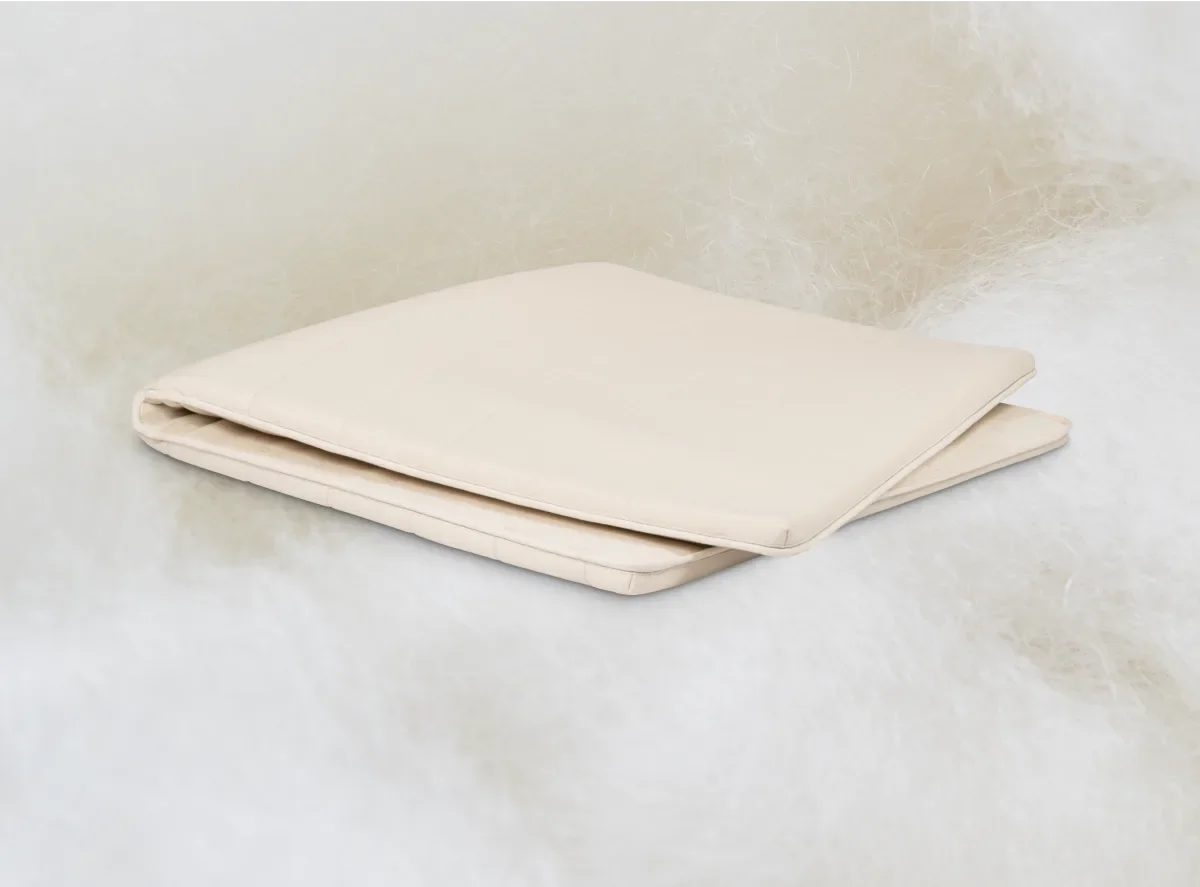
Folded Birch organic wool mattress topper resting on a fluffy wool backdrop.
Birch Living
Birch assembles its waterproof protector in the United States and offsets all distribution emissions through its partnership with Climate Neutral, a detail recorded in the brand’s annual impact report. An OEKO-TEX Standard 100 certificate covers the silent PU film, verifying freedom from PVC and phthalates. The cotton surface is marketed for its “quiet hand” and breathability, while the stretch skirt accommodates mattresses up to sixteen inches high without bunching on adjustable bases. A one-hundred-night trial and ten-year limited warranty illustrate Birch’s long-term confidence in durability and performance.
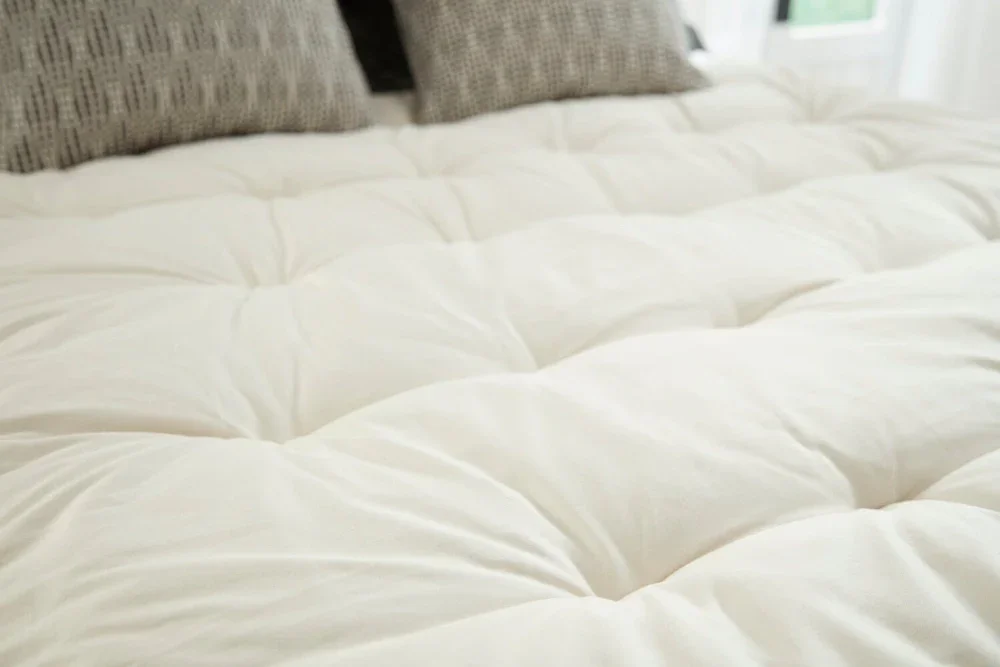
Lofty natural wool topper by PlushBeds, tufted for cloud-like comfort.
PlushBeds
PlushBeds prints its GOTS licence number (CU 865202) on each hangtag, providing instant verification of organic content. The 200 gsm cotton knit creates a breathable surface that doubles as a modest comfort layer, a finding echoed in verified customer reviews. Heat-fused bonding attaches the non-toxic waterproof backing, preventing glue delamination during repeated warm washes. The California-based company dispatches protectors from its West Coast warehouse in recyclable kraft cartons free of plastic packaging and backs them with a five-year workmanship warranty.
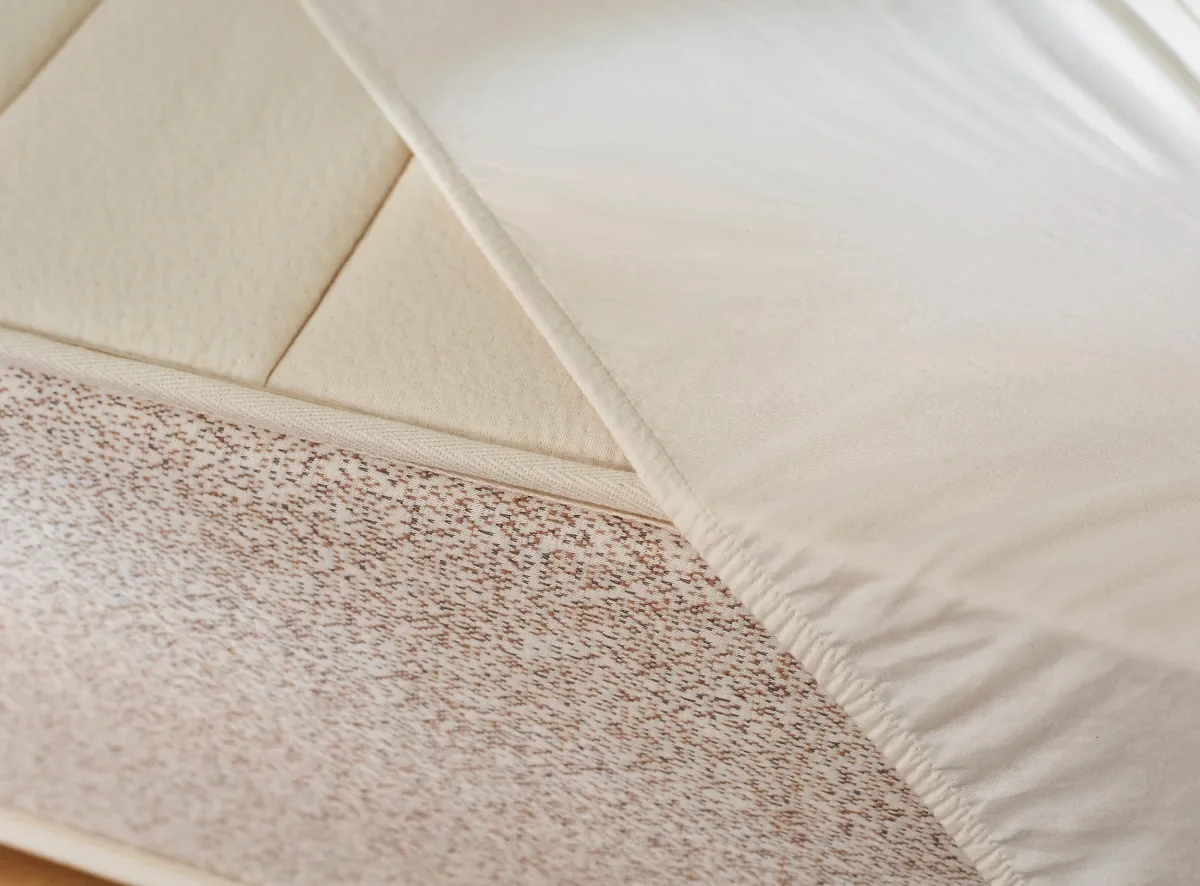
Close-up of Saatva waterproof organic mattress protector; corner flipped to show soft barrier lining.
Saatva
Saatva’s Organic Mattress Pad uses a three-hundred-thread-count percale weave certified to GOTS and incorporates a two-micron TPU film that blocks liquids without altering surface feel. Four-percent spandex side panels and a wide silicone elastic band hold securely on mattresses up to sixteen inches tall, even when the frame elevates for reading. Saatva aligns accessory returns with its broader bedding policy, offering a forty-five-day return window and prepaid shipping both ways. Free white-glove delivery is automatically included when the pad ships with a new mattress.
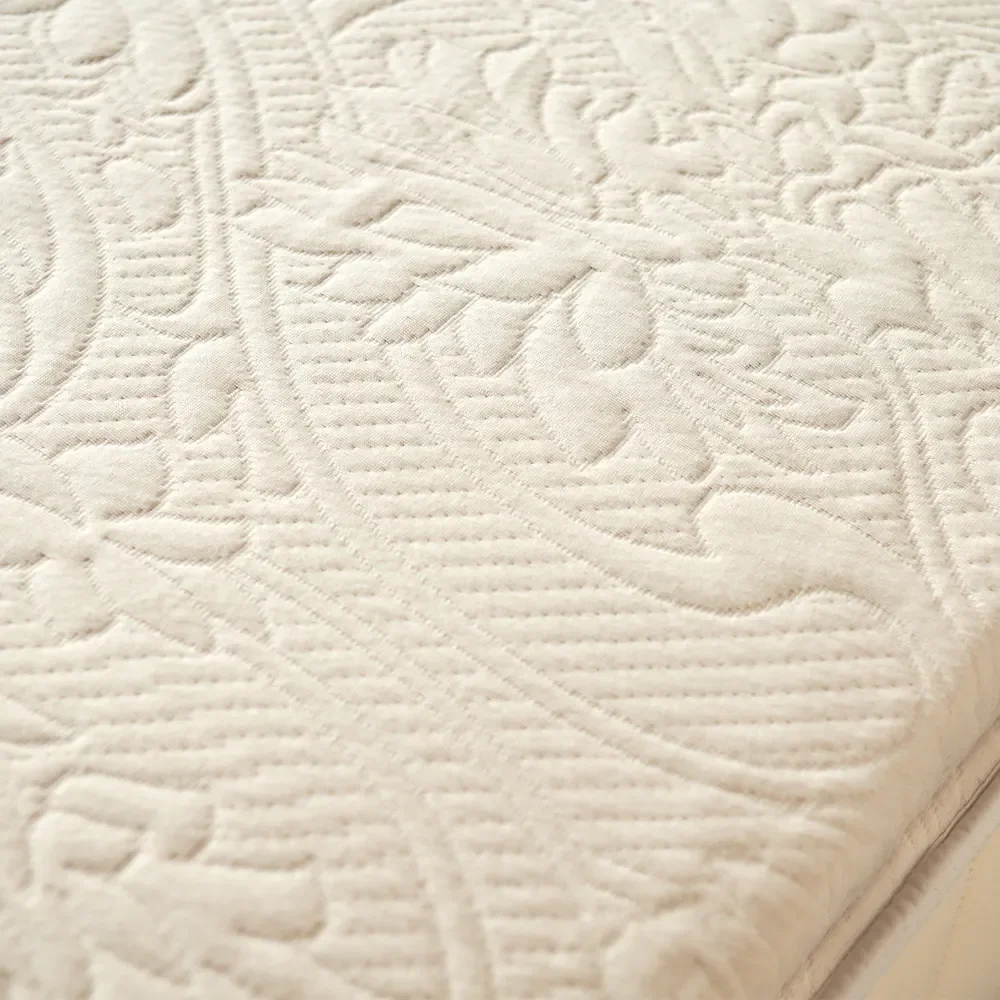
Embossed knit surface detail of Happsy organic latex mattress topper.
Happsy
Happsy stitches its unbleached jersey protector in Wisconsin, packages it in a compostable mailer printed with soy ink, and lists both GOTS and MADE SAFE seals on the product page. The TPU membrane, approved under GOTS chemical-input rules, is vinyl- and phthalate-free yet passes a hydrostatic test for full spill containment. A 150-night sleep trial surpasses the category average, and a one-year limited warranty covers workmanship. Total product weight for a queen size is just under two pounds, reflecting the flexible drape frequently mentioned in user feedback.
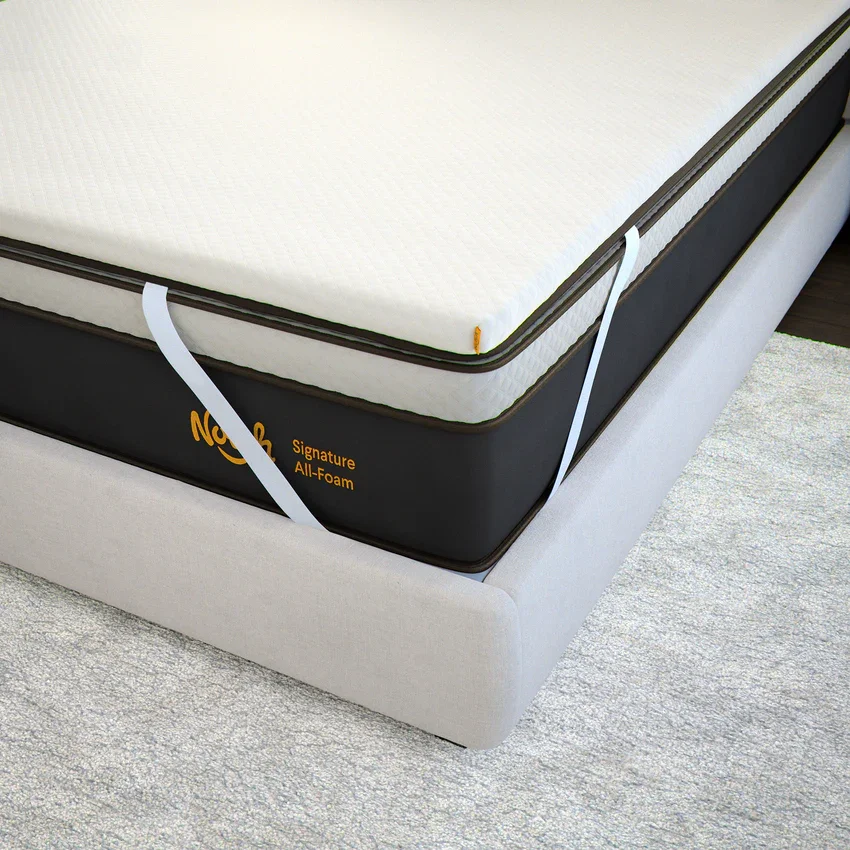
Nolah Signature foam topper secured with corner straps on an all-foam mattress.
Nolah
Nolah’s Bamboo Mattress Protector pairs a Forest Stewardship Council-sourced bamboo-viscose knit with a lightweight TPU barrier certified under OEKO-TEX Standard 100. Although it does not claim organic status, the four-way stretch fabric earns consistent praise in independent reviews for preventing bunching on high-profile foam beds. The brand grants a thirty-night comfort window and advises cold wash and line dry to preserve elasticity, a laundering guideline aligned with its lower-energy care recommendations.
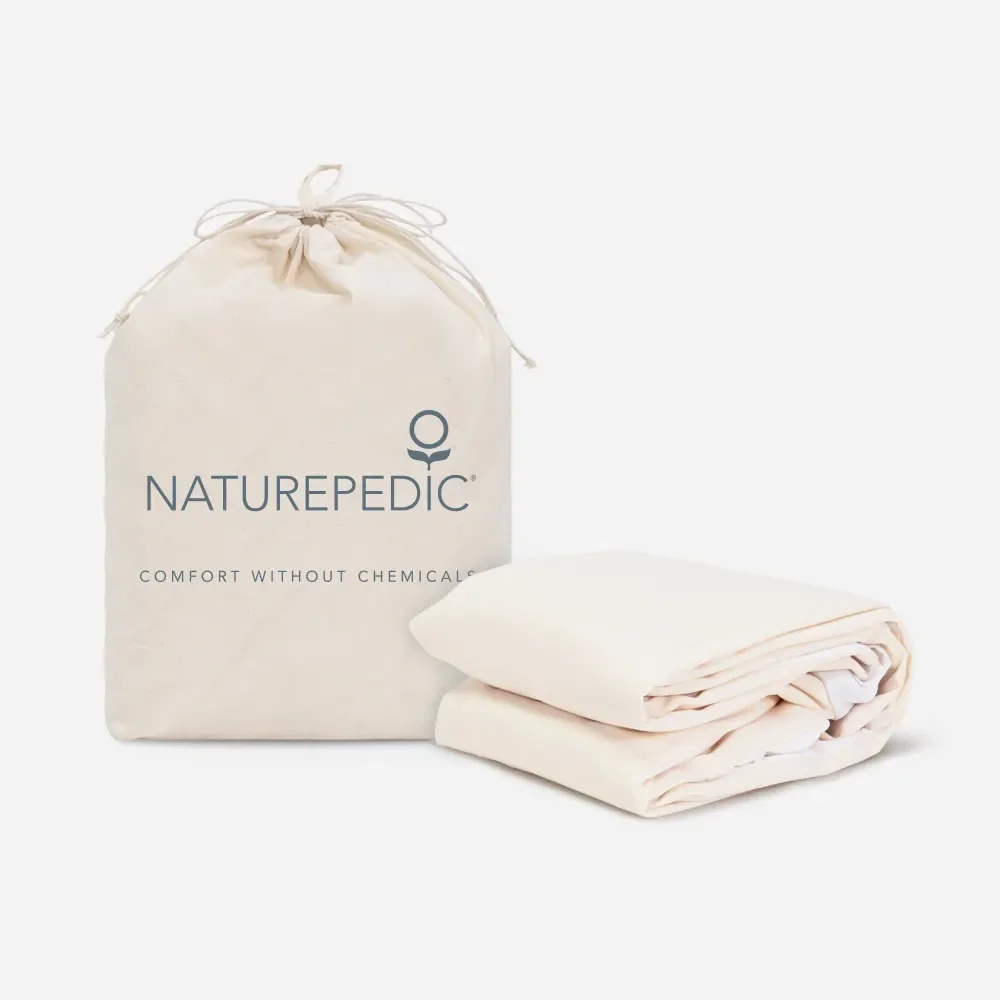
Naturepedic organic waterproof mattress pad neatly folded beside its cotton drawstring storage bag.
Naturepedic
Naturepedic manufactures its Organic Waterproof Protector Pad in Chagrin Falls, Ohio, using sugar-cane-derived biopolyethylene film sandwiched between two GOTS-certified organic cotton sheets. A downloadable laboratory report on the product page documents hydrostatic resistance exceeding five pounds per square inch. The protector carries MADE SAFE and GREENGUARD Gold endorsements, ships carbon neutral, and is covered by a one-hundred-night satisfaction pledge plus a one-year warranty. Returned pads enter the company’s take-back program for material recycling.
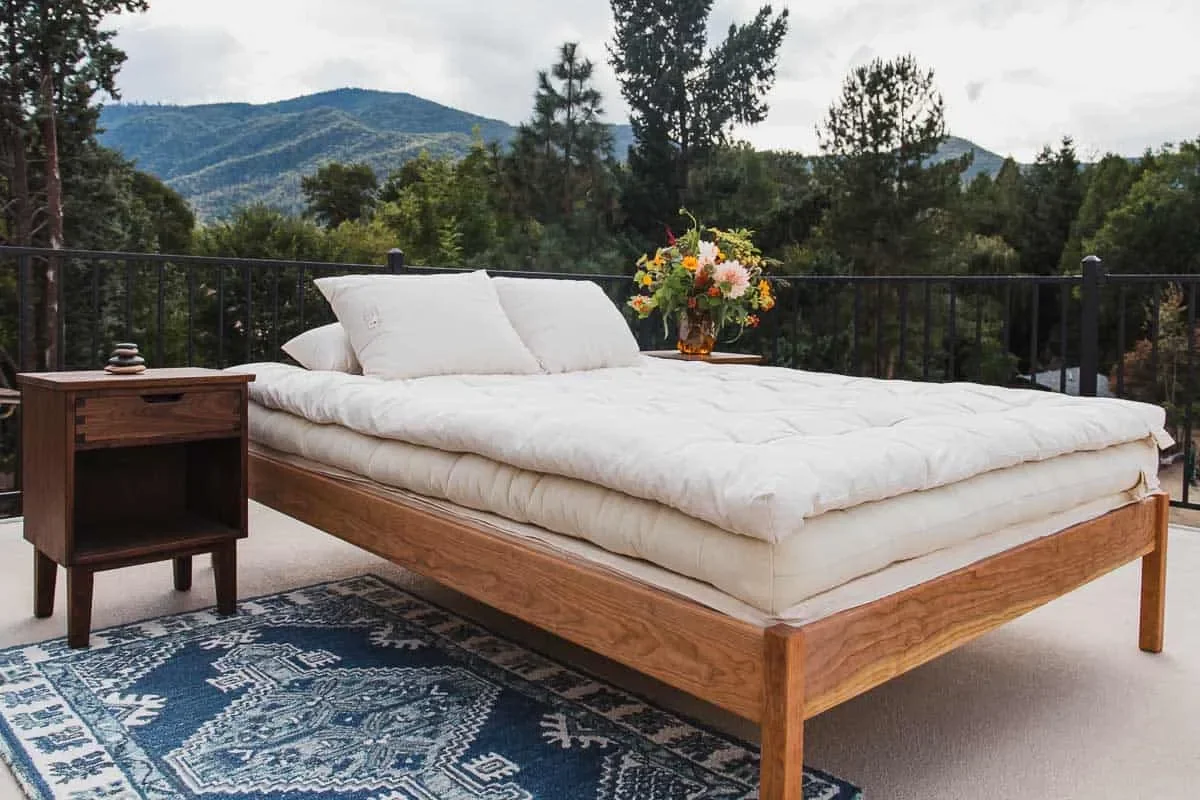
Shepherd’s Dream Snuggle-Mate wool topper on an outdoor bed overlooking forested mountains.
Shepherd’s Dream
Shepherd’s Dream quilts regionally sourced EcoWool batting inside thick organic-cotton sateen and secures the pad with four corner elastics, creating a design aimed at breathability and moisture-wicking rather than spill defense. The company’s website details the wool’s traceability to small western U.S. ranches and recommends twice-yearly sunning to refresh lanolin. Because no waterproof film is used, the pad remains fully biodegradable and can be spot-cleaned or hand-washed in lukewarm water without compromising loft.
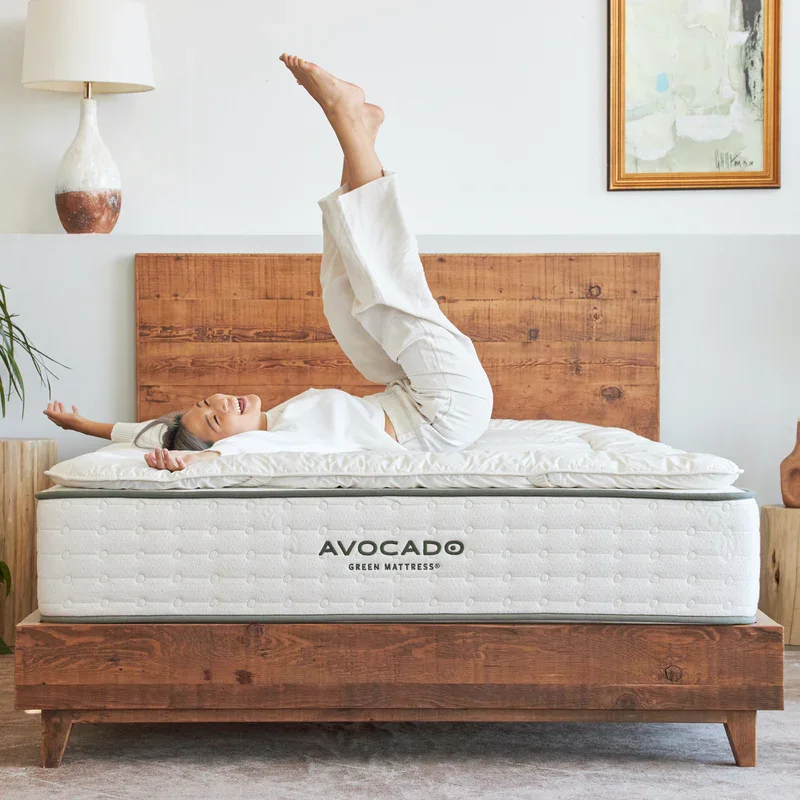
Smiling woman on Avocado plush hotel topper atop Green Mattress, legs playfully raised toward ceiling.
Avocado
Avocado encloses a corn-starch–derived, PFAS-tested waterproof layer between two GOTS-certified organic cotton knits and finishes the skirt with sturdy cotton canvas instead of polyester mesh. The protector carries GREENGUARD Gold and MADE SAFE seals, and every shipment is offset through the brand’s Climate Neutral certification. Recyclable kraft packaging printed with algae ink eliminates conventional plastic, and Avocado’s repair service replaces elastic or stitches small tears to extend product life, a commitment detailed in its sustainability FAQ.
Choosing the Right Organic Bed Protector for Your Home
Upgrading from vinyl to an organic bed protector begins with a clear picture of how the bed is used. Families juggling potty training or dawn-hour juice spills need full waterproof assurance; the best choice is a two-layer certified-cotton cover that hides a silent, food-grade TPU film, stopping liquid while moving with the sleeper. In rooms where accidents are rare and airflow matters most, a lightweight cotton or wool pad excels, wicking moisture and keeping surface temperature steady without the sealed feel of plastic.
Allergy or asthma concerns reshape priorities. Dust mites flourish in warm interiors rich in skin cells, so a six-sided encasement with a micro-tooth zipper becomes essential. Look for OEKO-TEX or GOTS certification and a pore size below ten microns; that threshold blocks allergens yet lets fabric breathe. Hot sleepers gravitate toward wool or high-breathability cotton. Wool fibres absorb up to thirty percent of their weight in vapour, releasing it before dampness pools. Some brands publish moisture-vapour transmission rates over one thousand grams per square metre per twenty-four hours, a signal the protector can shuttle perspiration away fast enough to keep skin cool.
Eco-focused buyers weigh ethics alongside performance. A genuine organic bed protector carries a GOTS licence number and, ideally, badges such as Climate Neutral Certified or B Corp, confirming audited carbon accounting and fair-labour practices. Transparent product pages list every component, from skirt elastic to waterproof film, so you know exactly how many renewable resources stand between you and the mattress.
After clarifying personal needs, measure mattress height. Standard innersprings sit near twelve inches, while pillow-top hybrids rise to sixteen. The protector’s pocket depth must exceed that figure to allow for the small shrink that occurs during the first wash. A cover that strains at the corners will slip by morning, exposing side panels where spills love to migrate.
Price differences follow the supply chain. Polyester covers may cost twenty dollars yet often delaminate within a year. Certified organic protectors range from one hundred to three hundred dollars; that premium funds pesticide-free farming, strict chemical controls, and reinforced stitching. Many arrive with one- or two-year warranties and survive more than two hundred laundry cycles, levelling the cost per year of use. By keeping foam dry and oil-free, a quality protector can double the service life of a thousand-dollar mattress, delivering savings seldom counted on the price tag.
Finish the search with brands that disclose supplier details, provide free shipping, and post verified reviews stretching past the twelve-month mark. Feedback from owners who have washed, spilled on, and sweated through the fabric across four seasons offers the clearest proof of staying power. The right organic bed protector, chosen through these steps, will preserve sleep quality and environmental integrity for years to come.
Rest Easy
As evening settles and lamps flicker low, turning down the coverlet becomes an invitation to uncomplicated rest. The quiet layer beneath your sheet is more than insurance for a mattress; it is a conversation between soil, farmer, and sleeper. Cotton that sprouted without herbicide, wool shorn under open skies, and a whisper-thin, food-grade membrane together cradle the body while respecting the biosphere that sustains it. Choosing an organic bed protector is not merely a purchase; it is an act of alignment. It tells the skin it will not meet chlorine bleach tonight, assures lungs that no vinyl vapors linger above, and signals to soil and river that their well-being matters. With each wash the fabric softens yet the integrity remains, echoing the promise that durable comfort need never rely on compromise. Rest, then, knowing that every inhale participates in a cycle of care that extends far beyond the bedroom walls.
Related Posts