8 Naturally Hypoallergenic Wool Pillow Options for Better Sleep in 2026
Discover how a wool pillow supports better sleep with natural, hypoallergenic properties, temperature regulation, and enduring comfort. Explore premium brands and essential buying tips.
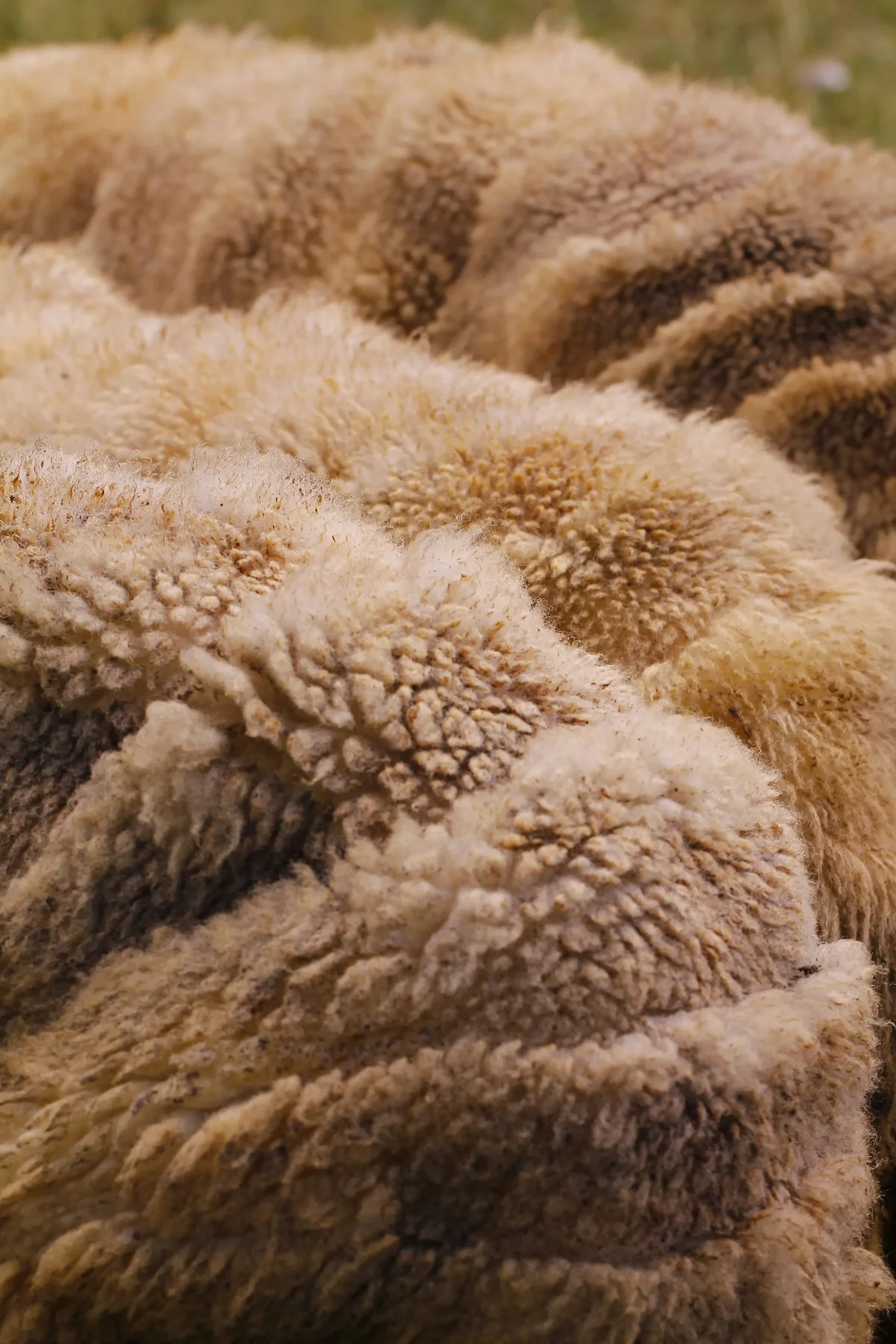
Close-up of undyed sheep wool fleece showing dense, crimped fibers in warm cream-to-honey tones.
Sleep is one of the most intimate routines we return to night after night, and the materials we rest upon shape more than just our dreams, they shape our health, our sleep cycles, and the way we greet the morning. A pillow is never just a pillow. It is a vessel for restoration, for release, for the subtle alignment of body and breath. In a world saturated with synthetic shortcuts and over-engineered solutions, wool pillows offer a quiet return to comfort, rooted in nature, free of toxins, and designed to last.
Wool’s character is both practical and poetic. It breathes with you, drawing moisture away from the skin and releasing it into the air. It adapts without collapsing, holds warmth without overheating, and creates a sleep surface that responds instead of resists. For those who sleep hot, who wake congested, or who seek cleaner air in their bedroom, wool becomes more than a fill; it becomes a partner in deeper, more deliberate rest.
We explore the sensory richness and structural integrity of wool bedding, tracing the lineage of craftsmanship, the nuances of fill and casing, and the wellness benefits that unfold over time. The brands we've recommended were chosen with discernment, each reflecting a commitment to craftsmanship, transparency, and the use of non-toxic materials. Whether you are reimagining your entire sleep health or simply seeking a pillow that breathes a little better, the journey begins here, with something enduring and wholly aligned with the way you want to live.
What You’ll Discover
Affiliate Disclosure
Some links in this post are affiliate links. That means we may earn a small commission, at no additional cost to you, if you choose to make a purchase. These are always brands, stays, or experiences we would recommend to a dear friend. Thank you for supporting the quiet sustainability of Terra Selene.
What Are Wool Pillows
Wool pillows are filled with sustainably process sheep’s wool and typically covered in breathable natural fabrics such as organic cotton. The outer fabric should be breathable, often made of 100% organic cotton or linen, to maximize comfort and airflow. Unlike synthetic fills that compress or trap heat, wool retains a resilient structure that responds to pressure while allowing continuous airflow. Wool fibers can bend around 20,000 times before breaking, unlike cotton which bends around 3,000 times, making wool pillows exceptionally durable. The result is a pillow that adapts subtly to the body rather than forcing the body to adapt to it.
These pillows suit a wide range of sleepers. Side sleepers often benefit from wool’s ability to hold loft and support the neck without collapsing. Back sleepers appreciate the balance between softness and firmness that helps maintain spinal alignment. Stomach sleepers tend to prefer lower-loft wool pillows or adjustable designs that can be reduced to avoid neck strain. Wool is also well suited to hot sleepers, people with allergies, and those seeking bedding made from natural materials rather than petroleum-based foams. Additionally, they avoid common sleep issues such as overheating, moisture buildup, and night-time allergies.
Naturally Hypoallergenic Qualities of Wool Pillows
Wool’s naturally hypoallergenic qualities stem from its complex fiber structure and lanolin content. Wool fibers actively wick moisture away from the body, absorbing vapor before it becomes damp. This moisture regulation keeps the pillow dry throughout the night, which plays a key role in maintaining hygiene and comfort.
Because wool does not create a humid environment, it is naturally resistant to dust mites, which thrive in moisture-rich conditions. The fibers are also antimicrobial, meaning they inhibit the growth of odor-causing bacteria without the need for chemical treatments. This contributes to cleaner indoor air quality and a pillow that stays fresher between washes.
Wool is also mold-resistant due to its breathability and ability to release absorbed moisture during airing. Some individuals with lanolin sensitivity may notice mild irritation, although high-quality, well-cleaned wool significantly reduces this risk. A faint natural wool scent may be present at first, particularly with new pillows, but this typically dissipates after a short period of airing. Additionally, some wool pillows have received approval or certification from reputable organizations, providing extra reassurance for allergy sufferers.
Pros and Cons of Wool Pillows
Wool pillows offer meaningful sleep benefits rooted in their material properties rather than engineered additives. They regulate temperature effectively, keeping sleepers cool in warm conditions and comfortably insulated in cooler environments. Their supportive yet forgiving structure promotes proper neck and spine alignment, which can contribute to deeper rest and fewer tension-related wake-ups. Wool pillows are also exceptionally durable, often lasting ten to fifteen years when properly maintained. They help maintain a lower, consistent heart rate and increase REM sleep cycles, further supporting restorative sleep.
The drawbacks are largely practical rather than performance-related, as they tend to cost more upfront than synthetic alternatives and require regular fluffing and airing to maintain loft. They are not designed to be fully machine-washed, which may deter those seeking low-maintenance bedding.
Choosing a wool pillow involves tradeoffs based on sleep preferences. Those who enjoy a deeply plush, sinking sensation may prefer memory foam, while sleepers who value breathability, adaptability, and natural materials often find wool to be the better long-term investment. When shopping for your perfect fit, consider factors like certifications and natural materials to ensure you are making a thoughtful and sustainable choice.
Wool Pillow Types and Construction
Wool pillows vary significantly in construction, even when the fill material appears similar. Some designs feature densely packed wool for a firmer, more structured feel, while others use looser fills that allow the pillow to mold more easily to the head and neck. Construction may include fixed-fill pillows or adjustable designs with zippered casings that allow users to add or remove wool to fine-tune loft and firmness over time.
Travel pillows made from wool are also available, providing comfortable, supportive, and temperature-regulating solutions for journeys. These travel pillows are valued for their hypoallergenic properties, durability, and ease of cleaning, making them ideal for enhancing travel comfort and convenience.
Fill Types
British wool is known for its robustness and spring, offering strong structure and long-lasting loft. It tends to feel slightly firmer and is often favored by side sleepers who need consistent neck support.
Merino wool has finer fibers and a softer hand feel. Pillows filled with Merino wool compress more easily and are often chosen by sleepers who prefer a gentler surface or lower loft.
Blended wool fills combine different wool types to balance softness, support, and durability. These blends aim to deliver a versatile feel that works across multiple sleep positions.
Shredded wool, sometimes referred to as wool bolus, creates a more moldable pillow. This fill allows the wool to shift internally, producing a softer, more adjustable feel that appeals to sleepers who like to shape their pillow throughout the night.
Cover and Encasings
The outer fabric of a wool pillow plays a critical role in comfort and breathability. Standard cotton covers offer durability and airflow, but organic cotton covers provide additional reassurance by eliminating pesticide residues and chemical finishes. For sleepers with sensitivities, organic cotton encasings are often considered essential.
Zippered removable covers add both comfort and practicality. They allow for loft adjustment, easier spot cleaning, and extended pillow lifespan by protecting the wool fill from direct wear.
Firmness and Loft Options
Fill weight directly influences firmness. A higher volume of wool creates a firmer pillow with greater lift, while a lighter fill produces a softer, more compressible surface. Wool’s natural resilience allows it to feel supportive without becoming rigid.
Selecting the right loft depends largely on sleep position. Side sleepers generally require a higher loft to keep the neck aligned with the spine. Back sleepers tend to benefit from medium loft that supports the natural curve of the neck. Stomach sleepers usually need a low-loft pillow to avoid excessive neck extension.
Wool Pillows We Recommend
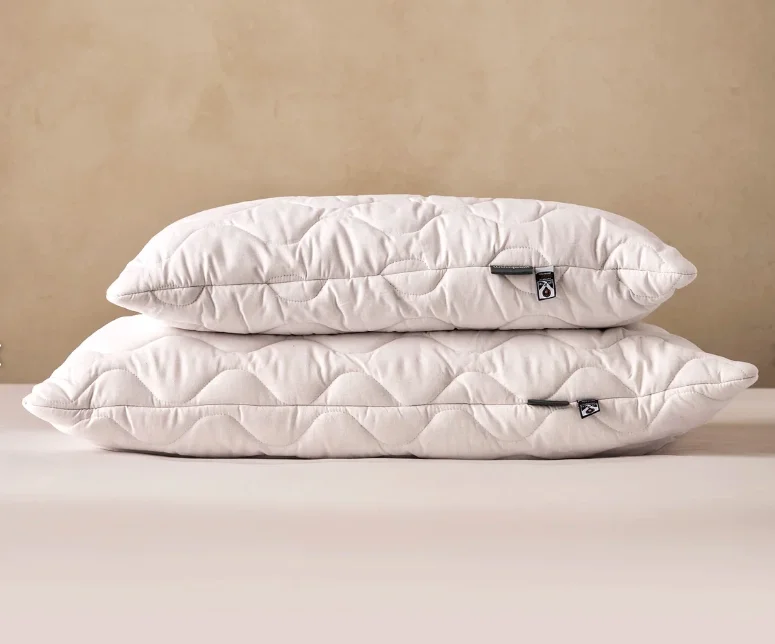
Pair of quilted washable wool pillows from Woolroom, light oatmeal tone against warm plaster wall.
Woolroom
Woolroom’s wool pillows are handcrafted in the UK using traceable British wool and GOTS-certified organic cotton. Known for their adjustable fill and medium-firm support, these pillows cater to side and back sleepers who need consistent loft throughout the night. The brand's commitment to sustainable wool products includes complete traceability and zero chemical treatments, making their designs suitable for those with sensitive skin or allergies. The moisture-wicking capabilities of the fill ensure a cool side even during hot nights, and their pillows are regularly reviewed for long-term breathability, comfort, and shape retention.
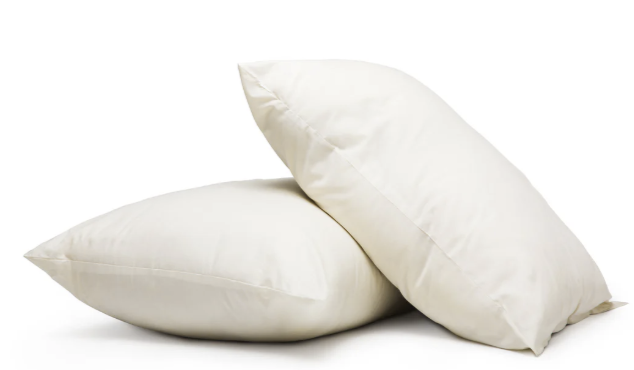
Frankenmuth Woolen Mill organic wool pillow in natural cotton shell.
Frankenmuth Woolen Mill
One of the oldest wool bedding manufacturers in the USA, Frankenmuth Woolen Mill has been producing wool pillows since 1894. Their pillows are filled with 100% virgin wool and covered in soft, breathable cotton. They offer firm support with generous loft, making them ideal for side sleepers. Each pillow is handcrafted with care, and their adjustable-fill line allows for custom comfort. Their deep experience in wool products means that buyers can expect consistent quality and craftsmanship with every purchase. For shoppers seeking classic construction with a heritage touch, this Michigan-based mill delivers.
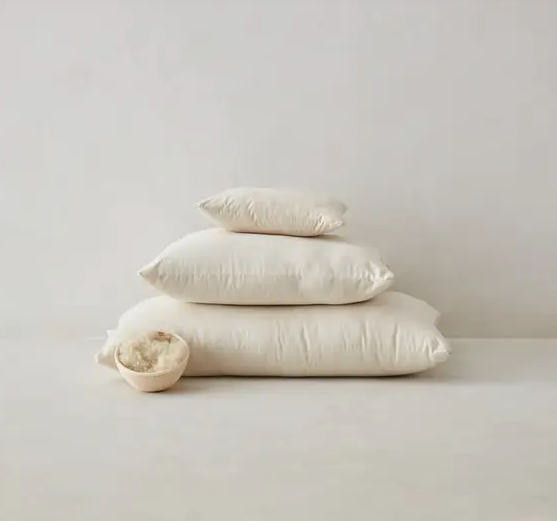
Group of neutral beige linen cushions, square, lumbar and bolster, arranged on minimalist cream floor.
The Futon Shop
Based in San Francisco, The Futon Shop offers hand-stitched wool pillows made from chemical-free, virgin wool. Their customizable designs range from firm to soft and are often combined with other natural fillings such as latex or coconut fiber. Ideal for eco-conscious sleepers seeking versatility, these pillows come in a range of sizes and are covered in organic cotton for optimal breathability. Their handcrafted process supports spinal and neck alignment and offers long-term durability even with frequent use.

Natural cotton-shelled wool pillow by Shepherd's Dream on white background.
ShepHerd's Dream
Shepherd’s Dream produces small-batch wool pillows in California using climate-beneficial wool and organic cotton. Their wool bolus fill creates a soft, moldable shape that cradles the neck gently, making them suitable for back and stomach sleepers. The company emphasizes regenerative agriculture and local sourcing, resulting in products that are as ethically considered as they are comfortable. The pillows are known for maintaining loft and breathability over time, encouraging better sleep through consistent support and airflow.
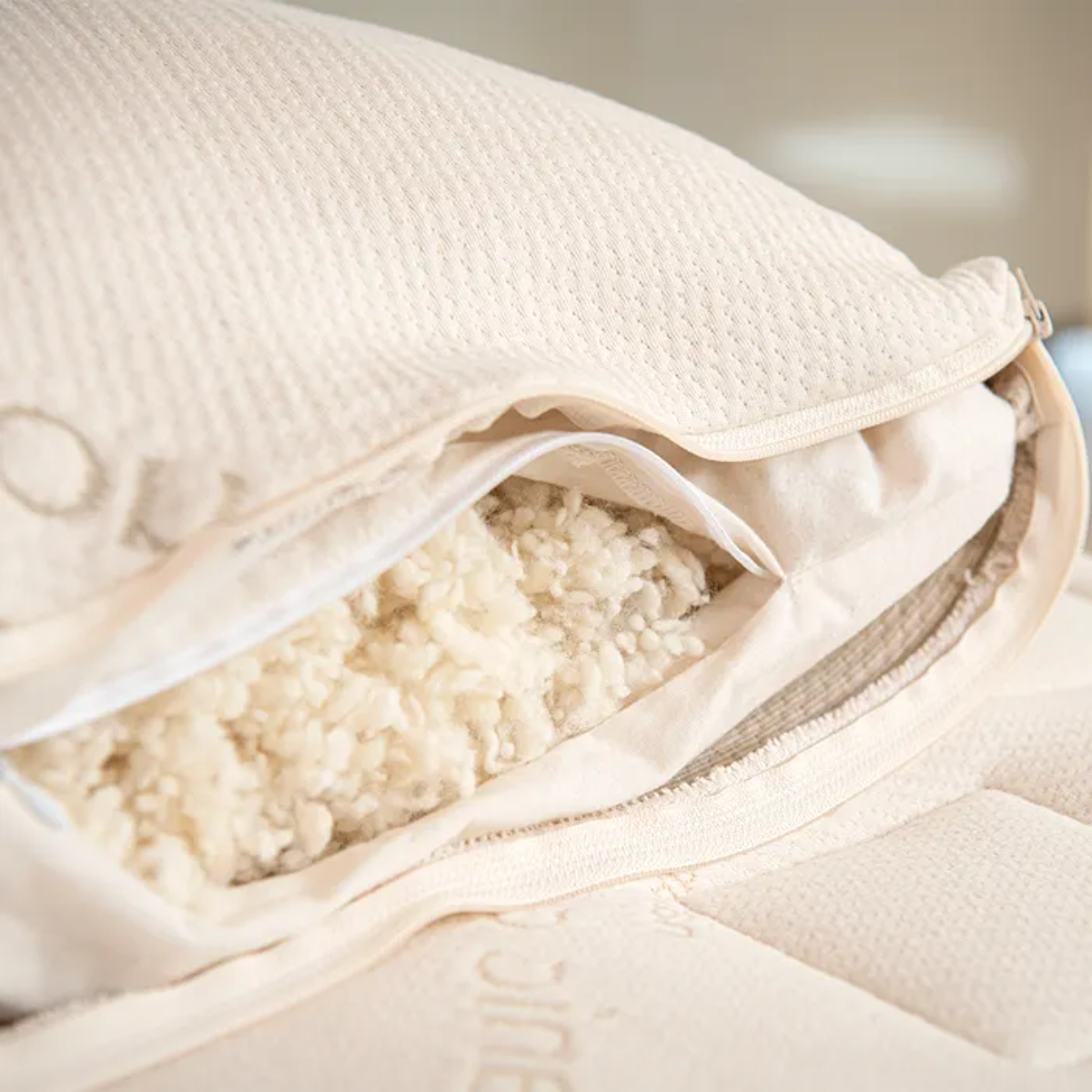
Zip-open Naturepedic pillow revealing adjustable organic wool fill inside textured cotton cover.
Naturepedic
Naturepedic’s organic wool pillow combines medium-firm support with meticulous attention to safety. Made in the USA, it features GOTS-certified materials and no flame retardants, glues, or synthetic foams. The pillow suits side sleepers who require firm lift and dependable neck support. Its casing is removable and washable, making care simple. Designed with better sleep in mind, Naturepedic’s pillows promote REM-cycle consistency through balanced temperature regulation and ergonomic alignment.
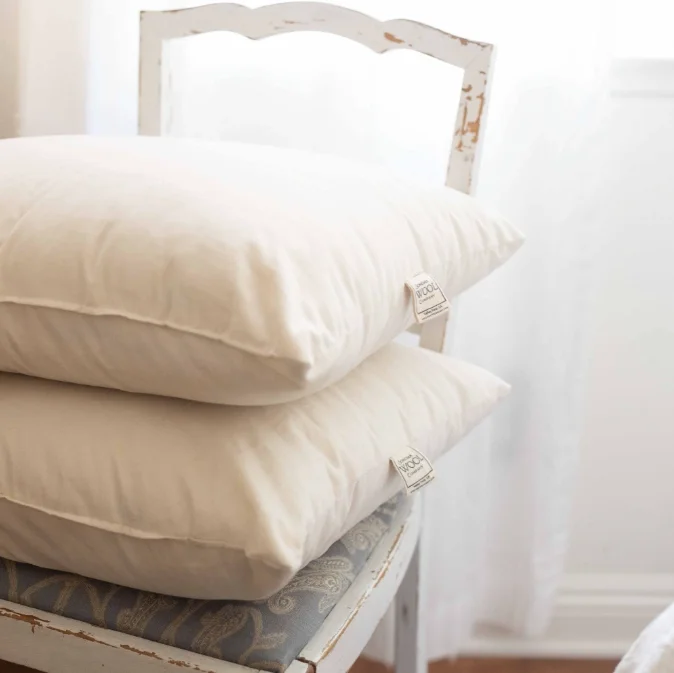
Sonoma Wool Company natural wool pillow.
Sonoma Wool Company
Sonoma Wool Company offers utilitarian, natural wool pillows filled with minimally processed wool and wrapped in breathable cotton. Their pillows are firm and supportive, holding shape well for side and back sleepers. While minimalist in design, their materials are of premium quality, and their durability means that each pillow maintains loft for years. Their products are well suited to those seeking functional wool bedding without synthetic additives.
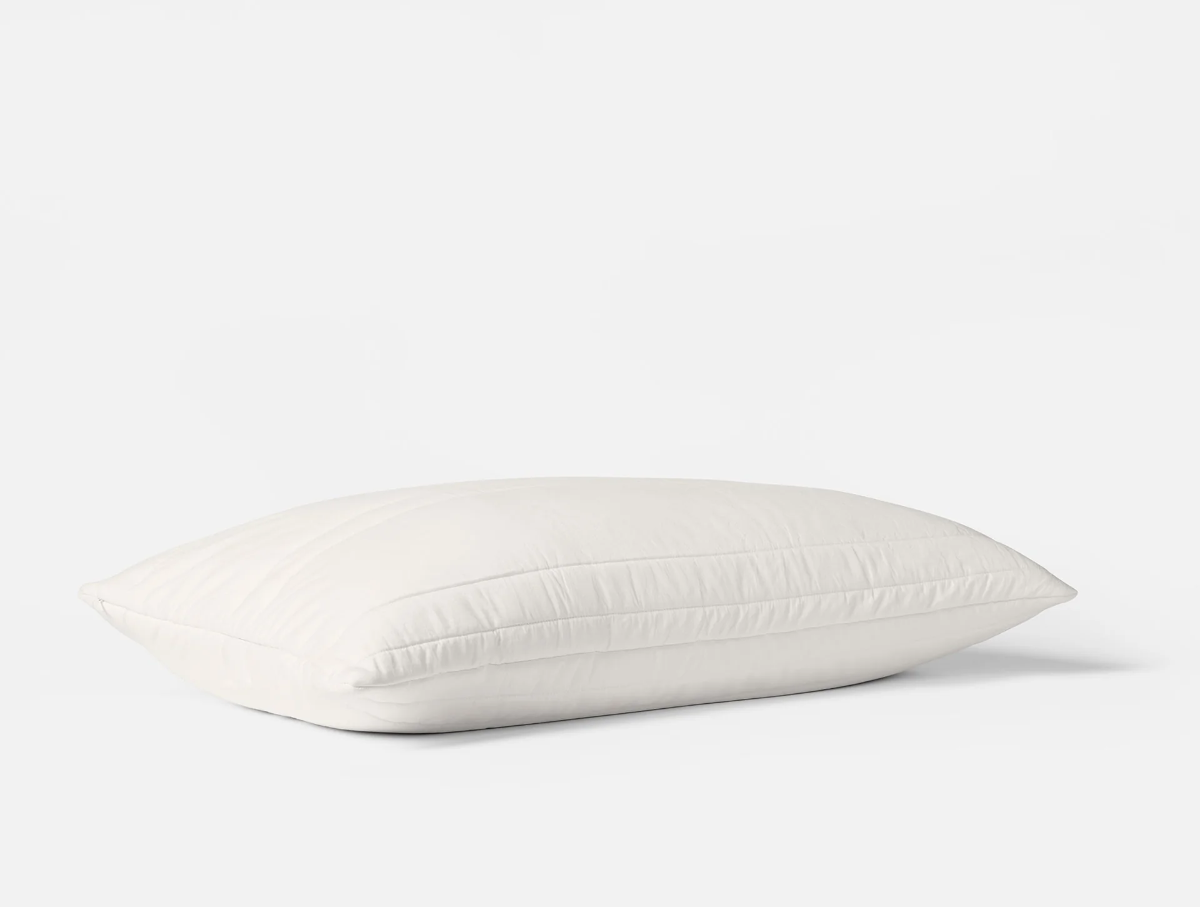
Coyuchi washable wool-filled pillow protector in soft white, shown side profile on seamless white background.
Coyuchi
Coyuchi takes a layered approach to wool pillows, offering protectors filled with NATIVA™-certified wool and soft plant-based batting. Their woman-owned brand combines style with integrity, wrapping their fill in organic cotton and constructing with care. Though technically designed as protectors, their wool-based models offer gentle support and natural temperature control, ideal for warm climates or sensitive sleepers. Their attention to sustainable sourcing and transparent manufacturing makes them a trusted name in luxury bedding.
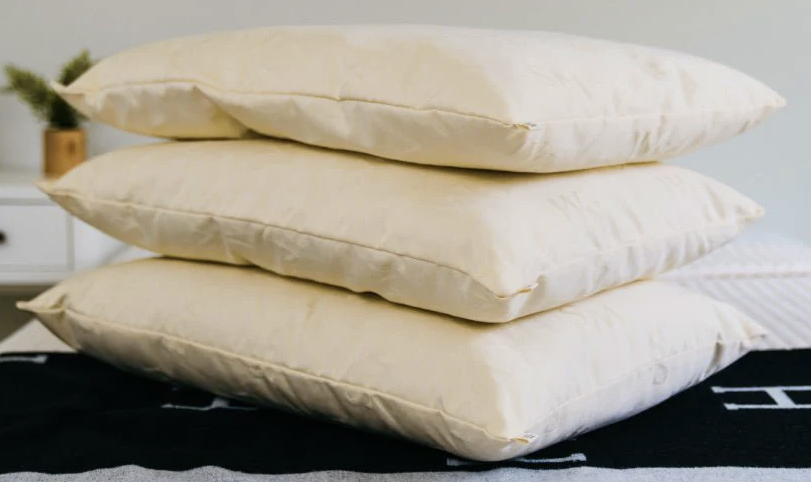
Three stacked natural wool pillows by The Woolshire, ivory cotton shells in bedroom scene.
The Woolshire
The Woolshire merges British and Merino wool for a balanced, breathable pillow that adapts to different sleep positions. Designed for adjustability, their pillows feature zippered organic cotton covers and a plush interior that reshapes easily. Their handcrafted approach ensures long-term comfort without sacrificing aesthetic integrity. The blend of soft and firm support promotes spinal alignment, while the natural loft supports head and neck without collapsing.
Caring for Wool Pillows
Proper care significantly extends the life of a wool pillow. Regular airing is essential and should be done every few weeks by placing the pillow in fresh air or indirect sunlight. This helps release moisture, refresh the fibers, and naturally deodorize the wool. Spot cleaning is recommended for minor marks, using a damp cloth and gentle soap while avoiding saturation of the fill. Removable covers should be washed according to their care instructions, typically in cold water with mild detergent. Daily fluffing helps redistribute the wool and maintain shape. Over time, if a pillow develops persistent lumps, loses loft, or no longer rebounds after airing, it may be a sign that replacement is needed.
Buying Guide: What To Look For
Certifications provide critical assurance of quality and safety. GOTS certification confirms that the wool and cotton are organic and free from harmful processing. In contrast, OEKO-TEX certification verifies that the finished product has been tested for toxic substances. Sizing should align with both bed size and personal sleep habits, with standard, queen, and king options widely available. Firmness selection should be guided by sleep position and body type, with adjustable pillows offering added flexibility. Budget-friendly wool pillows typically fall into a moderate price range, while premium options reflect organic certifications, domestic manufacturing, and handcrafted construction. Before purchasing, it is wise to review return policies and warranties, as these indicate the manufacturer’s confidence in durability and comfort.
Where To Buy Wool Pillows
Direct-to-consumer brands often provide the most transparency around sourcing, certifications, and construction methods. Specialty bedding stores offer curated selections and knowledgeable guidance for first-time buyers. Handmade marketplaces such as Etsy can be a source of artisanal wool pillows, though buyers should verify material quality and certifications carefully. Mill outlet stores, including long-standing manufacturers like Frankenmuth Woolen Mill, provide direct access to heritage wool bedding crafted at scale with traditional methods.
Final Thread
Choosing the right wool pillow for you is more than a bedding decision; it is a return to care, a deepening of rest, and a quiet stand for materials that support both body and earth. As your days grow fuller and your nights more precious, what you rest upon begins to matter. Let your pillow hold more than your head. Let it hold your rhythms, your routines, your longing for simplicity. In its breathability, resilience, and softness, wool offers not just comfort but continuity. You are not just purchasing a product. You are shaping the atmosphere that restores you. Let it be honest. Let it be natural. Let it hold.
RELATED POSTS