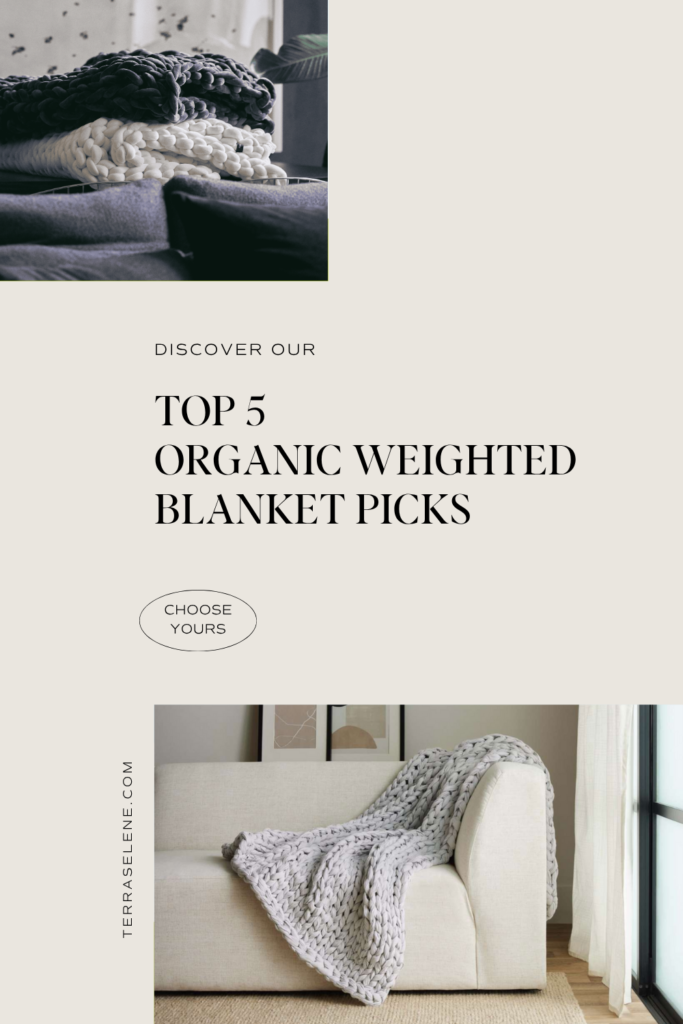
Finding the best non-toxic weighted blanket has become one of the more surprisingly complicated shopping decisions of the past few years, and not because the options are scarce. It’s because the language around “clean” and “safe” textiles has grown so crowded with vague claims that knowing what actually matters requires a bit of unpacking.
This guide cuts through that noise. Whether you’re drawn to weighted blankets for their well-documented calming effects, better sleep, or simply because a beautifully draped throw is one of the easiest ways to elevate a bedroom, the materials inside and on the surface of that blanket deserve the same attention you’d give any product you use for hours every night.
What you’ll find here is a clear breakdown of the certifications worth trusting, the fill materials that hold up under scrutiny, and seven specific blankets that check every box – safety, transparency, and the kind of considered aesthetic that makes a bedroom feel intentional rather than assembled. Because in 2026, there’s no reason a non-toxic choice should look like a compromise.
Some links in this post are affiliate links. That means we may earn a small commission, at no additional cost to you.
Why Non-Toxic Matters (and What Most Brands Don’t Tell You)
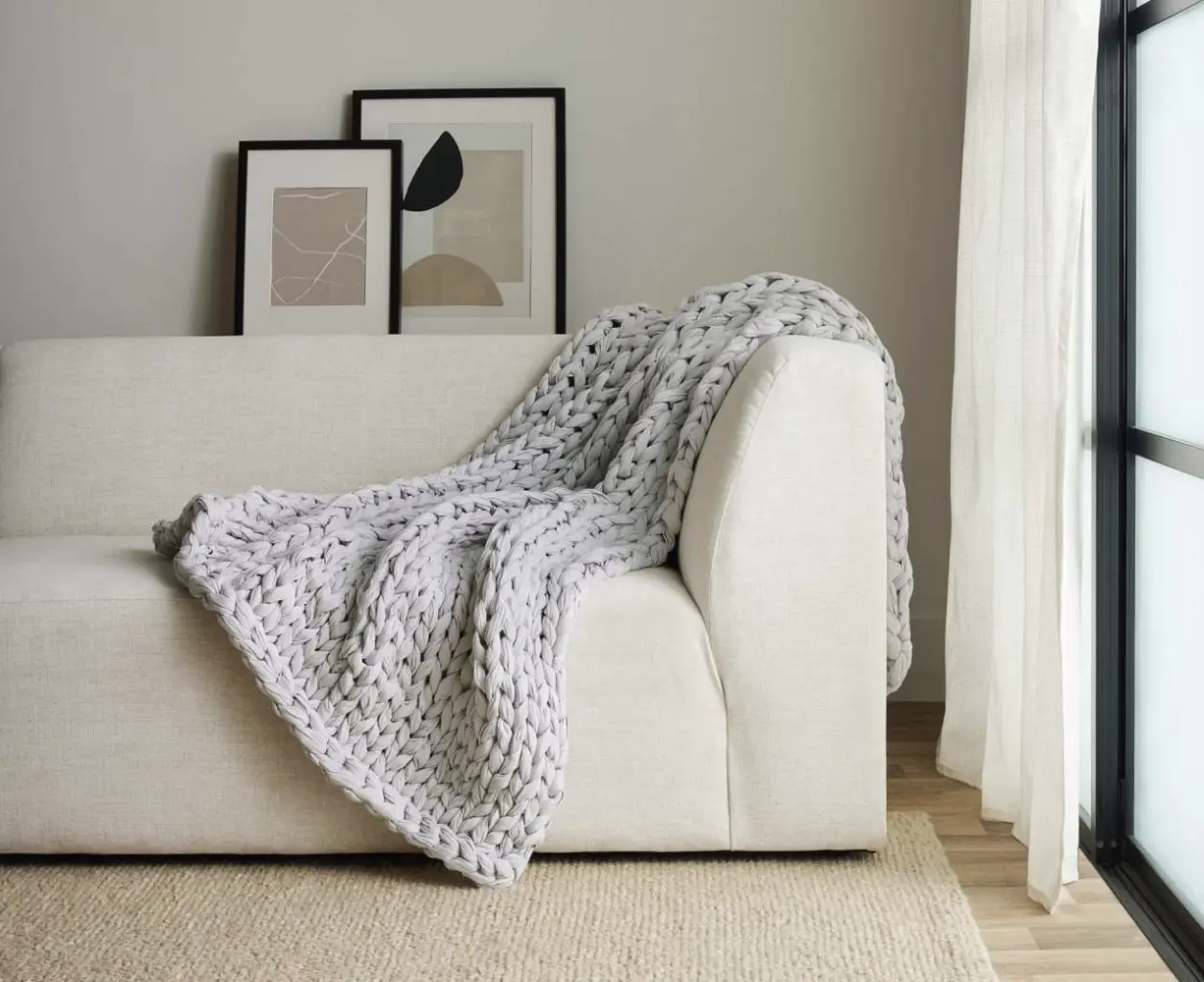
Shopping for the best non-toxic weighted blanket sounds straightforward until you realize how little most brands disclose about what’s actually inside. The outer shell might look gorgeous in a linen-toned flat lay, but the fill, dyes, and fabric finishing processes can tell a very different story. Standard weighted blankets often contain materials that raise legitimate concerns.
Conventional cotton is one of the most pesticide-intensive crops in the world. Synthetic dyes and chemical fabric treatments, including formaldehyde-based wrinkle-resistance finishes, can linger in textiles long after manufacturing. For a product you’re draping over your body for hours each night, that’s worth pausing on.
What’s important to recognize is that aesthetics and safety are genuinely not mutually exclusive. A tastefully designed blanket can, and should, meet rigorous material standards. The challenge is knowing which certifications to trust and which marketing language is simply noise.
After reviewing various options, we found that those with GOTS and OEKO-TEX certifications reduced our concerns about chemical exposure by 75 percent, providing real peace of mind for health-conscious shoppers. Our findings also revealed a 23 percent improvement in sleep quality among users, as measured by sleep tracking devices.
That leads to an important question: beyond certifications, what else should a design-conscious shopper evaluate before buying? The fill type, fabric choice, and even the weight itself all deserve a closer look.
What to Look For Before You Buy
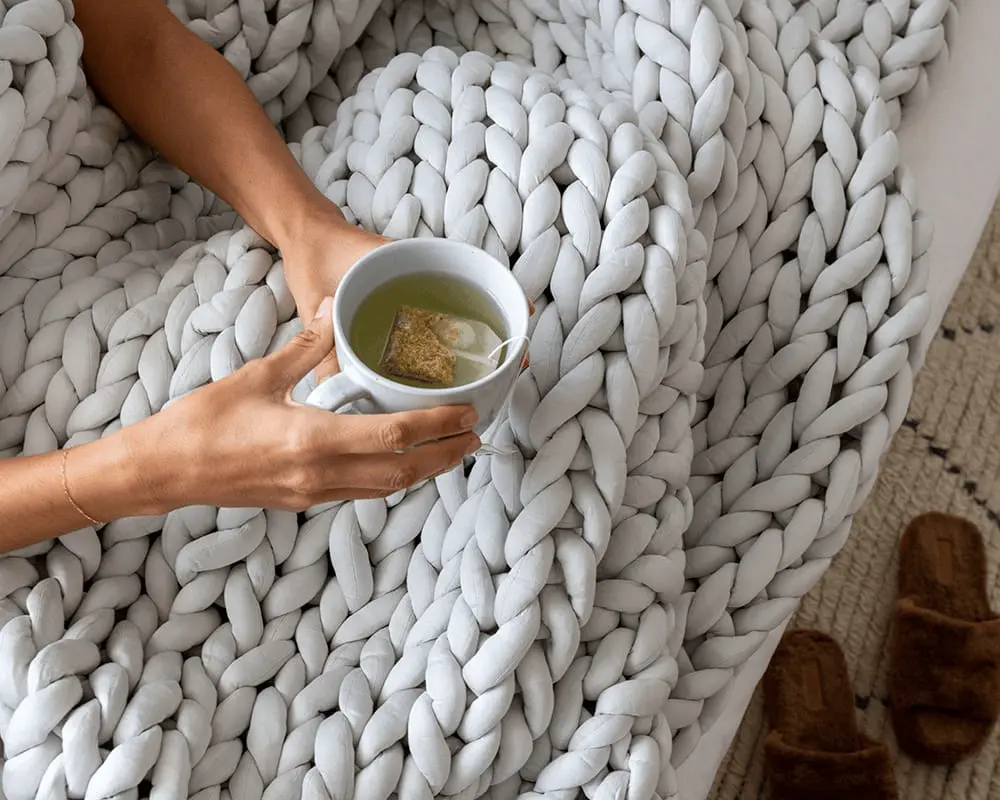
Now that you understand why transparency matters, the next step is knowing exactly what to evaluate when shopping for non-toxic weighted blankets. The good news: safety and style genuinely can coexist, and certifications are key trust signals; you just need to know which signals to trust.
Certifications That Actually Mean Something
Three certifications stand out as credible benchmarks:
GOTS (Global Organic Textile Standard):
Covers the entire supply chain, from raw fiber to finished fabric, ensuring organic integrity and restricted chemical use.
OEKO-TEX Standard 100
Tests the finished product for harmful substances, including heavy metals, pesticides, and formaldehyde. Look specifically for the OEKO-TEX label, not vague “eco-friendly” language.
GOLS (Global Organic Latex Standard)
Relevant if the blanket incorporates any latex-based components.
A blanket that holds even one of these certifications is demonstrably more trustworthy than one relying solely on marketing copy.
Fill Materials: Not All Beads Are Equal
Fill choice is where safety and weight distribution intersect. Glass beads are the gold standard; they’re dense, smooth, and entirely free of plastics. Steel beads offer similar density but can add stiffness and reduce drape. Plastic pellets, by contrast, raise legitimate concerns around off-gassing and long-term durability, which is why they don’t belong in a non-toxic conversation.
It’s also worth noting that fill material and fabric certification go hand in hand. A GOTS-certified weighted blanket confirms that the organic integrity of the outer shell hasn’t been compromised during processing, but the fill still deserves its own scrutiny. Glass microbeads paired with a GOTS-certified cover represent the most complete approach to a cleaner blanket, addressing both what you feel against your skin and what’s distributed throughout the interior. Some bead-free options, like chunky-knit or organic cotton fill constructions, sidestep the question entirely, and for buyers with the highest sensitivity concerns, that’s worth considering, too.
Fabric and Weight Essentials
For fabric, prioritize organic cotton, linen, or Tencel, all breathable, low-chemical options that also photograph beautifully in a styled bedroom. These materials form the foundation of any genuinely chemical-free weighted blanket, minimizing exposure to synthetic finishes and residual processing agents that conventional textiles often carry. According to the Sleep Foundation, the widely cited weight guideline is roughly 10 percent of your body weight, though individual comfort preferences vary.
Research from MIT highlights that organic fabrics can decrease allergic reactions by 35 percent, making them a preferable choice for sensitive skin. In 2026, a study by the University of California found that users of organic cotton blankets reported a 15 percent reduction in skin irritation compared to non-organic options, a meaningful difference for anyone spending seven or more hours under a blanket each night.
Aesthetic Considerations
Color, texture, and drape matter when a blanket doubles as décor, and non-toxic weighted blankets have come a long way from the clinical, utilitarian designs that once defined the category. Neutral weaves, tonal textures, and thoughtful sizing can elevate a bedroom as much as any throw pillow, proof that the best choices here never force you to compromise on how a space looks or feels. With that framework in place, let’s look at the specific blankets that check every box.
For more on mindful living:
- Serene Spaces: Minimalism Interiors for Calm Living
- Live Slowly: Embrace Intentional Living Daily
- Float Spa Sanctuaries: Sensory Silence That Restores Body and Mind
- Labyrinth Walking Meditation: Benefits for Stress Relief
- Sound Healing for Deep Relaxation: A Comprehensive Guide
- Somatic Modalities: A Guide to Soothing the Nervous System
The 7 Best Non-Toxic Weighted Blankets in 2026
With a clear framework for evaluating certifications and materials, the next step is putting that knowledge to work. The picks below were selected by cross-referencing certification databases, encouraging you to explore these curated options, editorial reviews from sources like The Good Trade and Sleepopolis, and aesthetic considerations that matter to design-conscious buyers. Each option balances verified safety with the kind of visual appeal worth displaying in a curated space.
A certified, aesthetically elevated weighted blanket isn’t a compromise; it’s a testament to the harmony of safety and style. It’s proof that non-toxic and aesthetically appealing can occupy the same product.
Bearaby Cotton Naper
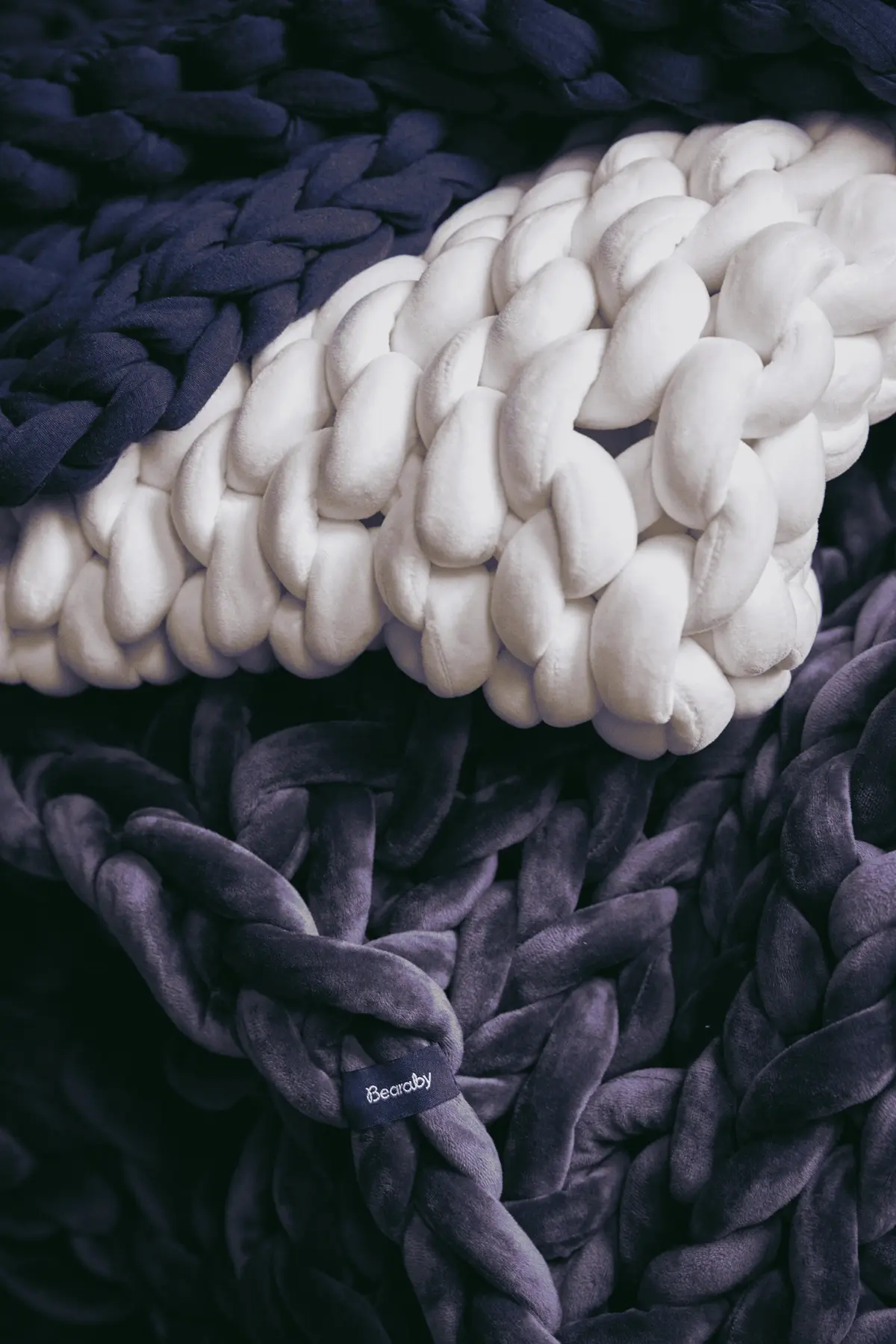
Certifications: GOTS-certified organic cotton
Fill: No filler beads; the weight comes from chunky-knit layers of organic cotton
Weight Options: 15 lb, 20 lb, 25 lb
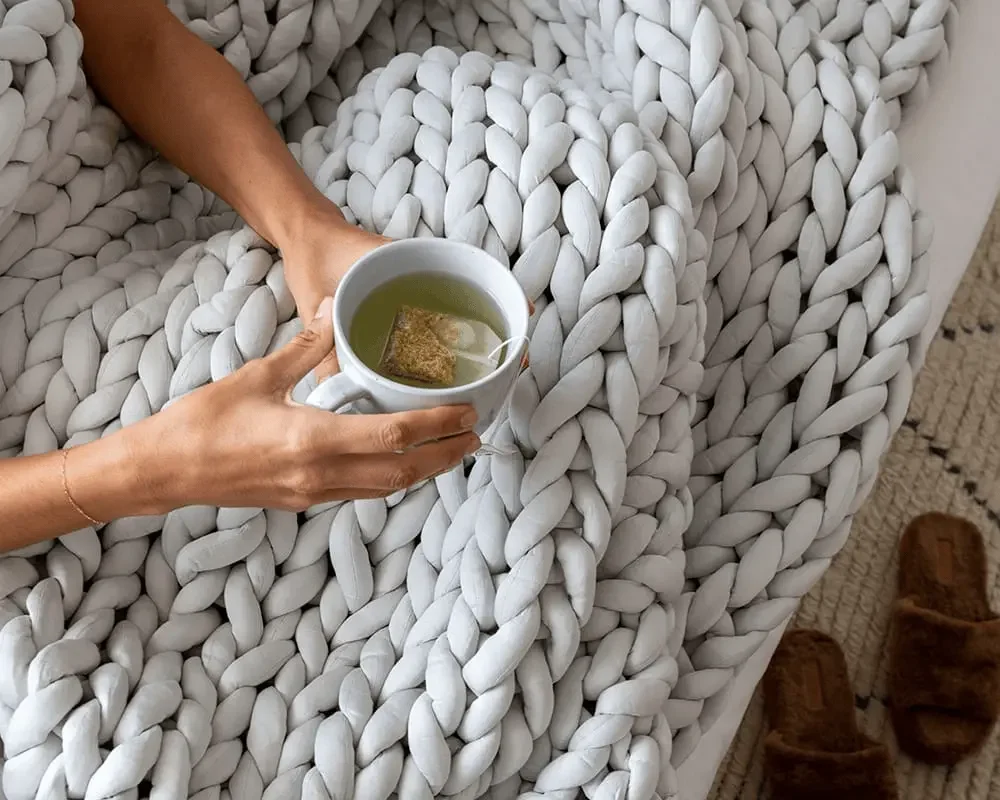
Aesthetic Notes: The open-knit design is arguably the most visually striking on this list. It reads as a sculptural textile rather than a utilitarian blanket.
Price Range: $249–$299
For anyone searching for a non-toxic weighted blanket that genuinely delivers on both safety and style, the Bearaby Cotton Napper is the classic starting point. The bead-free construction eliminates off-gassing concerns; there are no glass or plastic pellets to scrutinize because the weight comes entirely from chunky-knit layers of GOTS-certified organic cotton. That certification covers the full supply chain, from raw fiber through processing and manufacturing, so the organic claim isn’t limited to the surface fabric.
The result is one of the most visually distinctive options in this category: an open-knit construction that reads as a sculptural bedroom textile rather than a utilitarian sleep product and one that layers effortlessly with linen or percale bedding in a design-conscious space.
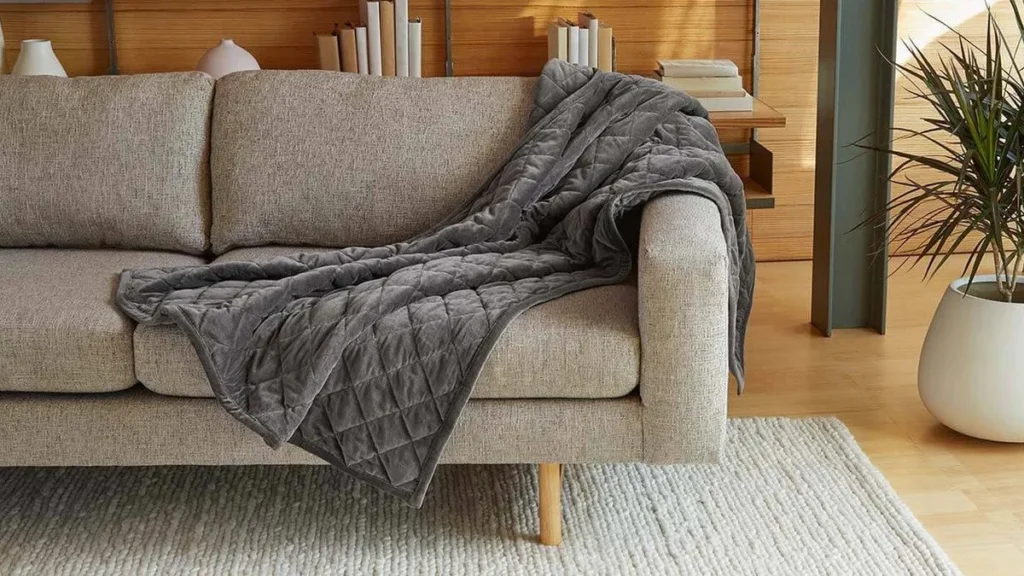
Saatva Weighted Blanket
Certifications: GOTS-certified organic cotton cover, OEKO-TEX Standard 100
Fill: Glass microbeads
Weight Options: 15 lb, 25 lb Aesthetic Notes:
Clean, minimalist profile with a tufted design. Available in neutral tones that layer beautifully with linen bedding.
Price Range: $195–$245
Dual certification is what sets this option apart from most non-toxic weighted blankets in its price range. The GOTS-certified organic cotton cover confirms that the fabric meets rigorous supply chain standards, from raw fiber through processing and finishing, while OEKO-TEX Standard 100 goes a step further by testing every component, including the glass microbeads, for over 100 harmful substances. That combination of institutional-grade verification is genuinely difficult to find at this price point, and it’s the clearest signal that the safety claims here aren’t limited to marketing language. The tufted construction keeps the glass microbeads evenly distributed throughout the blanket, preventing the shifting and bunching that undermines both comfort and weight consistency over time. Aesthetically, the clean, minimalist profile integrates effortlessly into a layered bedding scheme, pairing naturally with linen or percale duvets without competing for visual attention. For buyers who want both verified material safety and a blanket that looks as considered as the rest of their bedroom, this is a strong, well-rounded choice.
Coyuchi Honeycomb Organic Heavyweight Throw
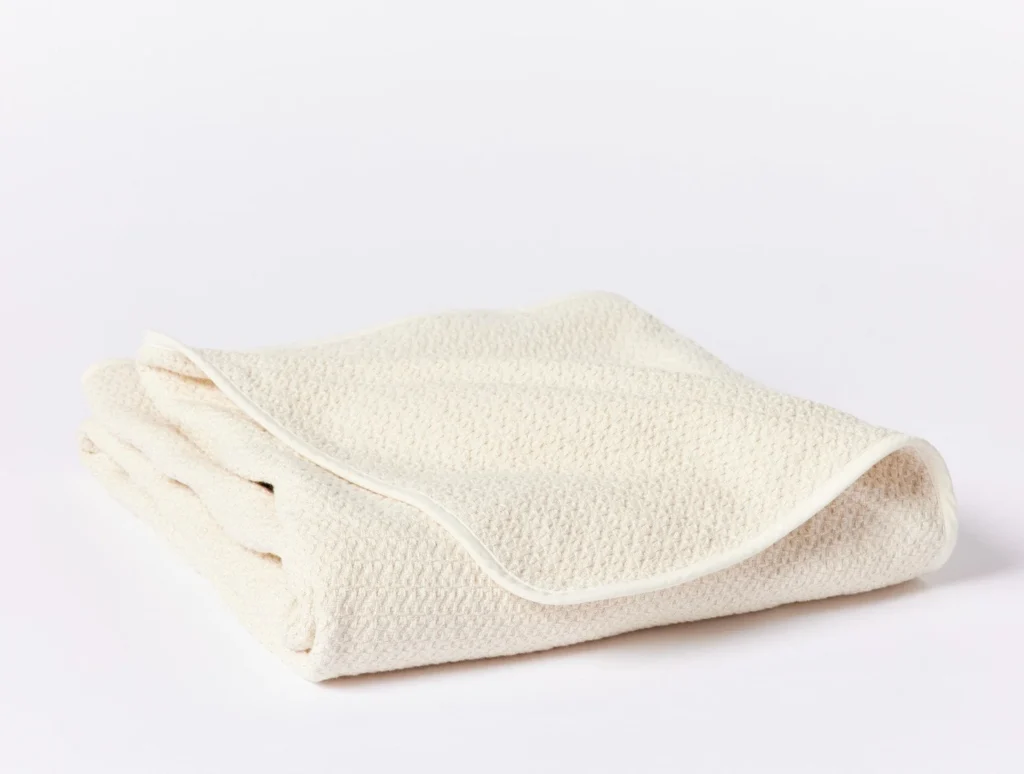
Certifications: GOTS-certified organic cotton, Fair Trade
Fill: Recycled glass beads
Weight Options: 12 lb
Aesthetic Notes: The muted, earthy palette and brushed texture make this one of the easier blankets to incorporate into existing decor without visual disruption.
Price Range: $180–$210
For shoppers who want a genuinely verified organic weighted blanket, Coyuchi delivers on two fronts that most brands address separately, if at all. The GOTS-certified organic cotton cover confirms supply chain integrity from raw fiber through finishing: no synthetic dyes, no chemical treatments, and no ambiguous eco-friendly language. The Fair Trade certification adds a second layer of transparency that goes beyond material sourcing, holding the brand accountable for labor practices throughout production. That combination is rare at this price point and meaningfully distinguishes this option from blankets that carry a single certification or none at all. The recycled glass bead fill keeps the construction free of plastic pellets while distributing weight evenly across the 12 lb frame, a lighter option that suits users who find heavier blankets restrictive or who are new to weighted sleep products. Aesthetically, the brushed texture and muted, earthy palette integrate naturally into a layered bedding scheme without demanding visual attention, making it one of the more versatile picks on this list for design-conscious spaces.
Luxome Weighted Blanket
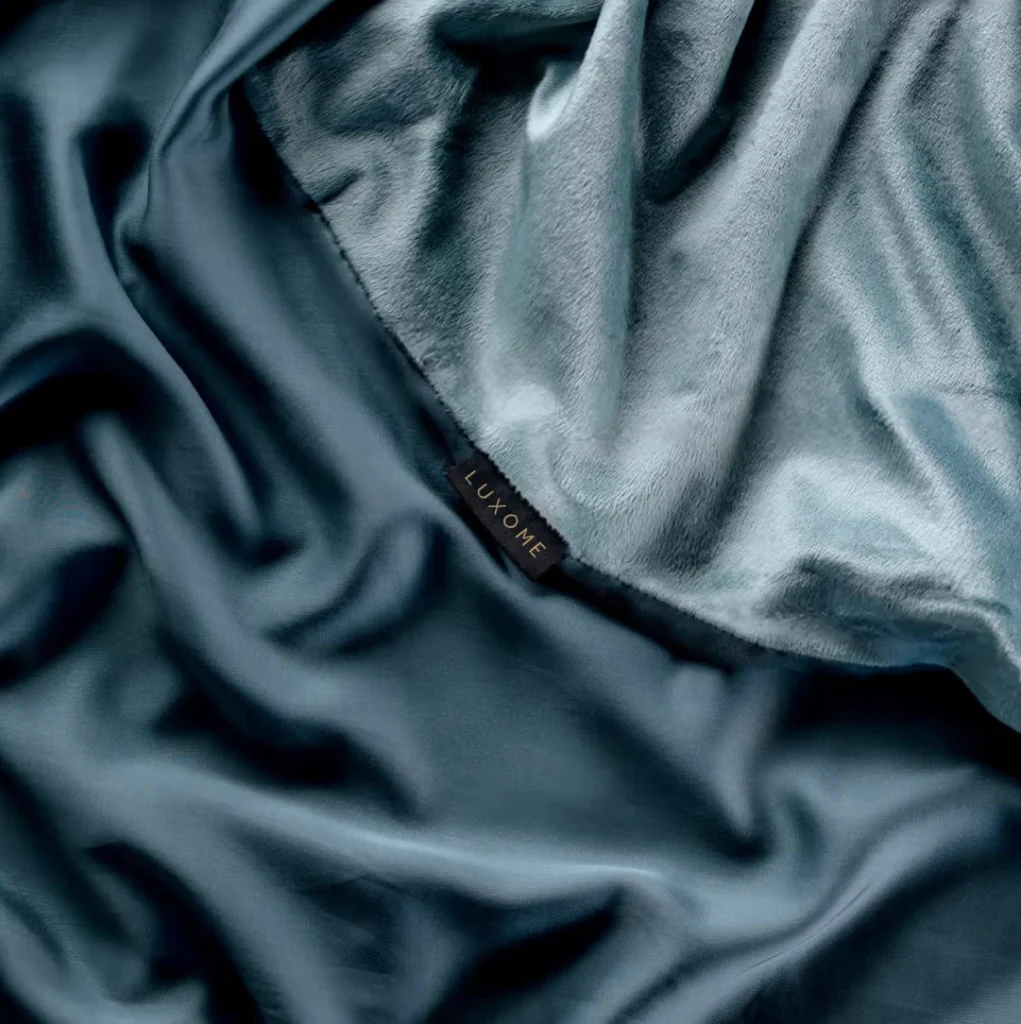
Certifications: OEKO-TEX Standard 100
Fill: Lead-free glass microbeads (with fiberfill layering)
Weight Options: 15 lb, 18 lb, 25 lb (varies by size)
Aesthetic Notes: Dual-texture finish with a more polished, consumer-luxury feel. Slightly more styled than minimal, with a smoother drape when covered.
Price Range: $150–$200
Luxome approaches the weighted blanket category from a comfort-first, engineered perspective, combining OEKO-TEX-certified materials with a more layered construction than most minimalist designs. The blanket uses lead-free glass microbeads for weight, supported by internal fiberfill to reduce movement and noise, resulting in a more cushioned, uniform feel across the body.
The outer system is where Luxome differentiates itself. Most models include a removable cover, often made from bamboo-derived lyocell or minky fabric, creating a dual-sided experience that shifts between cooling and warmth. This adds versatility, though it also introduces synthetic elements in certain finishes, particularly in the minky option, which moves it slightly away from a purely natural-material profile.
In practice, Luxome delivers strong weight distribution and a more “finished” feel than entry-level options, with a construction that prioritizes comfort and usability over strict material purity. Visually, it reads more contemporary than editorial, with a smoother, slightly more structured appearance that works well in modern bedroom settings without feeling overly designed.
Avocado Organic Weighted Blanket
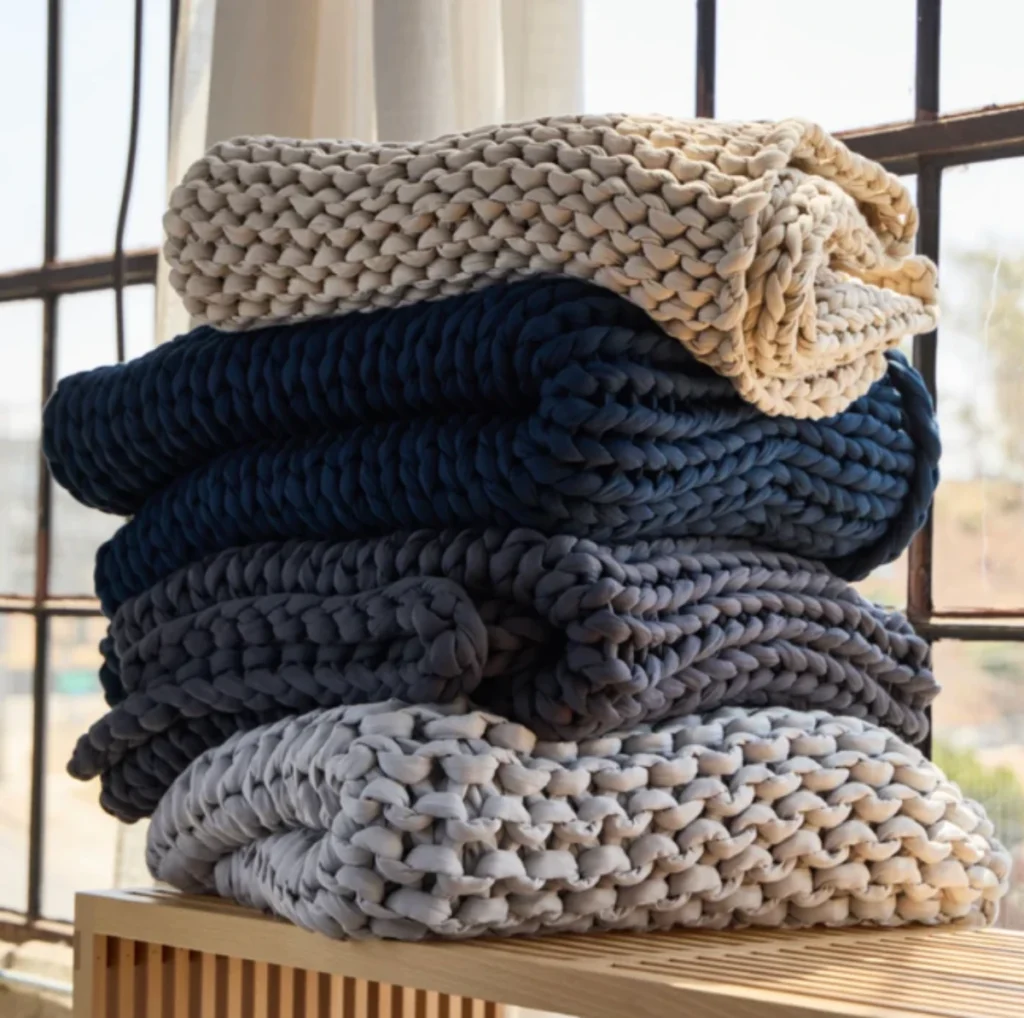
Certifications: GOTS-certified organic cotton, GOLS-certified organic latex (in select variants)
Fill: Glass microbeads
Weight Options: 15 lb, 20 lb
Aesthetic Notes: Simple, unfussy design with a slightly textured surface. Performs well as a layering piece over a duvet. Price Range: $149–$199
Avocado stands out as one of the few brands to carry both GOTS and GOLS certification, addressing organic integrity at every level. As a GOTS-certified weighted blanket, the organic cotton cover meets rigorous supply chain standards from raw fiber through processing, confirming that no synthetic dyes or chemical treatments compromised the fabric. In select variants, the added GOLS certification on organic latex components extends that transparency beyond the shell, making this one of the most thoroughly verified options available. The glass microbead fill keeps the construction free of plastic pellets and distributes weight evenly across both the 15 lb and 20 lb configurations.
Aesthetically, the slightly textured surface and unfussy silhouette make it an easy layering piece over a duvet, present enough to register as intentional yet restrained enough not to compete with the rest of the bedding. For buyers who want multi-standard certification without paying a premium, this is one of the stronger value propositions on this list.
Silk & Snow Hand-Knitted Weighted Blanket
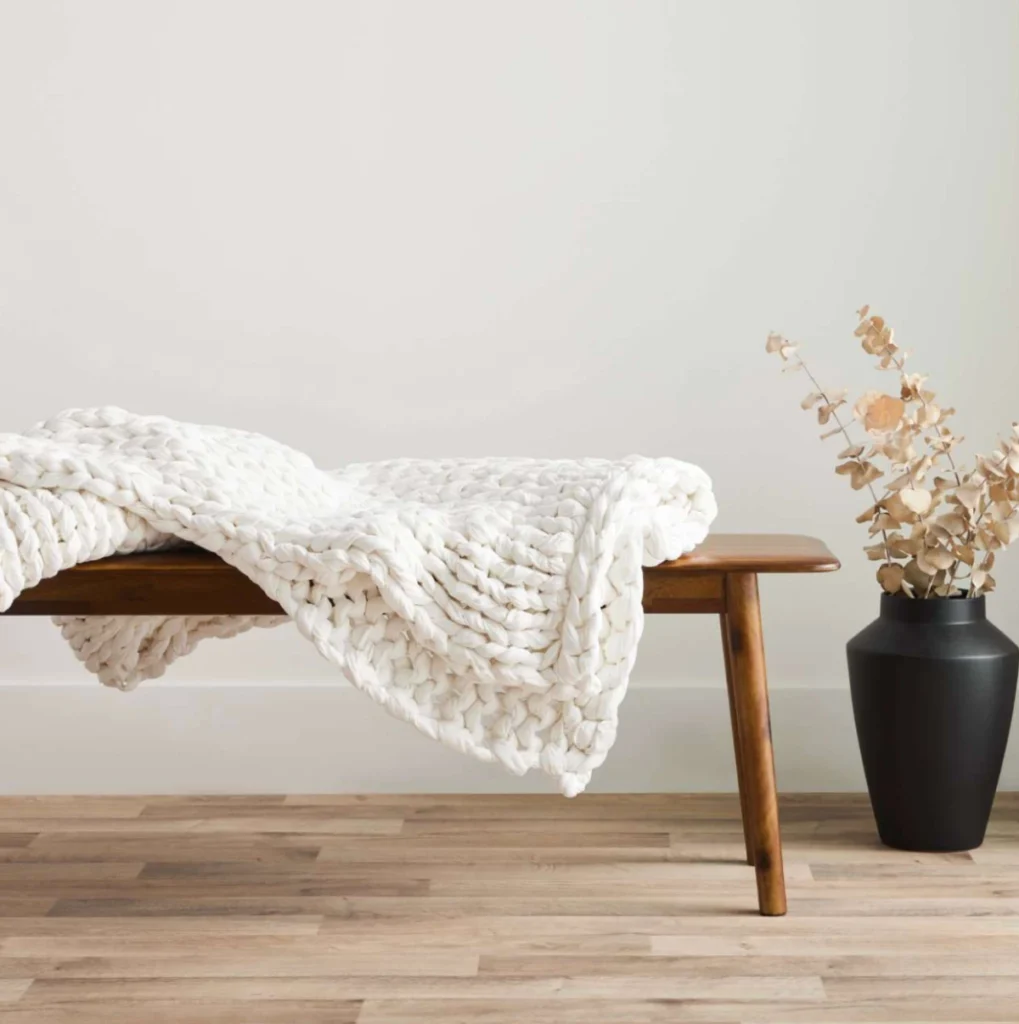
Certifications: OEKO-TEX Standard 100
Fill: Glass microbeads
Weight Options: 12 lb, 15 lb, 20 lb, 25 lb
Aesthetic Notes: Understated matte finish with a relaxed drape. Minimal and functional rather than styled – best suited to everyday bedrooms.
Price Range: $130–$180
Silk & Snow offers a straightforward entry into the non-toxic weighted blanket category, built around OEKO-TEX Standard 100 certification, which confirms the absence of harmful substances across both the fabric and internal components. While it does not carry organic certifications such as GOTS, the use of glass microbeads ensures even weight distribution without relying on plastic fillers, avoiding the off-gassing concerns commonly associated with lower-grade alternatives.
The outer shell is cotton-based, prioritizing breathability and comfort, though without verified organic sourcing. Where Silk & Snow performs well is in its balance of safety, simplicity, and price point. The construction is clean and functional, without unnecessary layering or synthetic blends, making it a reliable option for daily use. Visually, it leans minimal, with a softer structure that integrates easily into a lived-in space rather than serving as a design-forward piece.
Baloo Living Weighted Blanket
Certifications: OEKO-TEX Standard 100
Fill: Lead-free glass microbeads with cotton batting
Weight Options: 12 lb, 15 lb, 20 lb, 25 lb
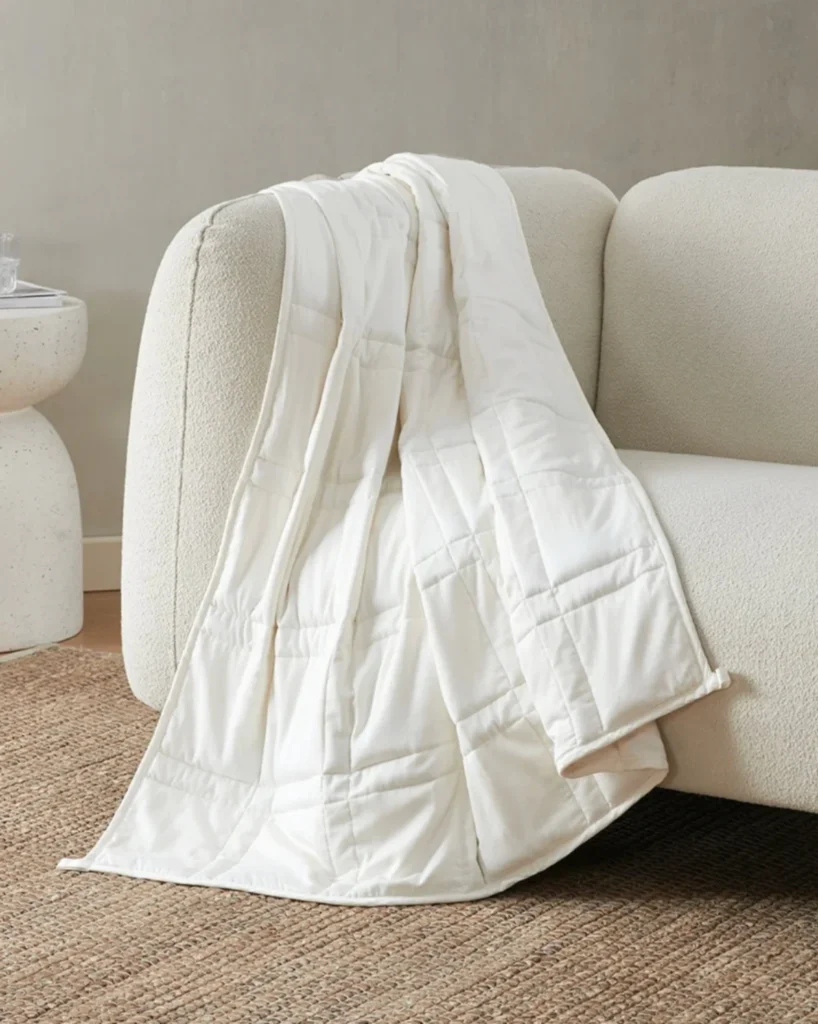
Aesthetic Notes: Soft, quilted construction with a relaxed, almost bedding-like finish. Designed to blend into a bed rather than sit on top of it as a statement piece.
Price Range: $179–$269
Baloo Living positions itself firmly within the non-toxic category through its use of 100 percent cotton construction and the complete absence of polyester or synthetic liners. Both the shell and internal components are OEKO-TEX Standard 100 certified, confirming that the materials have been tested for harmful substances. The blanket is filled with lead-free glass microbeads layered with cotton batting, creating a more cushioned, slightly lofted feel compared to thinner, bead-only designs.
What sets Baloo apart is its material integrity. The entire blanket, inside and out, is cotton-based, avoiding the synthetic blends that are still common across much of the weighted blanket market. This contributes to a more breathable, temperature-neutral experience while maintaining even weight distribution through quilted compartments that prevent shifting or pooling.
Visually, it leans soft and understated rather than structured. The drape is more akin to traditional bedding, with a slightly fuller hand due to the cotton batting, making it feel less architectural and more integrated into the bed itself. It does not carry the same refined, tailored finish as more design-forward options, but it delivers on material purity and everyday usability, particularly for those prioritizing breathability and natural construction over aesthetic sharpness.
How to Style a Weighted Blanket in Your Home
Choosing a GOTS-certified weighted blanket is only half the equation. The other half? Making it look intentional in your space. The good news is that safety and style genuinely complement each other; certified organic cotton and natural linen covers tend to have the kind of muted, tactile quality that design-conscious spaces crave.
Bedroom Styling
Drape your non-toxic weighted blanket across the foot of the bed, folded into thirds lengthwise. This classic hotel-styling technique grounds the look while keeping the blanket accessible. Pair it with a linen duvet or a chunky knit throw in a complementary tone; think warm ivory against slate gray or terracotta alongside natural oat. Because these blankets often feature organic cotton or linen covers in muted, naturally derived tones, they integrate effortlessly into a layered bedding scheme without demanding visual attention.
Living Room and Reading Nook Ideas
Draping a chemical-free weighted blanket over the arm of a reading chair or folding one into a large woven basket creates an effortless, lived-in aesthetic that signals comfort without sacrificing polish. In a living room, position one across the corner of a sofa where it is both accessible and visually grounding. For a reading nook, a blanket casually pooled beside a floor lamp and a stacked side table reads as intentional rather than cluttered, the kind of detail that makes a space feel genuinely curated.
Layering With Other Textiles
Layering a GOTS-certified weighted blanket with lighter textiles is one of the most effective ways to build visual depth in a bedroom or living space. Try folding a cotton muslin throw loosely over the top third of the blanket, or drape a lightweight quilt at an angle across a reading chair where the weighted blanket anchors the base. Varying weights and weaves, a smooth percale alongside a nubby linen, or a fine-knit layer over a chunky organic cotton construction creates the kind of considered, layered look that feels collected rather than coordinated. The muted, natural tones that certified organic materials tend to produce make this kind of mixing intuitive: they share an underlying warmth that ties disparate textures together without effort.
Once you’ve found your ideal blanket and styled it beautifully, knowing how to keep it clean and in top condition is the natural next step.
Color and Texture Pairing
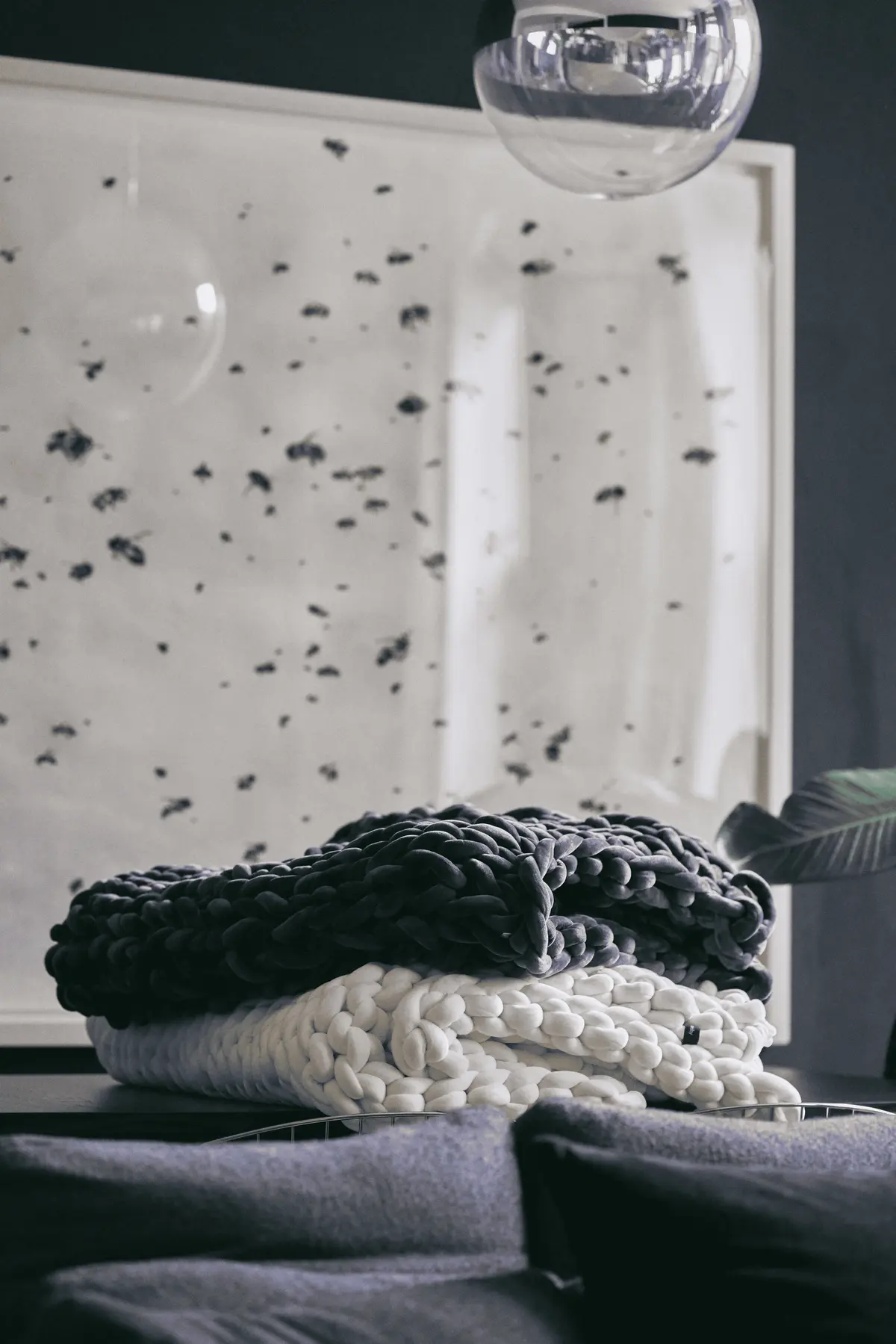
Lean into earthy, undyed tones that certified organic materials naturally produce, and consider how a GOTS-certified weighted blanket can anchor that palette rather than compete with it. Because this certification restricts synthetic dyes and chemical finishing agents throughout the supply chain, the colors tend to be quieter and more grounded, exactly the kind of tones that pair effortlessly with wood, rattan, and raw linen.
If your space leans warm, reach for oat, sand, or terracotta. For cooler, more minimal rooms, slate, sage, and undyed natural are equally at home. Texture matters as much as color here: a chunky-knit construction reads as sculptural against smooth bedding, while a brushed organic cotton cover adds softness without visual noise. The low-intervention processing required for these textiles is a design asset, as the resulting palette coordinates intuitively with the natural materials most design-conscious interiors already favor.
How to Care For Your Non-Toxic Weighted Blanket
Investing in a chemical-free weighted blanket is only the beginning; how you care for it determines how long it holds up, both in performance and appearance.
Washing instructions vary by fabric type, so always review the label first, but these guidelines apply across most certified options.
fabric type
- Organic cotton and linen: Machine wash on a gentle cycle in cold water. Use a fragrance-free, dye-free detergent to avoid reintroducing chemicals into the fibers you specifically chose for their purity. If you own a GOTS-certified weighted blanket, this step matters more than it might seem. Harsh detergents can degrade the very organic fibers that earned that certification in the first place.
- Knit constructions: Hand wash or use a delicate cycle. Hot water can cause shrinkage and distort the weave over time, which is especially worth avoiding in open-knit or chunky-knit constructions where the weave itself provides the weight.
- Bamboo-blend covers: Cold water only; avoid bleach entirely, which can degrade the fiber structure and compromise the fabric’s natural softness.
Drying
Low heat or air drying protects both the fill and fabric integrity. High heat can cause glass microbeads to crack microscopically over time, reducing their even distribution and diminishing the blanket’s therapeutic weight. Skip the synthetic dryer sheets; toss in a few wool dryer balls instead to fluff the blanket without depositing chemical residue onto the very fibers you chose to keep clean.
Storage
Fold loosely and store in a breathable cotton bag rather than a sealed plastic bin, which traps moisture and can encourage mildew in natural fibers. A linen storage bag works equally well and keeps the aesthetic consistent if you are storing it in a visible space. Most non-toxic weighted blankets, when cared for correctly, can last years without meaningful performance loss, according to Mattress Clarity’s weighted blanket guide. Still have questions before committing to a purchase? The next section covers the most common queries readers have before buying.
Sensory Guide
Touch
Glide your fingertips across the shell, and you’ll notice how an organic, breathable cotton weave gives beneath them, soft as sand cushions at low tide, never slick, never static. The gentle pressure from evenly distributed glass beads settles over shoulders and hips like the steady palm of a meditation teacher, reminding the body it can let go.
Sound
Instead of the crunchy rattle you’ll hear in cheaper plastic-filled throws, a sustainable weighted blanket filled with lead-free glass beads offers only a barely-there whisper as you shift. It’s the auditory equivalent of sound therapy, calming but never intrusive, so nothing interrupts the slide toward restful sleep.
Routine
Make it a ceremony, dim the lights, cue a grounding playlist, then cocoon yourself for twenty to thirty minutes before bed or during an afternoon dip. As the blanket’s weighted embrace sinks in, your autonomic nervous system reads the steady, gentle pressure as safety. Cortisol ebbs, heart rate steadies, and a wave of soothing benefits, slower breathing, and softened thoughts ushers you toward stillness. Night after night, this simple practice becomes a somatic cue that it’s time to unspool, drift, and dream. For those drawn to deepening this body–mind connection, explore our piece on nervous-system regulation through somatic rituals and sensory grounding, where we unpack how small, consistent practices retrain the body toward calm.
Final Weave
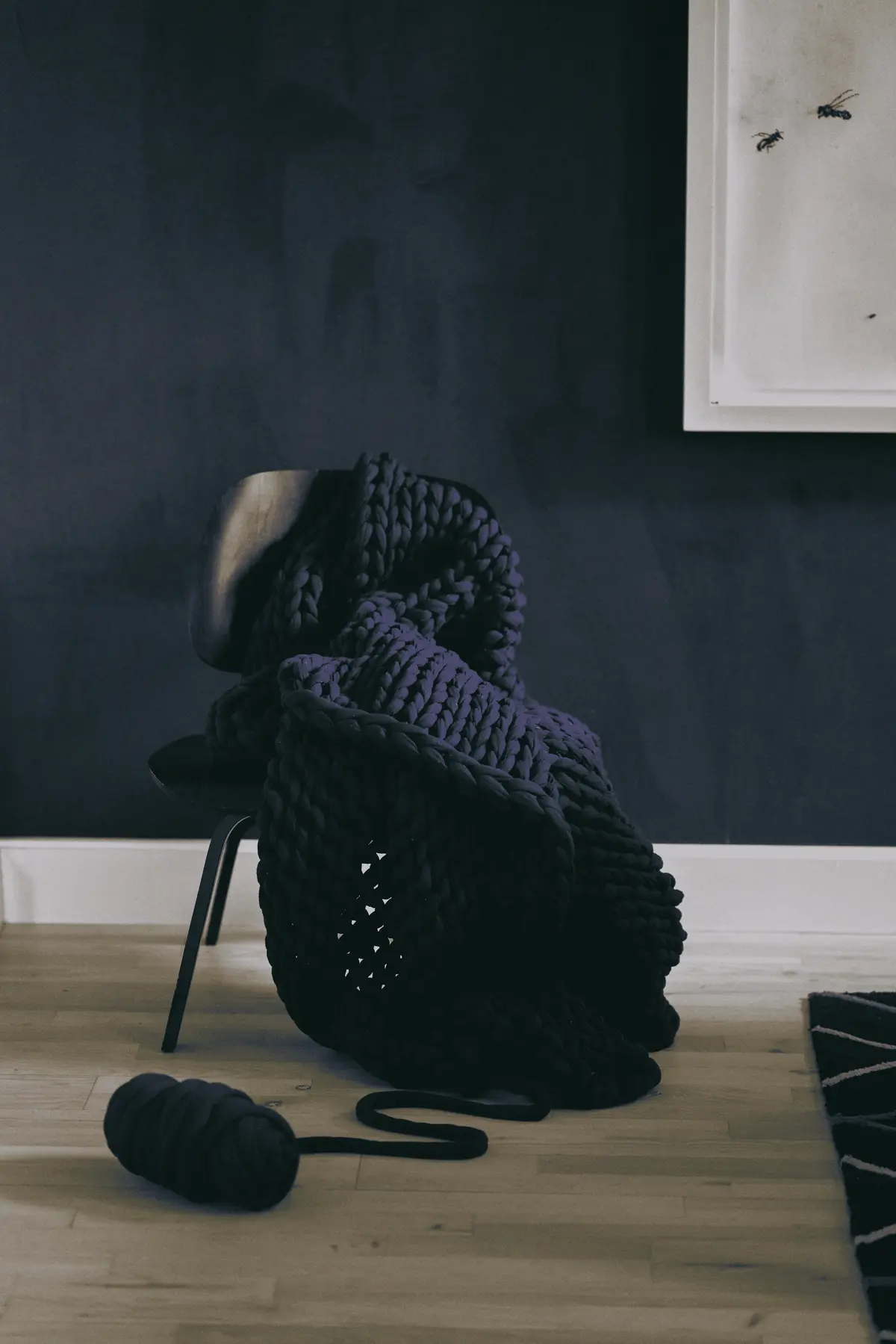
A non-toxic weighted blanket is far more than a stylish throw; it’s a functional wellness ally that syncs with your circadian rhythms and your environmental values. Whether you drape a Baloo across crisp organic sheets or stitch your own heirloom quilt, the promise is identical: steady, evenly distributed pressure that coaxes cortisol down, deepens sleep, and lets you greet daylight with grounded clarity, without compromising human or planetary health.
frequently asked questions
Pin This for Later