Live Slowly: Embrace Intentional Living Daily
Time can often feel elastic these days. Push notifications ripple across every surface, long commutes blur into late-night emails, and an unspoken understanding exists where any free time must be filled. In this fast-paced world, the constant rush often leads to fatigue and disconnection. As a result, this takes a toll on many people's bodies and minds, yet they struggle to establish an alternative. Slow living offers that option. It is a deliberate, values-first approach that privileges presence over productivity, depth over speed, and rhythm over urgency. We unpack the symptoms of the modern-day rush, define the principles of slow living, and provide practical ways to infuse every day with a calmer cadence. By the end, you will hold a framework for beginning your own journey toward an intentional life anchored in clarity and rest. This gift invites you to embrace a more meaningful and restorative way of living.
Some links in this post are affiliate links. That means we may earn a small commission, at no additional cost to you.



Soft orange clouds float above a frozen lakeshore at sunset, with reeds and distant trees silhouetted against the pastel sky.
Modern Life

Dancer in beige leotard lies sprawled on a polished parquet floor, eyes closed and hands resting softly by her sides.
To embrace slow living, begin by tracing the pathways your hours currently follow. In cities and suburbs alike, success is often measured by volume: messages sent, meetings attended, and targets reached. This metric ignores the hidden cost of this constant acceleration. Mental fatigue accumulates as multitasking fractures one’s attention, and social feeds fuel unhealthy comparisons. The body responds somatically with tight shoulders, shallow breathing, and an overaching spike in stress hormones. Emotionally, a subtle dread can set in, a sense that you are falling headlong through obligations rather than choosing them. Even leisure time becomes performative when every sunset demands an Instagrammable photograph and every café visit must be shared.
Analyzing your current lifestyle is essential; accepting where you are now is the first step toward meaningful change. Slow living begins by acknowledging these patterns rather than treating them as immutable. Conduct a personal audit for a standard week. Note the minutes lost to habitual scrolling, the energy drained by back-to-back calls, and the spike of anxiety that results from your calendar having no margin. As you do this, practice recognizing racing thoughts and negative emotions as they arise so you can slow down and be more present. Recognition is the first catalyst for change.
What is Slow Living

Chunky wool yarn ball rests on a table while a woman knits softly blurred in the background of a cozy indoor scene.
Slow living invites intention to guide every action instead of urgency. Yet this philosophy unfolds across several key dimensions. First, it elevates presence. True presence is more than physical proximity; it is an undivided meeting of one’s attention and external environment. Second, it insists on alignment. Activities, commitments, and even relationships are evaluated by whether they contribute to what you define as a meaningful life. Third, it honours sustainable rhythm. Instead of sprinting and collapsing, slow living seeks patterns that keep the nervous system steady through predictable sleep, nourishing meals, regular movement, and unhurried social connection. These principles directly challenge the hustle culture that equates busyness with worth. Where hustle culture glorifies the rapid pace, slow living questions whether that speed serves any lasting purpose.
Gentle Invitation: Craft the Tone

Relaxed view from bed in a lofted cabin, bare feet crossed toward tall window with sheer curtains and distant hills.
Adopting slow living requires a shift in self-awareness and how we speak to ourselves on a daily basis. The internal dialogue that once demanded more output should become a gentle invitation that presumes your worth is already intact. Permission-giving statements such as “My time is finite and precious” or “Rest is productive for the soul” create psychological space for new habits. Setting boundaries is the concrete expression of this gentleness. When you learn to say no to projects or things that do not align with your personal priorities, you protect both your time and energy.
For a woman on a spiritual journey, embracing slow living and setting boundaries is essential for cultivating inner peace and reflective, intentional living. Digital boundaries strengthen the practice: designate no-screen hours, create technology-free pockets during meals, or trial a full day each week without checking your emails. These mini-unplugs reduce mental clutter and teach the brain that stimulation is optional. Over time, each boundary becomes a self-respecting act that reinforces slow living.
Intentional Living Practices

Lifestyle magazine titled “slow.” Issue 16 rests on a sun-lit wooden stool; soft window-pane shadows fall across the cover.
Make slow living tangible by weaving it into the first and smallest moments of the day. Begin each morning without reaching for a device. Instead, open a window, breathe fresh air, and set an intention in writing. This simple routine claims the first 20 minutes for presence rather than reaction. Throughout the day, embrace single-tasking. Neuroscience indicates that focusing on one activity improves efficiency and spares mental energy otherwise wasted on context switching. To protect your concentration, intersperse micro-rest exercises: look away from the screen, stretch, or close your eyes for 60 seconds. These tiny pockets of slowness regulate cortisol and sharpen focus.
Next, schedule a weekly digital detox. Choose a 24-hour window in which all non-essential technology remains out of reach. Fill the reclaimed hours with reading, cooking, or a walk among trees. Fresh air and movement lower blood pressure and clear mental fog, reinforcing the emotional benefits of slow living.
Finally, create a deliberate margin. Rather than padding the calendar to its edges, leave open spaces between your commitments. Margins absorb inevitable delays, prevent the hurried pace from resurfacing, and remind you that life is not meant to be lived as a race.
Practical Tools and Spaces for Intentional Living
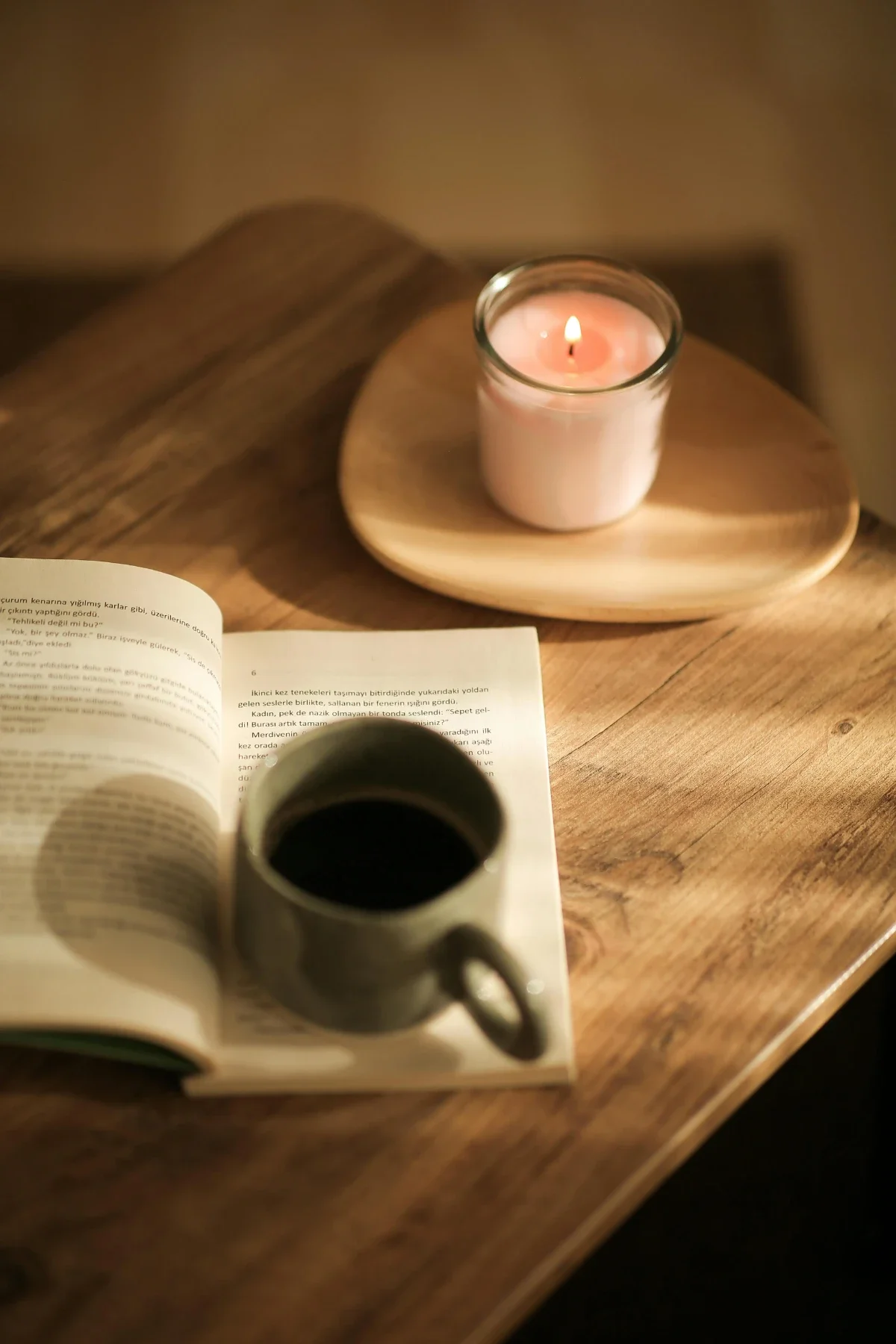
Pink jar candle next to an open book and a mug of black coffee on a warm wooden table, creating a cozy reading nook.
Our surroundings can hasten us, or teach us to breathe. Begin by taking stock of what is in plain sight. Pull everything off your desk, dresser, or kitchen counter and decide, honestly, whether it earns the right to stay. Placekeepers go back in an intentional spot; the rest gets boxed for donation or recycling. Space is not a luxury; it is a cue to the mind that nothing urgent lurks in the periphery, so it can settle on a single task.
Once the physical clutter thins, turn to the digital kind. Silence banners and badges that rarely matter, switch your phone to grayscale during deep-work blocks, and tuck your most tempting apps into a folder you have to swipe twice to reach. These tiny hurdles do not banish technology; they remind your thumb to ask, do I really want to open this right now?
Then scout for a small patch of tranquillity nearby, a shaded bench that catches the first light, a spare room dressed in plants and linen, or a stretch of shoreline where wave hush replaces traffic hum. Visit it often. Even a 10-minute pause in such an “island” setting can drop your pulse and smooth the mind’s chatter.
If you share a home, make slow living a family affair. Hang a family calendar where everyone can see commitments at a glance, cook one leisurely, seasonal meal together each week, and rotate chores so goodwill never sours into resentment. When the household moves in sync, calm stops being a solo experiment and becomes the atmosphere everyone aligns on.
Overcoming Obstacles on the Path

Blurred silhouette of a woman on a shaded balcony in gentle daylight.
The speed of modern life can feel like a rip current, pulling us into an endless rush of notifications, deadlines, and the hustle culture that glorifies a rapid pace. Choosing slow living inside that swirl is not intuitive, yet it can open the door to a more meaningful life. Jodi Grubbs, host of the podcast Our Island in the City and author of Live Slowly: A Gentle Invitation to Exhale, frames the first step as a gentle invitation to “exhale slowly,” let fresh air fill your lungs, and notice how the body slowly releases its hurried pace.
This pause challenges the belief that worth equals velocity. Slow living shifts this metric: instead of tallying messages sent, we ask what beauty emerges when we move at a slower pace. Think of island living in Jodi’s childhood home of Bonaire, where waves kept steady time and mornings began with unhurried walks. One mindful breath outdoors can lower blood pressure and steady mood.
Creating a sustainable approach requires practical boundaries. Disable non-essential alerts, weave twenty-minute pockets of rest into your schedule, and embrace single-tasking to avoid falling headlong into distraction. These habits respect human limits and create space for spiritual practices that nourish the soul.
Progress is rarely linear. Jodi’s journey through loss and renewal proves that intentional living is a consistent practice, not the art of perfection. Each morning offers a choice: stay aligned with the fast paced world, or step into slow living. No matter where you stand, whether on a high-rise balcony or a shoreline path, the invitation is the same. Breathe fresh air, rest deeply, listen for truth, and let hope guide the rhythm of your days.
Measuring Progress Without Pressure
Numbers have their place, yet slow living thrives on what the heart can feel rather than what a spreadsheet can tally. Once a week, slip into a quiet corner with a notebook, close your eyes, and notice the rhythm of your breath. Ask yourself: Was I truly present this week, or did I drift back into hurry? When did tension tighten my shoulders, and what ushered in ease? Which boundary, ritual, or pocket of rest felt most nourishing? Write without judgment. Over time, the pages will reveal subtler victories, steadier breathing, clearer thinking, a calendar that no longer feels like an adversary. Resist the urge to rank or time-stamp these moments. Progress in intentional living is sensed in the looseness of your jaw, the depth of a laugh, the way evening light looks when you are not racing past it. By tending to these reflections, you begin to shape a future where inner calm and outward action move in gentle harmony.
Gentle Invitation to Begin
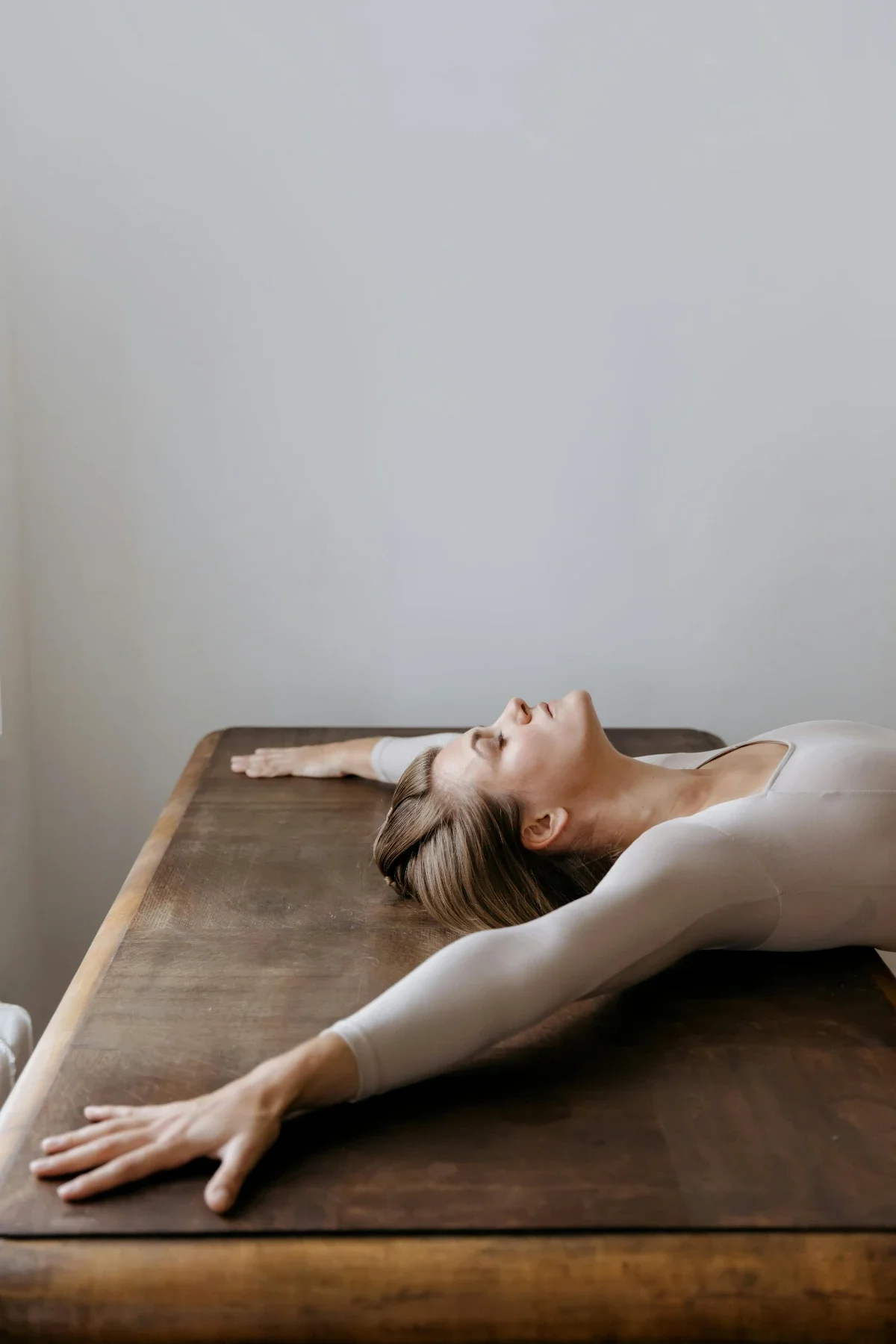
Young woman in a neutral leotard reclines across a wooden table, arms outstretched and eyes closed in a relaxed indoor stretch.
You do not need to quit your job or move to a cabin in the woods to welcome slow living. The shift starts with one steady choice. Try a week of no-screen breakfasts, or cancel a single unneeded meeting to claim an hour for quiet reading. Track what happens. Does your heart rate settle, do evenings feel looser, do conversations gain warmth when your mind is not split in two? Let those small signals suggest the next tweak, then the next. In a culture that measures worth by speed, this change may feel subtle yet it is quietly radical. Step by modest step, you reclaim time, invite presence, and shape a meaningful life marked by depth rather than sheer momentum.
Related Posts