Permaculture for Regenerative Living: Design Systems, Principles and Practice
Morning drifts across a quiet garden, revealing how dew beads, soil breathes, and light tilts through leaves with economical grace. Permaculture watches these conversations among water, wind, and root, then translates them into regenerative food production, renewable resources, and resilient community design. Just as aligning meals with the seasons roots nutrition in local cycles, permaculture roots design in the living rhythms of place. Coined from “permanent agriculture” and later broadened to “permanent culture,” the concept rests on three intertwined ethics: Earth Care, People Care, and Fair Share.
Guided by these values and formalised by Mollison and refined through Holmgren’s twelve permaculture design principles, this article offers a practical map from big-picture observation to hands-in-the-soil detail. Examples arise from a temperate site, yet the same patterns guide tropical hill farms, coastal balconies, and urban rooftops because the principles respond to climate, not dictate it. Whether you steward broad agricultural systems or a single planter box, you will discover how protracted and thoughtful observation invites small, slow solutions that enrich soil fertility, moderate climate change pressures, and nourish both household and local community. The journey ahead traces ethics first, then steps through design system, principles, and real-world practice so you can begin or deepen your own life in permaculture.
Some links in this post are affiliate links. That means we may earn a small commission, at no additional cost to you.



Young woman in wool sweater kneels, gathering fresh herbs while gently pinching shoots from dense shrub.
What is Permaculture
Walk through a mature forest and you feel intricate cooperation at every level, from mycorrhizal threads in the soil to the shifting canopy above. Designers who practice permaculture read those relationships and translate them into sustainable systems for human life. To define permaculture in simple terms, it is a holistic design system rooted in permanent agriculture that immitates natural patterns found in ecosystems to support food production, water management, shelter, and community culture. Conventional agriculture often strips complexity from landscapes, replacing diversity with monocrops that depend on synthetic inputs. By contrast, permaculture design arranges perennial agriculture, renewable resources, and waste-to-resource loops so that gardens and farms behave more like forests. This approach answers the frequent question, “What is the difference between gardening and permaculture?” Organic gardening focuses on chemical-free techniques, while permaculture integrates soil health, water, energy, and human relationships inside one ecological vision. The word permaculture was coined in the 1970s by Bill Mollison and David Holmgren, yet its core ethics, Earth Care, People Care, Fair Share, echo Indigenous stewardship worldwide.
Every definition must also acknowledge weaknesses. A common disadvantage of permaculture farming is its learning curve; protracted and thoughtful observation takes time, and slow solutions frustrate growers who expect instant yields. Critics add that temperate climate permaculture literature can neglect tropical or arid realities, so local adaptation becomes vital. Still, when designers apply self regulation and accept feedback from their own life and local community, systems evolve toward more sustainable outcomes than input-heavy agriculture.
Local Permaculture Adaptation

Sun-lit golden ear of corn peeks from dry husk amid rustling, tan stalks at harvest time.
No two landscapes share exactly the same sun path, rainfall, or cultural memory, so successful projects honor place-specific knowledge. In the Pacific Northwest, temperate climate permaculture relies on cedar windbreaks and rainwater harvesting swales, whereas highland Kenya channels roof runoff into banana circles that store energy in moist mulch pits. Many Indigenous nations have practiced companion planting, such as the Three Sisters of maize, beans, and squash for centuries, demonstrating sustainable living long before the term permaculture existed. Designers therefore consult elders, listen to stories about plant roots finding hidden springs, and weave traditional fire or grazing regimes into plans that combat climate change by preventing catastrophic wildfires. This respectful dialogue prevents protracted and thoughtless labor that ignores centuries of observation.
Permaculture as a Design System

Tiny brown mushroom rises from leaf litter and twigs, softly lit by fading forest evening light.
A genuine permaculture design begins with a measured base map that captures every contour, fence line, watercourse, and structure. Designers observe one full cycle of seasons to practice protracted and thoughtful observation, recording the arc of winter sun, the surge of storm winds, wildlife corridors, and the hidden language of natural ecosystems. Those raw notes feed a sector analysis that identifies forces crossing the site, from summer heat that can warm a greenhouse to cold air that settles in frost pockets.
These analytical steps trace back to Bill Mollison, who formalized the OBREDIM sequence – Observe, Boundaries, Resources, Evaluation, Design, Implement, Maintain – in his early permaculture literature. David Holmgren later articulated the process within his own permaculture design course material and linked it to the twelve permaculture design principles that guide resilient, sustainable systems. Together they framed zone mapping, where areas are numbered from zero through five so that elements sit at distances matching their intensity of use. Positioning vegetables in zone one and leaving zone five as wild reference illustrates how the design system lowers labor, fossil fuel inputs, and soil depletion.
Relative location follows naturally. Each element is placed where its needs are met by the outputs of another, forming interlocking feedback loops: kitchen scraps feed chickens, their manure enriches worm bins, worms nourish fish, and nutrient-rich pond water irrigates vegetables. Every element must serve at least three functions, and every essential function must be supported by more than one element, stacking resilience against failure.
Design then moves from patterns to details. Input-output analyses reveal that a passive solar greenhouse can heat an adjacent workshop through a shared cob wall, while rooflines channel rainwater harvesting flows to swales that hydrate shelterbelt trees. Materials favor renewable resources such as roundwood posts, clay plasters, and reclaimed lumber, reinforcing environmental sustainability within broader goals for sustainable development.
Framework variants like SADI (Survey, Analysis, Design, Implementation) or SADIMET (Survey, Analysis, Design, Implementation, Maintainence, Evaluation, Tweaking) echo Mollison and Holmgren, yet all cycles remain iterative. Implementation is always followed by monitoring, self regulation, and accept feedback steps that refine layouts over time. In practice, this fusion of empirical mapping with intuitive pattern recognition creates sustainable systems whose elegance mirrors the forest that first inspired permanent agriculture.
Holmgren’s Twelve Permaculture Design Principles
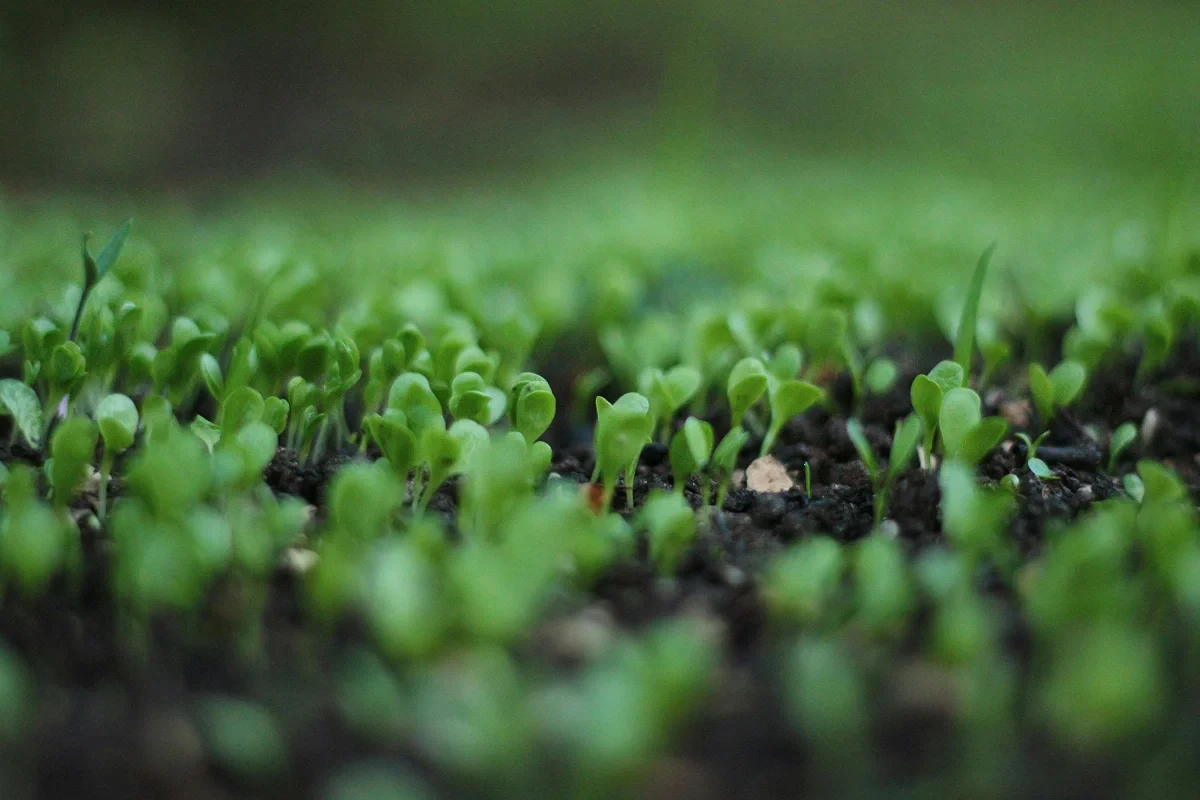
Dense carpet of fresh green seedlings emerges from rich, dark soil in an early-spring vegetable bed.
Australian ecologist David Holmgren distilled years of fieldwork with Bill Mollison into twelve design principles first published in Permaculture: Principles and Pathways Beyond Sustainability (2002). These principles are lenses: they teach us to read any landscape, then arrange soil, water, structures, and social patterns so that human settlements mimic the elegance of natural ecosystems. Every certified permaculture design course revolves around these guidelines because they translate ethics into actionable practice while remaining flexible across biomes, budgets, and cultures. What follows explores each principle in depth so you can recognise its intent and apply it to your own life and local community.
Observe and Interact
Permaculture design begins with attentive presence. Spend a full cycle of seasons charting sun arcs, tracking wildlife paths, and listening to community stories. Observation reveals microclimates and energy flows that a rushed survey would miss, allowing elements to be placed where they thrive with minimal external input. The practice cultivates humility and intimate knowledge of natural ecosystems, grounding design decisions in lived reality rather than abstractions.
Catch and Store Energy
Sunlight, rainfall, wind, and surplus biomass pass by only once unless they are captured. Roof-fed cisterns, gravity ponds, thermal mass walls, and coppice woodlots bank energy in forms that can be used later. By catching and storing energy, designers buffer seasonal scarcity, reduce dependence on fossil fuels, and demonstrate how permaculture principles build true wealth through renewable resources.
Obtain a Yield
A system that fails to feed people, wildlife, or soil microbes soon loses support. Yields need not be limited to calories; they include fiber, medicine, clean water, and shared celebration. Recording the harvest links vision to nourishment and shows that permaculture design principles can meet human needs while regenerating the landscape.
Apply Self Regulation and Accept Feedback
Soil tests, water meters, and neighbor feedback speak plainly. When organic matter declines or energy use rises, redesign grazing patterns, insulation, or plant spacing. Continuous monitoring and adjustment prevent resource depletion and align daily choices with long-term ecological vision. Accepting feedback embodies the ethic of People Care by valuing community insight alongside data.
Use and Value Renewable Resources and Services
Permaculture design favors resources that regenerate within a human lifetime. Straw, rainwater, solar heat, and biological pest control replace plastic mulch, imported water, or synthetic chemicals. Valuing renewable resources supports environmental sustainability and demonstrates how permanent agriculture can power permanent culture.
Produce No Waste
In healthy forests nothing is wasted. Kitchen scraps flow to worm farms, greywater irrigates bamboo windbreaks, and pruned branches become path mulch. Designing tight loops converts liabilities into assets, lowers costs, and illustrates the systemic elegance at the heart of the twelve principles.
Design from Patterns to Details
Large patterns, watershed, slope, wind, social dynamics, guide placement of finer elements such as pipe diameter or plant spacing. Mimicking the branching of rivers in orchard irrigation or the spiral of seashells in a herb spiral shows how patterns lead to efficient details. This principle keeps designers from locking into premature decisions before the broader story of place is understood.
Integrate Rather Than Segregate
Elements placed in mutually supportive relationships require fewer external inputs. A fruit tree guild layers nitrogen-fixing shrubs, dynamic accumulators, pollinator flowers, and groundcovers under one canopy. Integration extends to human life when shared tool libraries replace isolated ownership. In every case, the whole becomes greater than the sum of its parts.
Use Small and Slow Solutions
Starting at a manageable scale lets observation refine practice without catastrophic loss. A single raised bed teaches more about soil fertility and companion planting than ten acres planted at once. Slow solutions, such as building soil through continual mulch, accumulate strength over time and reduce the need for protracted, thoughtless labor.
Use and Value Diversity
Genetic, species, and cultural diversity buffers systems against pests, market swings, and climate variability. Planting several grain varieties, hosting insectary strips, and inviting diverse voices into decision making widen resilience and enrich community connection.
Use Edges and Value the Marginal
Productivity often peaks where different environments meet: pond edge, forest margin, path border. Mapping and enhancing these edges, adding strawberry towers along fences or pollinator corridors beside driveways, expands functional space without purchasing more land. Valuing the marginal also means welcoming unconventional ideas and participants, nurturing innovation at social edges.
Creatively Use and Respond to Change
Climate patterns, economic shifts, and personal circumstances evolve continually. Rather than resist, permaculture design seeks opportunity in transition. If rainfall decreases, deepen mulches and diversify plant dates; if new neighbors arrive, co-design a shared gathering space. Flexible responses transform uncertainty into regenerative momentum.
Together these twelve principles weave observation, renewable resources, self regulation, and fair share ethics into a coherent compass. Applied in concert, they guide any project beyond conventional agriculture toward regenerative, permanent agriculture that feeds soil health, supports plants, and uplifts community well-being.
Three Ethics: Earth Care, People Care and Fair Share

Garden hand sprinkles a sparkling arc of water over lush zucchini plants inside a glass-roof greenhouse.
Before any contour line is drawn or seed is chosen, permaculture asks designers to pause and consider the moral landscape underneath the physical one. Bill Mollison and David Holmgren framed the entire discipline around three guiding ethics that root every technique, pattern, and principle in lived responsibility. These ethics are not theoretical ideals but practical touchstones that shape daily choices, ensuring that the design system nourishes land, humans, and community in equal measure.
Earth Care
Every act of permaculture begins with the living skin of the planet. Designers build soil fertility through compost, cover crops, and minimal tillage, conserve water by slowing runoff in swales and ponds, and protect biodiversity so natural ecosystems remain the wellspring for resilient food systems. Honoring Earth Care grounds all later decisions in the quiet intelligence of moss, mycelium, and migrating birds.
People Care
A landscape that feeds bodies yet drains spirits undermines permanent culture. People Care arranges dwellings, gardens, and workspaces so they meet physiological needs, food, shelter, safety, while supporting emotional well-being. Shaded gathering spaces invite conversation, paths encourage daily movement, and workload pacing avoids exhaustion. Sustainable living depends on rhythms that sustain human life as well as soil life.
Fair Share
When harvest baskets overflow, the third ethic completes the circle. Fair Share sets discernible limits on consumption and directs surplus, seeds, knowledge, renewable energy, into broader community networks. Seed swaps, tool libraries, and neighborhood compost hubs circulate abundance, weaving reciprocity into the fabric of local culture and preventing the drift toward extraction or hoarding.
From Principles to Practice
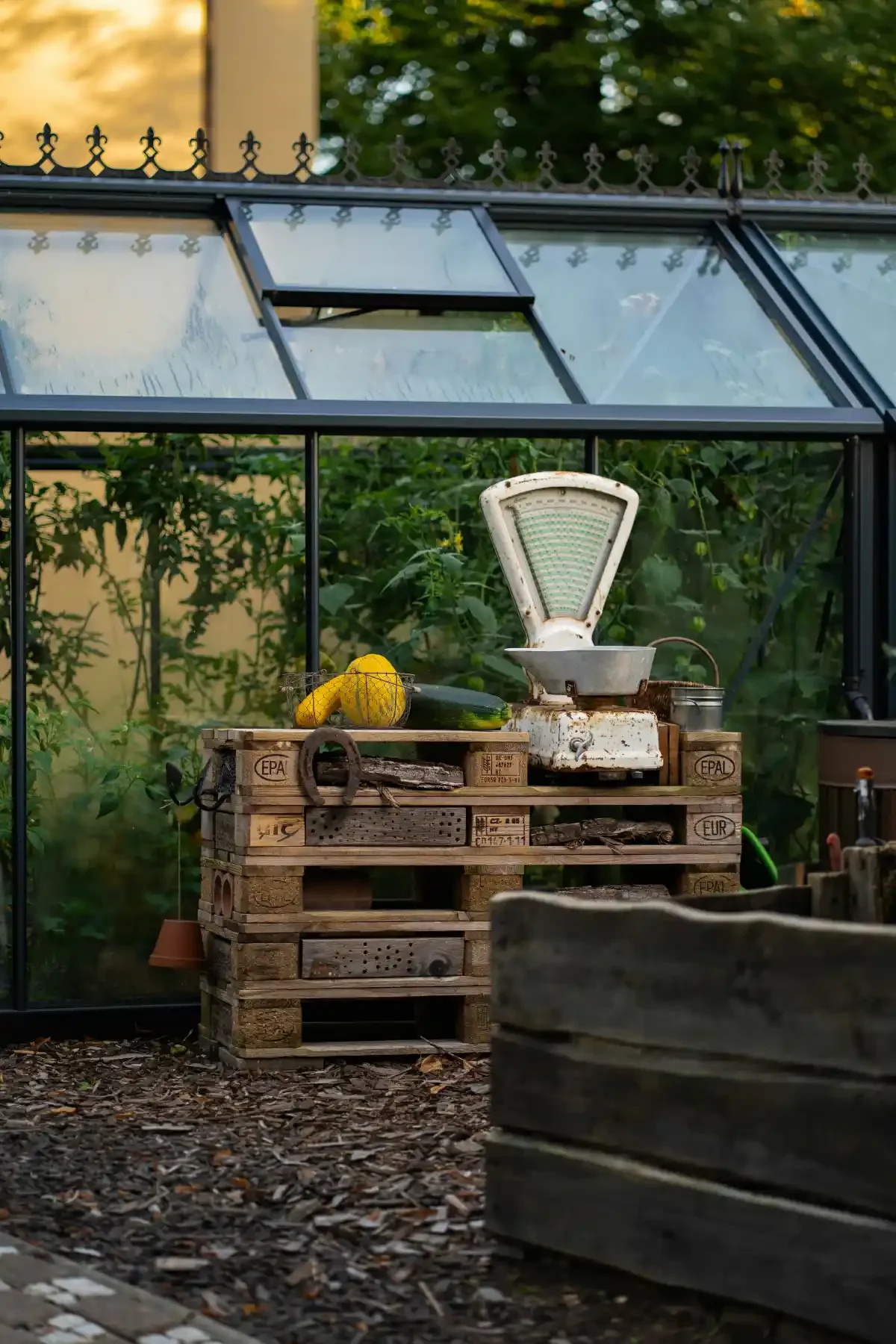
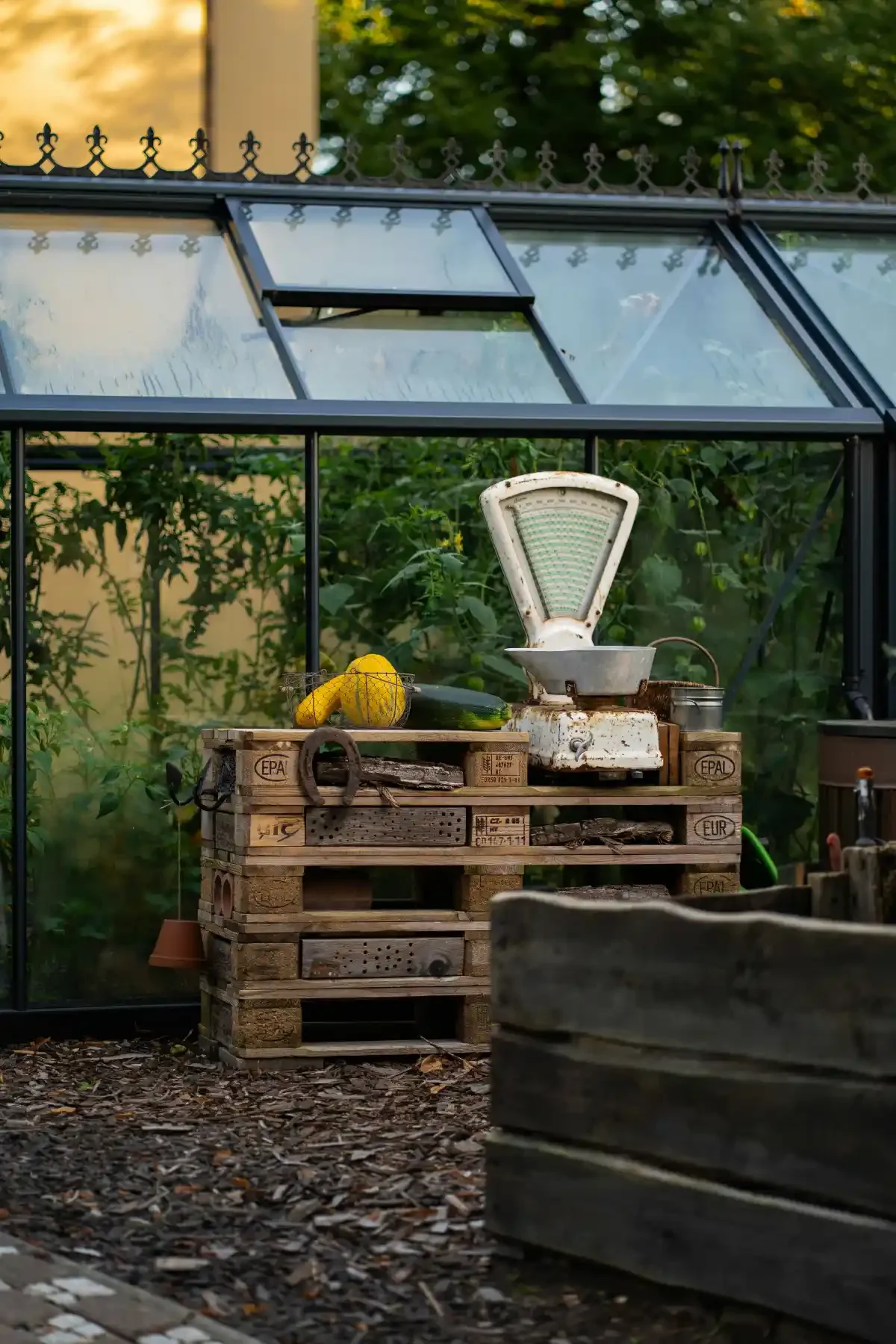
Vintage scale and harvested squash rest on pallet workbench inside misted-glass greenhouse with tomato vines behind.
Bill Mollison and David Holmgren always taught that permaculture principles must leave the page and touch soil. After introducing all twelve, this article now follows four of them into the field. Each subsection shows how a single principle or cluster of principles unfolds through tangible choices, giving readers a sensory sense of permaculture in motion rather than theory alone.
Catch and Store Energy
Rain that slides off a roof vanishes, yet rain guided into a cistern becomes a season of irrigation. This principle asks designers to harvest transient flows of water, sun, wind, and biomass so those energies remain on site. Swales cut along contour slow storm surges and recharge subsoil moisture. A stone wall behind a greenhouse absorbs low winter sun, then releases warmth through the night, trimming heating bills and protecting soil biology from freeze shock. Captured energy reduces dependence on external grids and aligns the project with sustainable development goals that value renewable resources over finite fuels.
Engage Feedback Loops
Holmgren couples self regulation with accepting feedback, reminding us that design is a living conversation. After the first season, a soil test might reveal falling organic matter. Instead of doubling on purchased compost, the designer adjusts mulch thickness and introduces green manure crops that fix nitrogen and feed soil microorganisms. Electricity logs note a spike during midsummer heat, prompting a retrofit of shading louvers over west windows. Weekly garden walks with neighbors surface insights about pollinator abundance and crop flavor, weaving community knowledge into the design. Continuous feedback keeps the system adaptive, agile, and rooted in fair share relationships.
Integrating Details for Function
Once broad patterns feel clear, details can dovetail. A cob bake oven attaches to the south face of the greenhouse so bread baking on market days also heats seedlings overnight. Greywater meanders through a reed bed before refreshing a bamboo privacy screen, turning household effluent into biomass for garden stakes. Companion planting clusters dill and calendula beneath tomatoes; the flowers charm pollinators while their scents confuse pests. Lumber milled from on-site wind-fallen trees frames a shed whose roof channels runoff back to the same hillside where the trunks once stood. Each choice satisfies several needs and every critical need is met in several ways, tightening the web of resilience.
Use Edges and Value the Marginal
Where meadow meets woodland, productivity peaks. Designers mimic that vitality by noticing and cultivating their own boundary zones. The narrow strip beside a driveway bakes in reflected heat and ripens early tomatoes long before main beds. A forgotten corner that catches roof runoff becomes a willow basket grove. In dense urban yards, a vertical tower of planters climbs a sunny wall, turning a blank facade into a micro farm. By honoring edges and marginal spaces, small parcels grow larger in function if not in acres, proving that creative observation can unlock hidden abundance without buying new land.
These four practical explorations reaffirm that the twelve permaculture design principles are not abstract ideals. They are working tools that guide water pipes, planting layouts, and neighborhood conversations toward regenerative outcomes grounded in place and in daily life.
Living Proof: Global Permaculture Initiatives

Speckled red-and-cream bean pods dangle amid lush leaves at Koanga Institute garden.
Principles take root when they meet place. The projects that follow span humid valleys, arid mesas, tropical islands, and temperate coasts, yet each arrives at the same quiet agreement with soil, water, and community. By tracing their methods we witness how Earth Care, People Care, and Fair Share translate into terraces that sip rain, straw walls that breathe, and seed libraries that safeguard diversity. These initiatives stand as living laboratories where observation guides layout, renewable energy replaces fossil fuel, and surplus overflows from farm gate to neighborhood table. Step into their fields and workshops to see permanent culture expressed through vegetables, classrooms, and homes that pulse with regenerative intent.
Happy Food Farm
On a five-hectare fringe south of Nanning, Happy Food Farm terraces its red-loam slopes into curved swales that slow the monsoon and direct nutrient-rich overflow toward two fishponds. Tilapia circulate beneath floating duckweed and supply fertilised water to vegetable beds that flank the ponds, while mobile chicken tractors move through orchard rows to compost weeds in place. The layout demonstrates Observe and Interact, the site was monitored for drainage patterns before any earthwork, then Catch and Store Energy as rainfall, pond heat, and poultry manure cycle through linked systems. More than a market enterprise, the farm runs a “Natural Education and Practice Base of Permaculture” that hosts school groups who plant seedlings beside the farmers, embedding People Care and Fair Share into the weekly routine.
IDEP Foundation
Founded in 1999 after Indonesia’s economic crisis, IDEP trains village leaders in disaster-resilient food security. Field courses begin with community mapping to satisfy Observe and Interact, then teach contour swales, bamboo rain-harvesting tanks, and diversified home gardens that Catch and Store Energy and Obtain a Yield even when cyclones disrupt supply lines. Graduates maintain diaries that track rainfall, harvest weight, and seed saving, turning Apply Self Regulation and Accept Feedback into a habit. IDEP’s media team publishes illustrated manuals and board games in the Balinese language so knowledge circulates freely, fulfilling Fair Share.
Kōanga Institute
Kōanga is based at Kotare Village, a rural eco-community about 16 km inland from the coastal town of Wairoa in the Hawke’s Bay region of New Zealand’s North Island. It stewards more than eight hundred open-pollinated vegetable lines and three hundred heritage fruit cultivars, over ninety-five percent of which trace whakapapa within Aotearoa. Students live onsite for immersive design blocks, recording wind sectors, soil microbe counts, and slope hydrology before sketching food forests, an exercise in Design from Patterns to Details. Guilds layer nitrogen-fixing tagasaste, stone fruit, and medicinal herbs so each element performs at least three functions, embodying Integrate Rather than Segregate. Seed catalogues translate that diversity into household gardens nationwide, spreading Value Diversity and Use and Value Renewable Resources through locally adapted genetics.
Permaculture Association of South Australia
Established in 1984, the association weaves suburban verge gardens, rural demonstration farms, and more than five hundred annual workshops into one learning network. Verge conversions install wicking beds fed by storm-water runoff that would otherwise rush to the gulf, illustrating Catch and Store Energy on micro urban sites. Country members rotate multi-species pasture, sheep follow poultry to break parasite cycles, showing Integrate Rather than Segregate across hectares. With over fifteen hundred members sharing seeds, scions, and data on a common dashboard, the group formalises Fair Share and Self Regulation at state scale.
Senegal Permaculture Project
On an eleven-acre plateau of lateritic soil, local farmer Mamadou Diamanka hosts demonstration plots that harvest scarce Sahel rainfall with contour bunds and zai pits, a direct expression of Catch and Store Energy. Alley rows of pigeon pea shelter millet while fixing nitrogen, combining Integrate Rather than Segregate with Value Diversity. Field days invite neighbouring growers to measure infiltration gains and crop weights, turning Accept Feedback into a regional learning loop that helps combat desert drift.
Permaculture Institute of North America
PINA advances permaculture by certifying designers who document full cycles of Survey, Analysis, Design, Implementation, Maintenance, Evaluation, and Tweaking, an institutionalized form of Apply Self Regulation and Accept Feedback. Diploma candidates submit peer-reviewed portfolios that become part of an open case-study library, while scholarship funds route tuition surplus toward under-served communities, enacting Fair Share at continental scale.
Community Rebuilds
Since 2010 the nonprofit has built more than seventy-three energy-efficient straw bale homes across five Utah counties. Thick bale walls, adobe floors, and passive solar orientation Catch and Store Energy, confirmed by blower-door tests that yield Home Energy Rating System scores as low as fifty-one, seventeen percent better than code. Intern cohorts of sixteen learn to Raise Walls, apply earth plaster, and install rainwater cisterns, transforming Produce No Waste and Use and Value Renewable Resources into skill sets residents carry forward. One project, the Rocky Road Straw Bale house, achieved International Living Future Institute Zero Energy certification, proving that regenerative building can meet formal performance standards.
Continuing the Journey
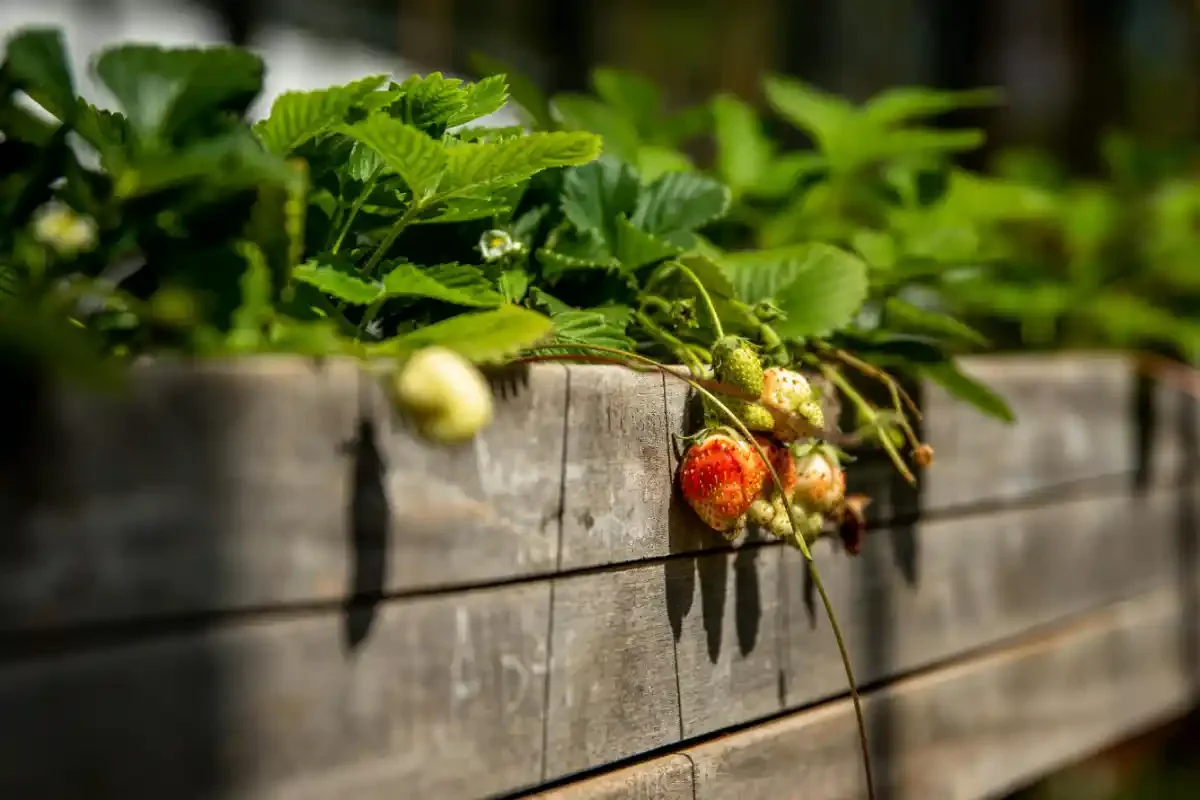
Pale and blushing strawberries dangle over the edge of a weathered wooden raised bed, foliage glowing green.
Standing at the end of this exploration, imagine your own garden ten years from now. Rain arrives, and instead of rushing away it pauses in terraced basins, waking earthworms that aerate soil fertility. A child plucks a peach whose sweetness depends on passive solar walls that stored summer heat. Chickens scratch under fruit trees, producing no waste because every scraping feeds compost. Neighbors gather for an autumn seed swap, reinforcing fair share values while stories of weather shifts guide next year’s plans and a shared commitment to local food sovereignty. In that moment you will see why people call permaculture a way to create more sustainable outcomes for human life and the planet. The twelve principles do not promise perfection, yet they offer tools to respond creatively to climate change, rising food costs, and ecological uncertainty. If this narrative sparks curiosity, seek out a permaculture design course, study Holmgren design services case studies, and walk your land with new eyes. Each step you take toward renewable resources, soil health, and community resilience stitches personal intent to planetary healing, proving that permanent agriculture can nurture permanent culture for generations.
Related Posts