Food Sovereignty: Reclaiming Local Power Over Our Plates
Food sovereignty began as a rallying cry and has matured into a rights-based framework that recentres food providers, rather than remote corporations, at the heart of our food systems. Coined by La Via Campesina in 1996, the concept champions communities that produce, distribute, and savour food on their own terms, using regenerative practices that nourish both culture and local economies. As climate volatility and widening inequality test the resilience of modern agriculture, the movement offers a tangible path toward healthier diets, ecological balance, and economic justice.
In the pages that follow, we explore why sovereignty differs from simple food security, trace its six Nyéléni principles, and visit Indigenous and small-holder case studies that bring those principles to life. We then examine the critiques, weigh the evidence on yields and climate resilience, and conclude with actionable steps, policy shifts, seed-saving rituals, and conscious consumer choices that you can take to strengthen sovereignty at home. Throughout, you will notice how reclaiming control of land and seed naturally aligns with eating in rhythm with the land’s own calendar, an idea we unpack further in our guide to peak-harvest nourishment.
Some links in this post are affiliate links. That means we may earn a small commission, at no additional cost to you.


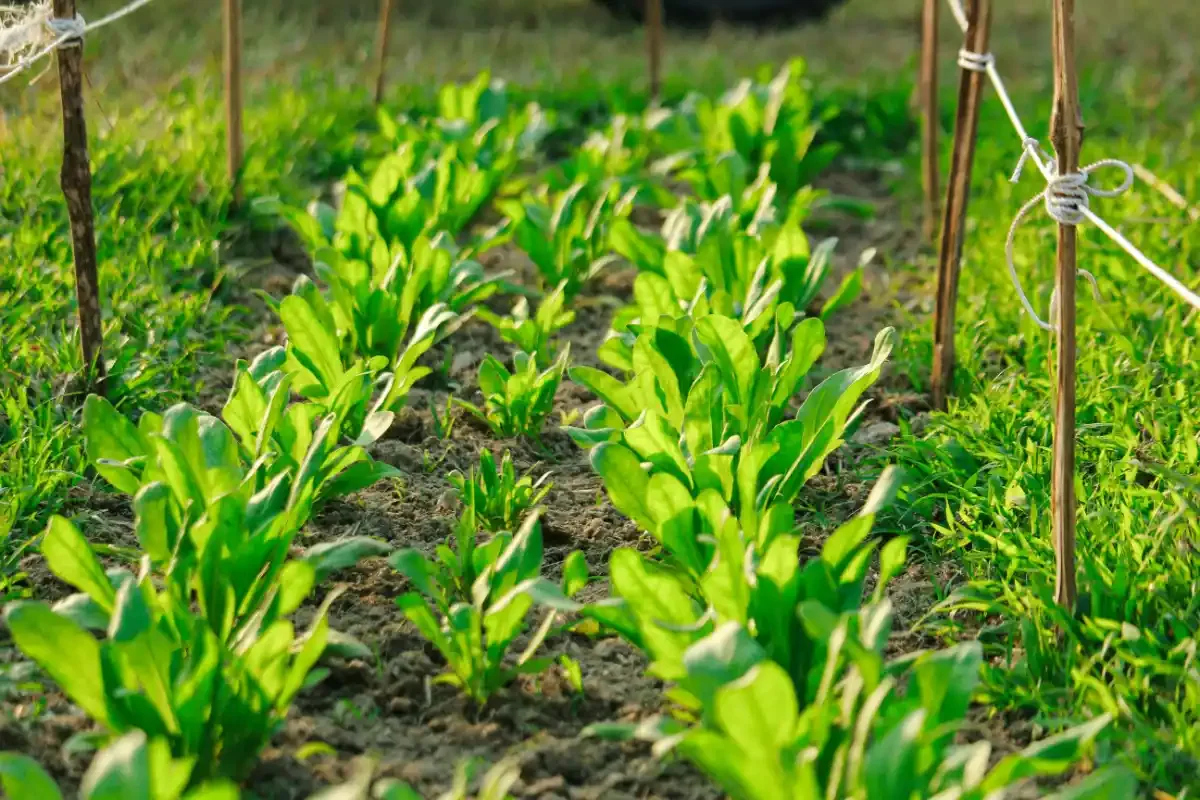
Rows of young leafy-green seedlings growing in neat soil beds on a sunlit organic farm.
What You’ll Discover
What is Food Sovereignty

Open trunk of vintage car showing baskets of greens, veggies and eggs under a Fresh Produce sign.
At its core, food sovereignty is the right of peoples to healthy and culturally appropriate food produced through ecologically sound and sustainable methods, and to define their own food and agriculture systems (Declaration of Nyéléni, 2007). Food sovereignty also emphasizes food access and food justice, ensuring that all people have reliable access to nutritious foods necessary for a healthy life. Whereas food security concerns whether there is enough food, food sovereignty inquires about who decides how that food is grown, processed, and distributed.
By restoring decision-making to family farmers, fisherfolk, herders, foragers, and other food producers, it localizes food systems, strengthens local and national economies, and protects future generations from the vulnerabilities of an extractive global food regime. Food sovereignty highlights the importance of local producers, values food providers, and puts control locally over food systems. It includes all those who grow, harvest, and process food, recognizing their contributions.
Food sovereignty ensures that farmers receive fair prices, which sustains rural economies and reduces poverty, and it requires bringing all voices to the table and sharing resources equitably.
History and Evolution
The roots of the food sovereignty movement stretch back to 1996, when La Via Campesina, an international peasant movement, first articulated the need for communities to reclaim control over their food systems. What began as a call to empower small-scale food producers has since blossomed into a global movement that unites farmers, indigenous communities, environmental advocates, and urban movements. Over the years, the food sovereignty movement has broadened its vision, recognizing that resilient agriculture systems depend on more than just food production; they require ecologically sound and sustainable methods, the protection of local food systems, and the defense of indigenous peoples’ rights to steward their own food and agriculture systems.

Shopper holding vine-ripened tomatoes above a basket brimming with leafy greens.
As the movement evolved, it began to champion seed sovereignty, the preservation of traditional foods, and the revitalization of local markets. These priorities reflect a deep respect for the knowledge and practices of indigenous communities and small-scale food producers, who have long managed food and agriculture systems in ways that sustain both people and the planet. Today, food sovereignty is a rallying point for diverse stakeholders, from family farmer-driven agriculture cooperatives to environmental and urban movements, all working together to build food systems that are just, sustainable, and rooted in local knowledge.
Food Sovereignty vs Food Security
Food security focuses on caloric supply, often delivered through global trade or inappropriate food aid. Food sovereignty insists that communities must shape the process, ensuring that the food produced is culturally meaningful, ecologically sound, and economically fair. The two concepts overlap; food sovereignty cannot exist without food security, but they diverge on power: sovereignty requires that local food providers and consumers control the rules of the game. However, food insecurity remains prevalent, especially among marginalized and Indigenous populations, due to systemic barriers to food access.
Food sovereignty advocates argue that the current corporate trade regime reduces food to an internationally traded commodity, dictated by the demands of markets and corporations. This undermines local control and equitable food access, highlighting the need for government policies and constitutional rights that guarantee everyone’s right to food.
Six Principles from Nyéléni
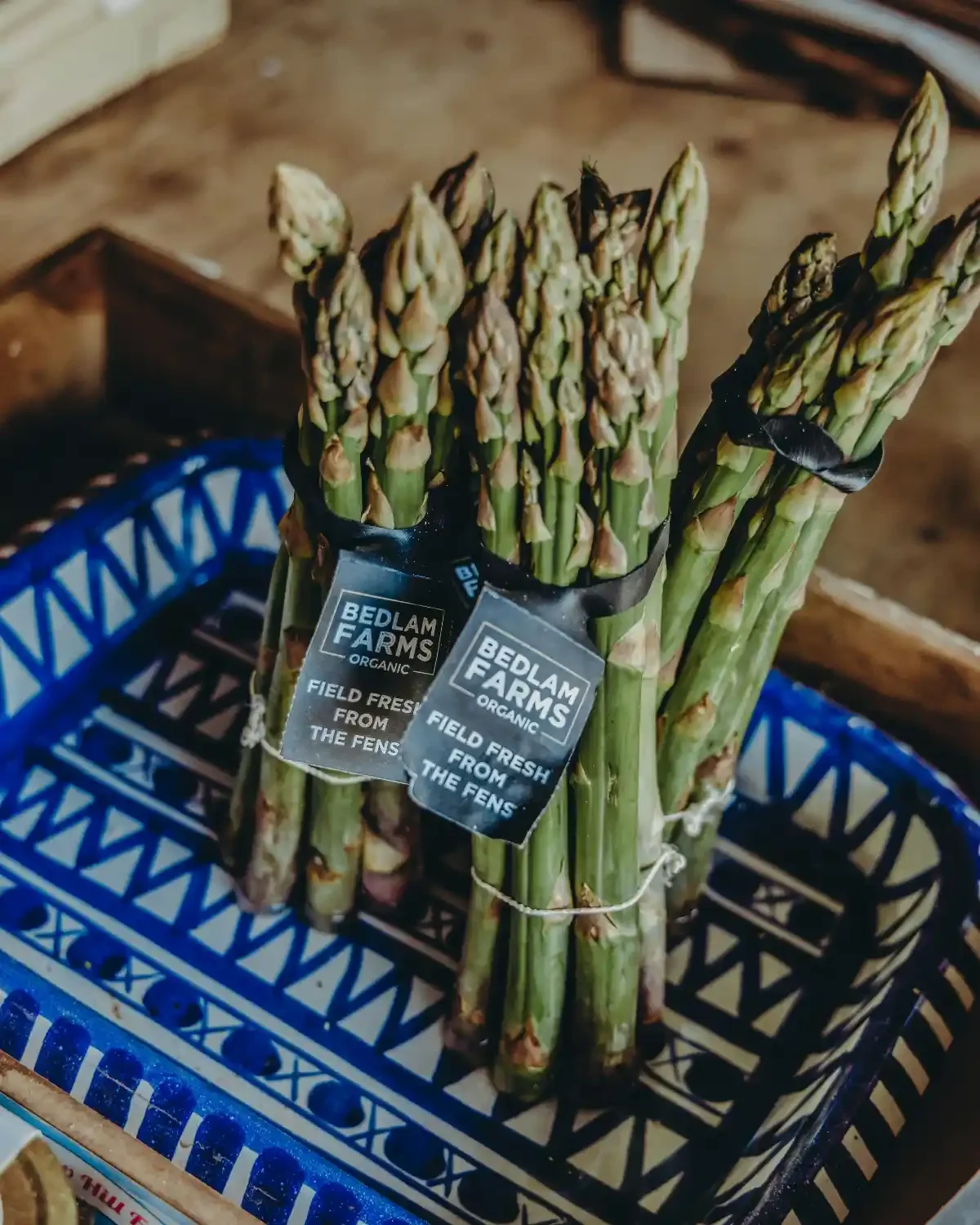
Bundles of organic asparagus labeled Bedlam Farms resting in a patterned tray.
The first Global Forum on Food Sovereignty convened 700 delegates from five continents in Nyéléni, Mali, in 2007, producing six guiding pillars: (1) focus on food for people; (2) value food providers; (3) localize food systems; (4) put control locally; (5) build knowledge and skills; (6) work with nature. These food sovereignty principles reject the logic of industrial monocultures and instead champion agroecology, biodiversity, natural resources stewardship, and community knowledge. They also underscore seed sovereignty, recognizing that reclaiming seed heritage is essential for climate adaptation and cultural continuity. The principles emphasize the importance of using sustainable and diverse harvesting methods that align with ecological principles, supporting ecosystem resilience and adaptation to climate change.
Under pillar four, decision-making over land, water, seeds, and forests rests with local communities, ensuring that family farmer-driven agriculture remains viable. This also includes the right of communities and fisherfolk to have fisheries systems determined locally, rather than by corporations or external entities. Pillar three commits to movements to shorten supply chains, bringing local food providers and consumers face-to-face in local markets that keep wealth circulating inside local communities.
The Indigenous Food Systems Network is an example of an organization advancing these principles through education, policy advocacy, and community-based initiatives, supporting the revitalization of traditional foodways and indigenous-led food systems.
Why Food Sovereignty Matters Today
Health and Culture
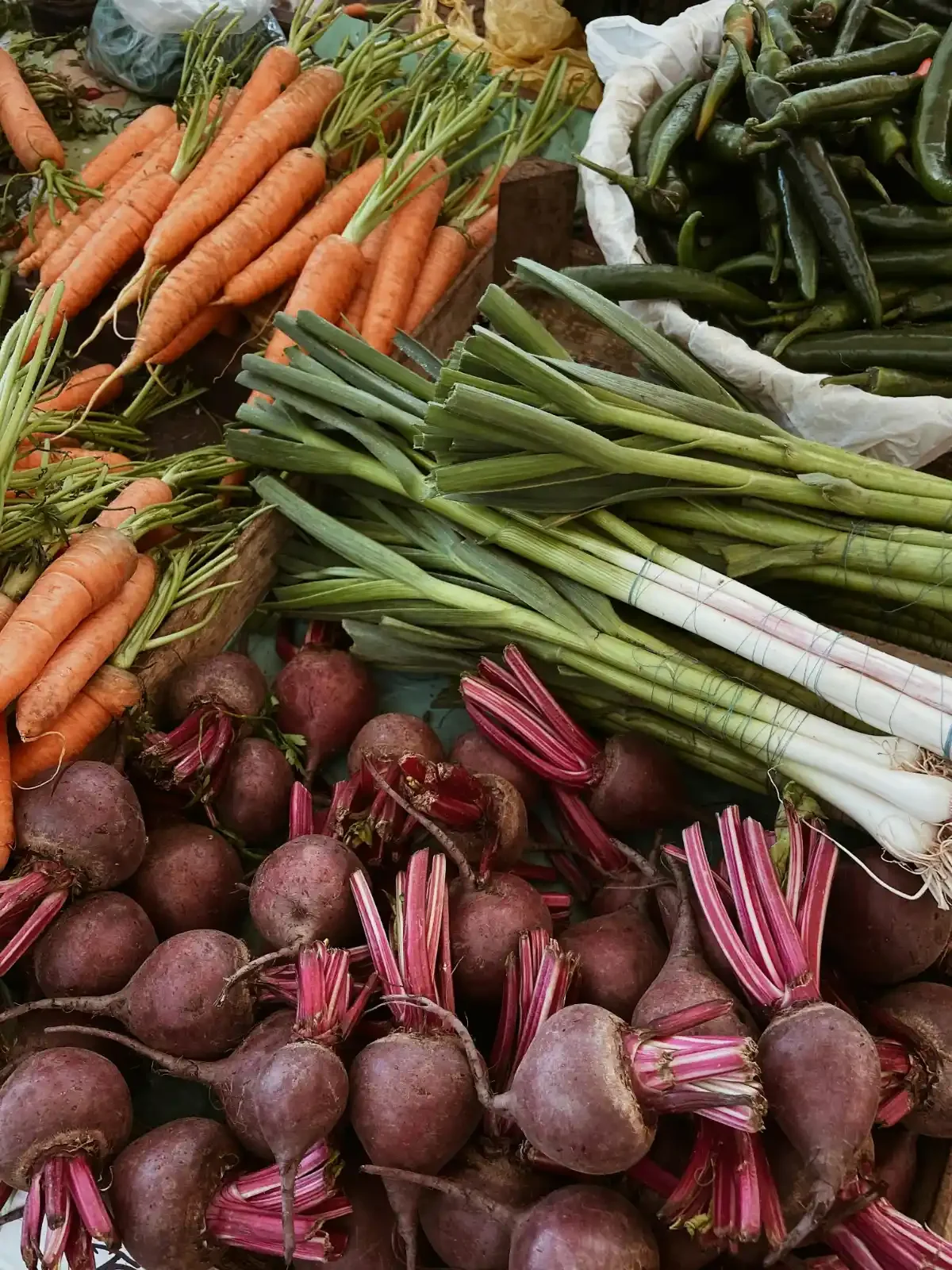
Colorful farmers’ market display of carrots, beets and scallions piled high on wooden crates.
Culturally appropriate food nourishes more than the body; it affirms identity. Revitalizing traditional foods, from Andean quinoa to First Nations wild rice, improves diet quality and supports community cohesion. The preservation and revitalization of indigenous food and indigenous food sovereignty are crucial for maintaining cultural identity and addressing health disparities among Indigenous communities. The disruption of traditional foodways for indigenous peoples is tied to colonialism and the loss of autonomy and power. Indigenous food sovereignty is increasingly recognized as a means of healing historical trauma and decolonizing communities. Linking production to dietary heritage also aligns with our medicine foods for disease prevention philosophy, where certain crops contain functional compounds that help avert chronic illness. Explore how millet, moringa, and wild greens fit this paradigm in our deep dive on medicine foods for disease prevention.
Climate Resilience
Industrial monocultures amplify greenhouse gas emissions, erode topsoil, and leave supply chains brittle. Climate change further intensifies these challenges, disrupting food systems, threatening ecosystem resilience, and dislocating indigenous communities. By contrast, agroecological mosaics promoted under food sovereignty, intercropping, dynamic agro-forestry, farmer-managed natural regeneration, sequester carbon, and buffer climatic shocks. Diverse and sustainable harvesting methods are essential for adapting to climate change and building resilient food systems, as they reduce reliance on harmful inputs and support ecological balance. A 2023 IPCC technical report cites diversified small-farms in Burkina Faso that maintained yields during a severe drought while neighbouring industrial cotton fields failed. Seed swaps that prioritise farmer-bred varieties further hedge risk: Kenyan millets selected over decades for short maturation now safeguard harvests when rains arrive late.
Economic Sovereignty

Person gently selecting a free-range egg from a straw-lined nest full of fresh eggs.
When food dollars loop locally, economic multipliers ignite. Studies in Ecuador, Nepal, and the US Midwest show that every dollar spent on community-supported agriculture creates 1.4 to 2.6 dollars of regional economic activity through tool repair, packaging, artisan processing, and farmers’ market tourism. Food sovereignty also promotes economic sustainability by ensuring that local and national economies remain viable and resilient through ecologically sound and socially equitable food systems. Fair farmgate prices keep rural youth employed at home, reducing urban migration and sustaining village schools and clinics. Such circular economies soften the blow of global price spikes and currency swings, shielding both producers and eaters from distant market turbulence. Food sovereignty initiatives further contribute to community development by empowering local communities, fostering sustainable livelihoods, and strengthening resilience through Indigenous-led programs and projects.
Global Movement and Indigenous Food Sovereignty Leadership
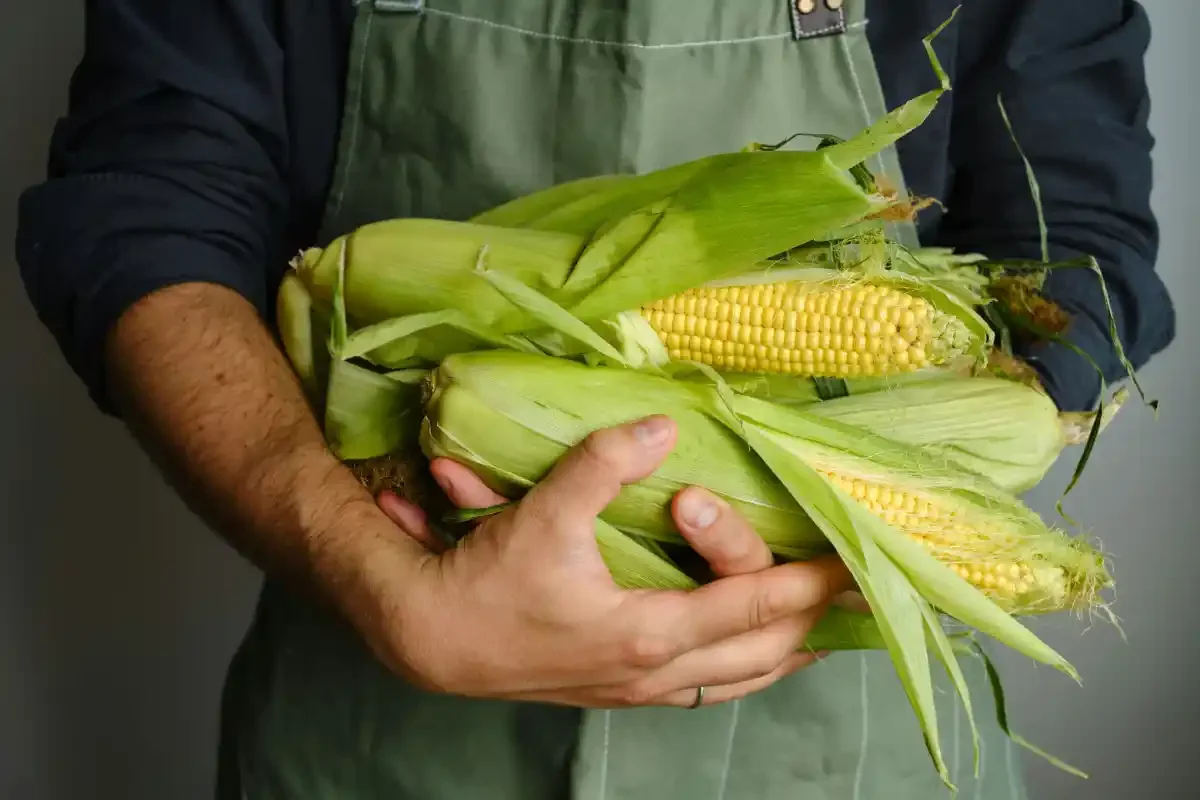
Grower cradling freshly harvested ears of sweet corn still wrapped in green husks.
Food sovereignty is now championed by La Via Campesina’s 200 million members, the International Indian Treaty Council, and fisherfolk networks spanning Senegal to the Philippines. Indigenous peoples articulate sovereignty as both policy and ceremony: row-crop rotation sits alongside spiritual protocols for seed selection, and harvest festivals double as governance assemblies. Indigenous food systems are central to these efforts, encompassing land-based traditional diets, cultural practices, and seed sovereignty. The Indigenous Food Systems Network plays a key role in supporting the revitalization of indigenous food systems through education, policy advocacy, and community-based initiatives. The systematic displacement of indigenous communities has led to mass food insecurity among these populations. Indigenous food sovereignty activists argue that increasing agency in food production is the most effective way to achieve food security for indigenous groups. In Canada, the Nishnawbe Aski Nation’s “Three Sisters” agro-forestry project pairs maize, beans, and squash with controlled burns that regenerate blueberries and medicinal plants. The FAO (2024) recognised the Navajo Nation’s Yeego edible school gardens, noting a 30 percent rise in fruit and vegetable intake among participating children, proof that school meals can serve culture and nutrition simultaneously.
Elsewhere, Brazil’s Landless Workers’ Movement (MST) occupies idle estates, converts them to organic cooperatives, and supplies government food-purchase programmes that feed low-income urban residents. Their model illustrates how land redistribution plus cooperative governance ripples from rural plots to city cafeterias.
Natural Resources and Conservation
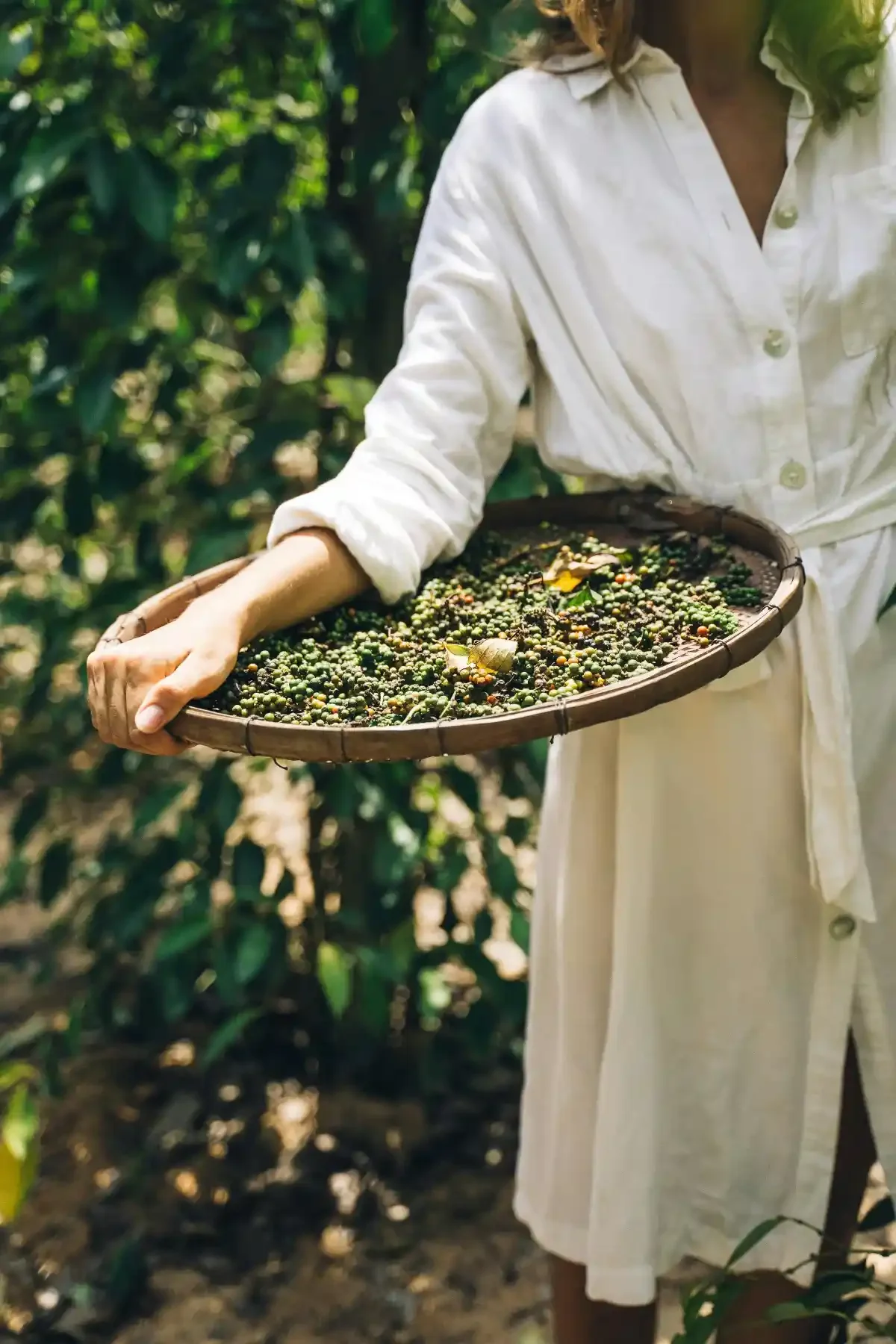
Woman in white linen dress holding round tray loaded with freshly harvested green peppercorns.
At the heart of food sovereignty lies a commitment to conserving natural resources and fostering harmony between people and the environment. Sustainable agriculture systems and ecologically sound methods of food production are essential for preserving biodiversity, protecting water sources, and maintaining healthy soils. Indigenous communities have long understood the importance of living in balance with nature, developing traditional practices that prioritize the stewardship of land, water, and other natural resources.
The food sovereignty movement draws inspiration from these time-tested approaches, advocating for food systems that regenerate rather than deplete the earth. By supporting local food systems and sustainable methods of food production, the movement aims to reduce the environmental footprint of industrial agriculture and promote a more equitable distribution of resources. This approach not only safeguards the environment but also strengthens the resilience of communities, ensuring that natural resources remain abundant and accessible for future generations.
Afroecology and Sustainable Agriculture
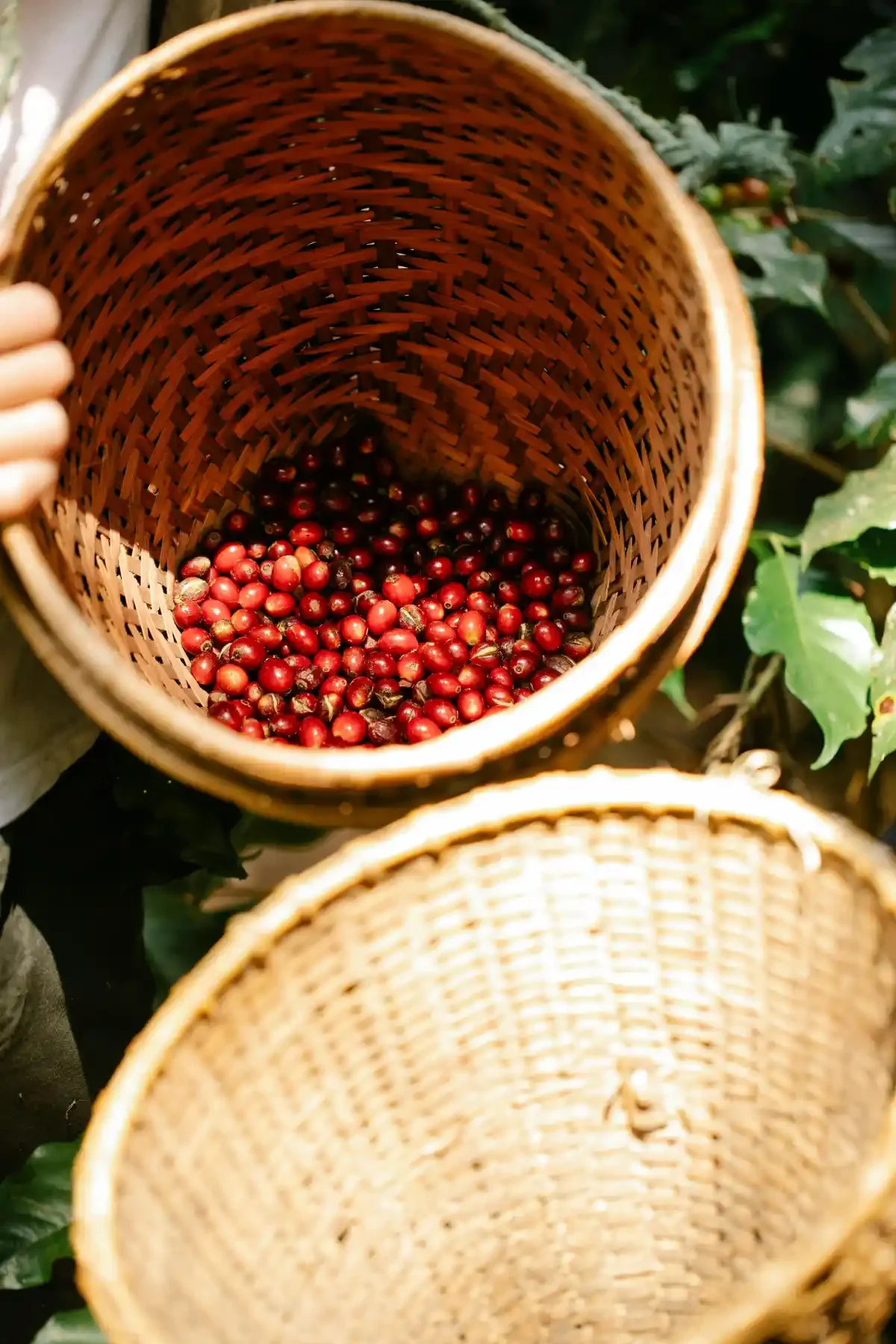
Handwoven basket half-filled with freshly picked red coffee cherries beside lush coffee leaves.
Afroecology is a powerful expression of the deep connection between African peoples and their land, rooted in centuries of traditional knowledge and sustainable practices. This approach to agricultural systems emphasizes the use of sustainable methods, the preservation of traditional foods, and the creation of local markets that support community well-being. Afroecology is closely aligned with the principles of food sovereignty, empowering African communities to shape their own food and agriculture systems in ways that honor both cultural heritage and ecological health.
By promoting agroecology, permaculture, and other regenerative practices, Afroecology helps to restore soil fertility, conserve water, and enhance biodiversity. These methods not only improve food production but also strengthen local economies and support social justice. The movement values the preservation of traditional foods and the development of local markets, recognizing that these elements are vital for sustaining both cultural identity and economic resilience within African communities.
Critiques and Debates
Sceptics argue that food sovereignty risks romanticising subsistence or shutting borders to lifesaving imports. They question how global cities with ten-million residents could feed themselves from peri-urban acreage alone. Others worry that competing grassroots claims might clash at provincial or national scales. Proponents respond that sovereignty is not autarky but plural subsidiarity: decisions should migrate upward only when local forums cannot address trans-boundary water basins or regional grain reserves. Trade can still flow, but on transparent and mutually agreed terms that do not dump subsidised surplus or hollow out domestic production.
Another debate concerns gender. Critics note that land titles in many regions remain patriarchal, potentially excluding women unless reform accompanies rhetoric. Activists point to Kerala’s Kudumbashree network, where five million women run micro-enterprises and collective farms, proving that sovereignty rooted in feminist economics can deliver both caloric and empowerment dividends.
Finally, questions arise around scalability and yield. Industrial lobbyists brand diversified farms as inefficient. Yet meta-analyses by the ETC Group (2026) reveal that smallholders managing 25 percent of global farmland produce 70 percent of the world’s food calories when measured in biodiversity-rich polyculture plots. Yield gaps close further once externalities such as greenhouse gases, eutrophication, and antibiotic resistance are considered. In other words, ecological efficiency and social resilience compensate for lower per-crop tonnage.
Pathways to Action

Wicker basket of bright oranges with leaves, carried by a woman in a white dress.
Support food providers directly. Subscribe to a CSA, join a buying club that sources within 100 kilometres, and ask restaurants to list farm partners on menus. Each rand or dollar moved from imported shelf space to community hands signals demand for sovereignty-aligned supply lines.
Reclaim seeds and knowledge. Save backyard tomato seeds, swap them with neighbours, and donate surplus to a seed library. Document elder techniques for fermentation, companion planting, and lunar sowing, then circulate them through local workshops.
Push policy change. Engage municipal councils to designate urban land for community gardens, lobby national parliaments for farm-gate price guarantees, and advocate right-to-food clauses in constitutions, following Bolivia’s and Nepal’s footsteps.
Strengthen coalitions. Link fishermen, herders, and street-vendor unions into regional networks capable of negotiating fair harbour fees, pasture rights, and market stall rents. Coalitions scale leverage without sacrificing local control.
Align diets with ecology. Practise seasonal eating so menus mirror local harvest rhythms, reducing refrigeration energy and rewarding farmers who plant diverse, staggered crops. For inspiration, read our guide to seasonal eating.
Invest ethically. Shift retirement funds or community endowments toward regenerative agriculture ventures, fair-trade cooperatives, and local food hubs. Capital inertia is often the hidden barrier to sovereignty ambitions.
Each step reinforces the others. Seed banks need markets, markets need policy, policy needs public appetite that is shaped by school curricula, journalists, and food bloggers like Terra Selene. Change accelerates when feedback loops align.
Harvesting Sovereignty: Returning Power to Local Food Systems

Two hands rinsing a green apple under splashing water with blurred garden background.
Food sovereignty is neither nostalgia for bygone villages nor a fringe protest. It is a living tapestry woven by farmers’ cooperatives, Indigenous nations, urban gardeners, nutritionists, and conscious eaters worldwide. By rooting plates in landscapes managed with respect, we honour the right to produce, distribute, and consume food that sustains culture, climate, and community. The journey involves legal reform, seed germination, meal preparation, and story telling, every act a stitch in a more resilient social fabric. When we choose sovereignty, we choose to hand power back to soil-stained palms, protect genetic legacies for future generations, and taste flavors that speak our mother tongue. That is how we reclaim local power over our plates, one harvest at a time.
RELATED POSTS