Portugal Beaches: A Slow Guide to the Algarve and Beyond
Explore Portugal beaches across the Algarve coast, from dramatic cliffs and sea arches to soft golden sand, with slow travel insight for 2026 planning.
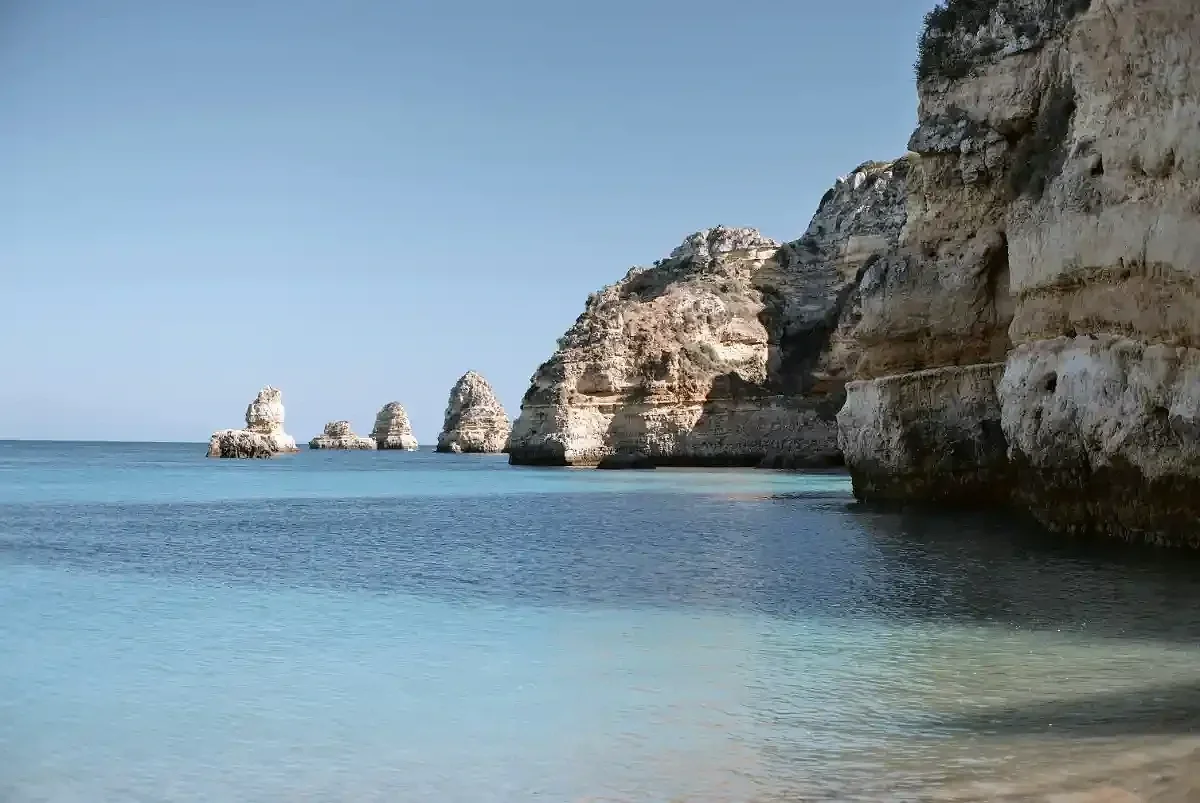
Limestone sea stacks rise from a calm, pale-blue bay on the coast of Algarve.
The Algarve is not a coastline you understand in one afternoon. I have had the honor of spending time moving through it slowly during the summer months when it's in full bloom, driving between towns, arriving at beaches at different tides, and returning to the same stretches of sand more than once. What becomes clear very quickly is that beaches in Portugal are not interchangeable. Where you go, when you arrive, and how long you stay all materially change the experience.
Portugal’s coastline extends for more than 1,700 kilometers, but this guide focuses on the Algarve coast, where many of the country’s most visited and most varied beaches are concentrated. Here, dramatic cliffs break into small coves, long beaches stretch uninterrupted for kilometers, and beach towns function as real places rather than seasonal backdrops. The west coast feels raw and exposed, shaped by stronger wind and surf. The southern coastline is calmer, more sheltered, and visually sculpted, with clear water and easy access.
This article is designed to help you understand those differences before you arrive. You will find a clear breakdown of western versus southern Algarve beaches, practical guidance on where to stay based on travel style and driving distances, and detailed coverage of specific beaches, coastal viewpoints, and trails that are worth building a day around. It also covers logistics that matter on the ground, including tides, parking, access routes, and how long it realistically takes to move between regions.
Some of the most beautiful beaches in Portugal are not the easiest to reach, and that is often part of their appeal. Others are well serviced and better suited to longer beach days. This is not about seeing everything. It is about choosing well, planning realistically, and understanding what each part of the Algarve coast offers so your time there feels intentional rather than rushed.
The Journey Ahead
Affiliate Disclosure
Some links in this post are affiliate links. That means we may earn a small commission, at no additional cost to you, if you choose to make a purchase. These are always brands, stays, or experiences we would recommend to a dear friend. Thank you for supporting the quiet sustainability of Terra Selene.
Western vs Southern Algarve Beaches in Portugal
Before diving into specific beaches, it helps to understand the Algarve’s essential split. The region divides roughly into two distinct personalities: the western Algarve, including the Costa Vicentina natural park and the Sagres area, and the southern coast, running from Lagos through Carvoeiro, Albufeira, and onward toward Faro. Each offers a different relationship with the sea, and knowing which calls to you can shape your entire trip.
The west coast faces the full force of the Atlantic. Here you’ll find cliffs in shades of black and ochre, broad beaches backed by dunes, and waves crashing with the kind of power that draws surfers from across Europe. Beaches like Praia da Bordeira and Praia do Amado stretch wide and wild, often uncrowded even in July and August. The wind is a constant companion, refreshing by midday, sometimes fierce by late afternoon. This is terrain for hiking, photography, and contemplation.
The southern coastline offers a softer welcome. Golden sand meets turquoise water in sheltered coves carved from honey-colored limestone. This is the Algarve of postcards: praia da marinha with its sea arches, the famous grottoes near Benagil, and the picturesque beaches that dot the coast from Lagos to Albufeira. Resort towns line portions of the shore, offering beach chairs, restaurants, and easy access to the water. The swimming is calmer, the water clearer, the atmosphere more cultivated, though peak summer brings crowds to match.
For slow travel, spring and autumn remain ideal. During these seasons, Algarve beaches return to balance. The water remains cool but inviting, the sand less crowded, and beach towns feel lived-in rather than overwhelmed. Walking along a long stretch of beach without interruption becomes possible again.
Where to Stay on the Algarve Coast
Your base on the Algarve coast determines how efficiently you move between beaches, how much time you spend driving each day, and how accessible different parts of the region feel over the course of a week. Choosing where to stay is less about aesthetics and more about positioning. The Algarve is compact, but travel time adds up quickly when you move between the west coast and the southern coastline.
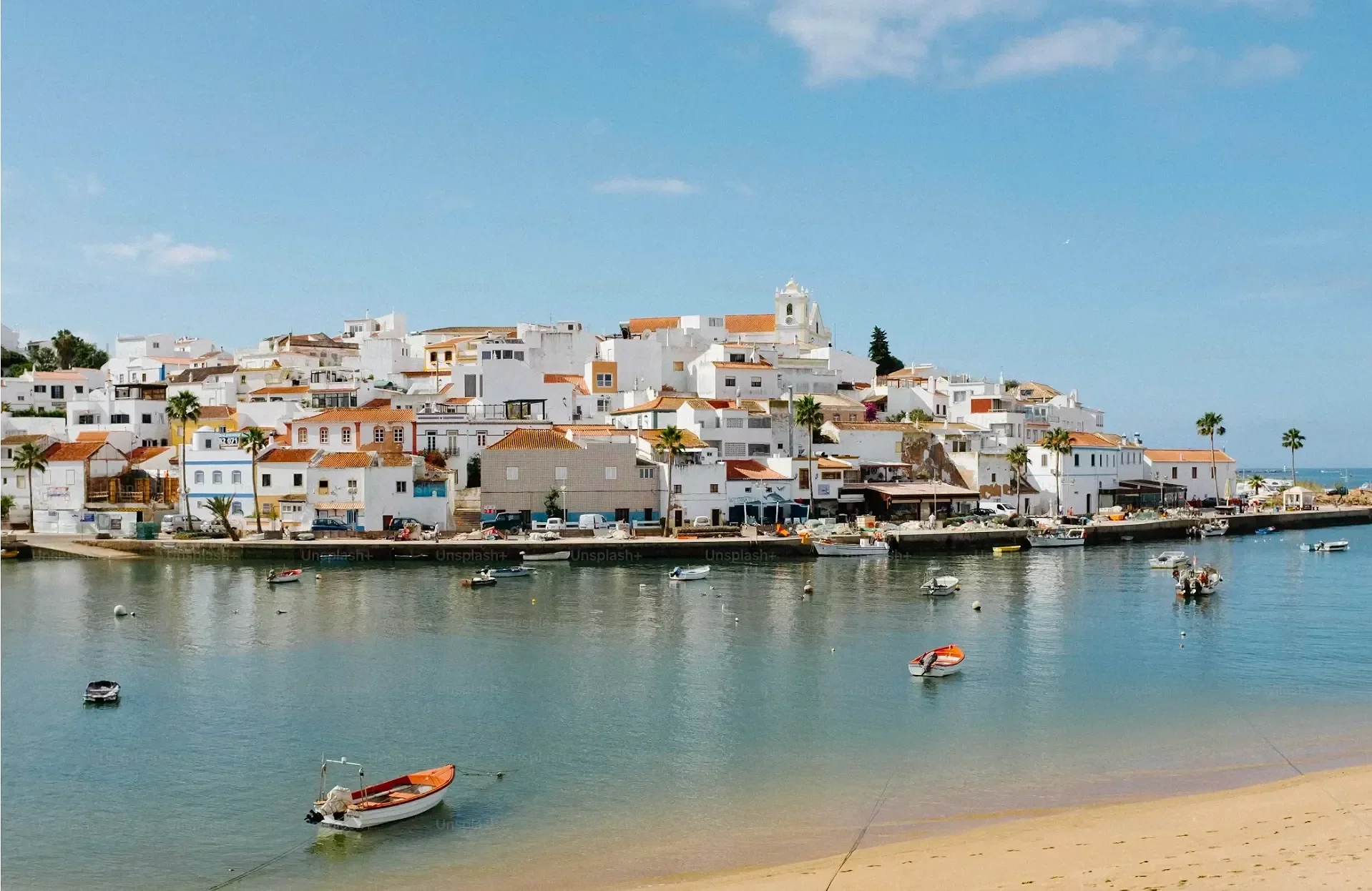
Whitewashed hillside town of Lagos reflected in calm harbor, dotted with small fishing boats and sandy shore.
Lagos is the most practical base for first-time visitors. The old town is walkable, with restaurants, shops, and cafes concentrated in a small area, and several beaches sit within easy reach. Praia Dona Ana is accessible on foot via a short walk from the historic center. Lagos also sits at a geographic midpoint, allowing straightforward day trips to both the western Algarve and the central southern coast. Drive time from Lagos to Sagres is approximately 30 minutes, while Lagos to Praia da Marinha takes around 40 minutes. Expect more activity here than in smaller villages, but also the widest range of dining and accommodation options.
Sagres lies at the southwestern tip of the Algarve and suits travelers focused on the west coast. The town is small and functional, oriented around surfing, hiking, and coastal exploration rather than nightlife. Beaches such as Praia do Tonel and Praia da Mareta sit close by, and daily driving is minimal if your priority is the western Algarve. Evenings are quiet, and services are limited compared to Lagos, but mornings are calm and direct access to west coast beaches is the trade-off.
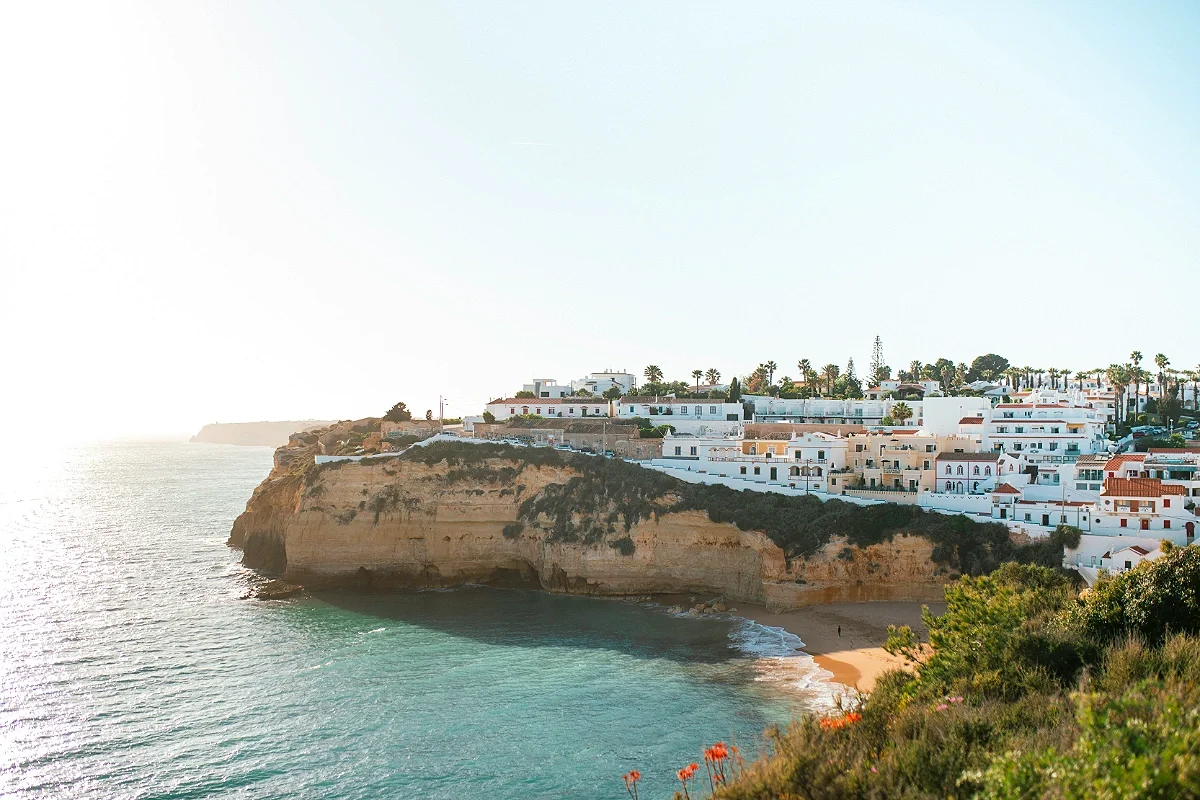
Sun-lit whitewashed clifftop village of Carvoeiro overlooking a small sandy cove and emerald Atlantic waters.
Carvoeiro, renowned as a quaint beach town in a picturesque setting, works well as a central base on the southern coast. The village retains the structure of a traditional fishing town, with whitewashed buildings clustered above Praia do Carvoeiro and local amenities within walking distance. It is well positioned for the Seven Hanging Valleys Trail, Algar Seco, and nearby beaches, and provides easier access to central Algarve locations. Driving from Carvoeiro to Praia da Bordeira on the west coast takes roughly 50 minutes.
Albufeira Old Town appeals primarily to travelers who prioritize nightlife and resort infrastructure. Accommodation options are plentiful, and the town remains active late into the night, particularly in summer. While it offers access to long beaches and tour services, it does not align with a slower travel pace and is best chosen intentionally rather than by default.
For travelers seeking quieter surroundings, smaller villages such as Burgau and Luz offer a slower pace without isolation. Both provide access to beautiful beaches, local restaurants, and essential services without large resort developments. Salema, further west, is a small fishing village that remains noticeably quieter, even in high season, and suits those looking for an off-the-beaten-path base on the southern coast. A central stay in the Lagoa, Carvoeiro, or Ferragudo area also works well for travelers who want to divide time between west and south without changing accommodations.
Faro Airport serves as the main entry point to the Algarve. Driving from the airport to Lagos takes approximately one hour, making Lagos, Carvoeiro, and surrounding areas viable bases for arrivals and departures. Renting a car is essential for exploring Algarve beaches efficiently, and having GPS navigation is strongly recommended due to inconsistent road signage outside of major towns.
We prioritize smaller guesthouses, apartment-style accommodations, and boutique hotels over large all-inclusive resorts. Locally owned stays tend to offer better positioning, easier parking, and a closer connection to the surrounding area, which becomes increasingly valuable over multi-day trips.
Need help booking a seamless journey to your destination?
Let our Travel Atelier craft a slow, sensory itinerary that honors the spirit of each place, treads lightly on the planet, and moves in harmony with your own natural cadence. Through our affiliation with Fora Travel , you unlock VIP upgrades, daily breakfast, and insider perks at no extra cost.
- Flight planning and booking support.
- Bespoke hotel and villa curation.
- Eco-conscious routing and local guides.
- 24 / 7 support from departure to return.
Complimentary discovery call · No planning fees for Terra Selene readers.
Choosing Your Beach Type
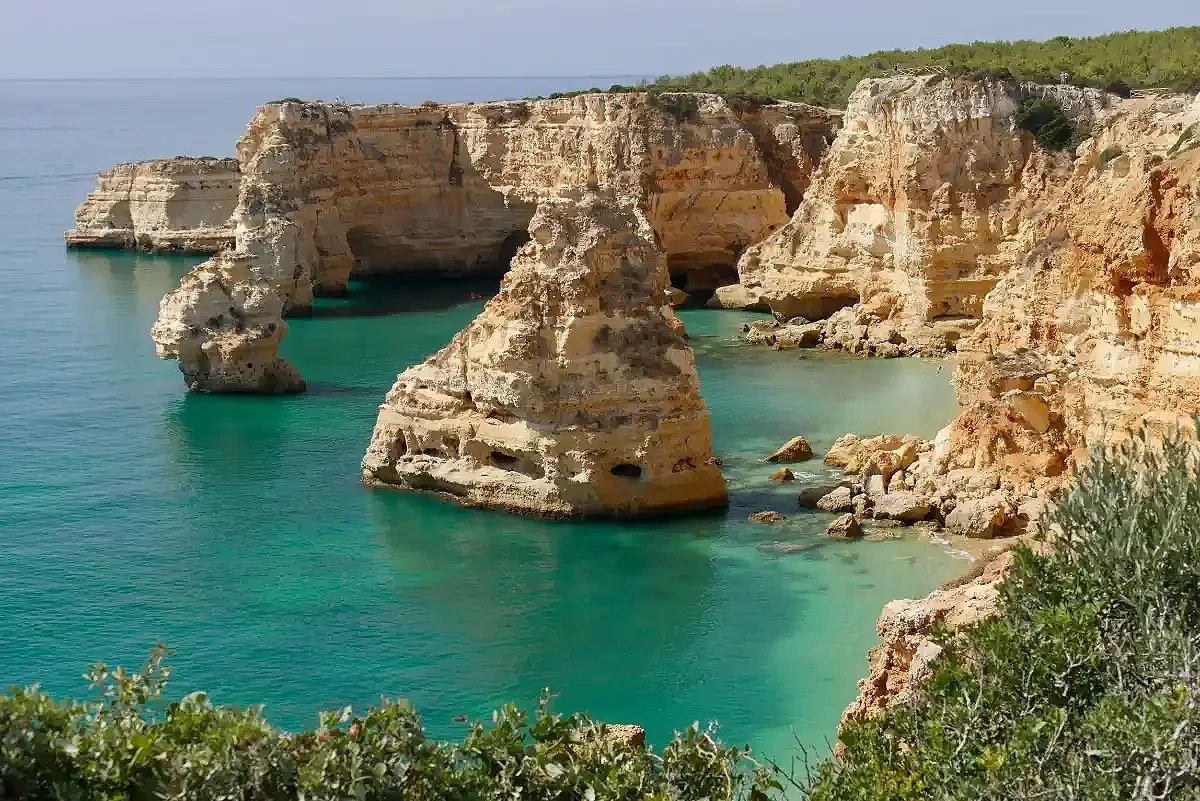
Dramatic limestone sea stacks rise from clear teal water along the Seven Hanging Valleys Trail.
Not all Portugal beaches ask the same of you. Some invite stillness. Others demand movement. Along the Algarve coast, beaches fall into distinct forms, each shaping the way a day unfolds.
Small scenic coves define many of the most beautiful beaches along the southern coast. Praia da Marinha, Praia do Camilo, Praia do Castelo, and Praia do Carvalho belong to this category. These beaches are framed by dramatic cliffs and intricate rock formations, their beauty concentrated and intimate. Access often involves a steep staircase or tunnel, and the actual beach space shifts dramatically between low tide and high tide. Shade arrives early as tall cliffs cast long shadows. The reward is atmosphere. These coves feel held by the landscape, ideal for quiet swimming, photography, and short walk explorations between neighboring beaches.
Long, flat beaches offer a different rhythm. Praia da Falesia and stretches near Meia Praia prioritize ease. Soft golden sand extends for kilometers, allowing for a long walk without obstacles. Beach chairs, restaurants, and restrooms appear at regular intervals. These beaches are well suited to families, extended beach time, and days when settling in matters more than movement. The scenery may be less dramatic, but the comfort is undeniable.
The west coast belongs to another category entirely. Praia da Bordeira, Praia do Amado, Praia da Cordoama, and Praia da Arrifana open wide to the Atlantic. Sand dunes rise behind the beach, waves arrive with power, and the wind becomes part of the experience. Surfing dominates this coast, and surf schools operate year-round. The western Algarve remains quieter than the southern Algarve during high season, despite its popularity. This coast has often been compared to California for its blend of surf culture, rugged terrain, and unfiltered natural beauty.
A balanced Algarve trip includes all three. A cove for stillness. A long beach for movement. A wild west coast stretch for perspective.
Cliff Safety, Tides and Coastal Awareness
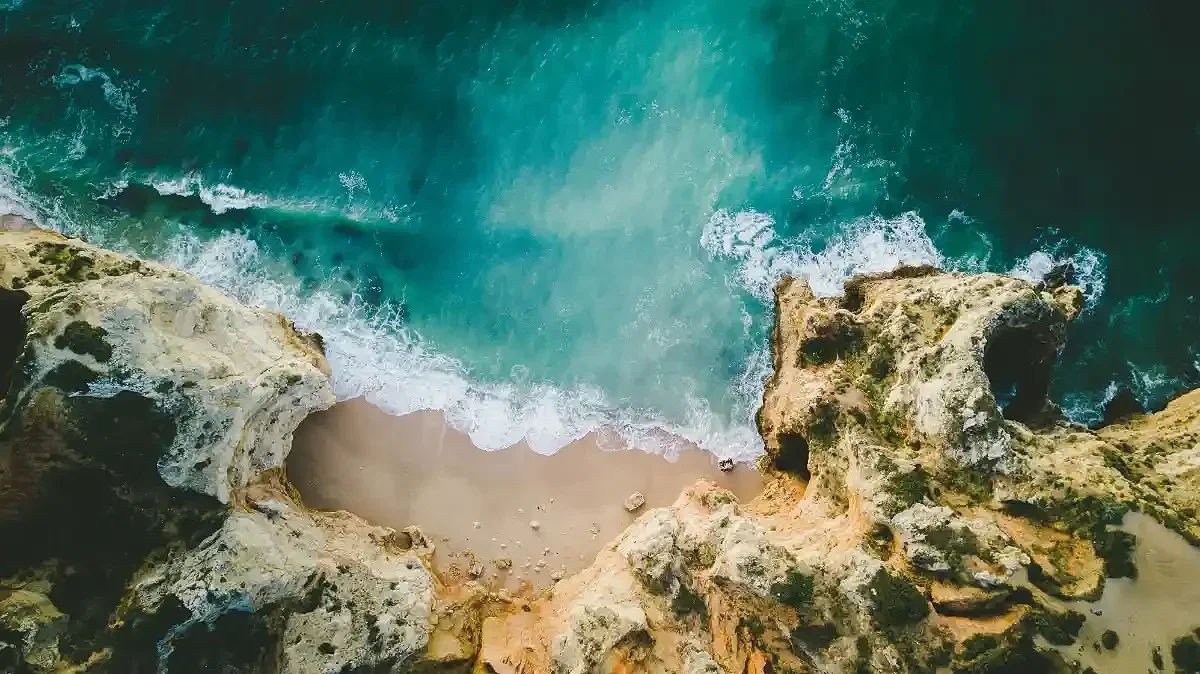
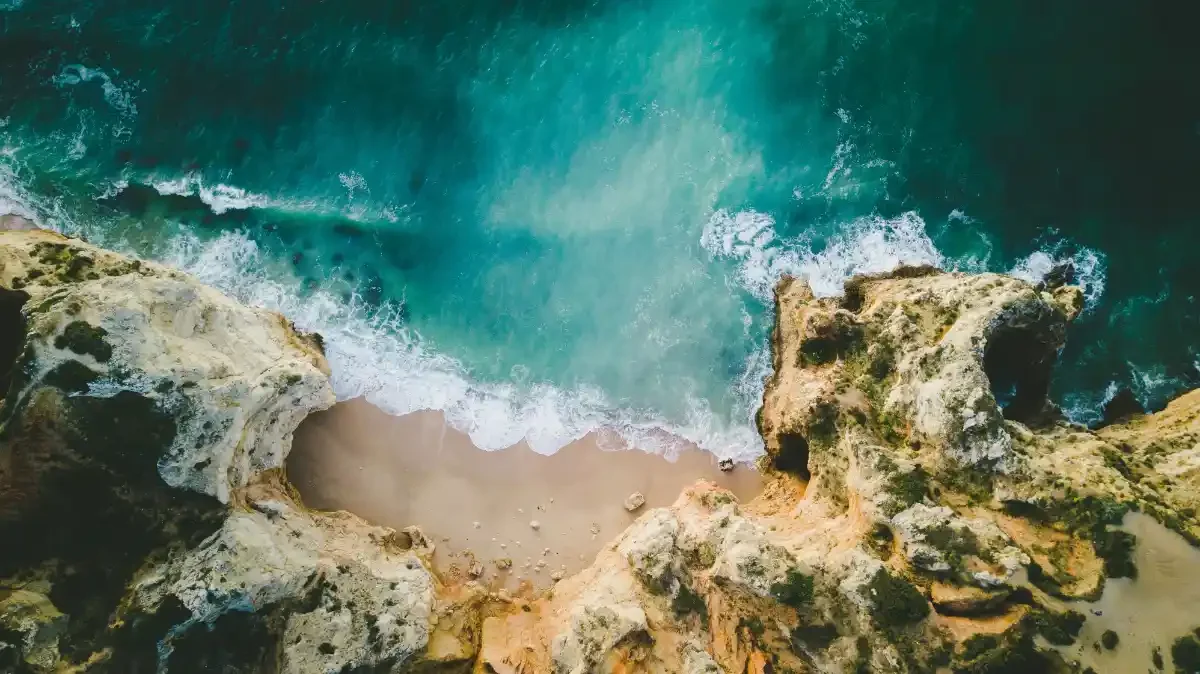
Aerial view of Praia da Balança: aquamarine Atlantic swells curl onto a narrow sand strip framed by limestone cliffs near Lagos.
The Algarve’s dramatic coastline is inseparable from risk. Limestone cliffs erode continuously, and understanding this geology is essential for safe beach time. Rockfalls occur most often after winter rain or storms, but erosion continues year-round. Sitting directly beneath rocky cliffs is never advised, regardless of shade or proximity to the water. Many beaches display warning signage, but the responsibility ultimately rests with the visitor. Keeping distance from cliff bases protects both you and the landscape.
Tides shape daily access. At high tide, many coves lose significant sand, narrowing to a strip against the cliffs. Low tide reveals additional rock formations, sea arches, and walkable passages. Beaches like Praia da Marinha change dramatically depending on timing. Checking tide tables before arrival allows you to plan exploration rather than reacting to limitations. Swimming conditions vary by coast. The southern coast offers calmer water and clearer conditions, while the west coast features stronger currents and larger waves. Flag systems indicate daily safety levels, and lifeguard instructions should be followed without exception. Rip currents remain a real hazard, particularly on west coast beaches with consistent surf.
Respecting the coastline also means protecting it. Stay on marked paths through sand dunes. Avoid removing shells or stones in quantity. Keep noise minimal on quieter beaches. The Algarve region depends on preservation as much as tourism.
7 Best Beaches in the Algarve
What follows is curated, not exhaustive. These seven beaches represent the range of what the Algarve offers: iconic coves and wild expanses, surf havens and quiet rock pools. We’ve chosen them for natural beauty, variety of experience, and potential for the kind of mindful, unhurried days that transform a trip into something you carry with you long after. A practical note: Many beaches in the Algarve are accessed by narrow winding roads, often requiring a short walk from parking areas. Water temperatures in the Algarve typically range from about 17–22°C, 63–72°F, between late spring and early autumn. If you feel the cold, pack a light wetsuit or rash guard for longer swims in May or October. The Atlantic, even in its gentler southern moods, rarely feels tropical.
Praia da Marinha
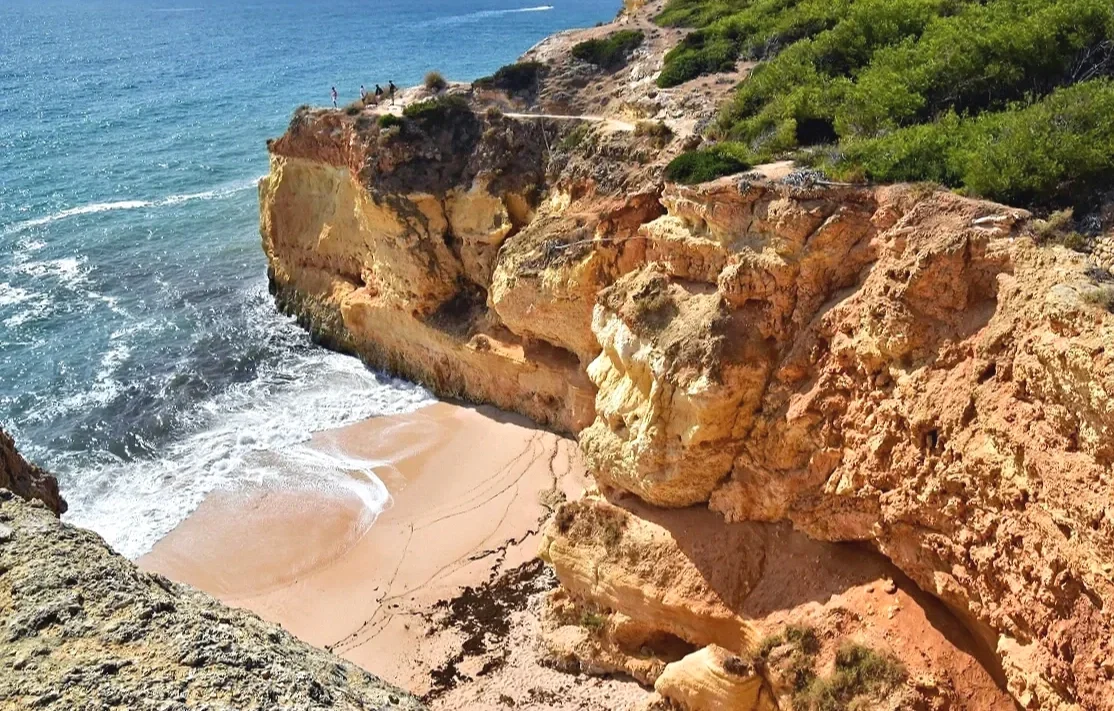
Secluded sandy cove under golden cliffs at Praia da Marinha, Atlantic surf gently lapping the shore.
Praia da Marinha appears on nearly every list of the most beautiful beaches in the world, and standing at the clifftop viewpoint, you understand why. The beach unfolds below in a composition of golden sand, turquoise water, and limestone sea arches that seem designed for photographs. Twin rock formations frame the shore; at certain angles, the arches align perfectly with the morning light. Even in the shoulder seasons, April through May, or September through October, this beach draws visitors. Arrive early in the morning or late afternoon to avoid both the crowds and the harsh midday sun. The large parking lot above fills quickly by mid-morning in summer.
The actual beach requires a descent down a long staircase carved into the cliff. At high tide, the sand narrows considerably, sometimes forcing visitors to wade through shallow water to reach the western sections. Check tide charts before visiting if you want to explore the rock formations and caves at low tide, this is when the beach reveals its full character. The cliff-top path above Praia da Marinha connects with the famous hanging valleys trail, offering phenomenal viewpoints without requiring you to spend the entire day on the sand. Consider a mindful ritual: walk slowly along the cliffs, find a quiet viewpoint away from the main overlook, and simply sit. Watch the tide shift, the light change, the arches catch shadow. This is not a beach to rush through.
Praia da Bordeira
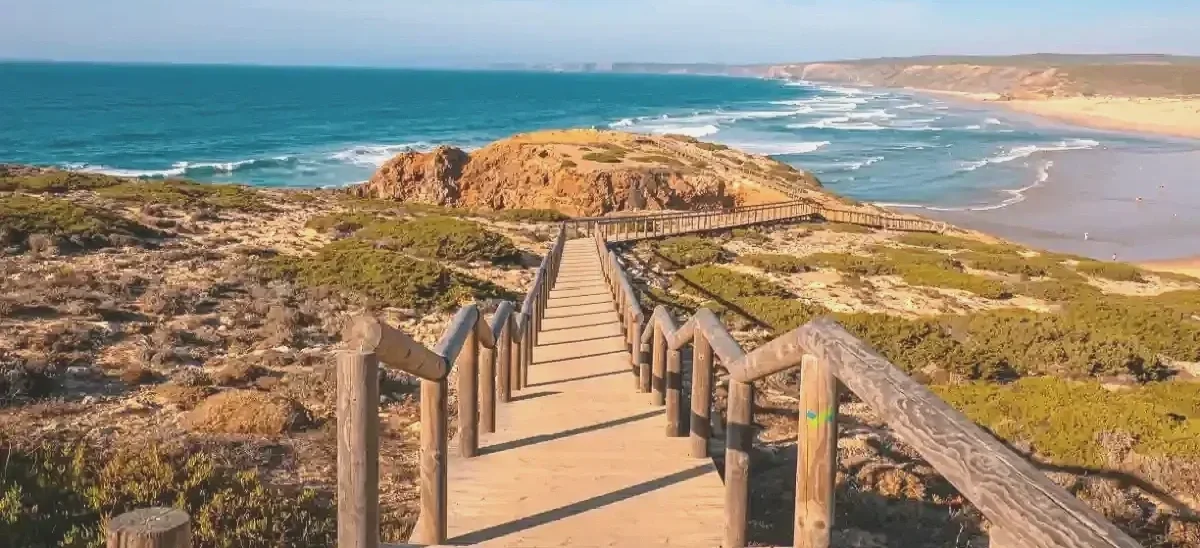
Long wooden boardwalk crosses rolling dunes toward the wide surf of Praia da Bordeira on Algarve’s wild west coast.
Praia da Bordeira, near the small village of Carrapateira, offers a different kind of beauty, vast and open. This is one of the west coast’s most expansive beaches, backed by enormous white sand dunes and crossed by a river estuary that winds across the sand before meeting the sea. The scale here invites long walks. You can wander for an hour and still see figures in the distance, the beach stretching ahead. Families love it for this reason: even in summer, there’s space. The dunes themselves are a destination, where children and adults often climb them to slide down or simply to admire the view. Stay on established paths to protect the fragile dune vegetation that holds this landscape together. Surf schools set up on this beach regularly; the waves tend toward the beginner-friendly end of the west coast spectrum, though the Atlantic is never fully tame. Bodyboarding is popular, as is simply standing at the water’s edge and feeling the power of the waves crashing.
Access requires a walk from limited parking areas, plus stairs or boardwalk segments down to the sand. Bring water, snacks, and sun protection; amenities are minimal, and that’s part of the appeal. A windbreaker is wise in spring and early summer evenings; the gusts on this stretch can shift a warm afternoon into something bracing.
Praia do Castelo
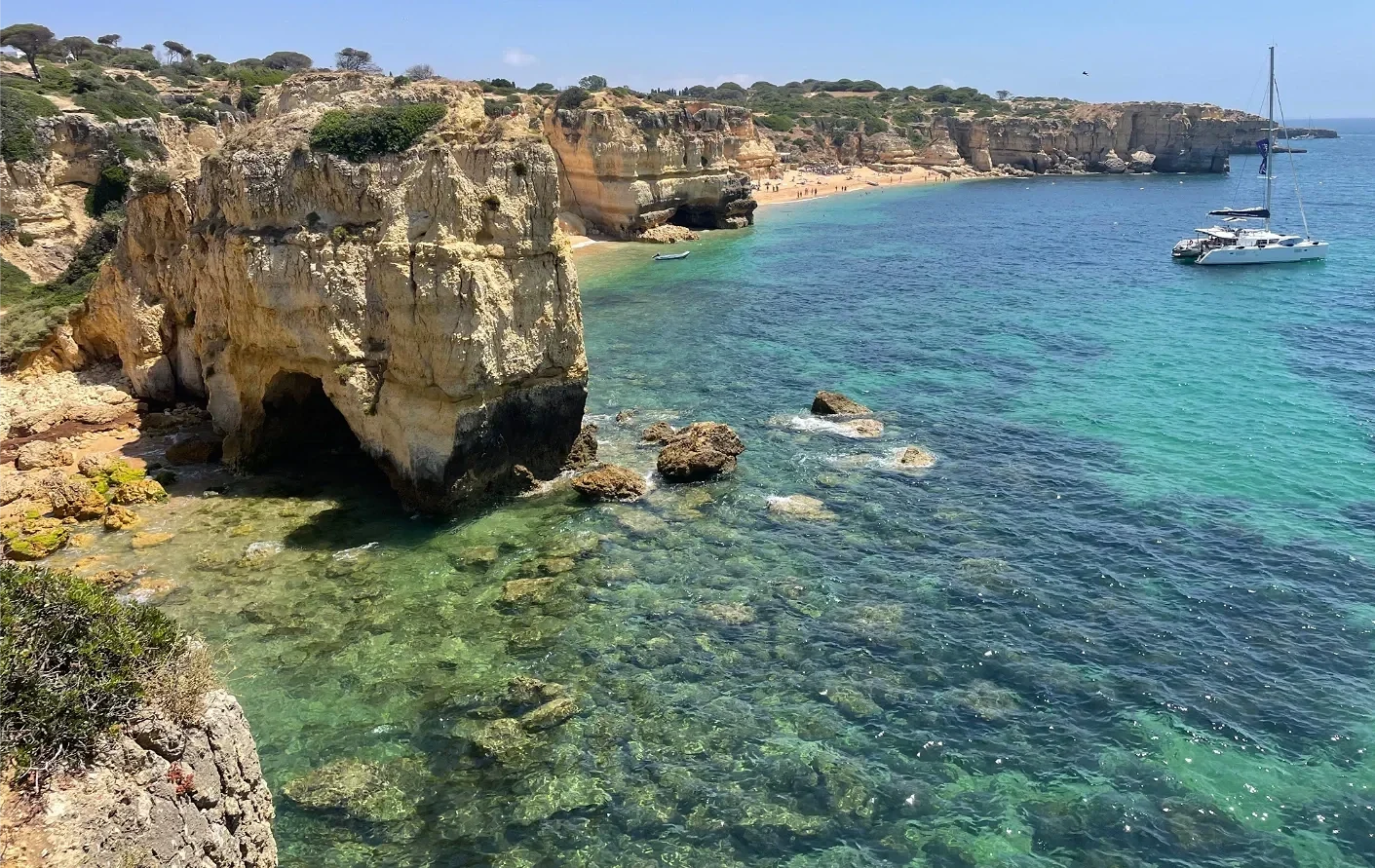
Natural limestone arch and anchored catamaran in jade water off Praia do Castelo, golden sand in distance.
West of Albufeira, Praia do Castelo offers an intimate counterpoint to the region’s longer beaches. This small beach sits framed by tall cliffs, with piles of large seashells often gathered along the tide line, a detail that delights children and collectors alike. The cove feels sheltered here, more protected from wind than the open west coast, with a softer, more secluded mood. It’s the kind of place where you might set up a towel, read for hours, and glance up occasionally at the cliffs changing color as the sun moves. Several neighboring coves are accessible via scenic clifftop paths, making Praia do Castelo a good anchor for an afternoon of short walks punctuated by swimming or shell collecting. Access involves stairs down the cliff; parking above is limited. Pay attention to safety signage about unstable cliff faces and falling rocks. This is not a beach for sitting directly under the rocky cliffs, no matter how inviting the shade appears.
Visit here as a counterpoint to busier Albufeira strips. It’s a reminder that even in the most developed parts of the Algarve, quieter corners remain.
Sagres Viewpoint and Beaches Nearby
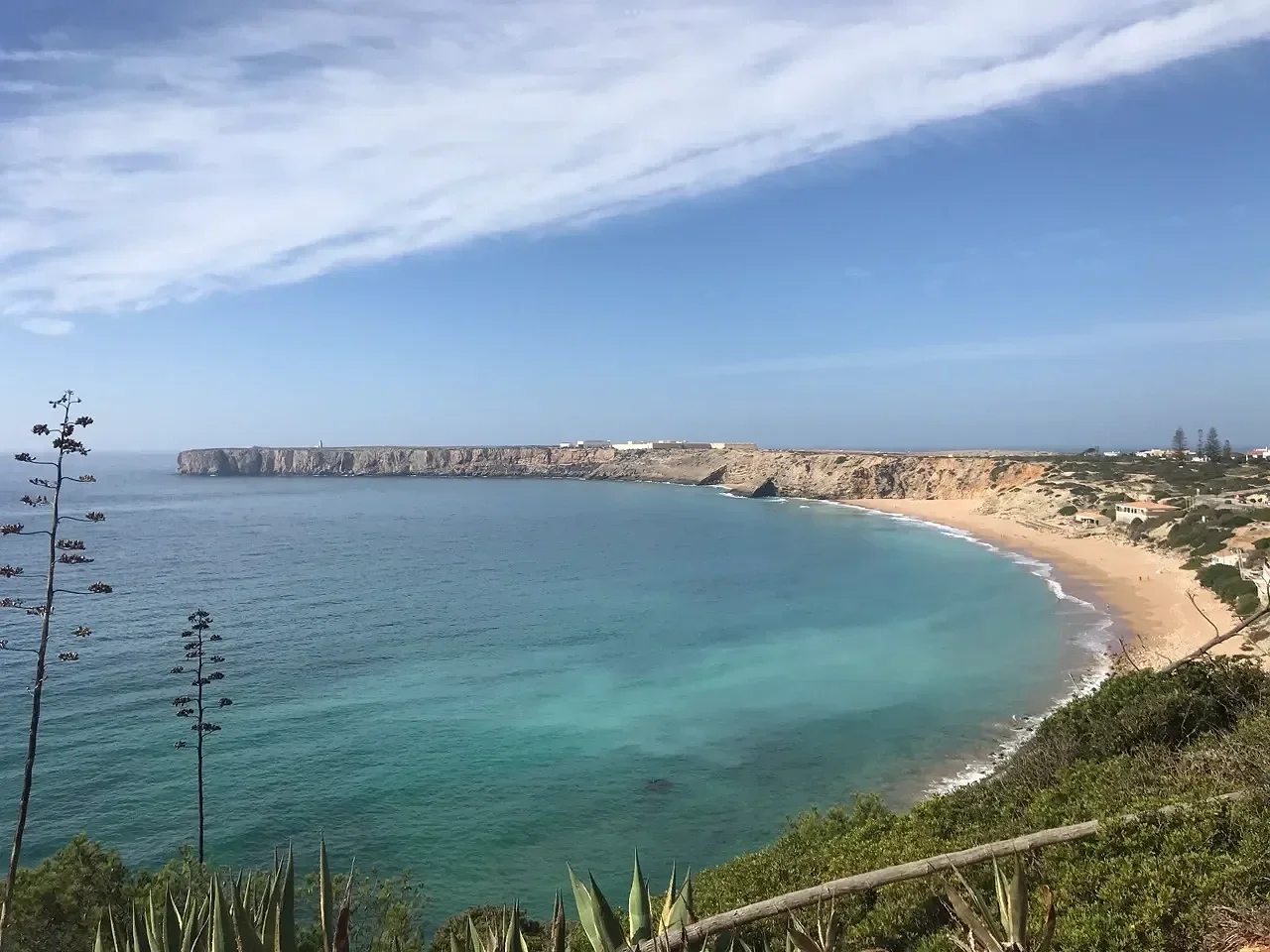
Sweeping view of Praia da Mareta—wide sandy bay beneath ochre cliffs, calm turquoise Atlantic under clear sky.
Sagres marks the southwestern tip of mainland Portugal, a place that once felt like the end of the known world. Cabo de São Vicente lies nearby, its lighthouse anchored high on sheer, basalt-toned cliffs that plunge directly into the Atlantic. The Fortaleza de Sagres sits on a broad, windswept promontory, its stone walls enclosing open ground rather than ornate structures, allowing uninterrupted views across the Algarve coast and out toward the open ocean. Walking along the fortress perimeter, the wind is constant and physical, pressing against your body and carrying the scent of salt and sun-warmed rock. Waves crash far below, their sound rising through fissures in the cliff. Natural blowholes send bursts of spray upward through gaps in the stone, especially during high swell. The ground here is exposed limestone and compacted earth, worn smooth in places by centuries of footsteps.
Below the cliffs, beaches such as Praia do Tonel and Praia da Mareta curve into wide arcs of golden sand. Praia do Tonel faces directly into the Atlantic and is favored by surfers for its consistent waves. At the same time, Praia da Mareta sits slightly sheltered, making it popular with families and swimmers on calmer days. Surf schools, camper vans, and lesson groups line sections of the road above, blending surf culture with daily coastal life. The beaches themselves are wide enough for long walks, particularly in the late afternoon when the light softens and the crowds thin.
A large parking lot sits near the fortress entrance, and a small entry fee grants access to the grounds. Dress in layers even on clear days, as the wind here is nearly constant year-round and can shift temperatures quickly. If possible, stay at least one night in Sagres rather than treating it as a short stop. Early mornings and evenings carry a noticeably different rhythm, quieter and slower, with softer light and fewer visitors. There is a reason travelers, navigators, and seekers have long come to this edge of Portugal in search of perspective rather than spectacle.
Praia da Cordoama and Praia do Castelejo
North of Vila do Bispo, Praia da Cordoama and Praia do Castelejo stretch along the western Algarve in a broad, open expanse of sand backed by steep, dark cliffs. These beaches feel exposed and expansive, with very little development interrupting the horizon, even during high season. The sense of scale is immediate, and the atmosphere is distinctly unpolished. Praia da Cordoama and Praia do Castelejo are ideal for long, meditative walks. The sand is firm near the waterline, allowing you to walk for extended distances without effort. Light shifts dramatically across the cliffs throughout the day, creating strong contrasts between shadow and surf that photographers favor, particularly during early morning and late afternoon. Surfers arrive for the consistent Atlantic swells, while walkers and families spread out easily due to the sheer size of the beaches. Each beach has its own parking area set back from the sand, with short walks required to reach the shoreline. Praia do Castelejo is generally slightly calmer and often draws more families, while Praia da Cordoama feels wilder and more exposed. Seasonal lifeguards are present, and small cafes or beach bars appear depending on the year, though amenities remain minimal. At high tide, the usable sand narrows significantly, so timing your visit around the tide makes a noticeable difference.
These beaches reward travelers seeking a nature-forward beach day. Fewer services, more space, and the feeling of encountering the Algarve coast without mediation.
Algar Seco Cliffs and Rock Pools
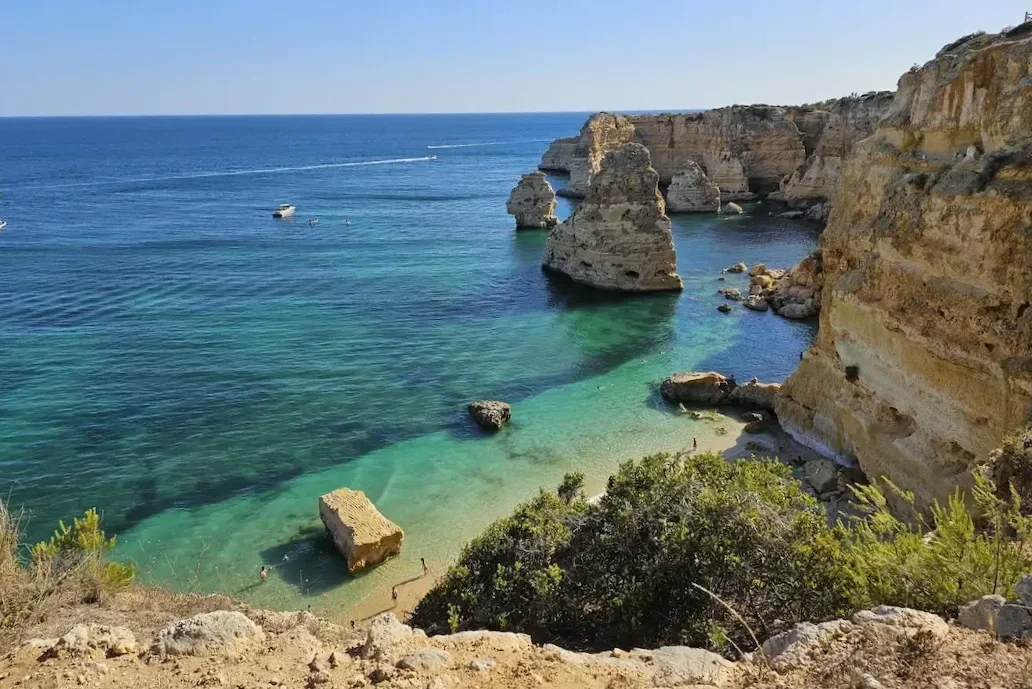
Dramatic sea stacks in jade-blue cove at Algar Seco, small boats gliding across calm Atlantic.
Algar Seco, located just outside the village of Carvoeiro, is less a traditional beach and more a geological landscape shaped by erosion and time. Wooden boardwalks and stone stairways guide you through honey-colored limestone formations carved into arches, grottoes, narrow channels, and sea pools that open suddenly onto the turquoise Atlantic below. The rock formations here are visually striking throughout the day, though early morning and sunset bring the most favorable light and fewer visitors. At low tide, tidal pools fill with clear water, revealing small fish and marine life, while waves surge through narrow openings in the rock, creating a steady rhythm of sound and movement. The well-known window-shaped rock formation frames the sea precisely, offering one of the Algarve’s most recognizable coastal views.
Boat tours pass beneath these cliffs, their passengers looking up at the same formations you explore from above. Much of Algar Seco’s drama, however, is accessible entirely on foot. The terrain is uneven, with exposed rock and steps, making sturdy sandals or walking shoes essential. Flip flops are impractical here.
Carvoeiro’s restaurants, cafes, and small shops are a short walk away, making Algar Seco an easy half-day outing paired with lunch or a swim at nearby beaches. It serves as a reminder that some of the Algarve’s most compelling coastal experiences happen above the waterline rather than on the sand.
The Seven Hanging Valleys Trail
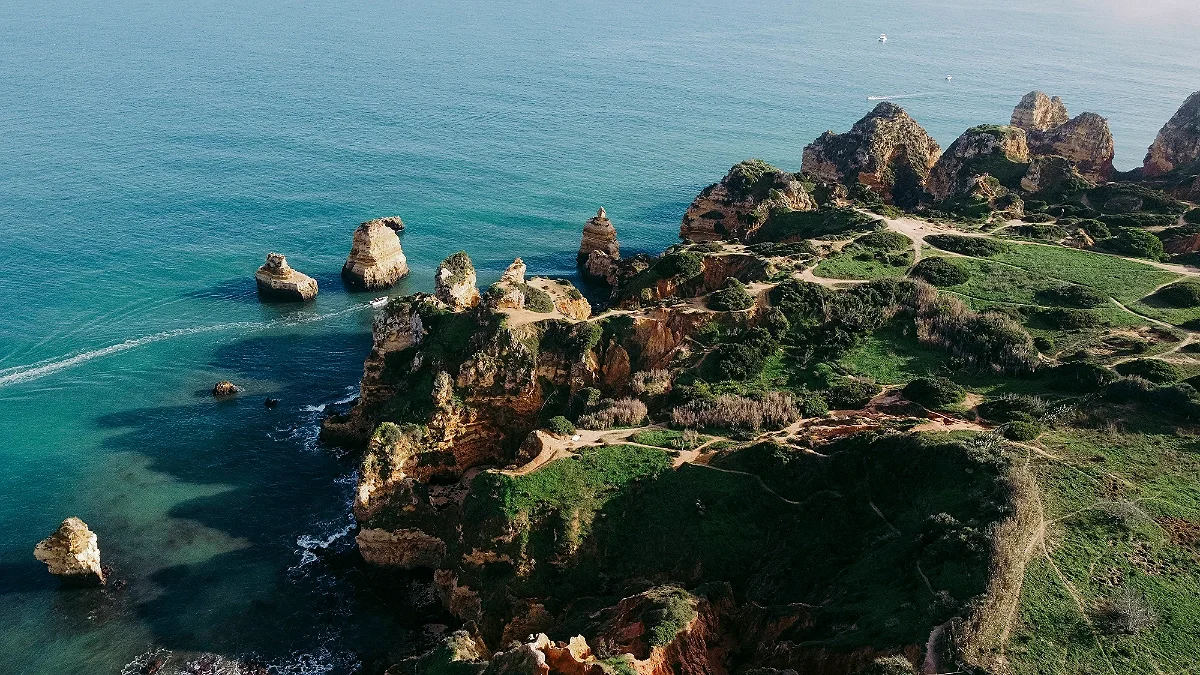
Aerial view of rugged limestone headland and sea stacks on Seven Hanging Valleys Trail above turquoise Atlantic.
The Seven Hanging Valleys Trail runs approximately six kilometers one way between Praia do Vale Centeanes and Praia da Marinha, following the clifftops of the Algarve coast. The trail crosses a series of hanging valleys, narrow gorges that open toward the sea, their steep sides shaped by erosion and covered in coastal vegetation.
As you walk, the landscape shifts constantly. Sinkholes punctuate the ground, limestone formations rise abruptly from the cliffs, and small beaches appear far below, accessible only by boat or steep scramble. The water below alternates between deep blue and bright turquoise depending on depth and light. The trail offers uninterrupted views for much of its length, making it one of the most scenic coastal walks in Portugal. While sections of the trail are family-friendly, exposed edges and uneven ground require attention. Sturdy walking shoes are essential, and sun protection and water are necessary year-round, particularly in summer when shade is limited. Some stretches can feel demanding in the afternoon heat.
For slow travel, consider walking only a portion of the trail rather than completing the full out-and-back. Starting at Praia do Vale Centeanes and finishing at Praia da Marinha allows for natural pauses, swims, and extended stops at viewpoints. Public transport between trailheads is limited, so many hikers use taxis or ride-hailing apps such as Uber or Bolt for the return journey. Planning logistics allows you to focus on the walk itself.
Praia Sao Rafael
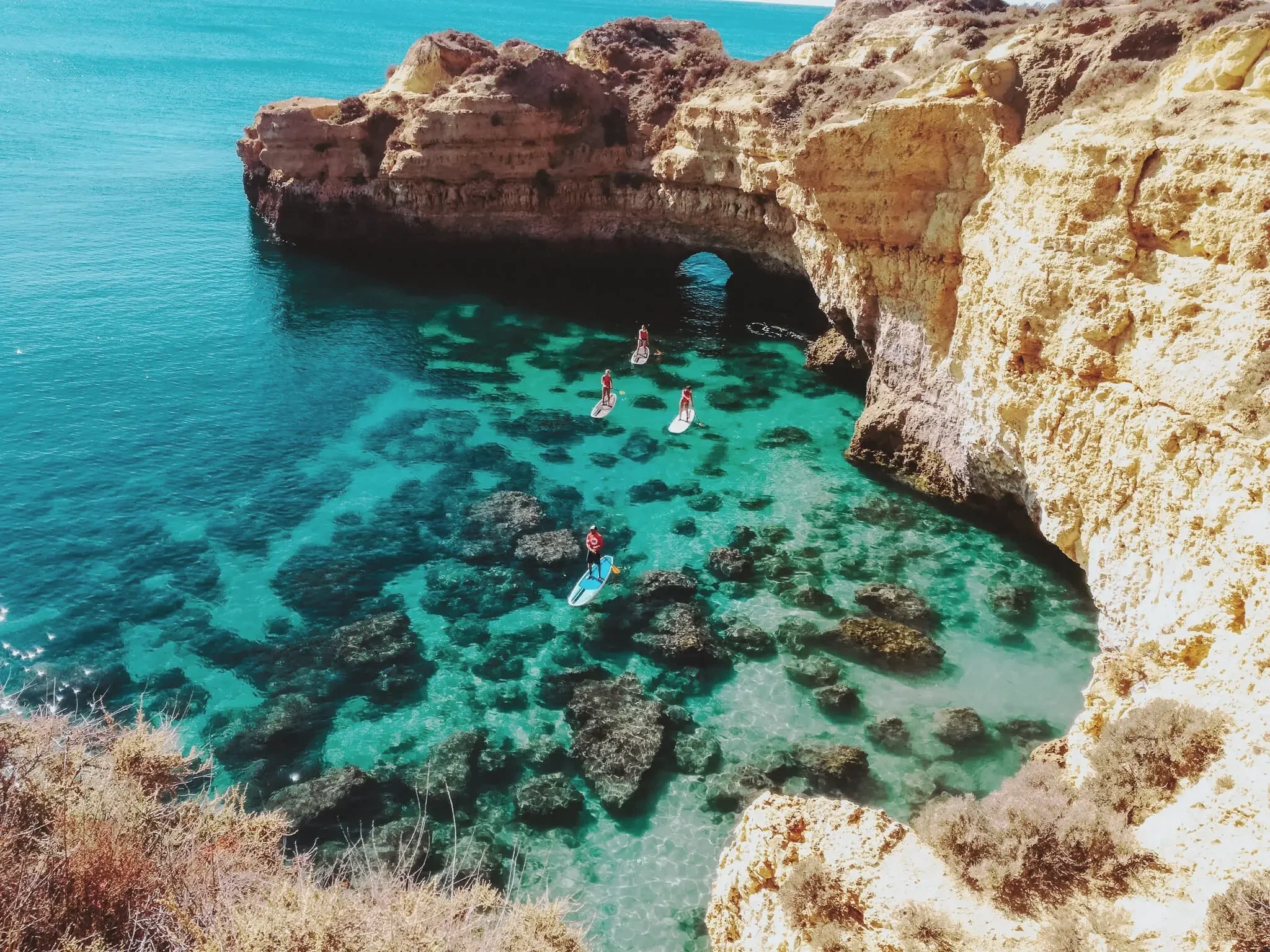
Just west of Albufeira, Praia Sao Rafael offers a balance of accessibility and visual drama. Soft golden sand stretches beneath tall limestone cliffs, their warm tones shifting throughout the day as the sun moves across the southern coastline. Distinct rock formations rise from the shallows, creating sheltered areas and adding texture to the shoreline. Praia Sao Rafael is known for its easy access. A nearby parking lot sits only a short walk from the sand, making it popular with families and couples who want to maximize beach time without navigating long staircases. The cliffs protect from prevailing winds, and the water here is often calmer than on more exposed beaches, making swimming and floating especially inviting. Rocky outcrops near the shoreline create excellent snorkeling conditions, with fish visible in the clear water on calm days. At low tide, small coves and pools appear among the rocks, offering quiet corners for exploration. The sand is fine and comfortable underfoot, well suited to long beach days or relaxed walks along the water’s edge.
Amenities such as nearby restaurants, restrooms, and beach chair rentals support extended stays without detracting from the natural setting. Praia Sao Rafael remains one of the Algarve’s most balanced beaches, combining comfort, scenery, and a sense of ease that makes returning feel inevitable.
Benagil Cave, Boat Tours, and Alternative Explorations
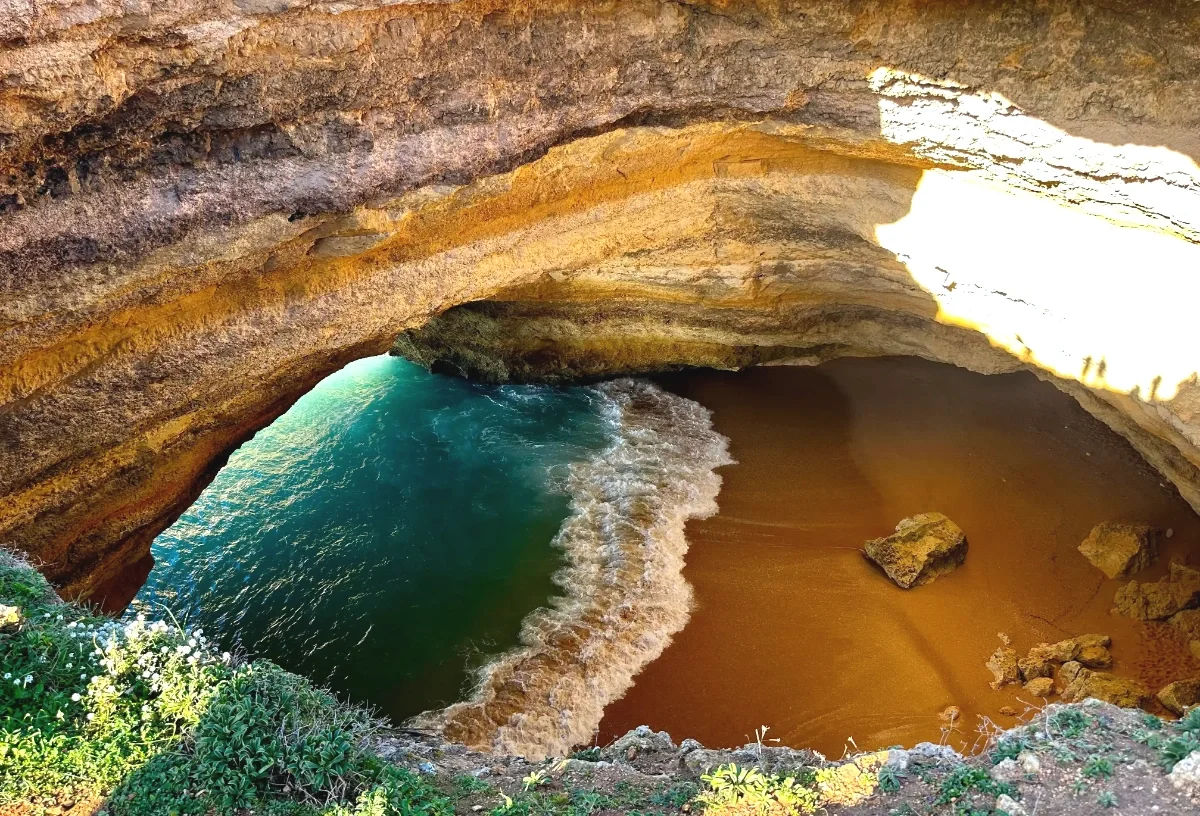
Interior of Benagil Sea Cave showing golden-sand pocket beach and turquoise Atlantic waves beneath arched limestone roof.
Benagil Beach and its famous sea cave have become among the most recognizable images of Portuguese beaches. The cave itself, domed with a circular skylight, sits just offshore, accessible by boat tour, kayak, or stand-up paddleboard, depending on conditions.
As regulations continue to evolve, boat tours no longer allow passengers to disembark inside the cave itself. Most tours operate from Benagil, Lagos, Portimão, and Albufeira, lasting between one and one and a half hours. A typical boat tour costs between €25 and €40 per person and passes multiple caves and rock formations along the Algarve coast. Kayaking and paddleboarding from Benagil Beach offer a quieter approach, though sea conditions must be carefully assessed. Swimming to the cave is strongly discouraged due to currents and heavy boat traffic.
For a less crowded experience, consider coastal caves near Ponta de Piedade in Lagos or Ferragudo. These areas offer equally striking sea arches and grottoes without the intensity of Benagil crowds. Viewing Benagil Cave from above, via the cliff path, provides perspective without pressure.
Cuisine in the Algarve
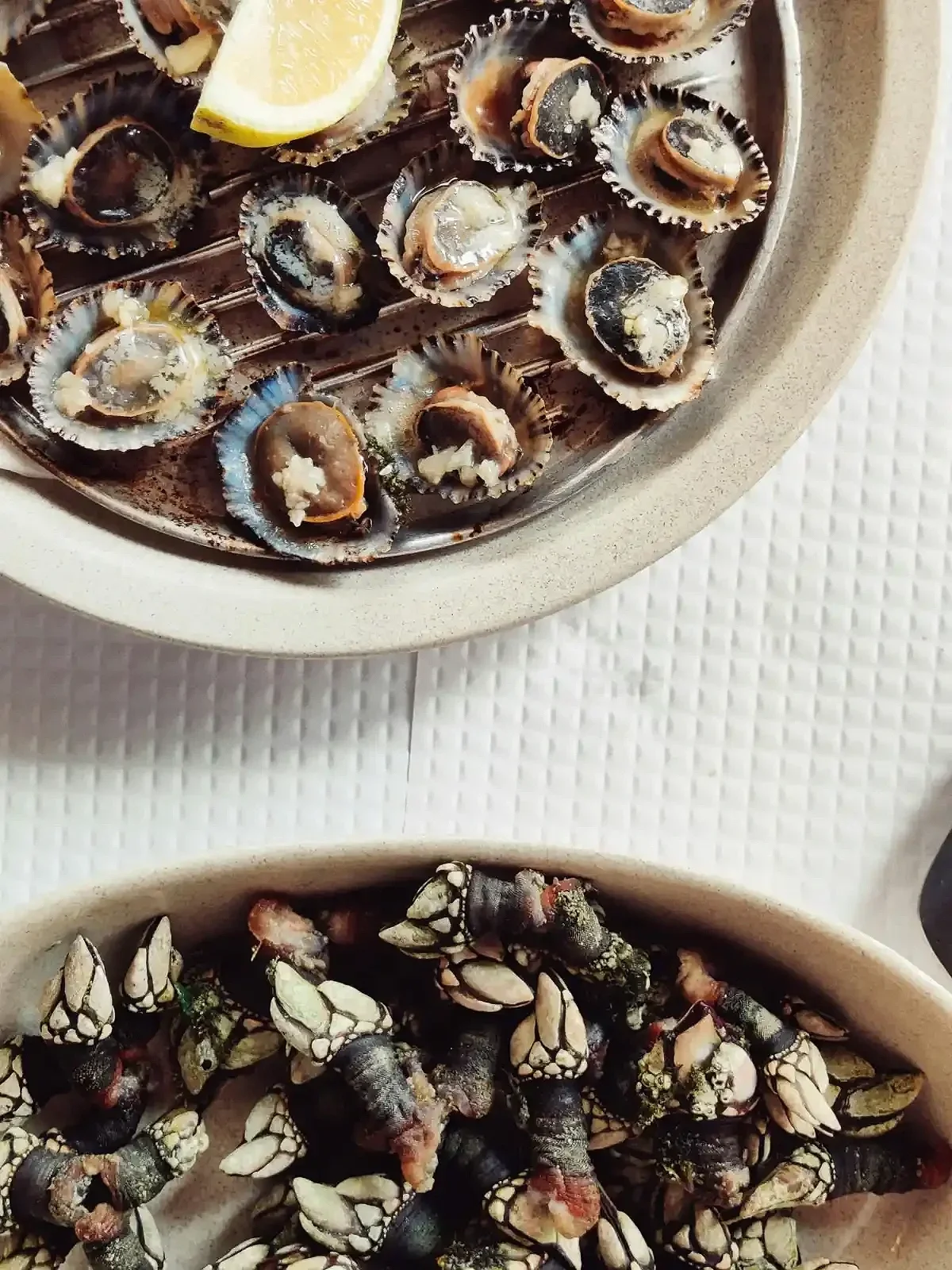
Grilled limpets with garlic and lemon wedge beside bowl of gooseneck barnacles, classic Algarve coastal seafood platter.
The Algarve region is a feast for the senses, and nowhere is this more evident than in its cuisine. Along the coast, the scent of grilling fish mingles with the salty air, and every meal feels like an extension of the beach day. Local restaurants, often perched above the sand or tucked into old fishing villages, serve up the freshest catches, think whole fried fish, simply seasoned and crisped to perfection, or cataplana, a fragrant seafood stew that arrives bubbling at your table. Don’t miss the chance to try arroz de pescado, a comforting rice dish brimming with the flavors of the sea, or to sample the region’s celebrated wines along the Algarve wine route. A glass of crisp Vinho Verde pairs perfectly with a plate of fried fish, especially when enjoyed with a view of the waves at a beachside spot like Restaurante da Praia de São Rafael. For a truly local experience, seek out small, family-run eateries where the menu changes with the day’s catch and the welcome is as warm as the southern sun.
Whether you’re lingering over lunch after a swim or savoring a sunset dinner with sand still between your toes, the Algarve’s culinary scene is as much a part of the region’s charm as its coastline. Here, every meal is an invitation to slow down and savor the flavors of the sea.
Summer events along the algarve
Summer in the Algarve brings a concentration of established cultural and food-focused events, most of them rooted in specific towns rather than staged as region-wide attractions. These festivals tend to unfold in public squares, historic centers, and waterfront areas, often overlapping with everyday local life rather than interrupting it.
In June, Festival MED takes place in Loulé, transforming the town’s historic center into a multi-day music event with outdoor stages, courtyard performances, and late-night sets. The festival focuses on world music and Lusophone artists, drawing both locals and visitors staying along the central Algarve coast. While not held directly on the beach, it pairs easily with coastal stays in nearby areas such as Faro, Quinta do Lago, or the Lagoa–Carvoeiro region.
August is the most active month for food and town festivals. FATACIL, held in Lagoa, is one of the Algarve’s largest summer fairs, combining regional food stalls, agricultural exhibitions, crafts, and evening concerts. It attracts a wide local audience and offers a snapshot of Algarve culture beyond the beach, particularly for travelers staying in Lagoa, Carvoeiro, or Ferragudo. Also in August, Portimão’s Sardine Festival centers on the city’s fishing heritage, with grilled sardines served along the riverfront, live music, and evening gatherings near the water. This festival is closely tied to the Algarve’s maritime identity and reflects the continued importance of fishing culture along the southern coast.
Loulé’s White Night typically takes place in late summer, when the town center stays open late into the night for street performances, music, art installations, and open-air bars. Visitors are encouraged to dress in white, and the atmosphere is festive without feeling overly staged. It works well as an evening outing for those based along the central Algarve.
These summer events add texture to a beach-focused itinerary rather than replacing it. They are best experienced as evening or night activities after beach days, particularly if you are staying nearby. Dates and programming can shift year to year, so checking local municipal websites or accommodation hosts once you arrive is the most reliable way to plan.
Navigating the Algarve
Renting a car remains the best way to explore beaches in the Algarve. While public transport connects major beach towns, it rarely reaches the coves, west coast beaches, or trailheads that define the region’s most memorable experiences.
Faro Airport serves as the primary entry point. From there, Lagos sits roughly one hour west, with Sagres an additional thirty minutes beyond. Driving allows flexibility, essential for adapting to weather, tides, and energy levels. GPS navigation is recommended due to inconsistent signage, especially near beaches accessed by narrow rural roads. Google Maps performs well across the Algarve coast, though some parking lots are unpaved and poorly marked. Parking lot availability varies widely. Popular beaches like Praia da Marinha, Praia Sao Rafael, and Praia do Camilo fill quickly in summer. Arriving early or late in the day improves access and atmosphere. Expect a short walk from most parking areas, often involving stairs.
A road trip through Algarve Portugal rewards patience. Leaving space in your schedule allows detours, viewpoint stops, and moments when another beach unexpectedly calls.
Map Your Stay
Use the map to find accommodation relative to beach recommendation.
What Portugals Beaches Leave With You
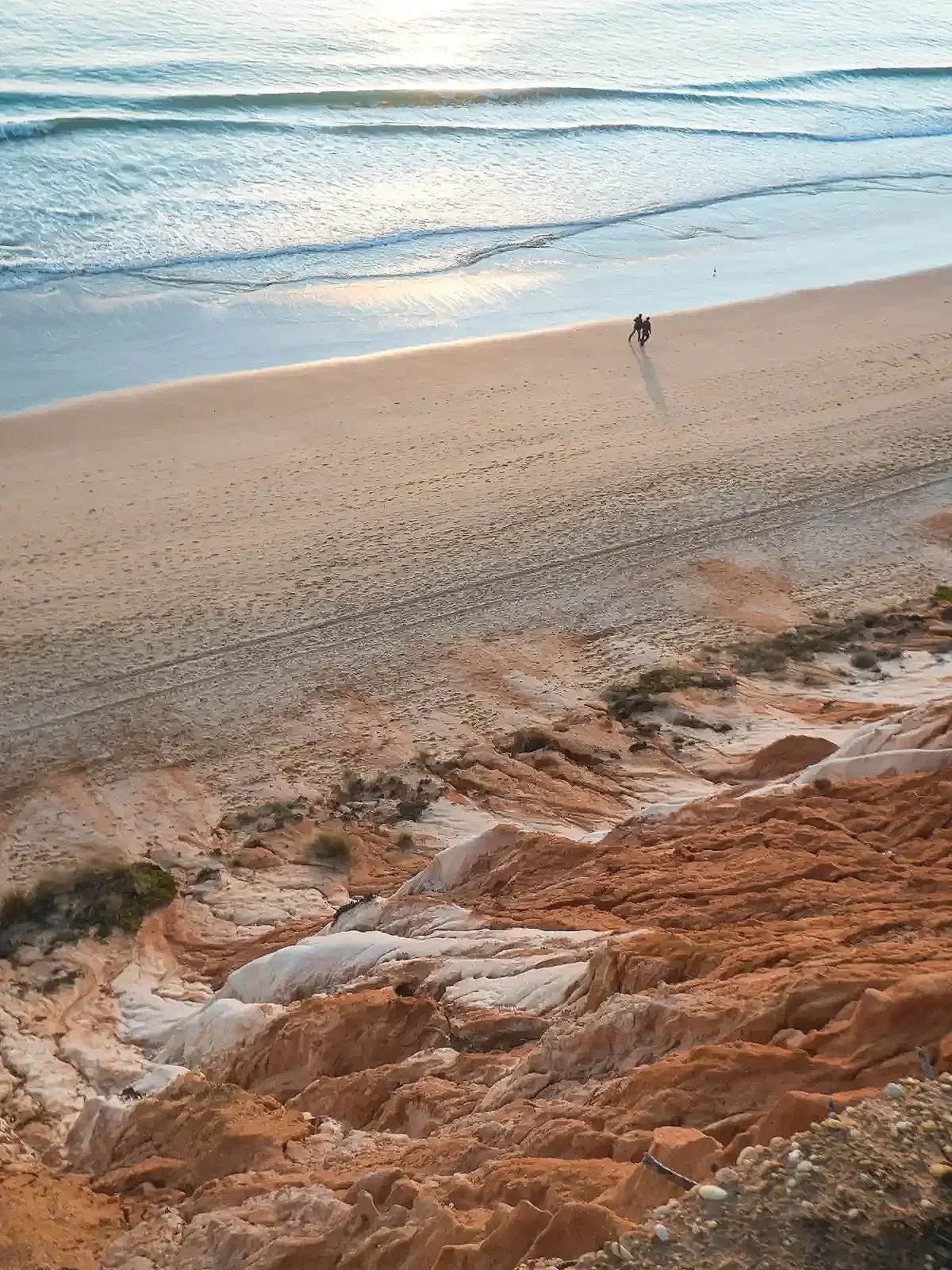
Couple strolls a quiet sunset shoreline beneath striking red-and-white sandstone cliffs of Praia da Falésia.
Beaches in Portugal endure because they ask something simple and increasingly rare. Along the Algarve coast, days soften. Movement slows. The land reminds you that beauty does not need explanation. From dramatic cliffs and sea arches to soft golden sand and quiet coves, the beaches in the Algarve offer space to reenter your own rhythm. Some beaches invite solitude. Others invite connection. All reward those who arrive without hurry. As you plan your next trip, allow space for return visits rather than accumulation. Let a favorite beach become familiar. Let the coast shape your pace rather than the other way around. The beaches will change with season and tide. You will change too. That is the quiet promise Portugal continues to offer.
related posts